
A loading dock near Surprise City Center cannot wait for a ceiling stain to dry before someone checks the roof. Water may enter at a seam, curb, drain, wall, or edge, then travel before appearing indoors. We start with the leak location and timing, what was operating above it, and prior repairs. Then we inspect above the interior mark, control the opening, and record what was found and what remains.
Follow the water, not the stain
Inside, we note the drip pattern, ceiling materials, nearby equipment, and any change in the leak during rain or after a unit runs. On the roof, we follow seams and deck lines, inspect penetrations and curb corners, and check drains and scuppers that may have backed up. Water can travel along insulation or a structural flute, so the nearest roof detail is not always the entry point. We separate a likely path from a confirmed opening rather than sealing every nearby joint at once.
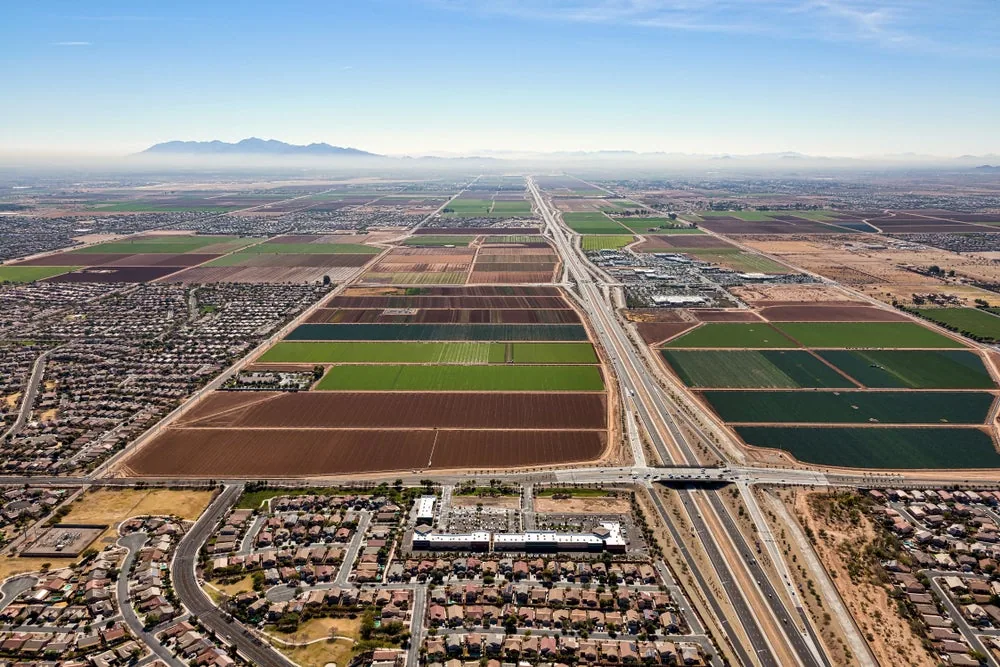
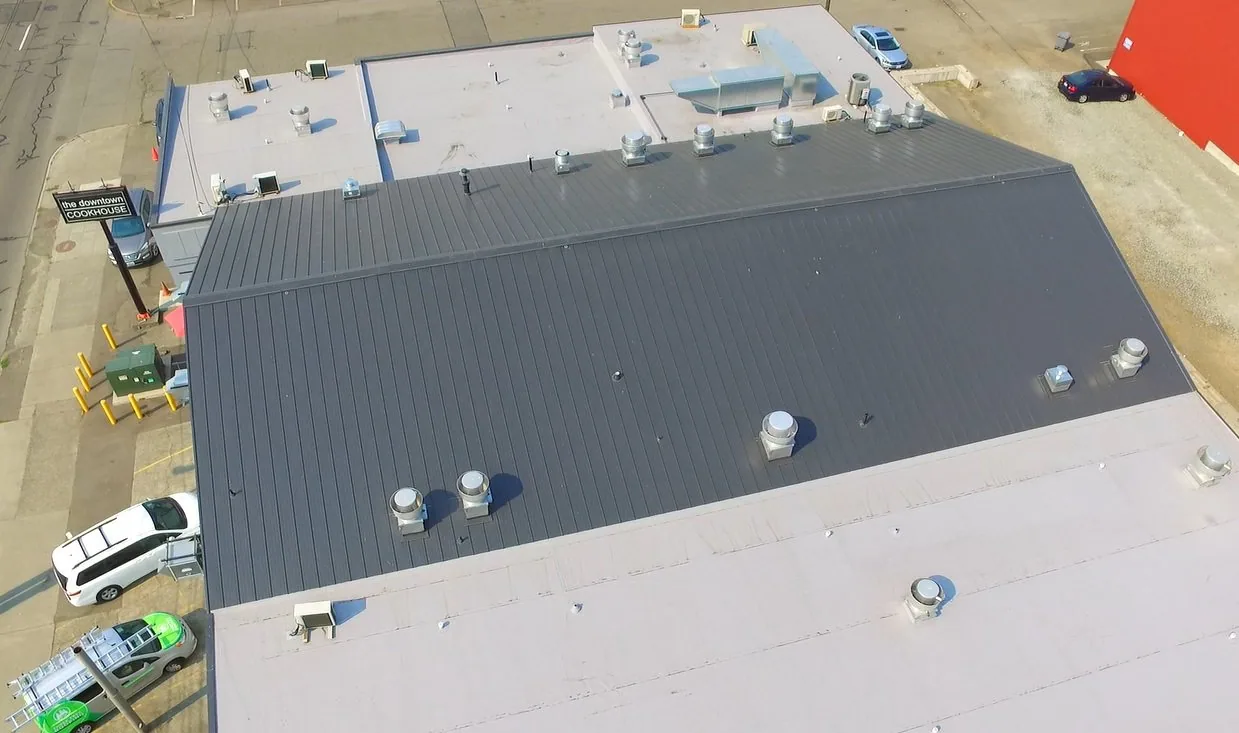
At Surprise's Cactus Road and Loop 303 commercial corridor, buildings include retail, service, and larger commercial uses. A storefront may have roof openings for exhaust and HVAC; a warehouse can have long roof runs with widely spaced penetrations. Those are possibilities to check, not assumptions about a specific building. We compare the roof details with the interior leak location, use test areas when needed, and mark the point where repair material will tie into the existing membrane.
Contain the leak before the next storm
For an active leak, the first task is to keep water away from people, inventory, electrical equipment, and work areas. We coordinate safe interior access and use a temporary dry-in or compatible repair where roof access and conditions allow. During active rain, a permanent repair may be unsafe or fail to bond. We explain immediate protection and return when the surface can be prepared.
Phoenix-area monsoon storms can bring damaging wind and heavy rain. A temporary patch is short-term control, not a substitute for inspection. We check if the wind lifted an edge or flashing, whether runoff found a blocked route, and whether an older patch separated. Photos taken before and after the temporary work help the owner distinguish emergency protection from the permanent repair scope. If the opening is large or conditions are unsafe, we isolate the affected area and coordinate with the building contact before proceeding.
Details that commonly carry water
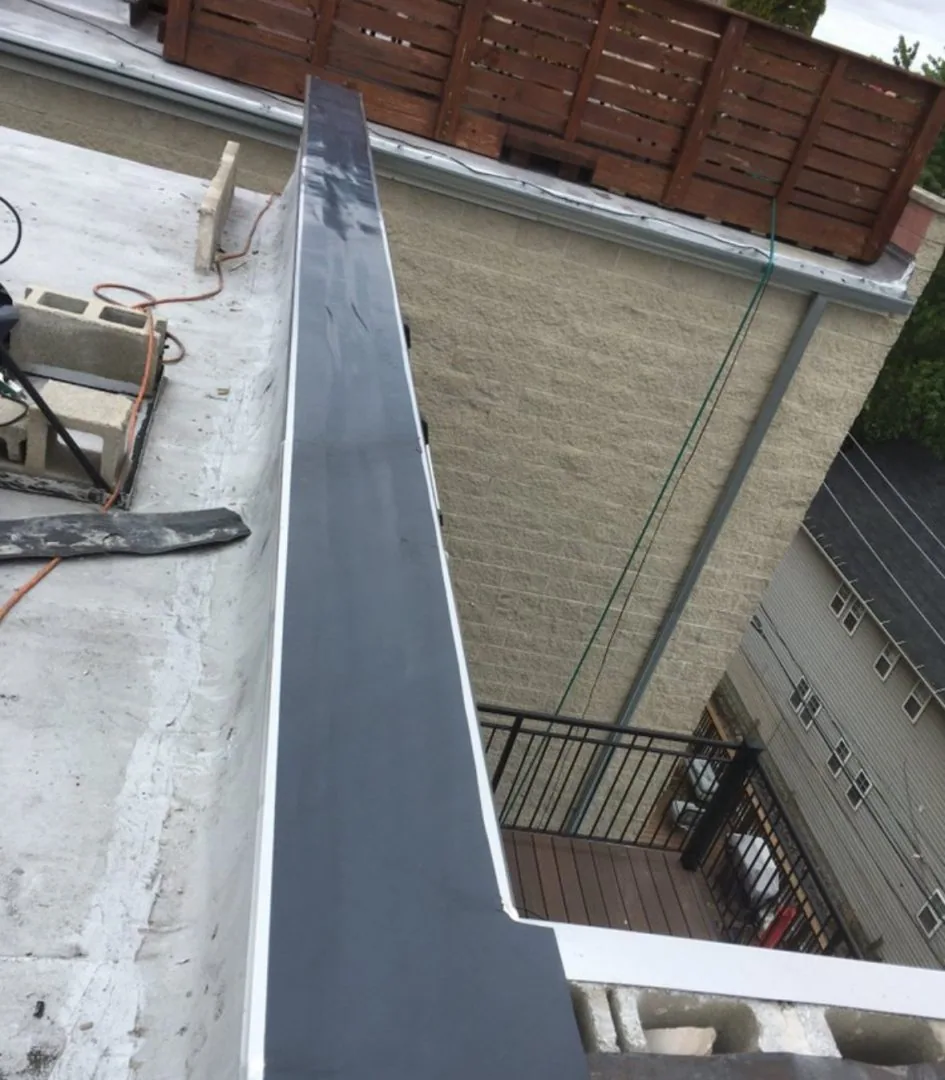
We look closely at membrane seams, end laps, pipe boots, pitch pans, skylight frames, wall flashings, equipment curbs, and metal terminations. The repair needs to bond to the actual roof material and reach sound substrate. If a curb corner has pulled away, adding sealant to the surface may leave the separation beneath it. Where water has entered the insulation, a test cut can show whether drying or removal is needed before the membrane is closed. We document the opening and patch so future maintenance can find it.
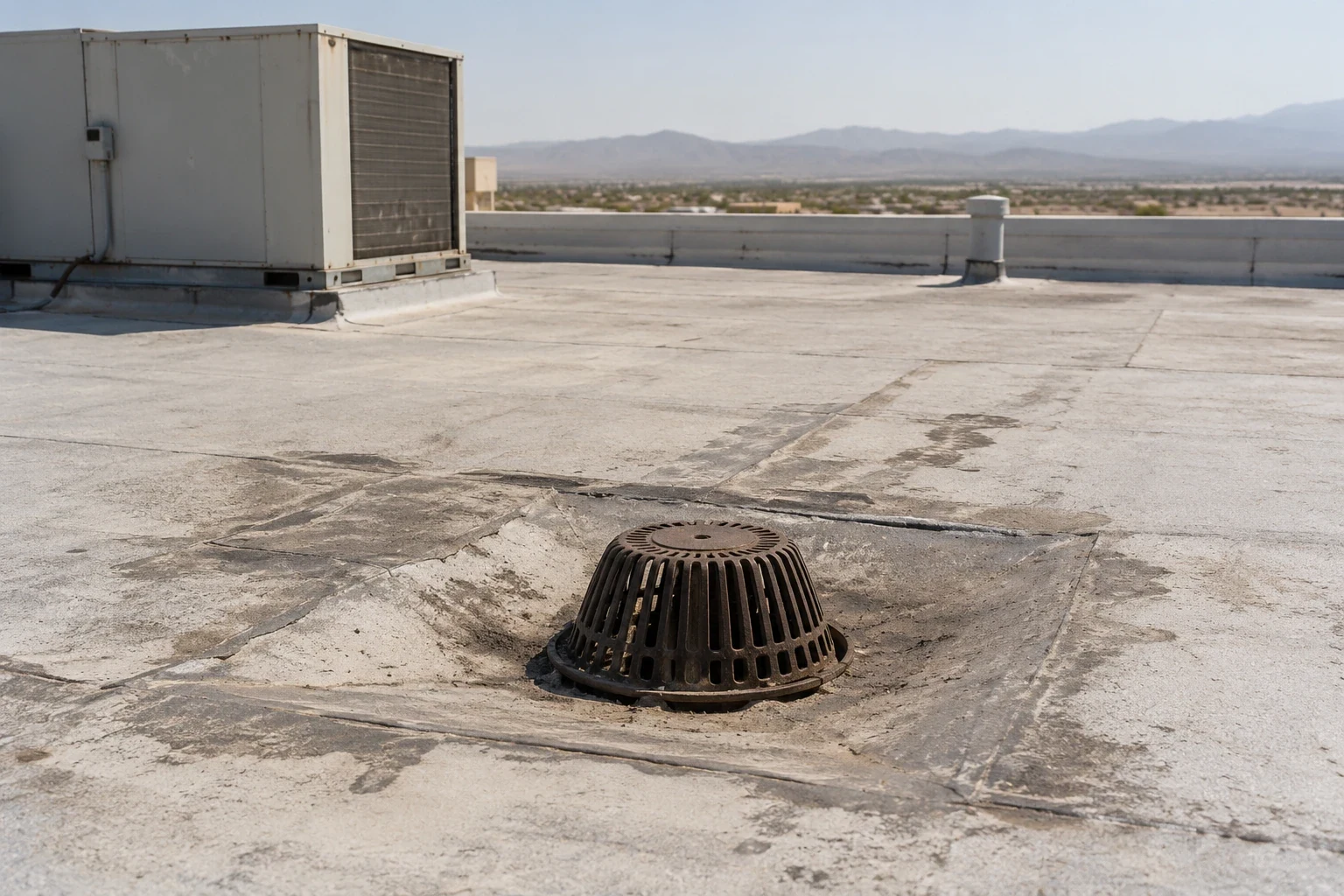
Drainage deserves its own check. A clogged drain or damaged scupper can leave water at a low seam, and a blocked overflow may change where water backs up. Drain and scupper repairs can be part of the leak scope when they affect the water path. At a Surprise City Center property, shared access and tenant hours may shape the repair window. We confirm the building's requirements before setting it.
Repair the opening and record the limit
Once the entry point is confirmed, we define the repair around the damaged material and the tie-in area needed for a sound patch. A puncture may need a compatible membrane patch; an open seam may require cleaning, welding, or reinforcement; a flashing failure can require rebuilding the transition. If the roof has a broader pattern of failure, we state where this repair ends and what further inspection would answer. Owners can then distinguish a targeted repair from a larger rehabilitation.
When the leak is hard to trace, a broader roof repair inspection can examine nearby transitions and drainage. If a storm caused visible damage, flashing repair may address the failed edge or curb connection. We identify the material at the opening, explain how it will be prepared, and note any area that cannot be confirmed without additional access. The record does not treat a temporary seal as proof that concealed insulation or deck is dry.
Keep the response workable for staff
Leak repair can affect tenant spaces, equipment rooms, stock, and service routes. We agree on who can open roof access, when a ladder or lift can be placed, and which area needs protection below. On a distribution property, that can mean keeping a dock clear; near Village at Prasada, it can involve shared drives or storefront hours. The crew keeps the roof opening as small as the repair allows and leaves the work area protected before moving to another section.
For urgent conditions, response is available around the clock. We ask the facility contact for the affected area, roof access point, and electrical or equipment concerns. An interior photo can help locate the zone, but a roof walk must confirm the opening. The project lead gets a clear handoff: what was stopped, what was permanently repaired, and which area remains under observation after the next rainfall.
Make the next visit faster
We record the repair date, roof section, material, nearby detail, and photos of the opening and finished tie-in. A plan marked with the repair boundary helps compare later moisture or staining with prior work. If a repair was temporary, the record names that limit so it is not confused with a permanent fix. That is especially useful where multiple tenants or contractors share roof access and no single person sees every visit.
We can inspect the leak area with the general contractor or facilities contact and prepare a written scope for the repair. A TPO roof takes a different seam repair than other membranes; the existing assembly decides the method. For buildings near Village at Prasada, we coordinate access around the site's operating rules. The owner can provide the leak location, prior repair notes, and the earliest safe roof window.
Commercial Roofing Questions
Why does the leak show up far from the roof opening?
Water can travel along insulation, deck flutes, a seam, or a structural member before it reaches the ceiling. We use the stain and timing to narrow the area, then inspect roof details and follow the likely path. If the entry point is still uncertain, we mark the suspected area and test before closing a large section.
Can you stop a leak while it is raining?
We can respond and help protect the interior, but a permanent repair depends on safe roof access and a surface that can be prepared. During active rain, a temporary dry-in may be the practical measure. We explain its limit and schedule the lasting repair when the materials can bond and the roof can be worked safely.
What details do you check around an HVAC unit?
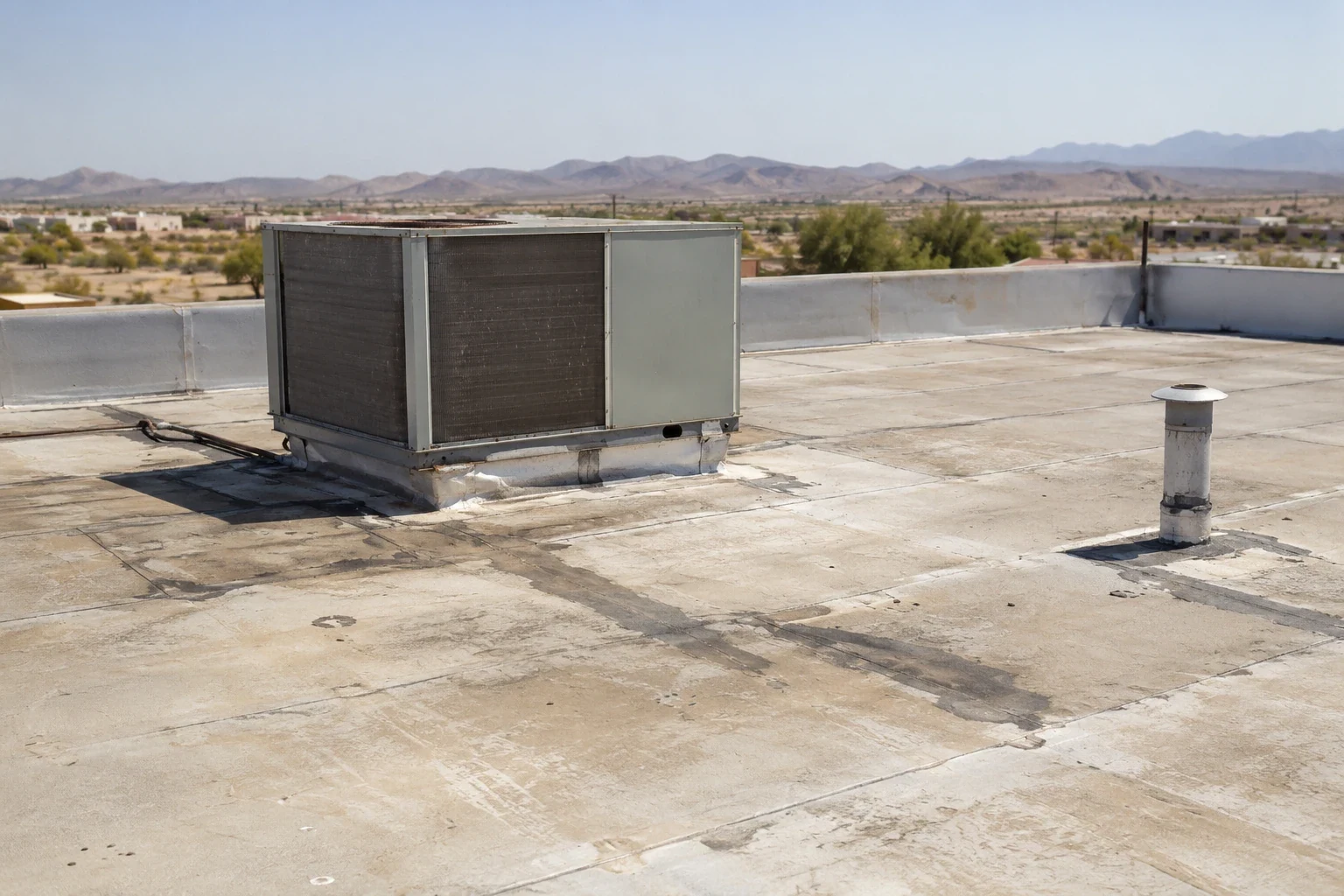
We inspect the curb corners, membrane termination, nearby seams, conduit supports, and the route water takes around the unit. If the curb or flashing has separated, the repair may need to extend beyond the visible gap. We also coordinate with the service contractor when equipment work or disconnects affect access.
How do we know whether wet insulation must be removed?
A test cut can reveal whether insulation is dry, crushed, or holding water. We locate cuts where observations suggest a change, photograph the layers, and close each opening with a compatible repair. If moisture is broad, the scope needs to address the affected area rather than cover it with a surface patch.
What information helps you respond to an urgent roof leak?
Give us the building name, affected interior area, when the water appears, roof-access contact, and any equipment or electrical concern. Photos can help us prepare, but they do not replace a roof inspection. We coordinate the safe access window and tell the facility contact what was contained and what follow-up remains.
Ready to review the roof scope?
Request a Roof Assessment
Related Roofing Work
Trace the leak and protect the opening
Share where water appears, when it started, and who can provide roof access. We can coordinate an urgent inspection, contain the active opening where conditions allow, and document the permanent repair boundary.