Retail, dining and health-service buildings in Village at Prasada need roof work that keeps entrances, deliveries and tenant schedules in view. The district is on Waddell Road's south side, east of Loop 303, in Surprise, AZ. In 2025, 61 businesses were operating there across retail, dining, and health and beauty categories. That is a multi-property district, not one building, so the roof scope has to start at the specific tenant property and its assembly.
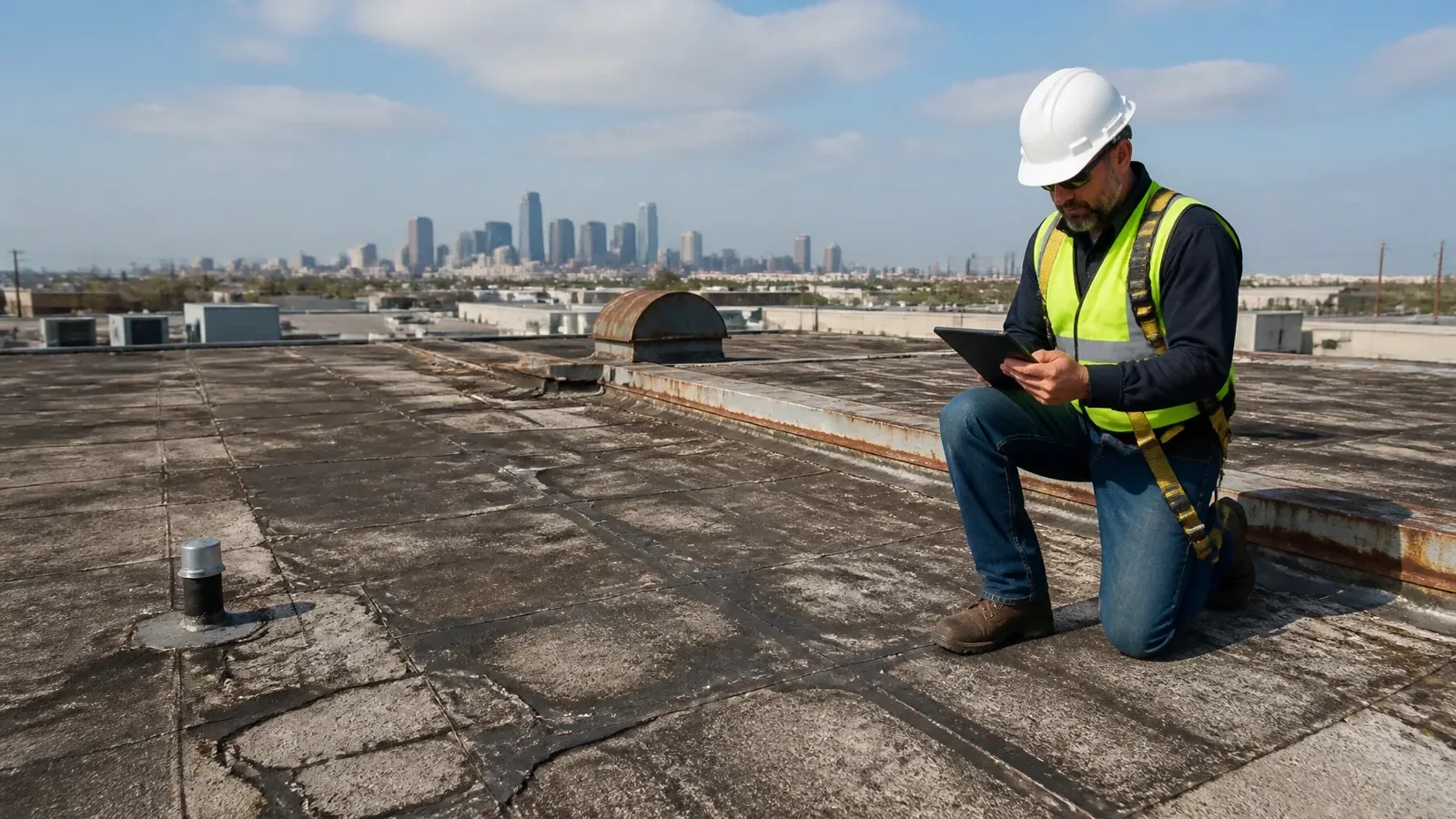
We inspect the field membrane, seams, edge metal, penetrations and drains, then tie each finding to the part of the building it affects. A clear repair can be separated from work that needs a larger budget and schedule. Our roof condition reports record photos and conditions in a form an owner can review with property operations.
Tenant activity changes access
A multi-tenant retail and restaurant area brings different operating hours, loading patterns and customer routes. The district's wider commercial development includes several properties, so we confirm which roof and which tenant space the work affects before staging tools. We ask about delivery windows, outdoor seating, service access and areas that cannot be blocked. Those details help us contain a repair or phase a larger project without moving the problem from the roof into the daily operation below.
On the roof, we look for split flashing at curbs, open seams, loose edge metal, failed sealant and drainage points that collect debris. A leak above a kitchen, treatment room or retail ceiling deserves a documented trace, since water can travel away from the entry point. The visible stain gives us a place to investigate, not a final diagnosis. If the low-slope system is TPO, our TPO roof work addresses seams, terminations and penetrations as a connected assembly rather than isolated patches.
Village at Prasada's location alongside Waddell Road and Loop 303 also makes safe staging a practical issue. A site manager can identify the right delivery gate and pedestrian route before equipment arrives. We keep the work zone separate from tenant access, protect temporary openings at shift end and coordinate rooftop equipment shutdowns when a task requires it. The sequence belongs in the written scope so tenants do not discover the schedule after work begins.
Low-desert heat and summer storms
The Phoenix-region heat benchmark is clear at Sky Harbor: its 1991 to 2020 July normal mean temperature is about 95.5 degrees. It is a metro proxy, not a Surprise station reading. We check exposed membrane, sealant and flashing for heat-related change at each visit. We look for seams pulling apart, brittle repairs and details that have lost flexibility. Roof surface temperature can run higher than air temperature, so material selection and application conditions matter when coating or repairing an assembly.
Across the Phoenix metro, summer monsoon weather can include damaging wind, flash flooding, and possible hail. For this district, a roof review should include edge securement, drain openings, scuppers and overflow paths. We clear a path for water only after identifying whether the blockage is debris, a damaged fitting or a low area. Hail marks need comparison with surrounding surface and prior condition, not an assumption that a dent or puncture came from one event. Owners who need an urgent weather response can reach us around the clock, holidays included.
Water above a food-service or health space can interrupt equipment and finishes below. We document the wet area, check nearby penetrations and note whether insulation appears compromised. If moisture extends beyond a repair boundary, a focused test may help define the next step before any recover is priced. A membrane should not be covered until the existing assembly has been checked for trapped water.
Choose a repair with a clear boundary
When one seam or penetration has failed and the surrounding field remains serviceable, a localized repair can be the right first move. We clean and prepare the surface, use compatible materials, and extend the repair far enough to reach sound membrane. If several leaks appear across a roof, or insulation is wet in multiple areas, repeated patches can cost more without resolving the assembly problem. A roof condition review should show the owner where the defect ends and where broader evaluation begins.
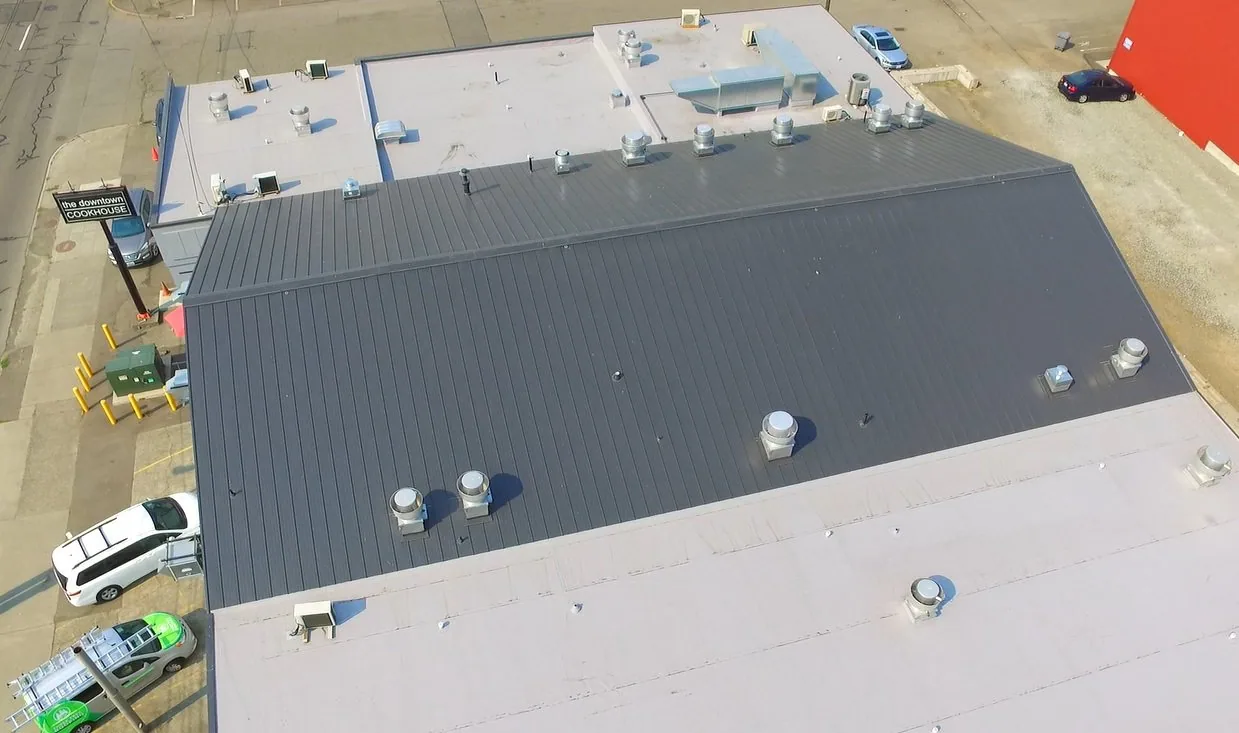
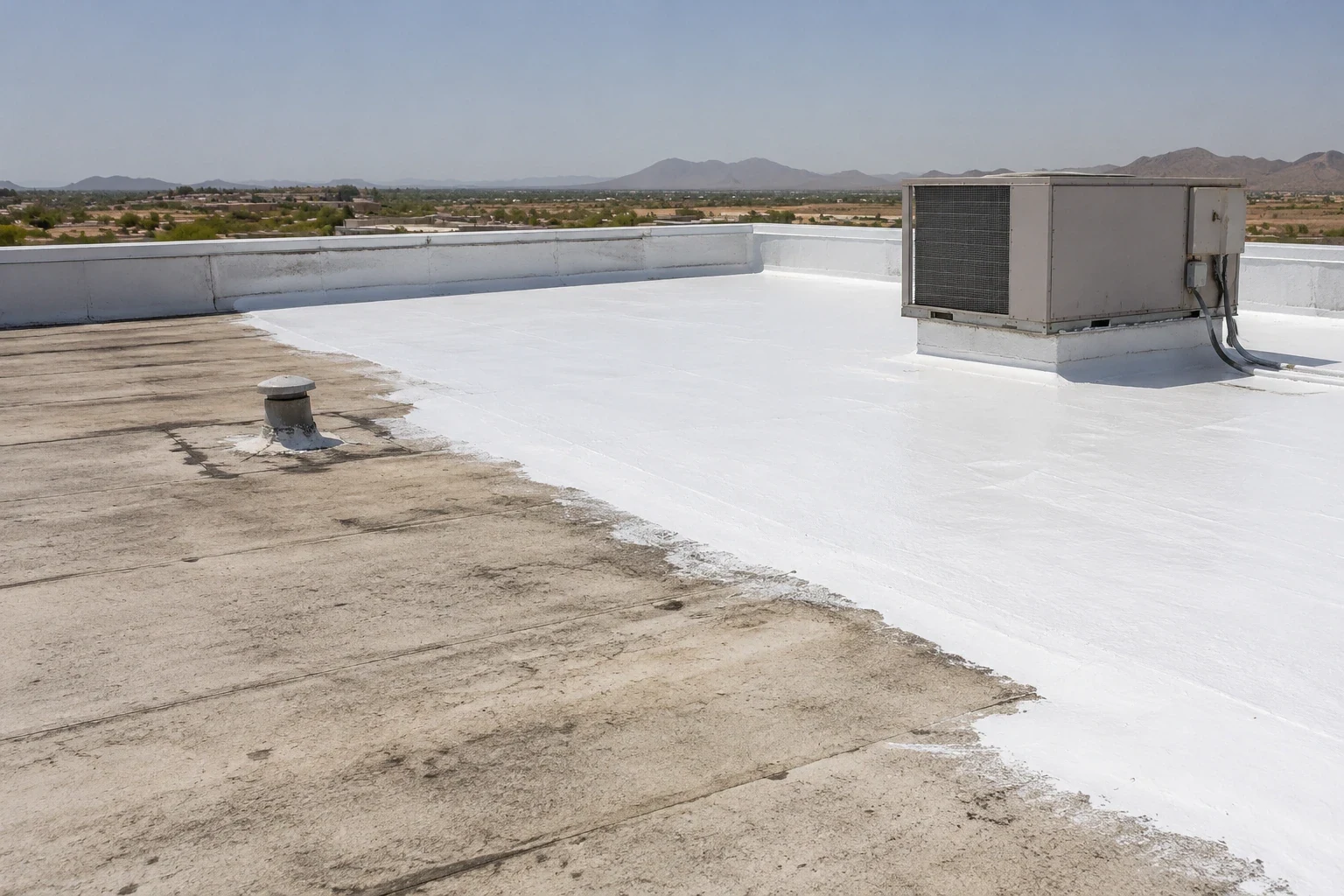
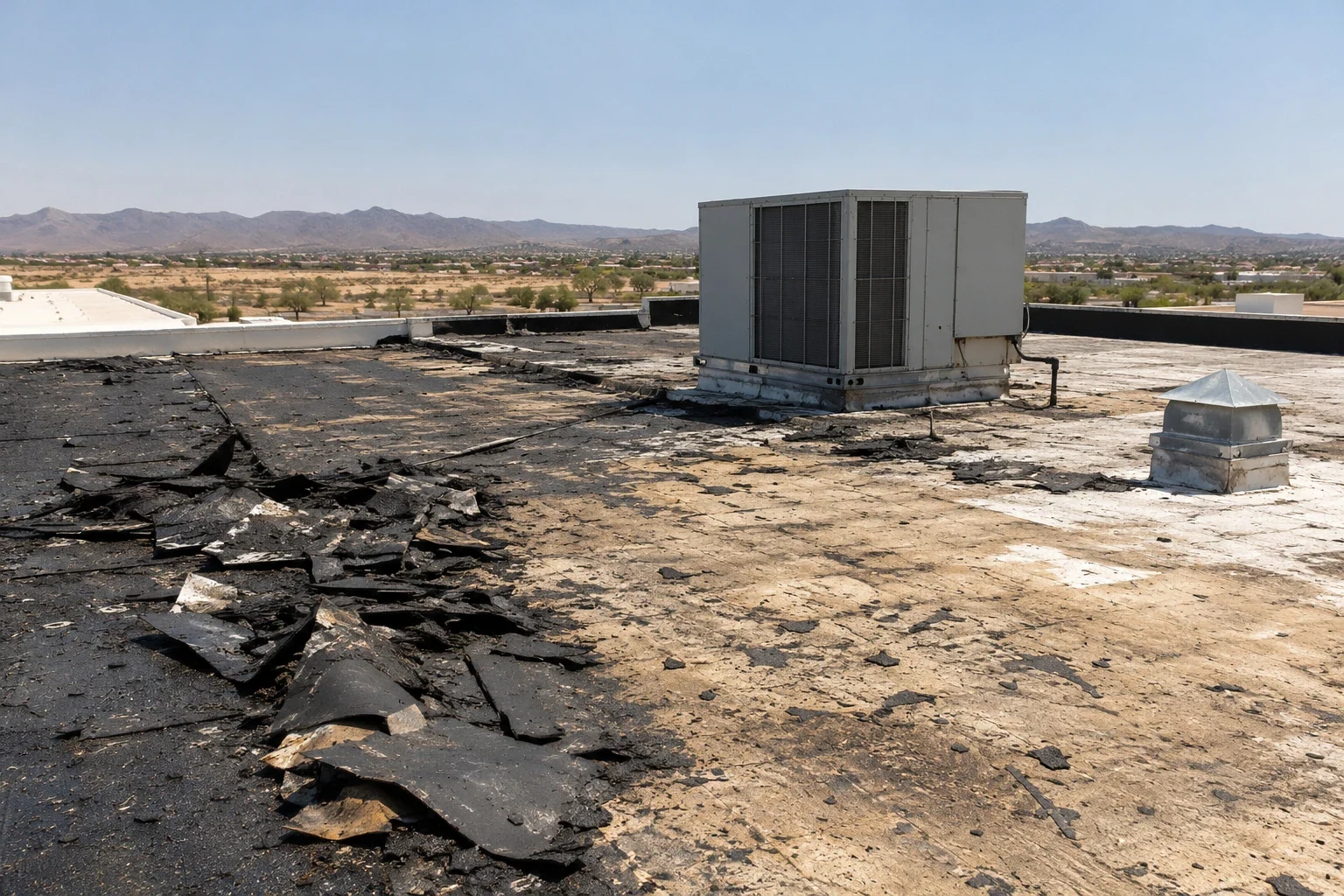
A recover or coating is possible only when the substrate, moisture condition and attachment support it. We check adhesion and detail transitions at walls, drains and curbs before putting that option on paper. If replacement is needed, the scope covers tear-off or overlay eligibility, insulation, edge details, disposal and access. Our coating and restoration service starts with existing-roof suitability; commercial replacement planning weighs the full assembly and phasing.
Budget and timing depend on the failed area, roof access, number of penetrations, edge length, insulation condition and the hours available for disruptive work. We separate emergency stabilization from permanent repair where that distinction helps the owner. A written scope should identify the exact area, material, tie-ins and coordination needed, with exclusions stated plainly. That gives the property manager a decision they can compare with other capital priorities.
Plan around open businesses
Before work, we confirm roof access, tenant contacts, deliveries, customer paths and rooftop service needs. A repair above a restaurant may need a different work window than one above a back-office suite. For replacement, we can divide the roof into zones and secure each temporary opening at the end of the shift. The aim is a sequence the property manager can communicate before crews and material arrive.
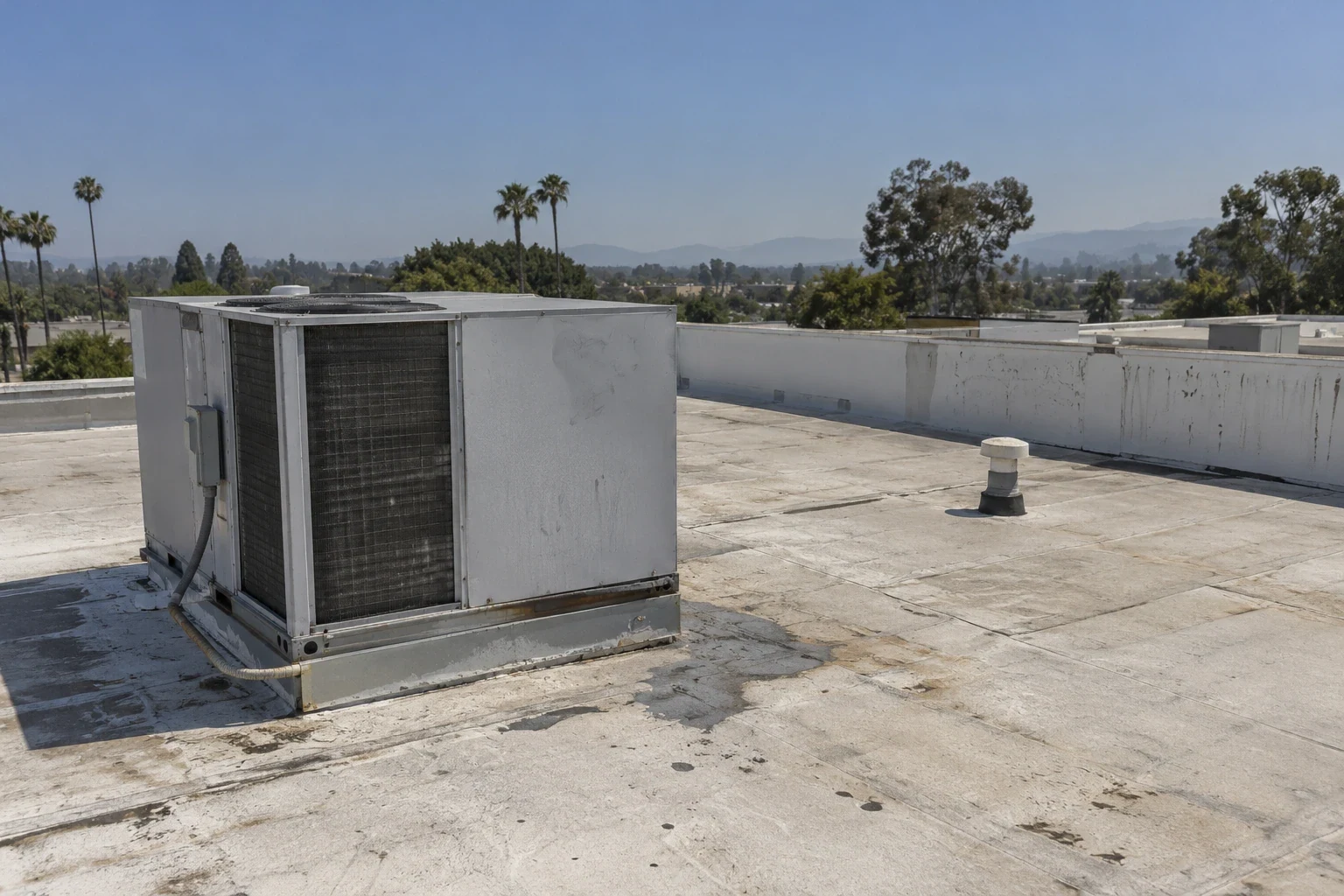
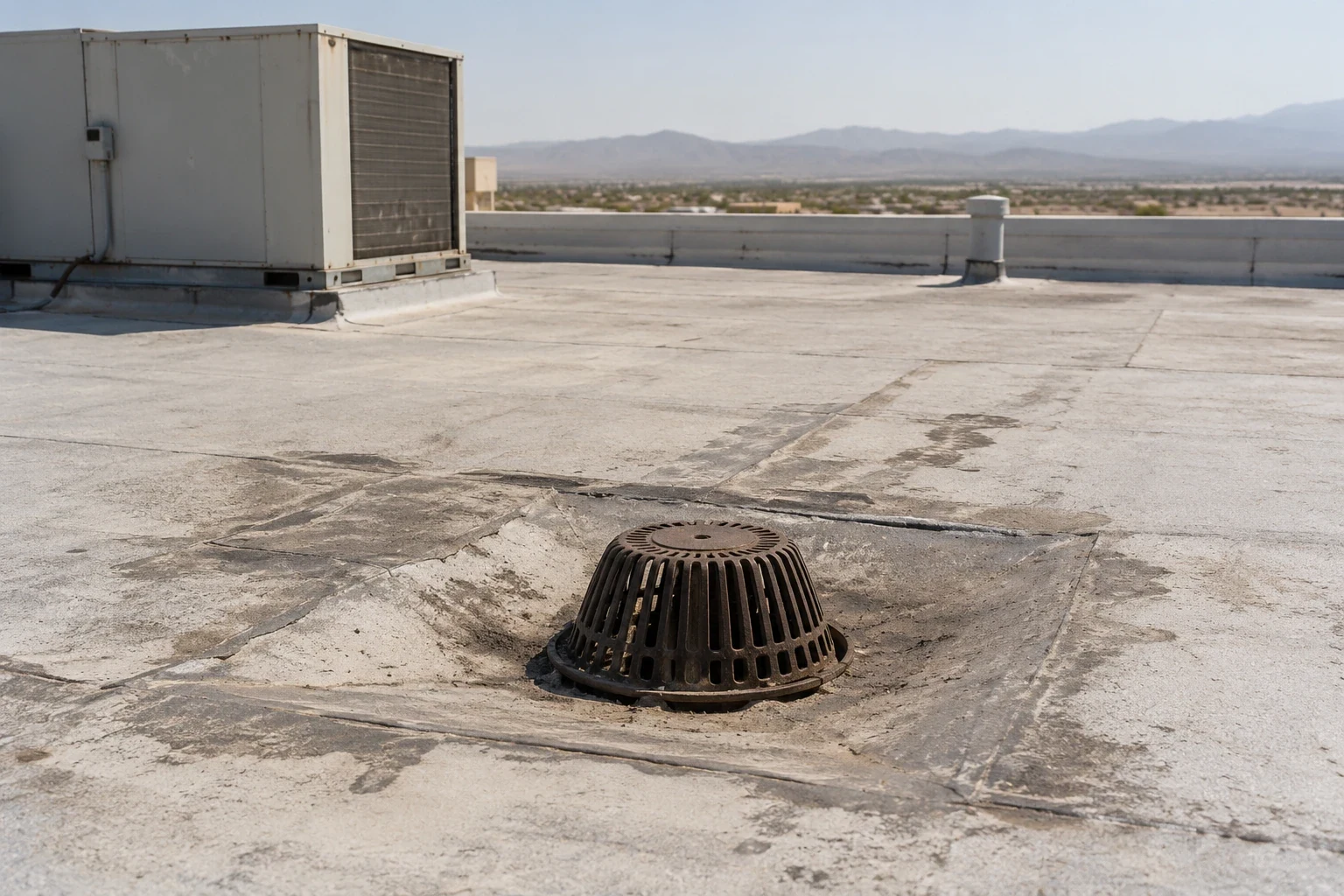
Surprise adopted its 2024 building and existing-building code editions for work beginning January 1, 2026, with local amendments in force. Energy, fire and electrical requirements may also apply where reroofing changes insulation or touches rooftop systems. We check the permit path against the actual scope before specifying an assembly. For buildings that stay occupied, our occupied-building reroofing coordinates access and work phases, while drain and scupper repairs address water flow at roof level.
Village at Prasada is part of a wider Surprise commercial pattern, but each building's roof history is its own. Prior repair records, leak locations and equipment changes can explain why a detail needs attention. We photograph the inspection and keep the scope tied to observed conditions rather than assumptions about neighboring properties. A follow-up visit can then check the repaired area and drainage after the next storm cycle.
Owners near other west-side development, including the broader Prasada North district and planned Prasada East area, can request an assessment for their own buildings. The first visit identifies roof type, active leaks, access constraints and the repair boundary. If water is entering now, emergency response is available at any hour. For planned work, we return a documented set of options with timing and cost drivers explained.
Commercial Roofing Questions
How do you keep roof repairs from blocking a restaurant entrance?
We set the staging and work zone with the property contact before arrival. Customer doors, deliveries and any outdoor service area stay in the access plan, and material can be brought to the roof by a route that avoids active pedestrian paths where the property allows it.
Does a leak over a health-service tenant need a full roof replacement?
A leak alone does not establish that. We trace the entry point and check nearby seams, penetrations, insulation and drainage. If the defect is bounded, a repair may work; if moisture or membrane failure extends across several areas, we compare a larger restoration or replacement scope.
Can a coating be installed over an existing retail roof?
Only after we confirm the roof is dry enough, stable and compatible with the coating system. We inspect adhesion, seams, repairs and transitions first. If the assembly holds trapped moisture or has unstable details, a coating would hide the issue rather than resolve it.
What information helps you price phased work?
Roof drawings, prior repair records, tenant hours, equipment shutdown needs and access restrictions help define the sequence. We still verify conditions on site. The written scope then separates zones, temporary protection, permanent tie-ins and work that can proceed while other tenants remain open.
Ready to review the roof scope?
Request a Roof Assessment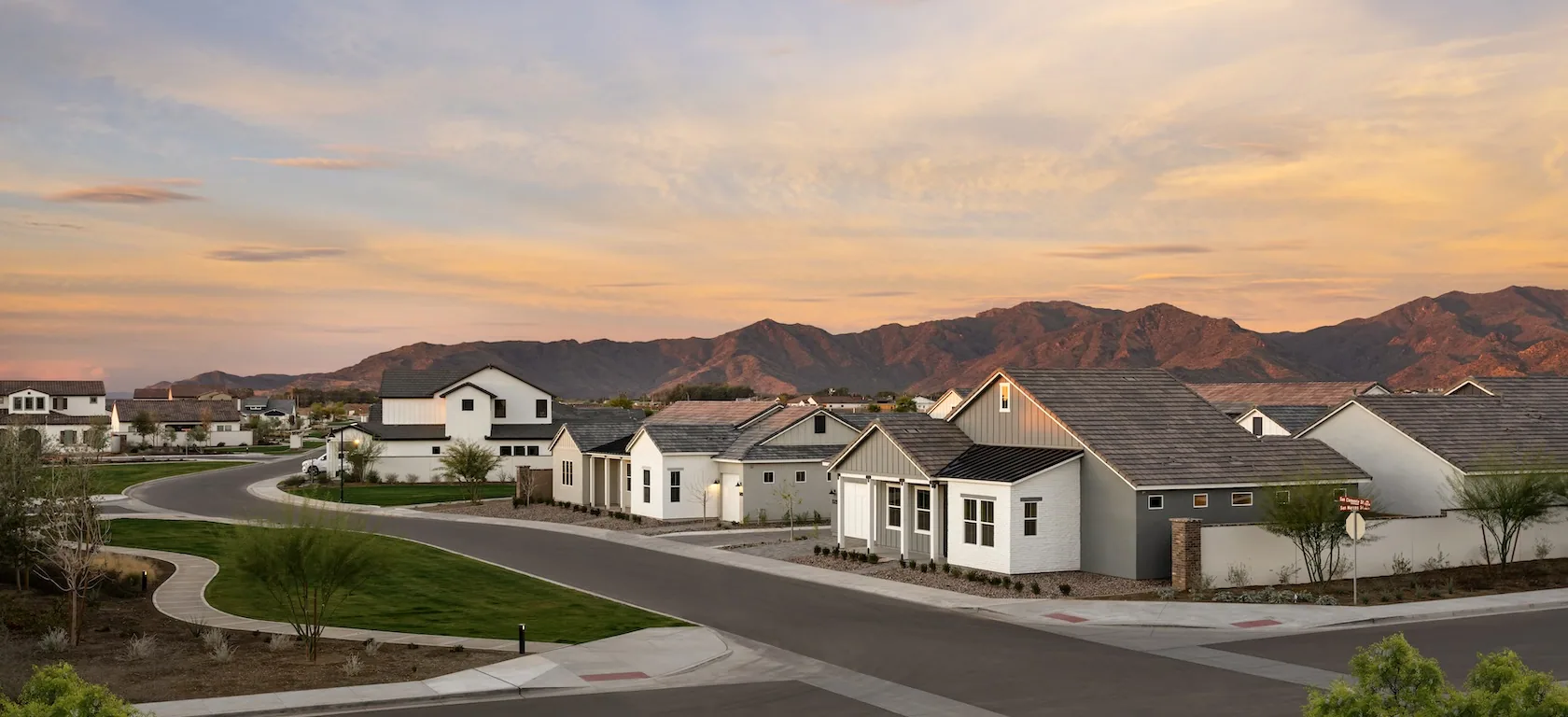
Related Roofing Work
Get a roof scope that fits the property
Share the leak locations, tenant schedule and any prior repair records. We will inspect the roof serving your Village at Prasada building and document the next practical step.