
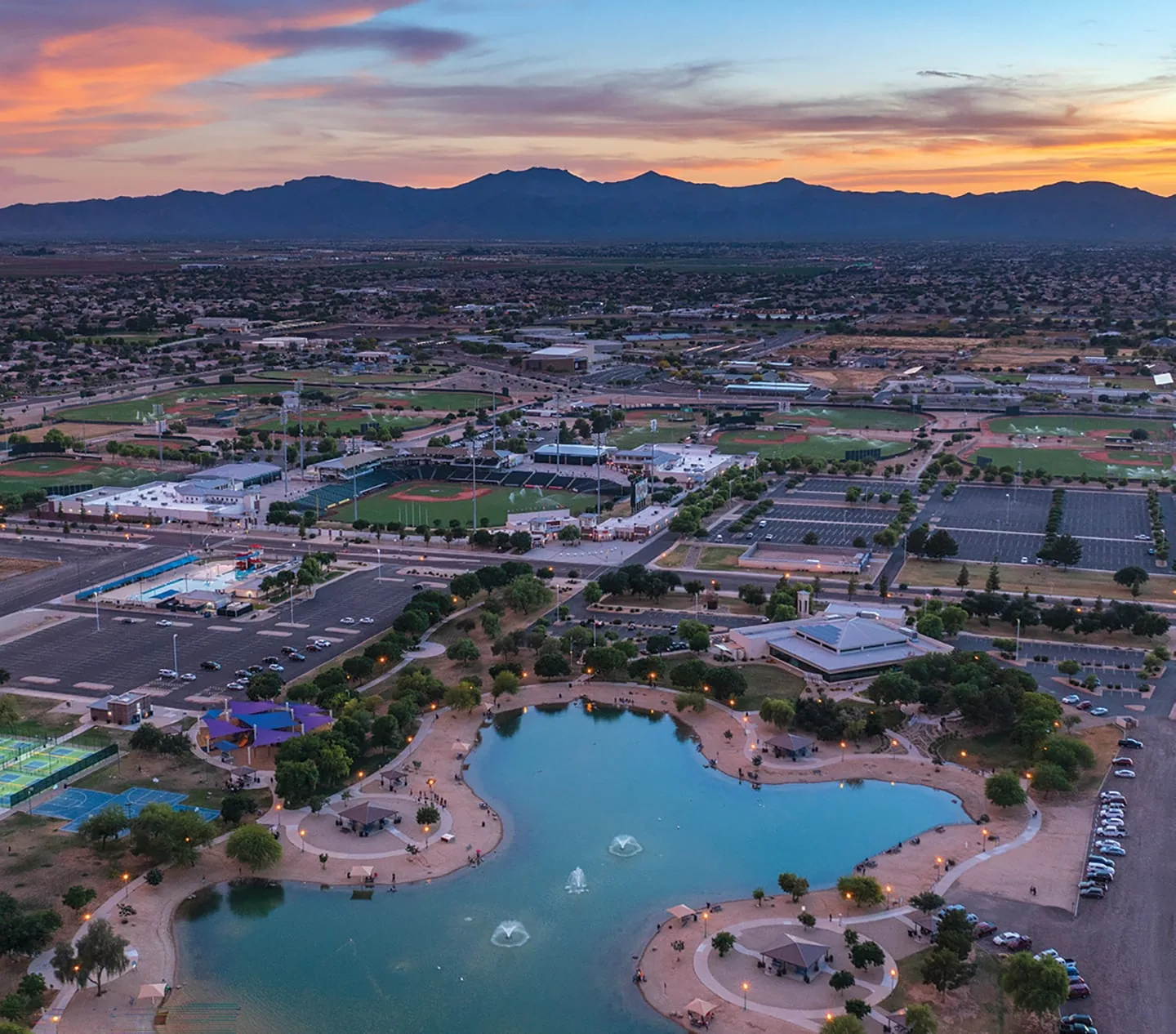
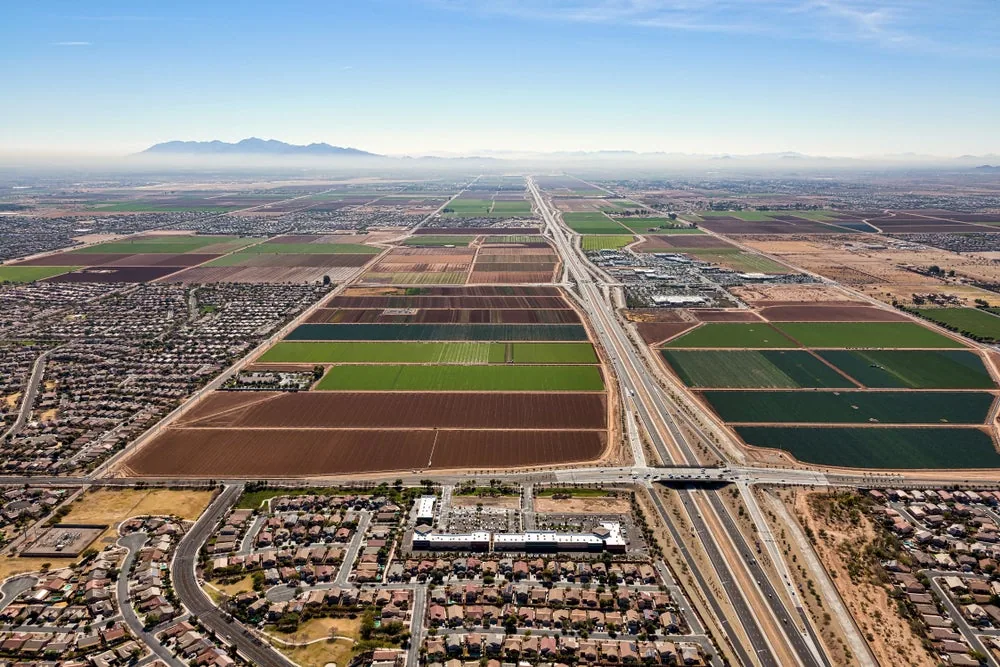
A roof over a City Center retail, civic or health-care property in Surprise, AZ has to be assessed with the people using the building in mind. The district spans a square mile and includes civic, retail, restaurant, health-care, hotel and commercial-service uses across multiple blocks. We inspect the actual roof assembly, locate active water paths and set a repair boundary that respects tenant hours and public access. A district-level description does not tell us a particular building's roof type or condition; the first walk establishes those details before we recommend a repair, restoration or replacement.
Plan a roof walk around the property
Start with the building contact, roof plan and the access route from the service entrance. In a mixed-use district, the roof may sit above a public lobby, dining space, clinical operation or back-of-house area, so we confirm when lifts, noise and equipment shutdowns are workable. We check parapets, drains, scuppers, edge metal, rooftop equipment curbs, penetrations and any earlier patch. The Diligence Notes identify what is visible and what needs a test rather than applying one conclusion to every property in the district.
City Center's multi-block mix gives the project team a reason to coordinate by property, not to assume every roof has the same assembly. If a leak appears above a tenant, we compare its interior location with the roof slope and likely water route. Water can travel before reaching a ceiling. A commercial roof inspection records the roof section and detail, while a leak repair visit can address a confirmed opening. We keep temporary protection separate from permanent work when the leak cannot wait.
Surprise's west-valley summer heat and monsoon storms make exposed seams, equipment transitions, edge metal and drainage worth examining. A regional weather pattern is not evidence that a City Center property has failed. We look for a split lap, open flashing, displaced coping, blocked outlet or wet insulation and record the actual finding. The nearby Bell Road corridor has its own commercial and transportation context, but the roof assessment still follows the subject building's roof plan, use and observed condition.
Follow the membrane and its transitions
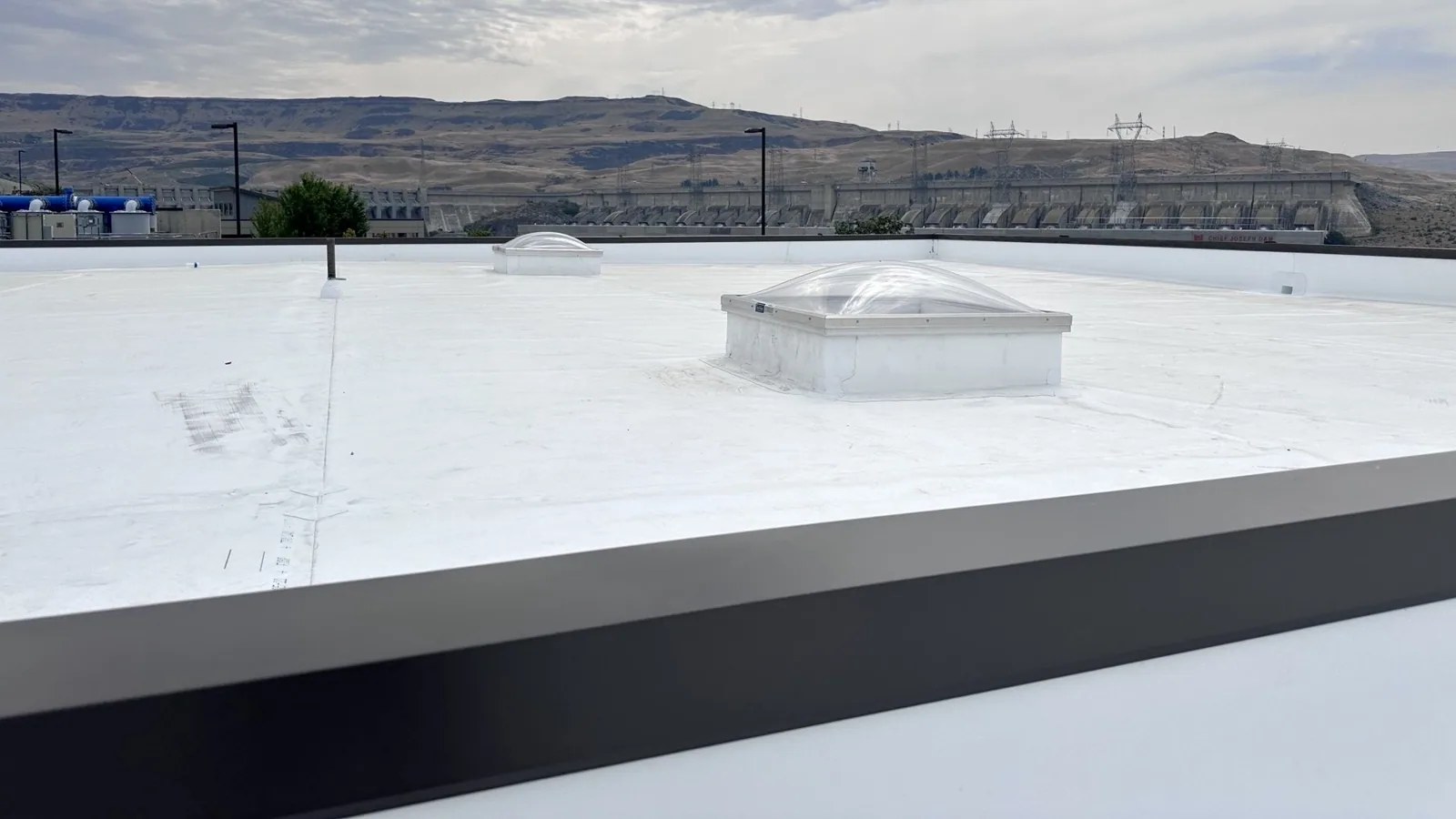
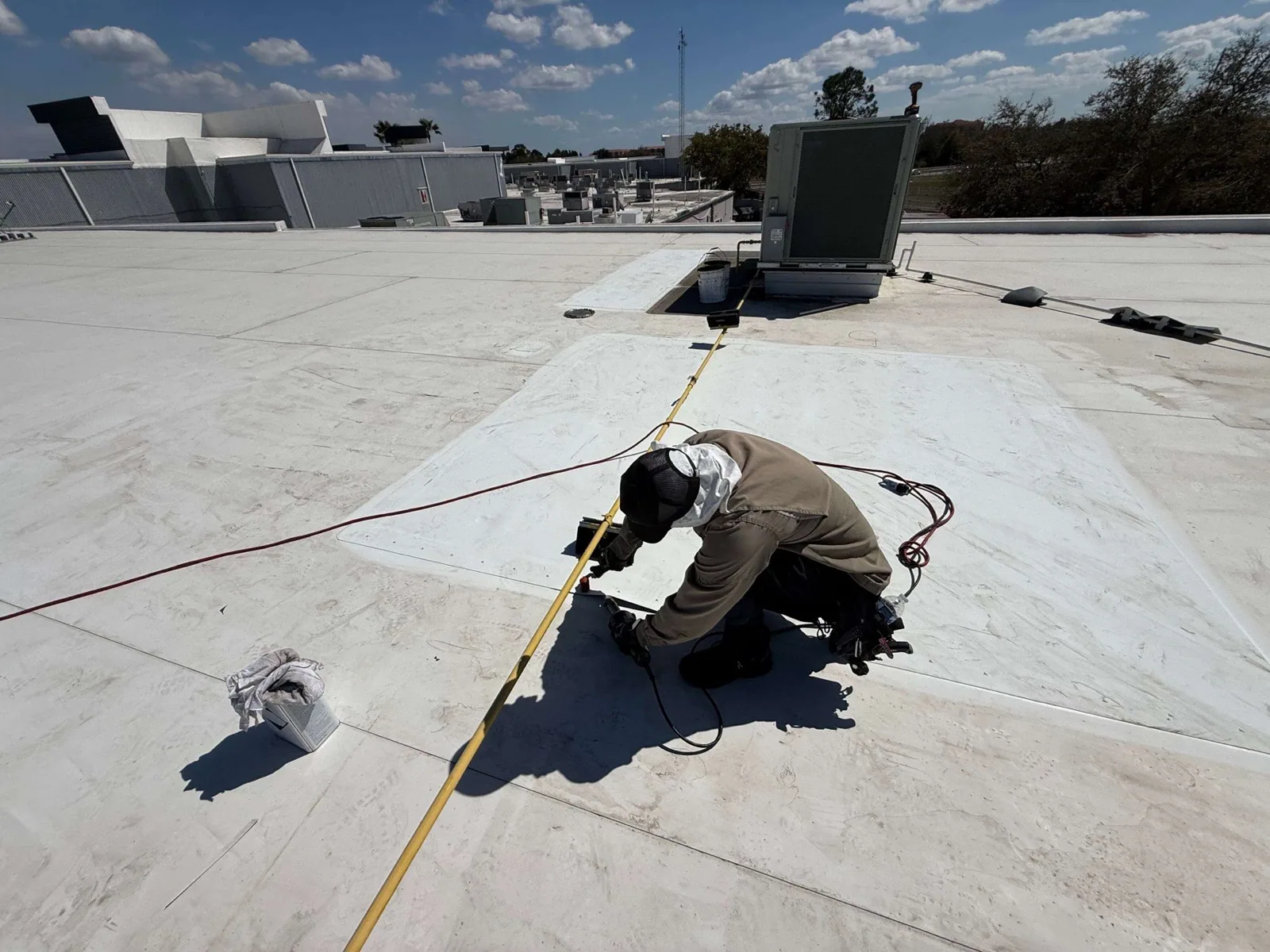
On a low-slope roof, the field membrane is only one part of the weather plane. Seams, wall transitions, penetrations, drains and curbs have to work together. We identify the system where it can be confirmed, then check laps for opening, wrinkles, poor adhesion or incompatible repairs. Around rooftop equipment, we look at the curb height, flashing termination, service clearance and any conduit or line that crosses the roof. If mechanical work has altered a detail, clarify which trade will restore the flashing before scheduling roof work.
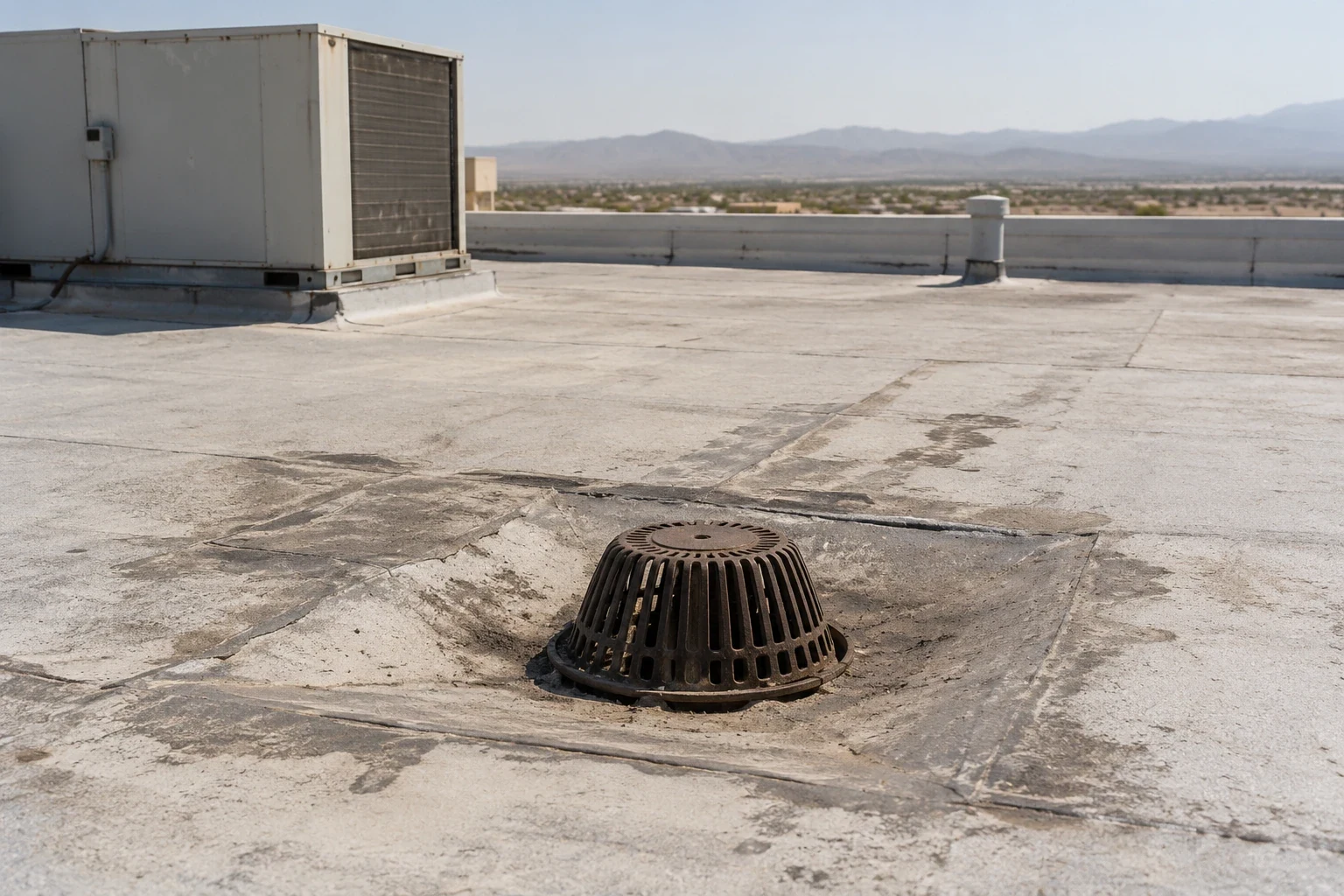
Drainage deserves a clear note because water that remains after rain can load a weak area, expose a seam or reveal an outlet problem. We check the drain bowl, strainer, nearby membrane and overflow path. If the roof has ponding, map the area and observe whether insulation or deck movement may contribute. A drain and scupper repair should correct the observed detail without blocking an overflow route. We do not call a roof failed because water is present at one moment; we connect the observation with slope, outlet function and the assembly beneath.
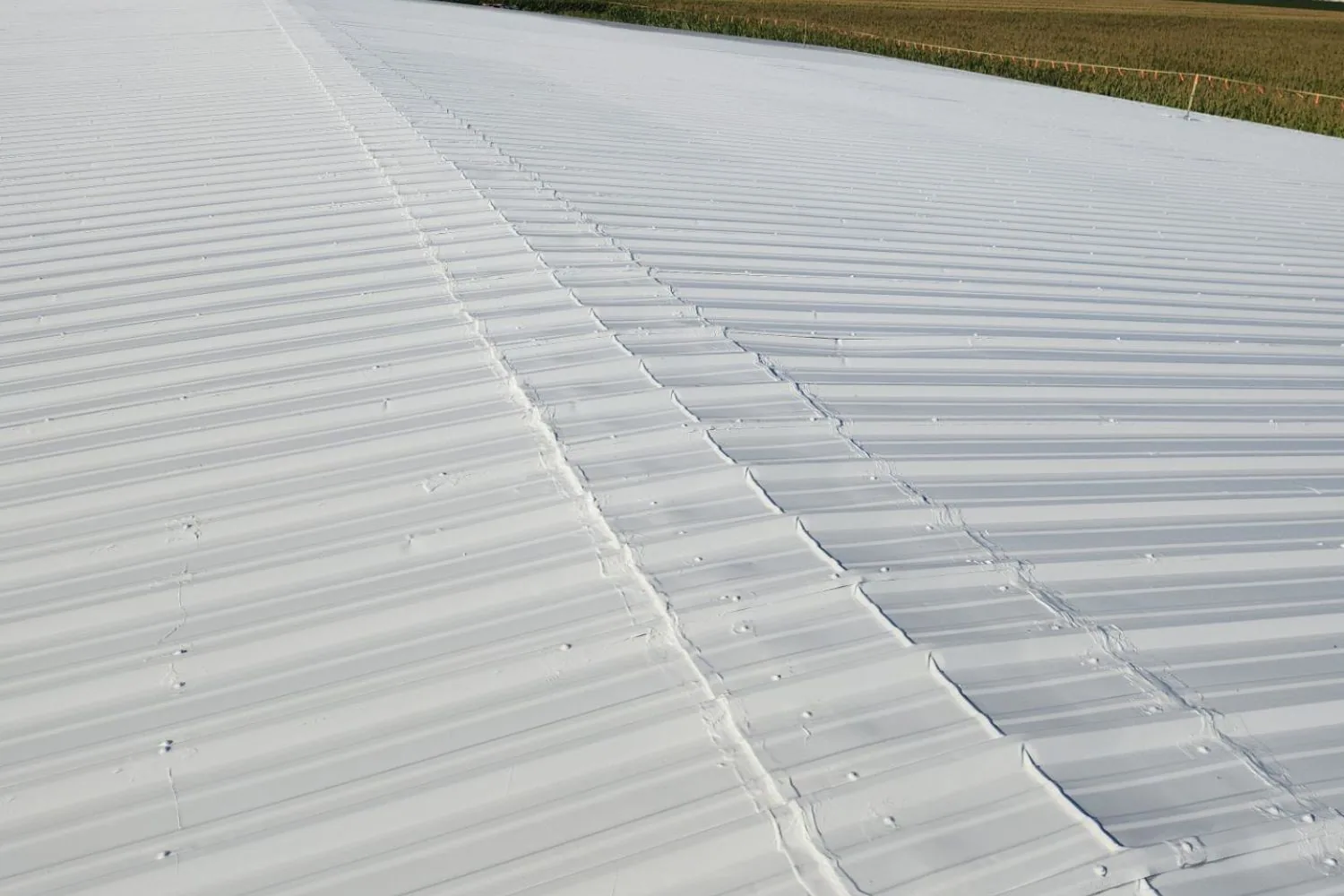
For a property with a membrane that is sound but weathered, restoration may be worth comparing with localized repair or replacement. We check surface condition, moisture, adhesion, preparation and terminations before recommending coating. A silicone coating system cannot correct a wet assembly or a loose flashing by itself. If failures extend across roof sections or concealed layers are damaged, replacement may provide a clearer repair path. We describe the evidence behind each option and the area each scope includes.
Keep occupants and roof access in view
Occupied work needs a sequence that protects the interior and keeps the building usable. We agree on where materials can be staged, which roof area can be isolated, how service routes remain open and who controls rooftop equipment. For retail or restaurant spaces, a lift or noisy task may need a different window from a medical or civic use. Before opening the roof, confirm daily dry-in, interior protection, fire safety requirements and who will notify the affected occupants.
In the wider Surprise network, Loop 303 connects several development areas, including the Railplex and North Surprise. That is useful context for coordinating a broader project, but City Center site logistics must be confirmed with its own building lead. A Loop 303 corridor project or Railplex roof program may involve different loading and staging questions. Keep each site's access limits, repair history and schedule attached to its roof record.
Before changing a roof assembly, confirm the permit path for that project. Surprise's local provisions pair amendments with the 2024 International Building Code and Existing Building Code, in use since January 1, 2026. We record the layers, insulation and proposed tie-ins so the reviewer can consider the actual work rather than a generic reroof description. That check is easier when the report states existing layers, intended tie-ins, equipment interfaces and any test cut findings instead of leaving a vague note about replacing the roof.
Leave a clear repair boundary
A useful scope names the material, preparation, detail, limits and follow-up. For a small opening, identify the patch or flashing repair and the surrounding material checked. For a larger wet or deteriorated area, include the test or removal needed to define what is concealed. A condition report with marked photos lets a property manager compare the repair proposal with what the crew found. If the building belongs to a wider portfolio, a roof register can preserve the same labels for future maintenance.
Costs and timing depend on roof height, access, occupied hours, material availability, moisture, tear-off depth, deck repairs, insulation, equipment relocation and edge details. We separate confirmed quantities from conditions that could expand the work. A repair may be scheduled quickly when the opening is defined and safe access is available; a larger project may require testing, permit review and tenant coordination. If water is entering now, our emergency response runs around the clock. Temporary dry-in can protect the building while the permanent scope is prepared.
We can walk a City Center property with the general contractor, owner or facilities lead, review the roof plan and return a written scope. Bring recent leak locations, prior repair records, access requirements and any equipment work scheduled nearby. The next decision should be visible: repair now, test a suspected area, plan restoration, or carry a supported replacement into the budget. It should not rest on the district's reputation or the age of a neighboring building, but on the roof and building in front of us.
Commercial Roofing Questions
Can work be scheduled around City Center tenants?
Yes, we can plan access, lifts and noisy work with the building lead, then protect the interior and define each roof phase. The available window depends on the operation and the repair boundary.
Does the district's commercial mix tell you what roof is installed?
No. We identify the assembly from records and field details where possible. The report keeps an uncertain system type open until it can be confirmed.
What do you check when a tenant reports a ceiling leak?
We compare the interior mark with roof slope, drains, penetrations, seams and equipment transitions. Water can travel, so we trace a likely path and distinguish confirmed entry from areas needing more testing.
Could coating be used instead of replacement?
Only if the existing assembly is suitable, dry, stable and compatible with preparation and coating. We check moisture, adhesion, seams and terminations first, then compare restoration with repair and replacement.
What information helps price a repair?
A roof plan, access limits, leak history and any available system records help us define the work. We mark confirmed quantities and state which concealed conditions could change the scope.
Ready to review the roof scope?
Request a Roof Assessment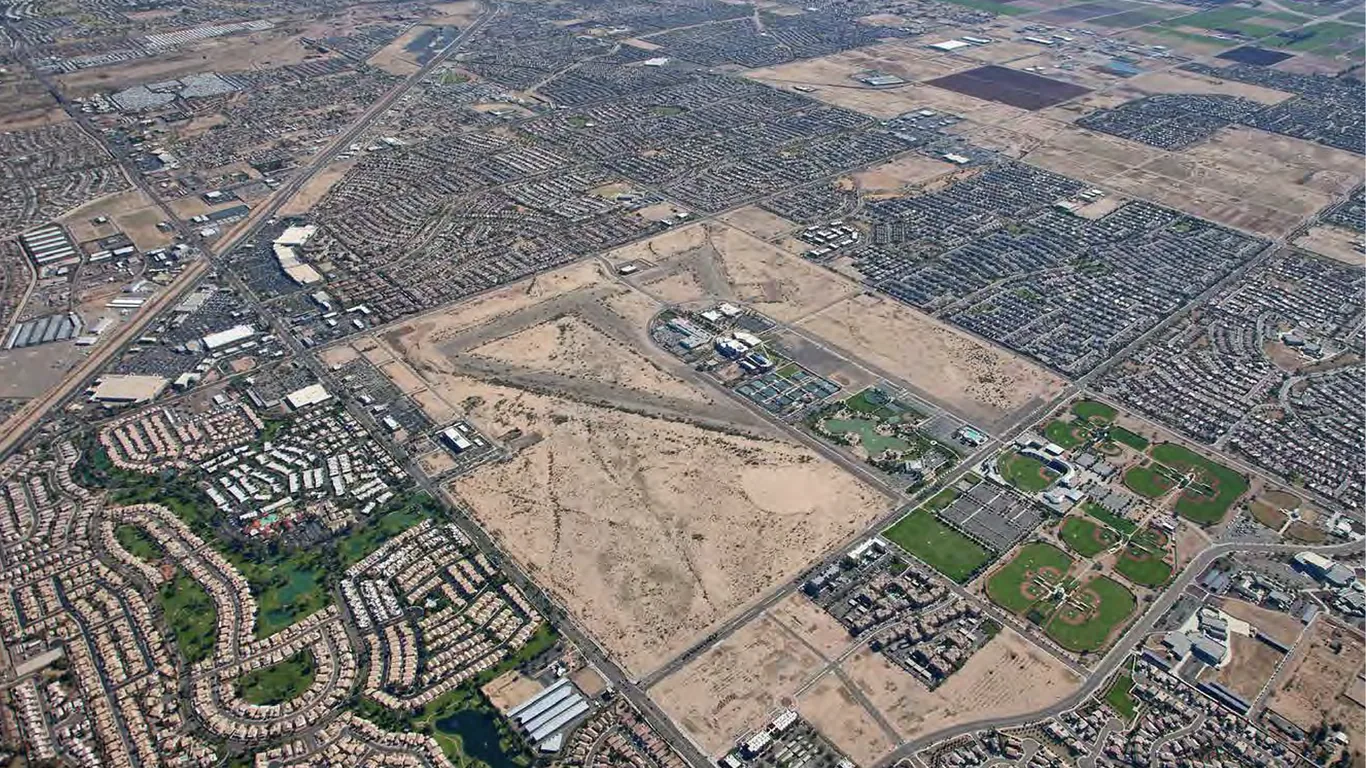
Related Roofing Work
Set a roof walk for the building's operating window
Share the roof plan, tenant hours, access route, recent leak notes and any planned equipment work. We can inspect the affected areas, map the repair boundary and identify what needs testing.