
A general contractor overseeing buildings in Surprise, AZ needs more than a folder of old leak calls. One roof may have a recent patch, another may approach replacement, and a third may have equipment work that changed its flashing. We build a roof record that ties each observation to a building, roof section, photo and next decision. The mix of industrial, office, retail, medical and service properties identified across the city's development areas makes that separation useful. A portfolio review should show what needs attention, what needs testing and what can stay on a maintenance path.
Start with a roof register
A useful register begins with the information a project team can verify: building name, roof section, approximate system type, known repair dates, visible equipment, access limits and available warranty records. We do not turn an old invoice into a condition rating. An invoice records work that was billed; a current walk shows whether the detail remains sound. Each entry should identify the source of the information and leave unknown items open instead of filling them with an assumption.
We can assign a stable section label to each roof and use it on the plan, inspection photos and repair list. That makes it easier to compare the same area on later visits, even if the property manager or contractor changes. A written roof condition report can hold the field observations while the register provides the portfolio view. If the roof includes a known TPO assembly, note that only after identification; color or a prior vendor note alone may not establish the membrane type.
Location can affect the way work is organized without proving a roof condition. Surprise's City Center includes civic, retail, restaurant, health-care and hotel uses across a square-mile district. At a mixed-use property, a roof record can note tenant access windows and service paths alongside the roof section, not as substitutes for inspection. At the Surprise Railplex, freight-oriented industrial and distribution uses make loading routes and material staging relevant portfolio fields. The register helps a team compare dissimilar buildings without pretending their roofs are alike.
Separate condition from priority
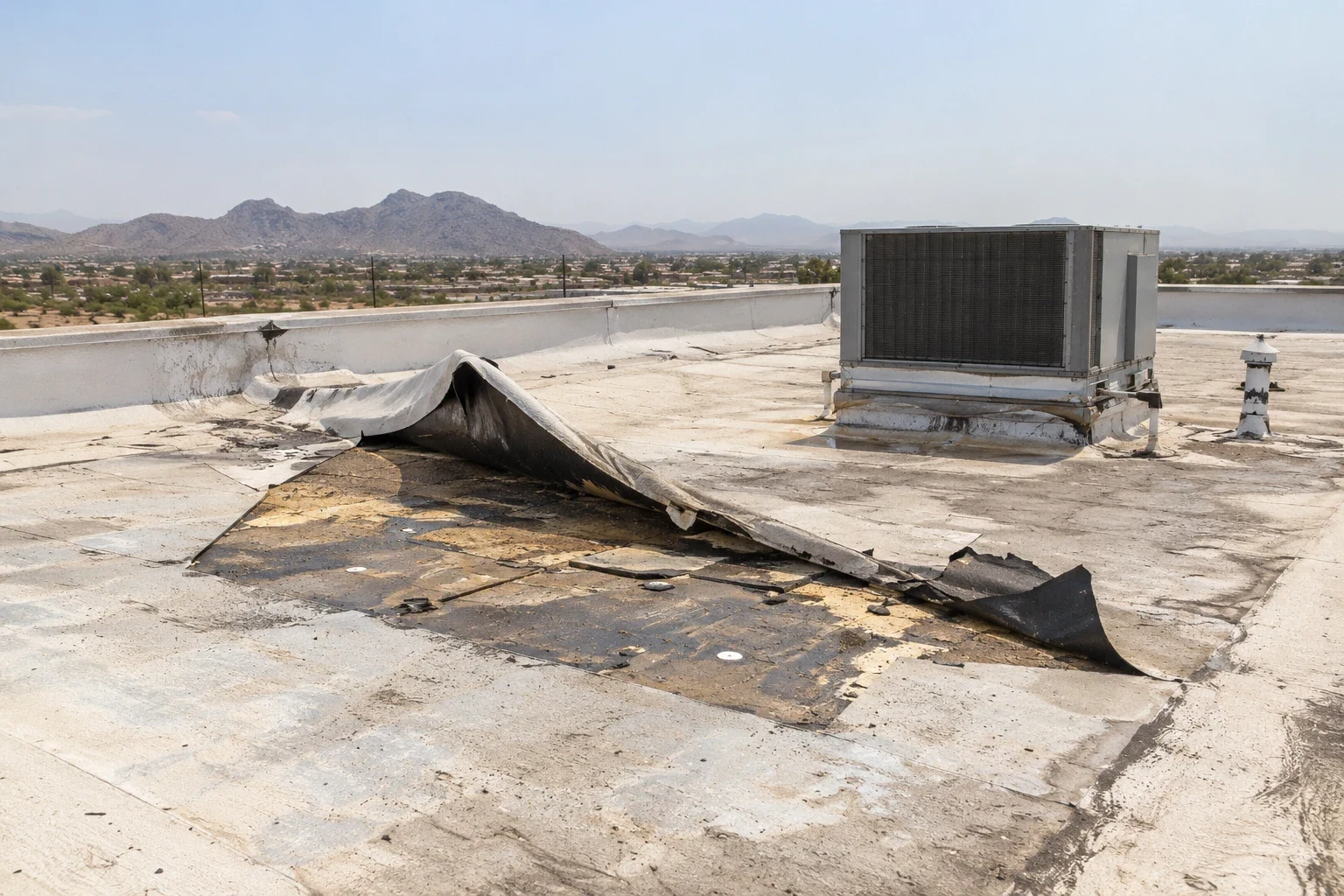
A condition label should answer what was observed, not make the capital decision by itself. Open seam, loose edge metal, soft insulation, blocked drain and weathered coating are different findings with different next steps. We record location, extent, photographs and whether the condition was confirmed or still needs a test opening. A roof with a small active leak may need immediate protection even when most of the membrane remains serviceable. Another roof may be dry today but have broad deterioration that belongs in capital planning.
Surprise shares the Phoenix region's prolonged summer heat, and local planning recognizes freight, retail, civic and service building types in several growth areas. These facts help us ask the right field questions, but they do not tell us how any one roof has aged. We inspect exposed membrane, seams, penetrations, edges and drainage. Monsoon storms can bring damaging wind and heavy rain in the metro area, so after-weather findings should be photographed and dated rather than assigned to a roof without evidence. The wind-damage assessment can stay separate from routine wear in the asset record.
Priority then follows the owner's operating risk and the roof's condition. A leak over an occupied clinical room may need a faster response than a dry maintenance item, while a weak edge near regular rooftop access may deserve planned correction before the next storm season. We can group work by urgency, access setup and material compatibility. Each group should say what happens if it waits, what evidence would change the decision and what interim protection is appropriate. That gives the project lead a defensible sequence instead of a single score with no explanation.
Keep each visit comparable
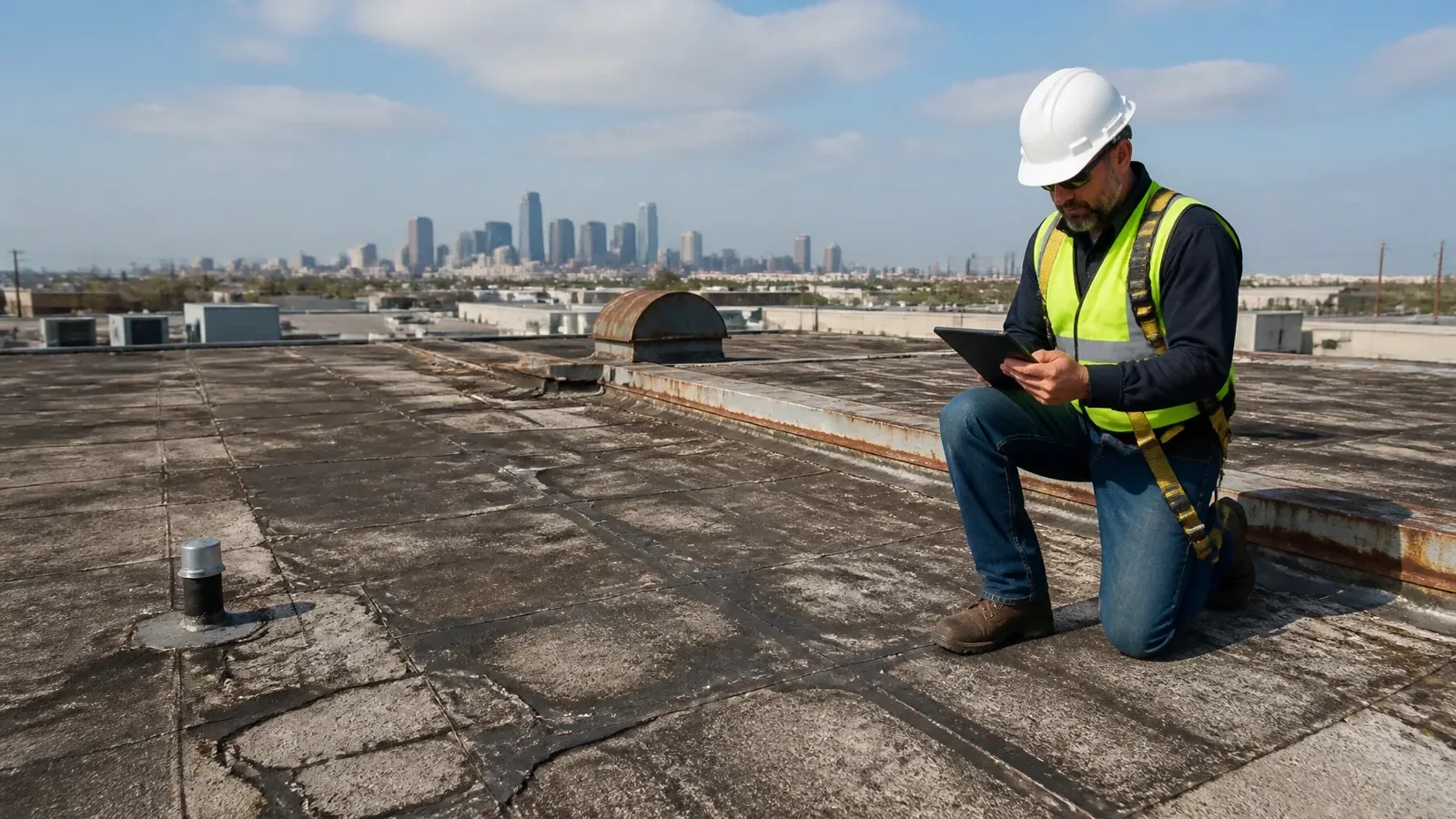
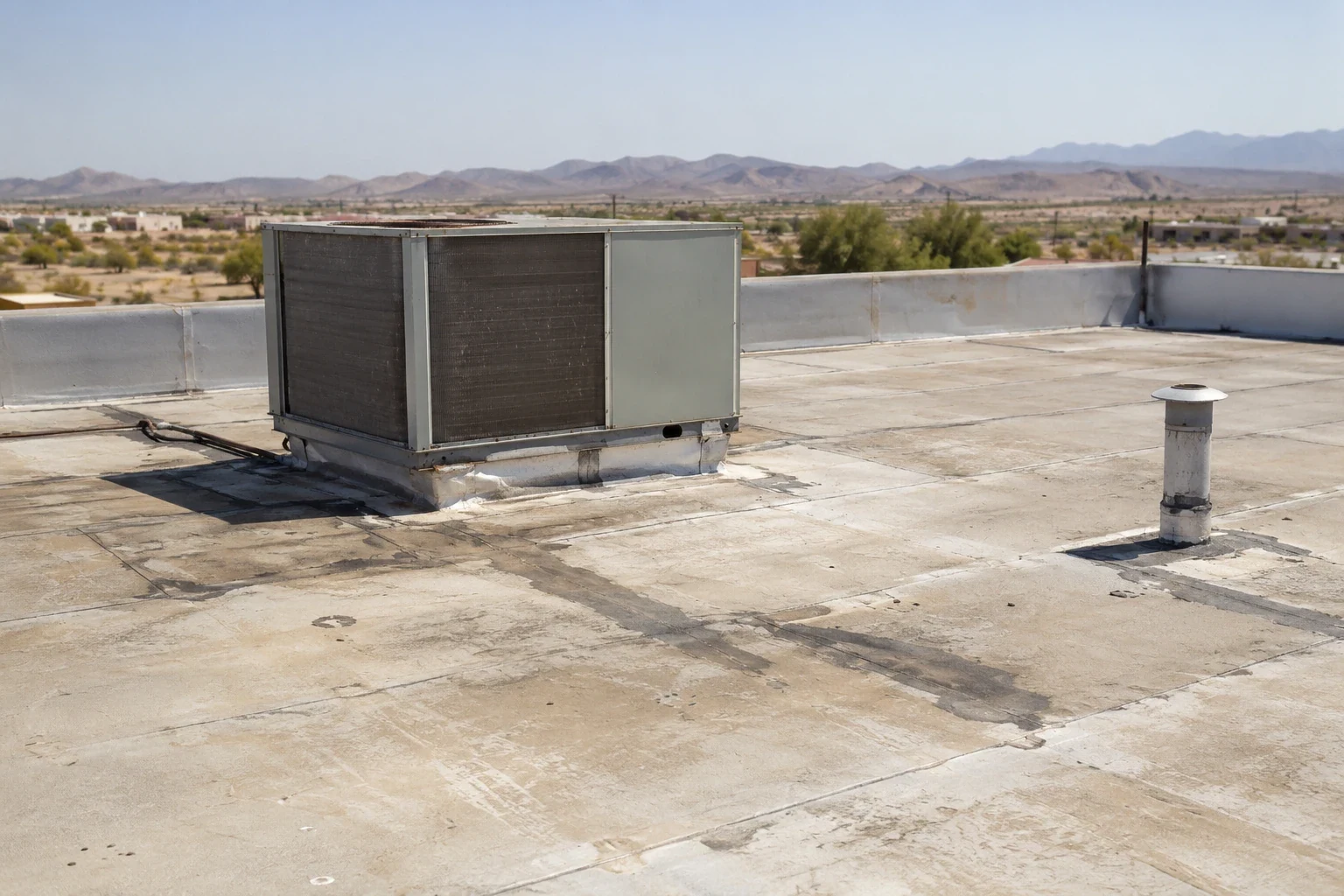
Repeat visits are most useful when the inspector returns to the same marked locations and records what changed. We compare seam movement, patch edges, sealant condition, ponding, drain function, equipment openings and prior repair boundaries. If a measurement or moisture test is used, record the method and the area tested. A photo should show the detail and enough of the roof plan to find it again. That is more useful than a collection of close-ups without location or date.
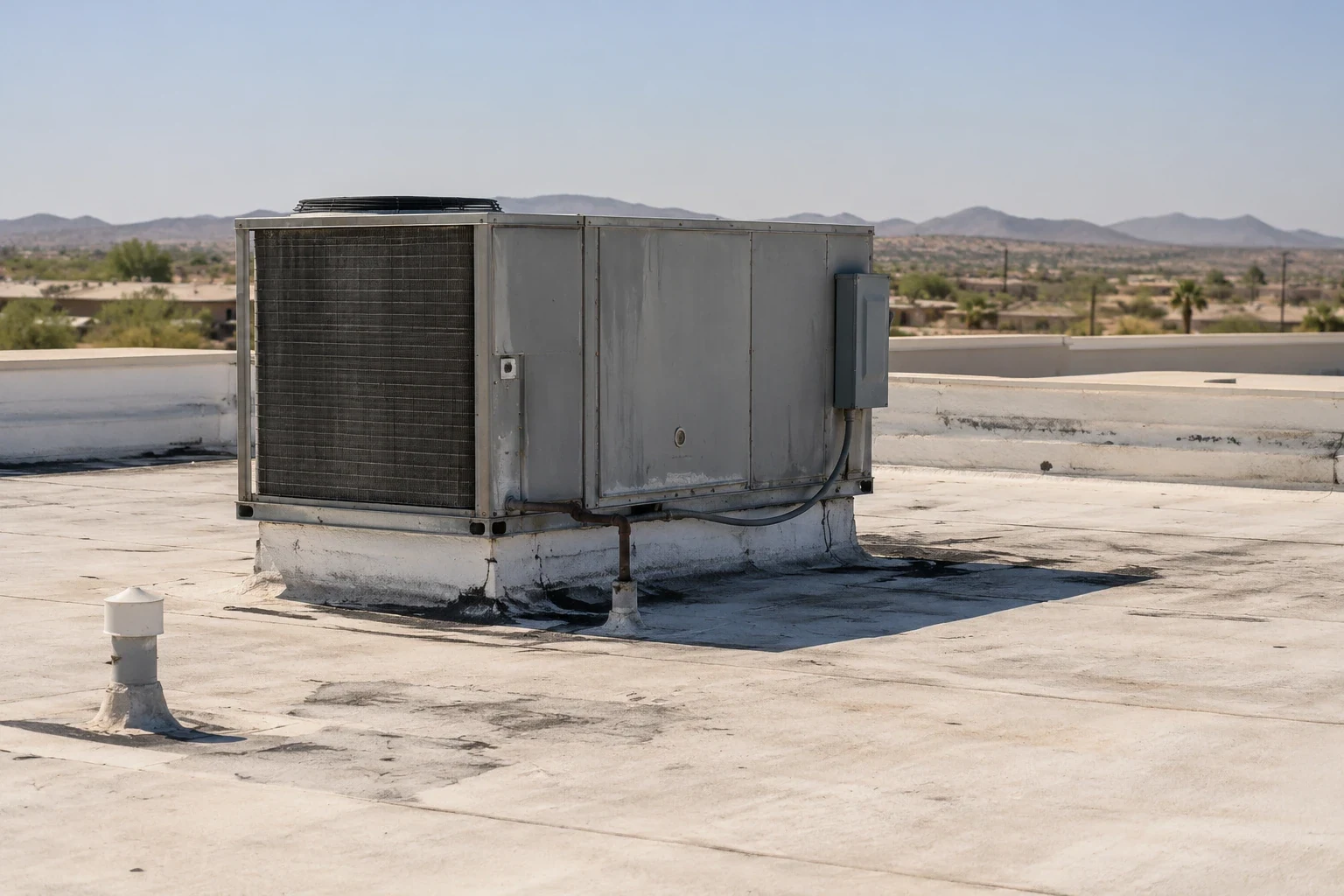
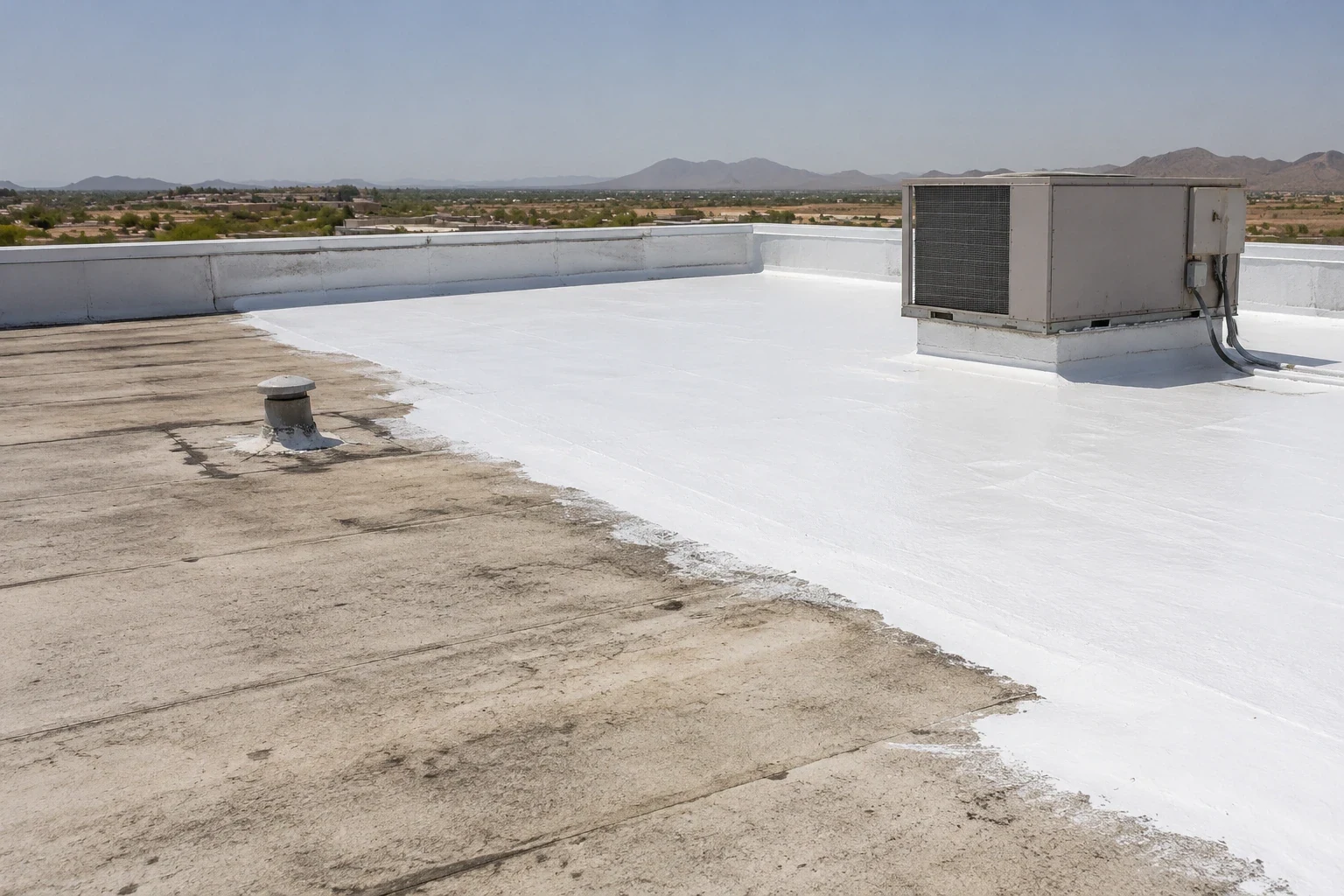
The west-valley heat benchmark and summer storm pattern support regular attention to exposed details, but a schedule should still reflect the assembly, drainage, access and observed condition. We can inspect after significant weather, after rooftop work, and at planned maintenance intervals. Where a crew has crossed the roof to service HVAC equipment, note the route and any protection that was moved. If a roof coating is part of the assembly, compare the treated surface and terminations without treating appearance as proof of adhesion or moisture condition.
Work orders should connect to the same section labels used in the register. Record the repair completed, material used, areas excluded, photographs and any follow-up test. This is important when a leak returns near an earlier patch: the next inspection can see whether the same detail opened, a new path formed or water traveled from elsewhere. A preventive maintenance visit can inspect drains and details before they become emergency calls, while localized repair can address a confirmed defect. Keep the repair history specific enough for another project lead to act on it.
Connect field records to capital work
A portfolio register becomes useful when an owner can trace an inspection finding into a scope, budget request and completed job. We can group roofs by immediate repair, additional testing, restoration review or replacement evaluation, then show the reason for each path. A broad area of wet insulation, repeated seam failure or a deteriorated deck can change the decision; a dry, stable assembly with isolated defects may support a smaller scope. The difference should be visible in the record, not hidden in a summary label.
When work changes a roof assembly, assign permit review in the project record; Surprise now applies locally amended 2024 construction codes to that scope. Energy requirements may also matter when insulation or roof layers change. We provide the roof information and scope assumptions for the design and permit review; the applicable requirements should be confirmed for the specific work. Where a building has several occupants, the schedule should identify shutdowns, noise windows, material lifts and temporary protection.
We can review the register with the general contractor, owner or facilities lead and walk roofs where records are unclear. A practical review ends with assigned next steps: protect an active leak, test a suspected wet area, price a defined repair, or carry a supported replacement option into the capital plan. If you have a portfolio plan, roof maps and prior work orders, we can compare them against field conditions and prepare an inspection sequence. We respond to roof emergencies around the clock when an opening cannot wait. For a roof walk in the Railplex or a property near City Center, coordinate access and building operations before setting the route.
Commercial Roofing Questions
What information belongs in a portfolio roof register?
Use building and roof-section identifiers, known assembly details, repair records, access restrictions, photos, observed condition and open tests. We mark unknown system or warranty information as unconfirmed until the field records support it.
How do you compare roofs with different systems?
Compare condition and next action, not material names alone. We identify the assembly where possible, record each roof's defects and maintenance history, then show which items need repair, testing or capital review.
Can the register set a replacement year?
A date should follow condition evidence, repair trend, moisture findings and project constraints. We can outline a planning window with assumptions, but a new field finding can change that sequence.
What should change after a leak repair?
Add the repair location, materials, limits, photos and follow-up check to the same roof section record. If the leak returns, that history helps us determine whether the repair reopened or water is entering elsewhere.
How does Surprise weather affect the review?
Summer heat and metro monsoon storms make exposed seams, edges, drains and equipment transitions worth tracking. We still base priority on the roof's own observed condition, not a regional weather pattern by itself.
Ready to review the roof scope?
Request a Roof Assessment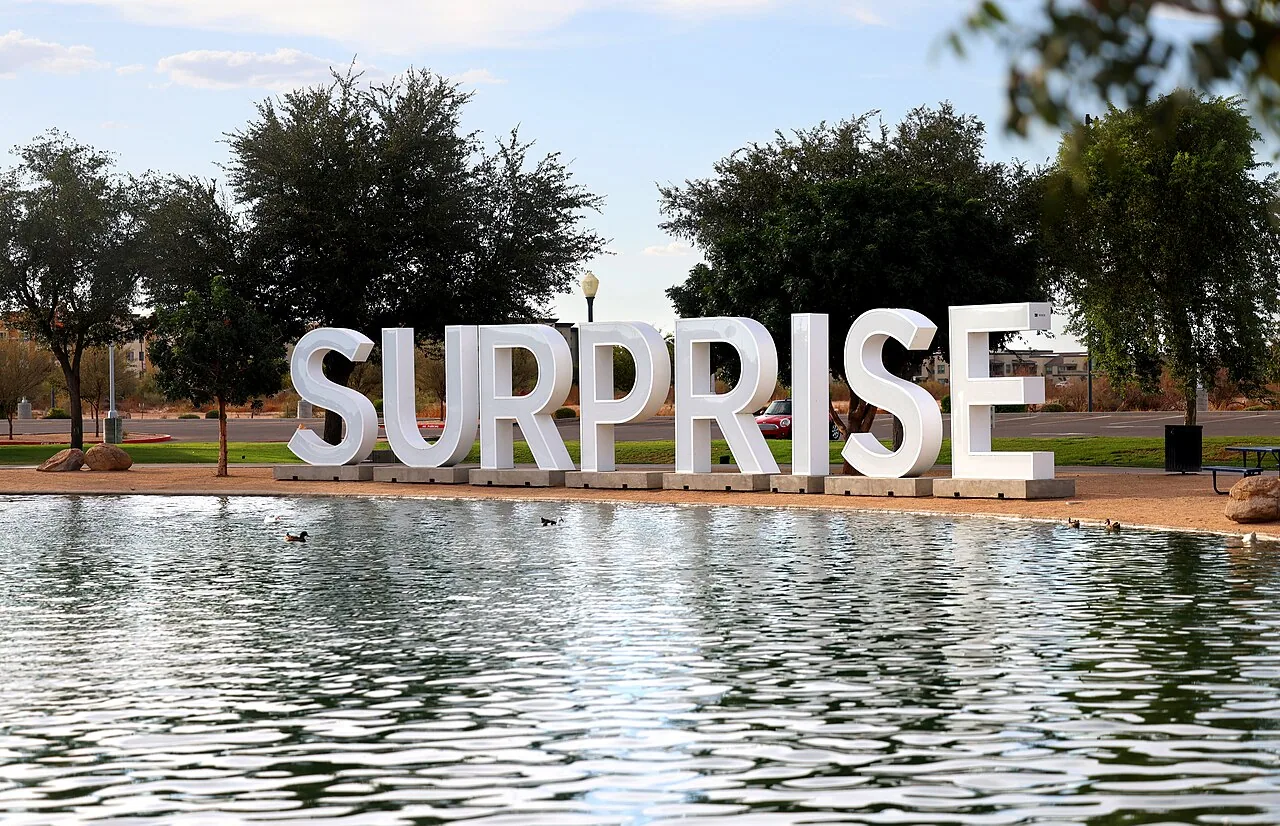
Related Roofing Work
Review the roof portfolio
Bring roof plans, recent work orders, access limits and any known system records. We can walk selected buildings, map verified conditions and leave the project team with repair, testing and capital next steps.