
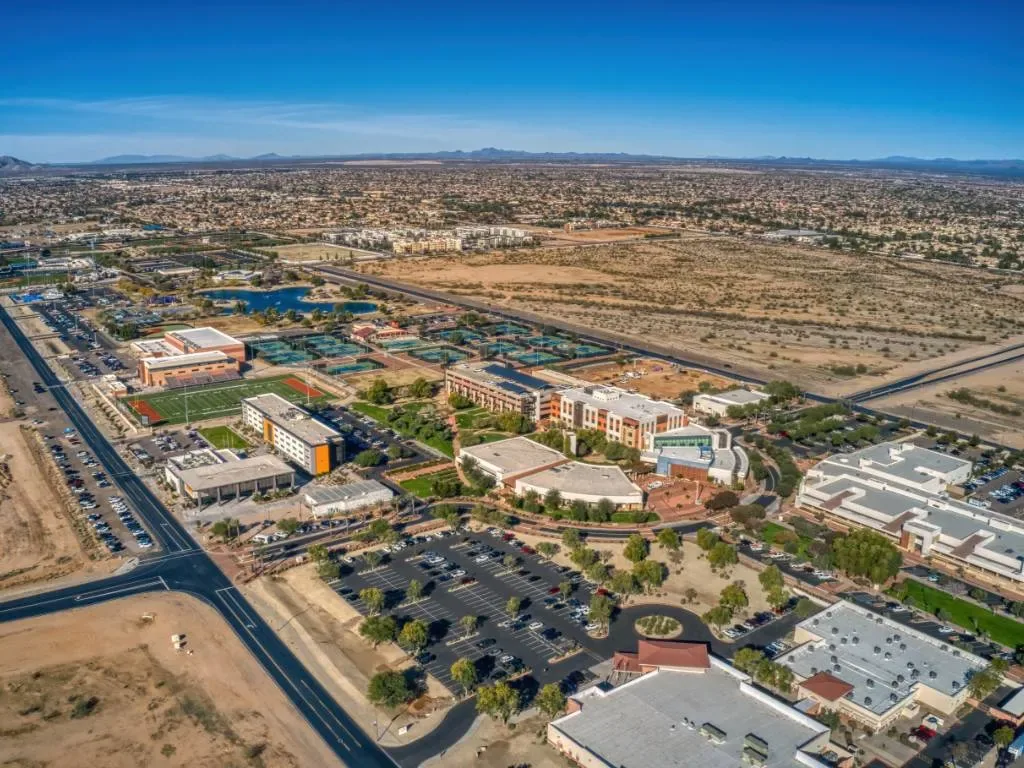
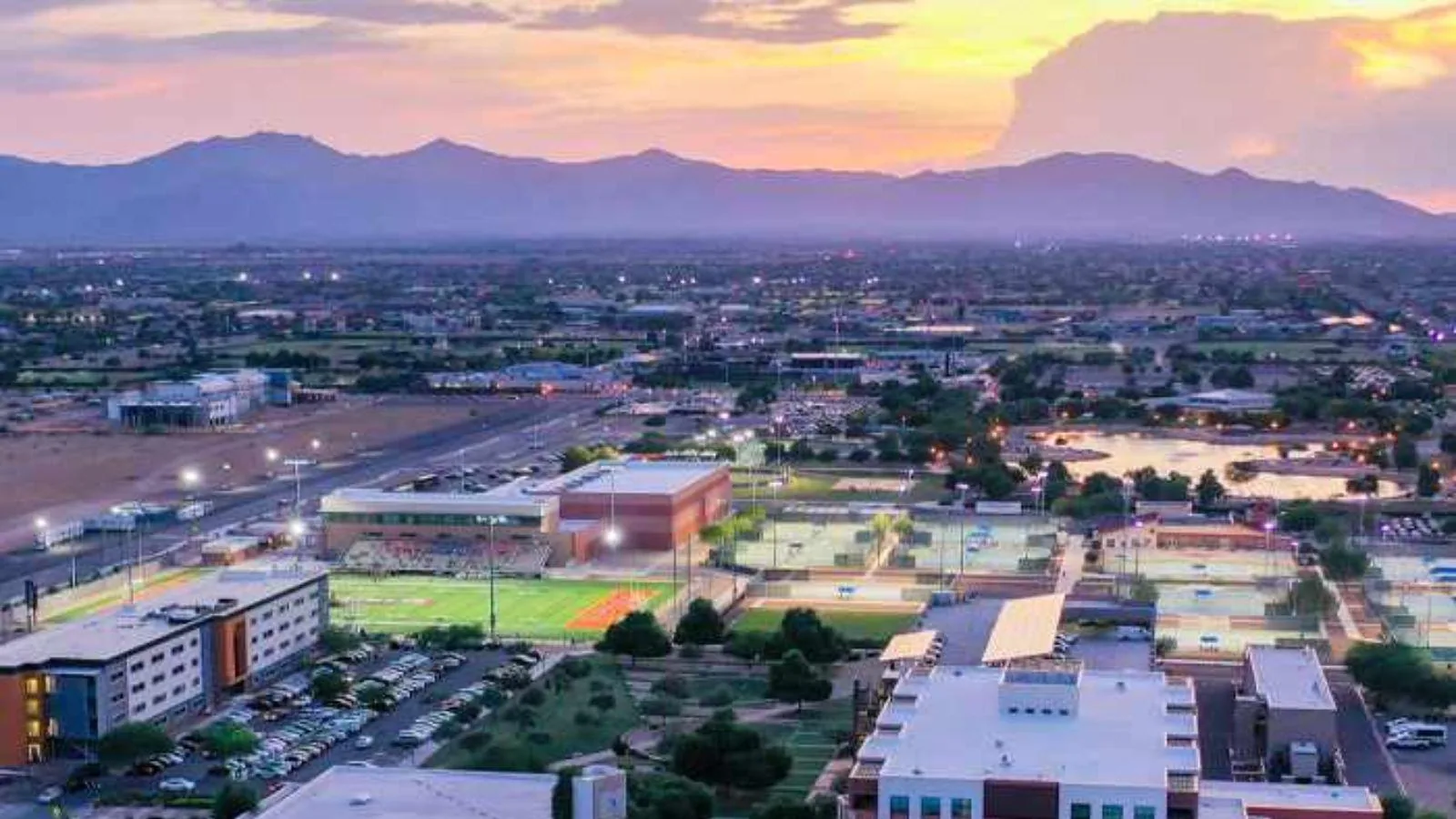
A low-slope retail or distribution roof in Surprise may have long membrane runs, frequent rooftop units and a loading schedule that cannot pause for a repair. TPO can be a practical single-ply system, but the white surface alone does not decide whether it fits. The deck, insulation, fastening pattern, parapets, drains, wind exposure and maintenance access all matter. Before recommending replacement or a recover, we inspect the existing assembly and describe how a new sheet will turn up at every curb and edge. A roof near the Surprise Railplex may have different access and staging needs than one in Surprise City Center; the assembly still has to close cleanly at its details.
What a TPO membrane does
Thermoplastic polyolefin is a reinforced single-ply membrane whose field seams are typically joined with hot air. A properly prepared seam creates a continuous sheet across the roof, while perimeter terminations, penetrations and drainage points complete the weather plane. The material is not a cure for a weak deck, trapped moisture or an unsupported curb. We look at those conditions before selecting a thickness or fastening method, then show the owner where each detail changes the scope.
Light-colored TPO reflects more sunlight than a dark surface, but color does not replace insulation or promise a fixed utility result. Building loads, HVAC efficiency, roof geometry and operating hours affect performance. We can identify the assembly and roof area being considered; an energy analysis should evaluate the complete building. In the west-valley sun, repeated heat exposure makes seams, flashing and rooftop equipment worth checking during inspection, without assuming that a roof is damaged simply because it is hot.
The proposal should name the membrane, reinforcement, attachment, cover board or insulation, flashing method, edge metal and warranty basis. It should also distinguish manufacturer requirements from contractor preferences. A useful scope explains what happens at a transition from the new sheet to an existing roof, and who confirms compatibility before installation.
Start with the deck and existing assembly
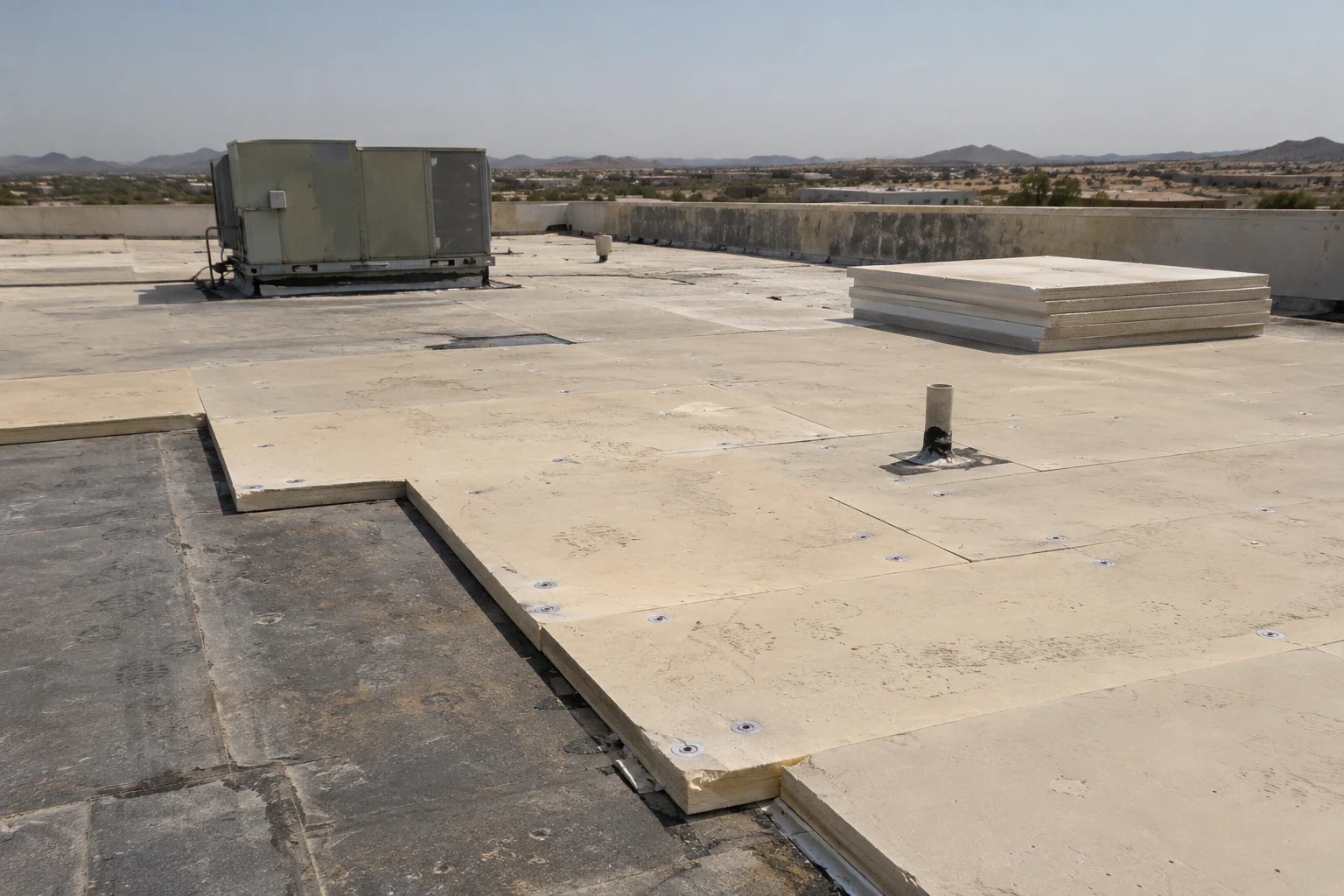
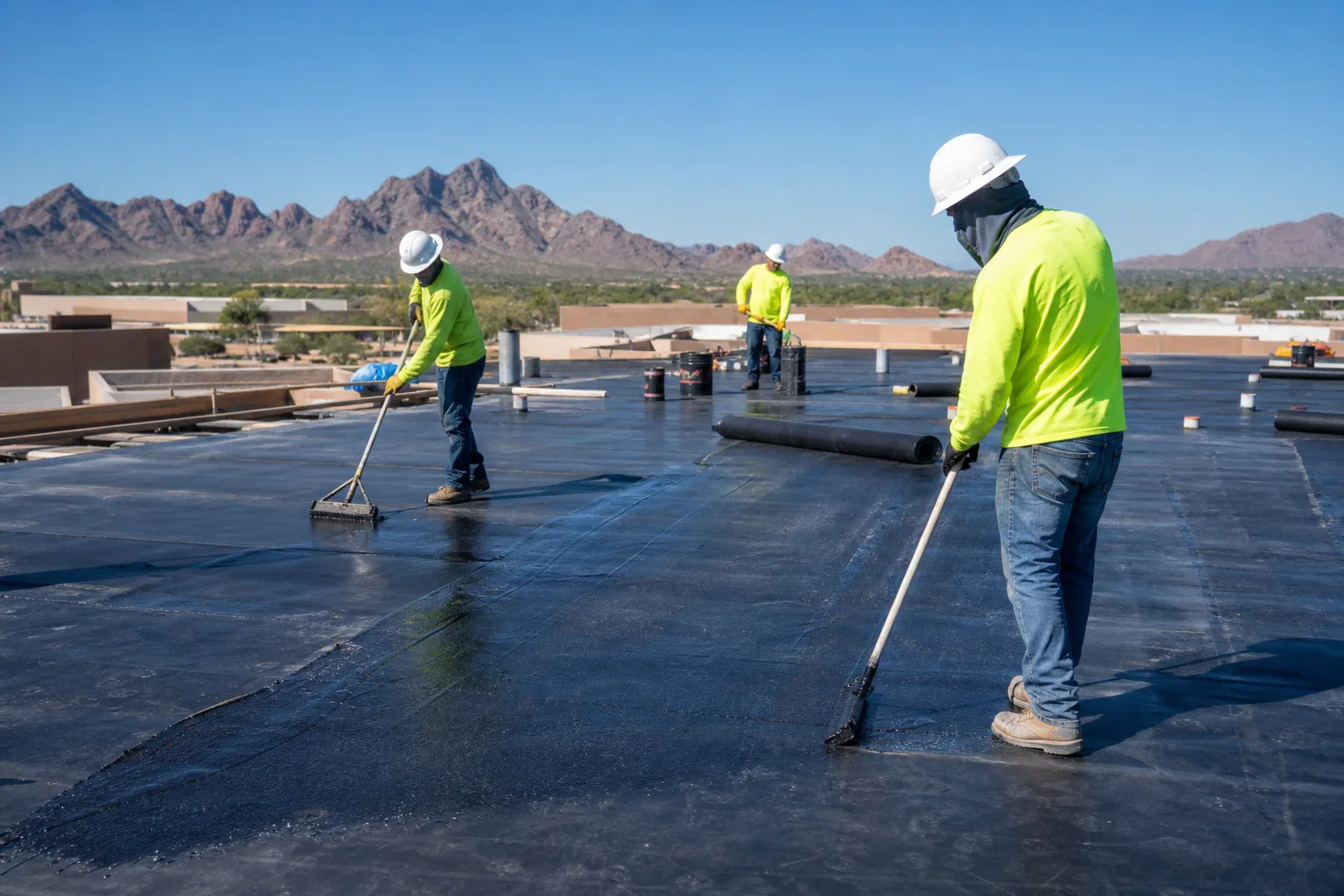
We begin below the membrane line. A roof walk records ponding, soft areas, open laps, loose fasteners, wet insulation, deck movement and previous repairs. Inspection photos should identify each condition by roof area instead of collecting close-ups with no location. If moisture is present, a recover may hide a problem that should be removed. If the assembly is dry and stable, an overlay may be possible only when the code path, manufacturer instructions and project requirements allow another layer.
A TPO scope needs an attachment plan that suits the deck, perimeter conditions and the roof sections that remain in service during installation. The applicable permit route depends on the actual work. A design professional should verify insulation, wind-uplift, fire and attachment requirements against the project documents. We can document what is installed and identify the questions that need confirmation before specifying the replacement.
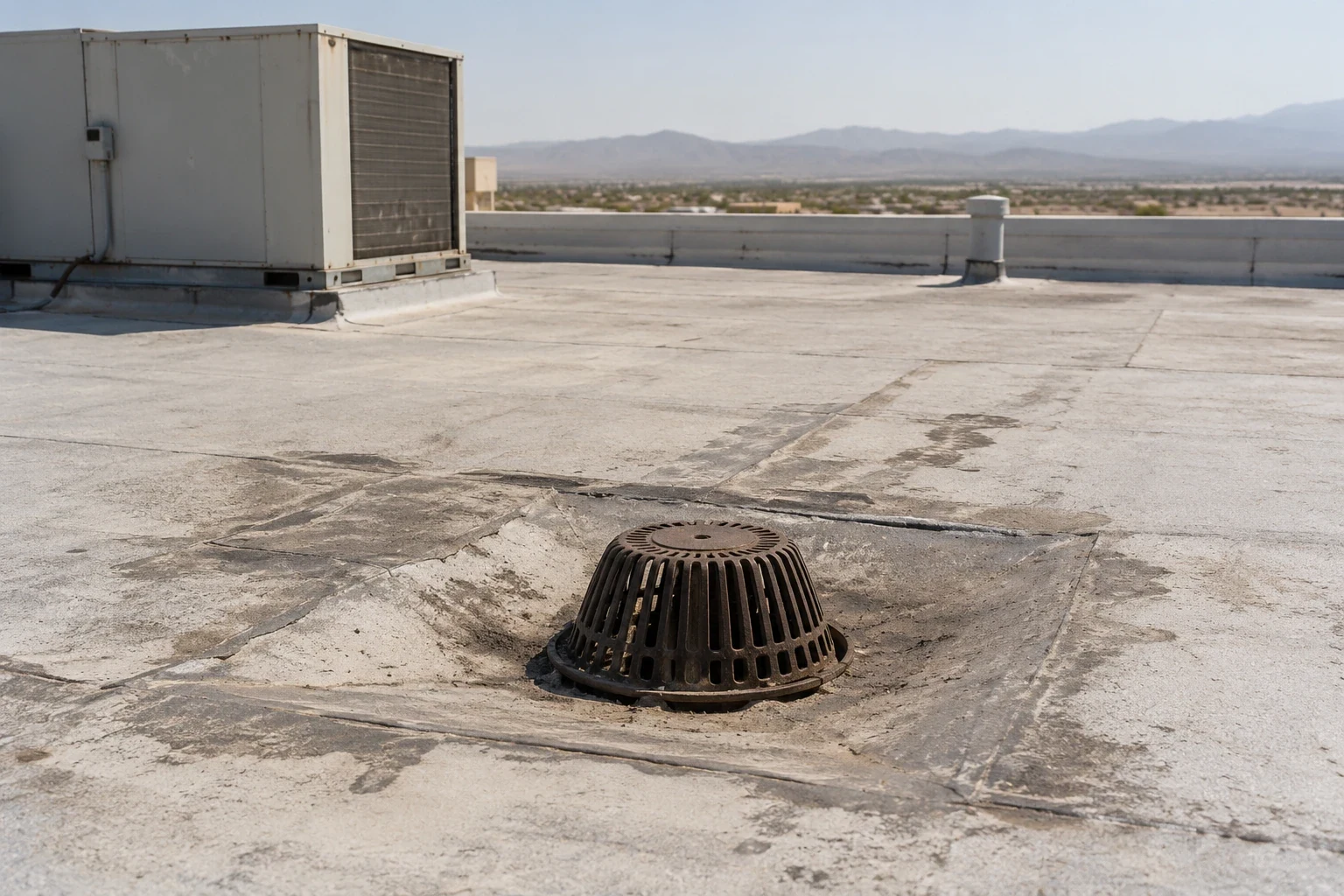
Drain height can change when new insulation or cover board is added. We check each drain bowl, scupper, cricket and overflow before setting a new roof elevation. The insulation and cover-board scope should work with the drainage layout, not create a lip that holds water. If the old roof is a candidate for restoration rather than replacement, compare EPDM as an alternative only after compatibility and condition are established.
Choose attachment around wind and structure
Mechanically attached, adhered and hybrid assemblies place different demands on a deck and substrate. The chosen system should match the structural capacity, uplift design, insulation layout and manufacturer approval for that project. We do not infer an attachment pattern from a neighboring building. The roof plan and specification should show the design zone, fastening density, perimeter reinforcement and the substrate that receives each fastener or adhesive.
On a metal deck, fastener pullout and flute orientation matter. On concrete or an existing roof, preparation and adhesive conditions can control whether the assembly is appropriate. The crew should confirm that the substrate is dry, clean and within the product's application range. If the field condition differs from the submittal, pause and resolve the mismatch before covering it. That decision belongs in a written clarification, not an unrecorded adjustment at the roof edge.
Surprise monsoon storms can bring damaging winds and heavy rain across the Phoenix area. Work sequencing should keep loose sheets secure, set a safe daily boundary and close each opening before the crew leaves. For perimeter work, coordinate edge metal and coping with the membrane termination. On occupied properties, an operating-hours plan can address material lifts and safe routes while the roof remains active.
Treat seams and penetrations as a system
Field seams deserve a repeatable process. The installer cleans and prepares the overlap, controls temperature and speed, then checks the weld with a probe after it cools. Test welds establish the day's settings; production seams need consistent overlap and documented checks. A small void at a T-joint, patch or change in plane can become a leak path if the detail is rushed. The inspection plan should say which seams are tested and how repairs are recorded.
Curbs, pipes, skylights and conduit require compatible flashing details. A prefabricated boot can be useful when dimensions and movement match the penetration; an irregular curb may need a field-fabricated detail. We list the trades that must move or reset equipment and mark the exact point where roofing takes responsibility. A new membrane should not conceal a loose conduit support or a curb with an open corner.
Drainage is part of the finished assembly. We verify that water reaches each drain or scupper, that overflow paths remain open and that debris from construction is removed. A roof with low areas may need tapered insulation, a cricket or another correction in addition to the membrane. The written scope should separate those measures from routine membrane installation so an owner can compare the real work.
Compare replacement, recover and maintenance
A replacement provides access to more of the existing layers but brings tear-off, disposal, noise and interior protection into the project. A recover can reduce removal work, but it is not suitable where moisture, unstable attachment or project limits make the old assembly a poor substrate. Localized repair may be the sensible choice when the membrane remains serviceable and damage is confined. We show the evidence behind the recommendation and identify what could change after demolition.
Costs vary with roof height, access, tear-off depth, insulation thickness, deck repairs, equipment lifts, edge-metal replacement, drainage changes and occupied-building restrictions. The estimate should state assumed quantities and exclusions. For a multi-building owner, a PVC membrane option can separate urgent repairs from planned capital work. If a retrofit includes solar, review solar-ready details before the new roof closes around future attachment points.
After installation, keep a marked roof plan, product data, seam test records, inspection photos and warranty documents together. Routine walks after major weather should note debris, drain condition, punctures and any service work that crossed the roof. The maintenance path should identify which repairs need the manufacturer or installer involved. TPO performs as part of a complete assembly; the membrane alone cannot protect a roof whose drains, edges or penetrations are left unfinished.
Commercial Roofing Questions
Is TPO suitable for every commercial roof?
No. Deck condition, uplift design, insulation, drainage, fire requirements and roof use determine whether the specified assembly fits. We inspect those items before recommending a system.
Can TPO go over an existing membrane?
A recover may be considered when the old roof is dry, stable and allowed by project requirements and manufacturer instructions. Wet or loose areas need review before covering.
How are TPO seams checked?
Installers establish settings with test welds, then inspect production seams after cooling. The project plan should identify the required probe checks and repair records.
Does a white TPO roof lower energy use?
A reflective surface can reduce solar absorption, but insulation, HVAC, building loads and operation also matter. No fixed savings figure follows from membrane color alone.
What should be inspected after a monsoon storm?
Check drains, edge metal, rooftop equipment, penetrations and visible seams, and record the location of any change. Keep foot traffic away from soft or exposed areas.
Ready to review the roof scope?
Request a Roof Assessment
Related Roofing Work
Review the complete TPO assembly
Share the roof plan, existing system, drainage layout and equipment schedule. We can inspect the roof and prepare a scope that identifies substrate, attachment and detail work.