
A retail roof near Village at Prasada has many tenant doors below it, but a drain problem can begin at one bowl, scupper, or low seam. We trace where runoff should travel, look for places it stalls, and inspect the membrane around the outlet before proposing a correction. Clearing debris may restore flow; a reverse slope, undersized opening, damaged flashing, or depressed insulation needs a different scope. The repair starts with the route water takes across the roof, not simply the stain that appears inside.
Trace the water from field to outlet
We identify the primary drains and scuppers, then check whether nearby crickets and tapered insulation direct water toward them. Dust, leaves, packaging, and loose material can block an opening, while a damaged strainer or loose leader connection may interrupt flow after the water leaves the roof. We note the ponding boundary and how long it remains after rainfall, then compare it with seams, curbs, and prior repairs in the same area. That record helps distinguish a maintenance item from a slope or membrane problem.
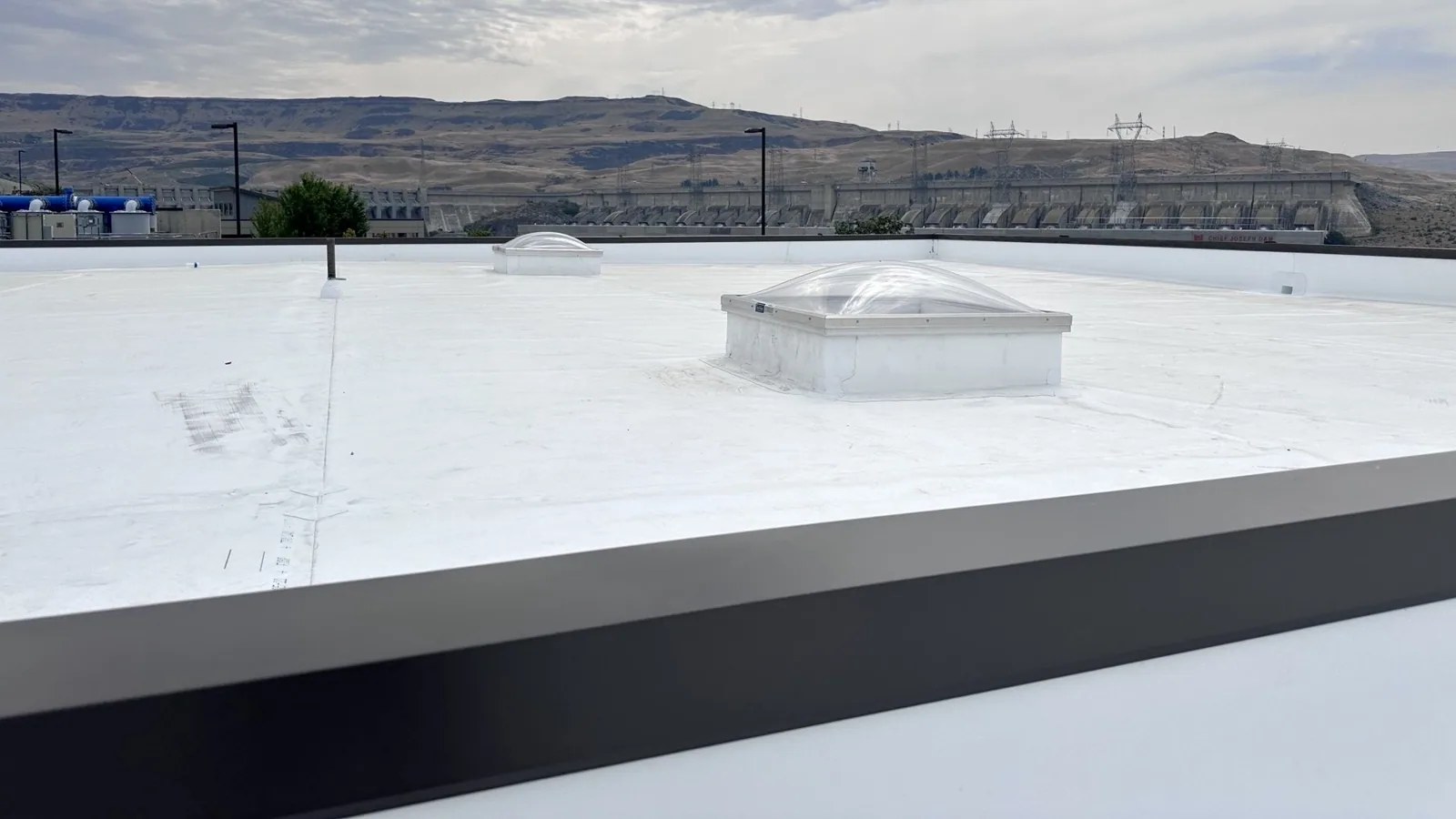
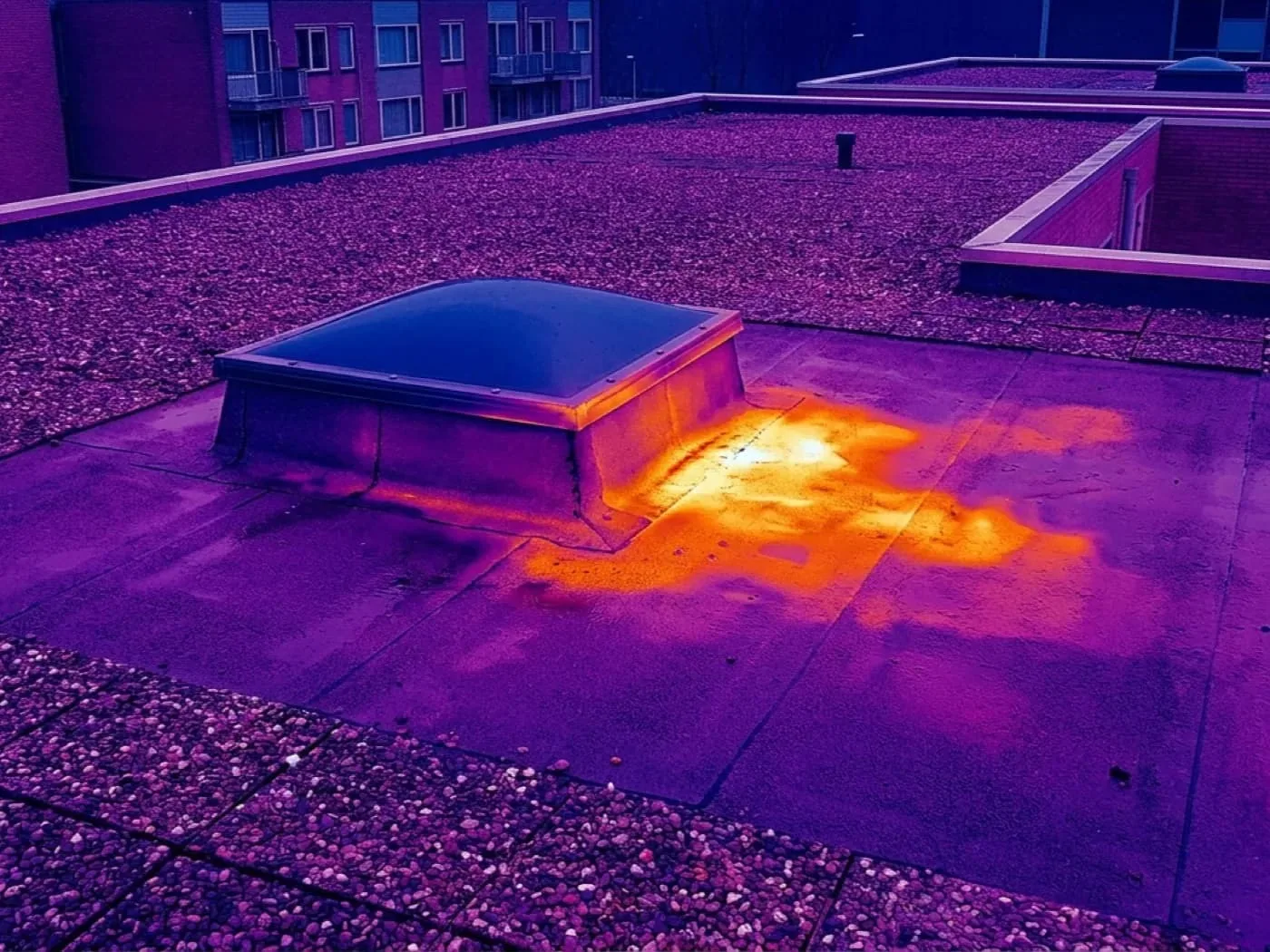
Where access allows, we check the drain bowl, clamping ring, and surrounding flashing for movement or deterioration. A roof that holds water can place repeated stress on joints and make a weak transition harder to spot. We can prepare a focused roof inspection or use infrared moisture screening to select areas for confirmation when the surface evidence points below the membrane. Neither task substitutes for correcting the drainage path itself.
Clear, rebuild, or reshape
If the outlet is open and the path is sound, cleaning and a short written maintenance record may be enough. If the drain bowl or scupper flashing has separated, the repair may require removing loose material and rebuilding the transition with a compatible membrane detail. A cricket that sends runoff away from an outlet can require tapered material and tie-ins to the existing assembly. We identify the limits of that work so a local correction does not promise to eliminate ponding that originates elsewhere on the roof.
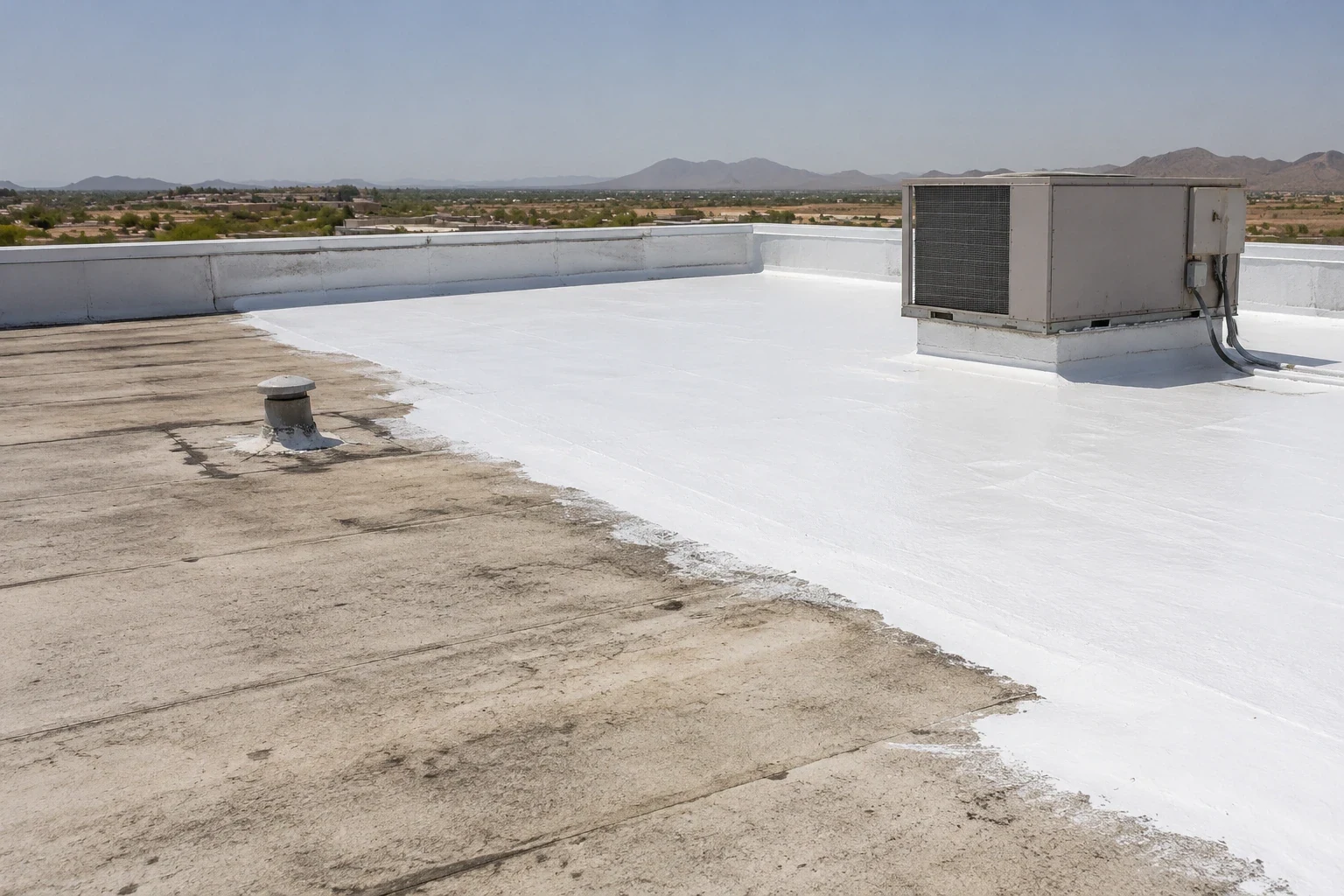
Surprise's current code set includes the 2024 International Building Code and Existing Building Code with local amendments. A substantial change to slope or a larger opening can affect permit and design review, so the project team should confirm the proper path before construction. We can document the condition and repair boundary, while a design professional reviews structural or code questions. When the issue extends to a coating candidate roof, correcting drainage and standing water belongs in the evaluation before surface restoration.
Monsoon runoff and roof edges
Phoenix-area monsoon storms can bring short periods of heavy rain, damaging wind, and flash flooding. Those conditions make it useful to inspect drains, scuppers, edge metal, and rooftop openings after a storm, but they do not prove a particular roof has a defect. We look for debris at the outlet, water marks at the low point, and signs that runoff is reaching a wall or edge detail before the drain. That is a roof observation, not an assumption based on regional weather.
City Center's mix of retail, healthcare, hotel, civic, and commercial-service uses can bring different access and tenant windows to the work. The Railplex's manufacturing and distribution properties can add loading activity and freight routes to the same planning question. A City Center drainage walk or a Railplex roof visit should fit the building's operating hours. Before a crew begins, we agree where debris can go, how the drain will stay protected, and when an interior check should confirm that water is no longer entering.
Drainage details at the membrane
The membrane around an outlet has to stay bonded and properly clamped while the roof expands and contracts. We inspect the drain ring, flashing, nearby seams, and any repair layer that may have built up around the bowl. A scupper needs a clear throat, sound sidewalls, and an exterior discharge path that does not send water back toward the building. Where a conductor head or downspout is involved, we identify that boundary rather than treating the roof opening as the only component.
Runoff can also expose an edge-metal problem. If water travels over the edge or behind coping, coping and gutter repair may be separate from the roof drain work. A persistent low area can lead to moisture below the surface, which is why we record the location before removing material. If the roof needs larger corrective work, tapered insulation and cover board may help form a path to the outlet, subject to assembly and project requirements.
Close the maintenance loop
After cleaning or repair, we note which outlets were reached, what was removed, which low points remain, and whether any section could not be accessed. We identify each outlet we could not reach. A dated photo before and after the work gives the facility lead a simple way to compare the next visit. We distinguish routine service from a repair that needs an approval, a material order, or another trade. If a leak was reported below the ponding area, we ask the building contact to check that room after the next rainfall and report any return.
A written record can support roof condition tracking for more than one building. It can also help explain why a small drain repair should be done before a coating or recover is considered. Along the Cactus Road and Loop 303 corridor, commercial sites share the same regional rain pattern but not the same roof geometry. We scope each outlet and each transition from what we can see, and we keep any larger slope or structural question outside the repair unless it has been reviewed.
Commercial Roofing Questions
When is ponding water a roof repair issue?
The shape, depth, and persistence of the water matter, along with the membrane, seams, and insulation below it. A blocked drain may be cleared, while reverse slope or a depressed area may require tapered material or a broader correction. We map the low point and explain what evidence supports the proposed work.
Can a drain be cleaned without replacing the roof?
Yes, when debris is the cause and the surrounding bowl, flashing, membrane, and drainage path remain serviceable. We check the outlet and nearby details before calling the work complete. If a seam, clamp, or scupper transition has failed, that repair needs to be included separately.
How do you decide whether a cricket is needed?
We compare the roof slope and low points with the drain location. A cricket can direct water around equipment or toward an outlet, but it has to tie into the existing membrane without creating new seams that collect water. We document the path and review assembly constraints before specifying it.
What happens if water remains after the drain is cleared?
We check whether the low area is a slope problem, whether the outlet sits above the field, and whether wet insulation or membrane deformation is present. A clear drain does not prove the whole drainage path is working. We identify the remaining condition and propose a correction that addresses its source.
Will a new scupper solve an interior leak?
It can help only when the leak is tied to the scupper or the discharge path. We inspect its flashing, opening, and exterior route, then trace water marks inside to the roof area. If the entry point is a nearby curb or seam, a scupper change would not correct that separate defect.
Ready to review the roof scope?
Request a Roof Assessment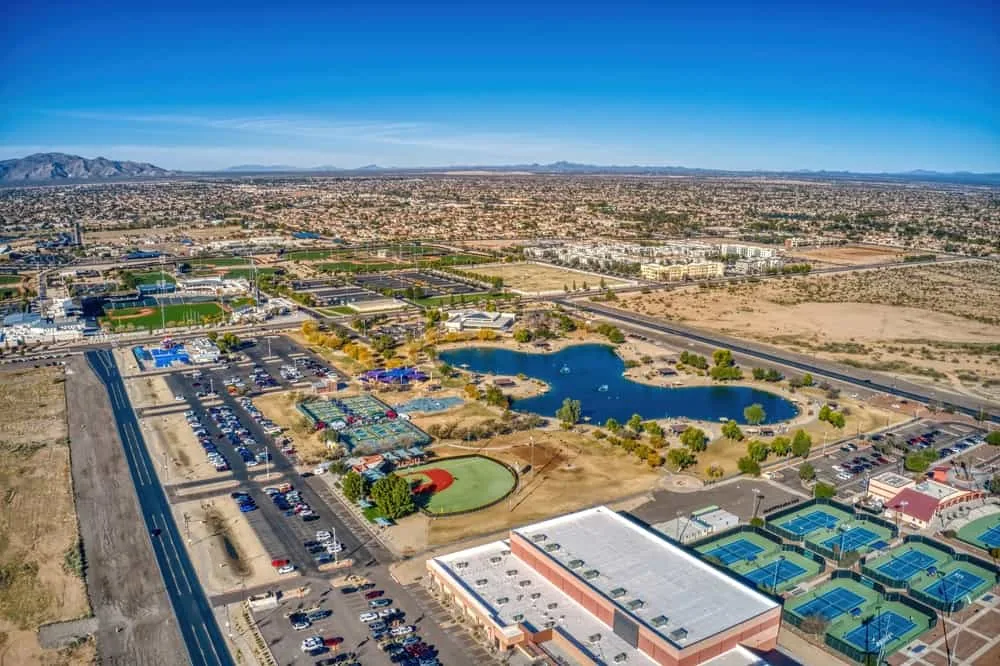
Related Roofing Work
Map the drainage path
Share roof plans, recurring water locations, and access constraints. We can inspect Surprise drains and scuppers, document low areas, and separate cleaning from slope or membrane repairs.