Large roof planes near Surprise Railplex can make it hard to choose where a test cut will answer the moisture question. An infrared survey can map temperature patterns across a roof and highlight areas for closer review. It does not read water through every assembly or prove that a thermal difference is wet insulation. We plan the survey for the roof material and conditions, compare the images with visible details and repair history, then check selected areas with test cuts or hands-on inspection before the owner decides on a recover, repair, or tear-off.
Conditions have to support the reading
Infrared results depend on the surface, assembly, weather, and timing. We review the roof system, insulation type where known, recent rain, daytime heating, and the period when the roof can be scanned. Wet or cloudy weather, reflective surfaces, shadows, rooftop units, and surface repairs can change the pattern. Before mobilizing, we determine whether the expected conditions can produce a useful comparison and whether the assembly is suitable for the method. If not, we explain another way to locate moisture.
Surprise's hot low-desert setting matters to the survey window. Phoenix Sky Harbor's long-term July normal is a metro benchmark, not a reading on a Surprise building, but the regional summer heat affects surface temperatures and survey timing. We plan for the actual roof and conditions on the survey day rather than apply a fixed schedule. A drone roof inspection can add surface imagery for layout and access, but it does not replace thermal analysis or field check of the roof layers.
Build the scan around the roof plan
We divide the roof into sections and note drains, curbs, skylights, wall transitions, equipment, and previous repairs before collecting images. Each thermal frame needs a location that can be found again by the project team. We label the roof plan and keep the image reference with the condition record, so a potential anomaly is not reduced to a colored spot without context. If one roof section has different membrane or insulation, it should be treated separately in the interpretation.
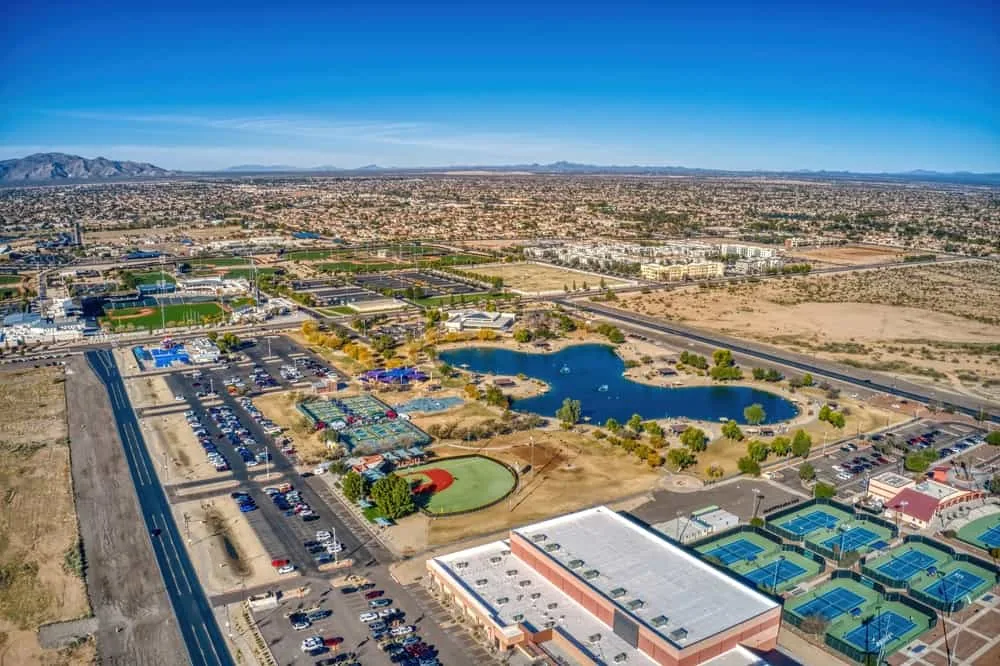
The Surprise Railplex development mix includes manufacturing, distribution, flex office, and warehouse uses. Large operations may have separate roof zones, equipment layouts, and access paths. We label those conditions on the plan and confirm the actual assembly and site rules with the facility lead. Near Village at Prasada, a retail property may need a different access plan around tenant hours. In either case, we confirm the site's roof access and use the same plan references throughout the survey and field check work.
Separate a pattern from a confirmed wet area
A thermal anomaly is a place to investigate, not a final diagnosis. We compare the pattern with surface conditions, assembly changes, shaded areas, equipment, and known repairs. We may recommend test cuts at selected locations to confirm the roof layers and moisture, then map the confirmed area separately from the unconfirmed pattern. If the test cut is dry, we revisit the interpretation rather than extend the wet-area map by assumption. A report should make that distinction visible to the owner.
Monsoon storms around Phoenix can bring heavy rain and wind, which may create an urgent leak but do not tell us how far moisture has traveled below the surface. We compare interior leak marks with the scan and roof details, then check likely water paths. A hands-on roof inspection can assess seam bond, flashings, drains, and edges that thermal images cannot check. Any test opening is photographed, marked, and closed with a repair compatible with the existing roof.
Use verified moisture to set the boundary
Once moisture is confirmed, the owner needs its extent and relationship to roof details. Isolated wet insulation may be removed as part of a repair; a larger contiguous area can change whether a recover remains feasible. We plot confirmed test locations, compare them with thermal patterns, and show the boundary that the evidence supports. We also identify areas not tested and any conditions that would require additional cuts. The decision then uses confirmed roof layers rather than assuming every anomaly needs removal.
For a roof near Surprise's Loop 303 corridor, an active warehouse or distribution operation can affect which sections are released for inspection. We coordinate the access window and mark roof zones to limit disruption. If the result supports targeted work, a repair scope can identify the removal and membrane tie-in. If the owner is considering an overlay, the report gives the recover review a confirmed moisture map and test-cut record.
A record the next crew can use
The deliverable should include the roof plan, image references, conditions during the scan, potential anomaly locations, test-cut findings, and a clear distinction between confirmed and unconfirmed areas. We label the date and roof section so another inspection can compare like with like. If a repair follows, the marked boundary and photos make it easier to understand what was removed, what remained, and where the new system ties in.
A written roof condition report can bring those findings together with visible defects and recommendations. For a warehouse or flex building, the property roof plan should preserve equipment locations and access routes for later work. We review the report with the general contractor or facility lead and explain what the infrared pattern established, what test cuts confirmed, and which decisions can now be made.
Plan the next inspection or repair
After field check, the owner can prioritize immediate openings, define an area for selective removal, or compare repair with broader replacement. If only some locations are confirmed wet, the scope should preserve that limit and avoid expanding work beyond the supporting evidence. If the roof is near the Surprise Loop 303 corridor or City Center, the building's loading, tenant, and service hours help set a safe work window. We coordinate those details with the site lead before opening or closing the assembly.
We can walk the roof, review the scan with the project team, and prepare a written scope for testing or repair. The survey is most useful when it leads to a field action: a test cut at a marked point, a repair at a confirmed opening, or a documented decision to keep monitoring. The owner can provide roof plans, past leak locations, and recent weather notes before the survey so the inspection questions are clear from the start.
Commercial Roofing Questions
Does an infrared image prove that insulation is wet?
No. The image shows a thermal pattern that may be consistent with a moisture difference, but surface, shade, equipment, and assembly changes can also affect the reading. We select field check points and use test cuts or another suitable method to confirm the layers. The report keeps the mapped pattern separate from confirmed wet insulation.
When should the roof be scanned?
The survey window depends on the assembly, weather, recent rain, and temperature behavior expected for that roof. We review those conditions before scheduling and can move the survey if the pattern is unlikely to be interpretable. A suitable window helps the survey compare roof areas under consistent conditions.
How many test cuts do you make?
The number and location follow the pattern, roof layout, and decision at hand. We choose points that can confirm or challenge the suspected area, and we record each opening and its layers. A survey should not turn every thermal variation into a test without a clear reason.
Can the survey show how far a leak traveled?
It can help identify areas for testing, but the leak path must be compared with the roof assembly and interior observations. Water can move along a deck or insulation joint. We mark what the scan suggests, then check locations before setting the removal or repair boundary.
Can we use the results to decide on a roof recover?
The results can inform that decision when confirmed moisture is mapped and the deck, attachment, and code path are also reviewed. A recover cannot be approved from an image alone. We combine test-cut findings with the rest of the assembly inspection and explain which areas remain unknown.
Ready to review the roof scope?
Request a Roof Assessment
Related Roofing Work

Map and check roof moisture
Share roof plans, leak locations, repair history, and the proposed work window. We can review whether infrared fits the assembly, plan scan and test locations, and prepare a record that supports the next roof decision.