
A service building near Surprise's Cactus Road and Loop 303 corridor may need repairs while loading, customer access, and rooftop equipment stay in operation. We inspect the damaged seam, flashing, or penetration and check whether surrounding membrane, insulation, and attachment remain serviceable. A patch can close one opening; a broader repair may be needed when damage extends beyond the visible split. The scope shows what can be fixed now, what should be monitored, and what needs further testing.
Trace the path before opening the roof
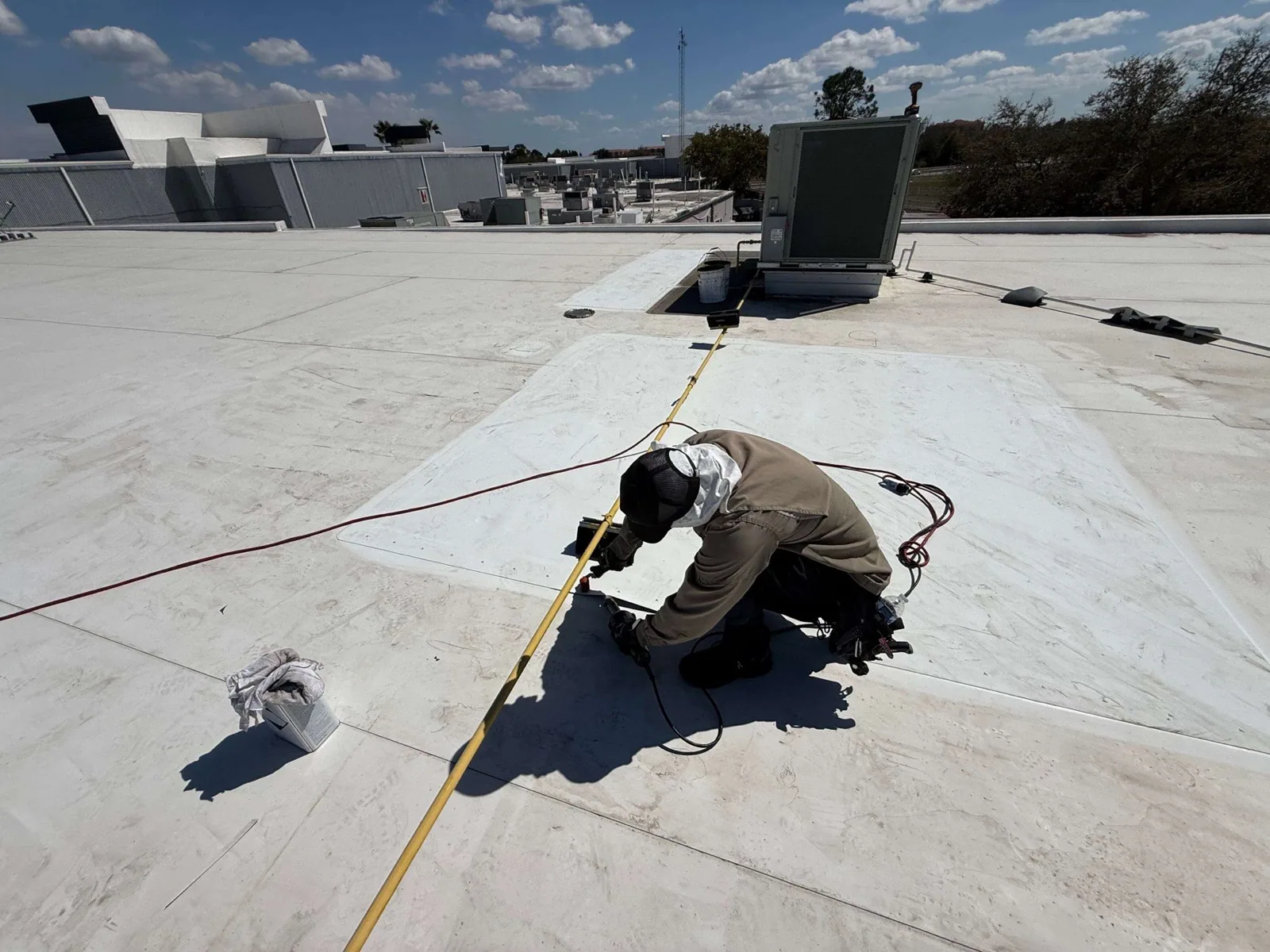
We begin with the interior: when the leak appears, what area is affected, and what prior repairs were made. On the roof, we check seams, flashing laps, penetrations, edge metal, drain bowls, scuppers, and any patch that overlaps older material. If the entry point is not obvious, we test likely details rather than coating a broad area without a finding. Photos and a roof-plan mark separate the suspected path from the confirmed repair.
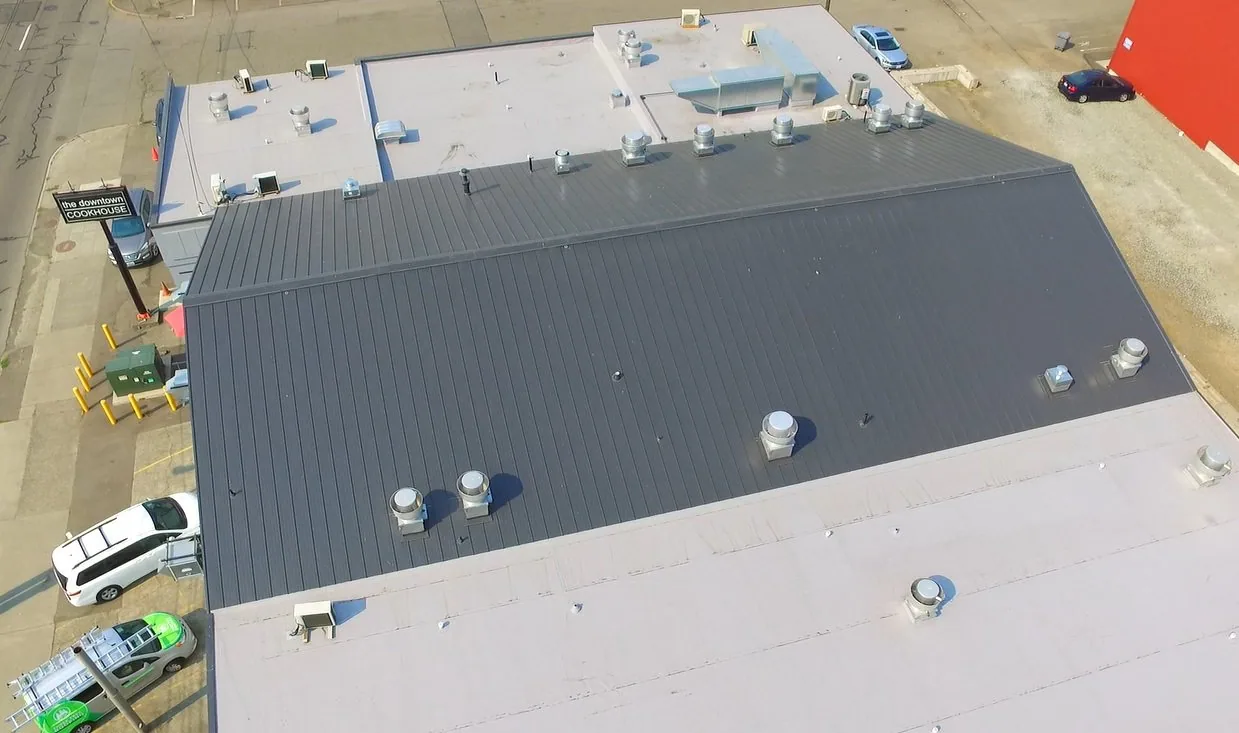
A repair has to suit the existing material. A compatible patch can close a local cut or open seam, while a failed curb corner or loose termination may need flashing rebuilt beyond the visible split. On a warehouse, long runs can make seam condition important; a retail roof may have more penetrations and service routes. Surprise's Railplex planning area includes manufacturing, distribution, flex-office and warehouse development, but each roof gets its own inspection. We do not infer a defect from the building's use alone.
After monsoon wind and rain
Phoenix-area monsoon storms can bring damaging wind and heavy rain. After a storm, we check edges, corners, equipment curbs, drains, and temporary patches. Wind can work at a loose termination; runoff can expose a drain restriction. We photograph the condition and distinguish storm observations from older wear when evidence allows. A storm date alone does not establish what failed.
Heat affects exposed membrane and sealants. Phoenix Sky Harbor's summer normals are a regional reference, not a Surprise roof reading, but the low-desert setting makes surface aging worth noting. We look for cracks, open laps, loose sealant, and movement at transitions. If a repair is temporary, the report says what is stabilized and what remains for a later scope.
Details that need more than a dab
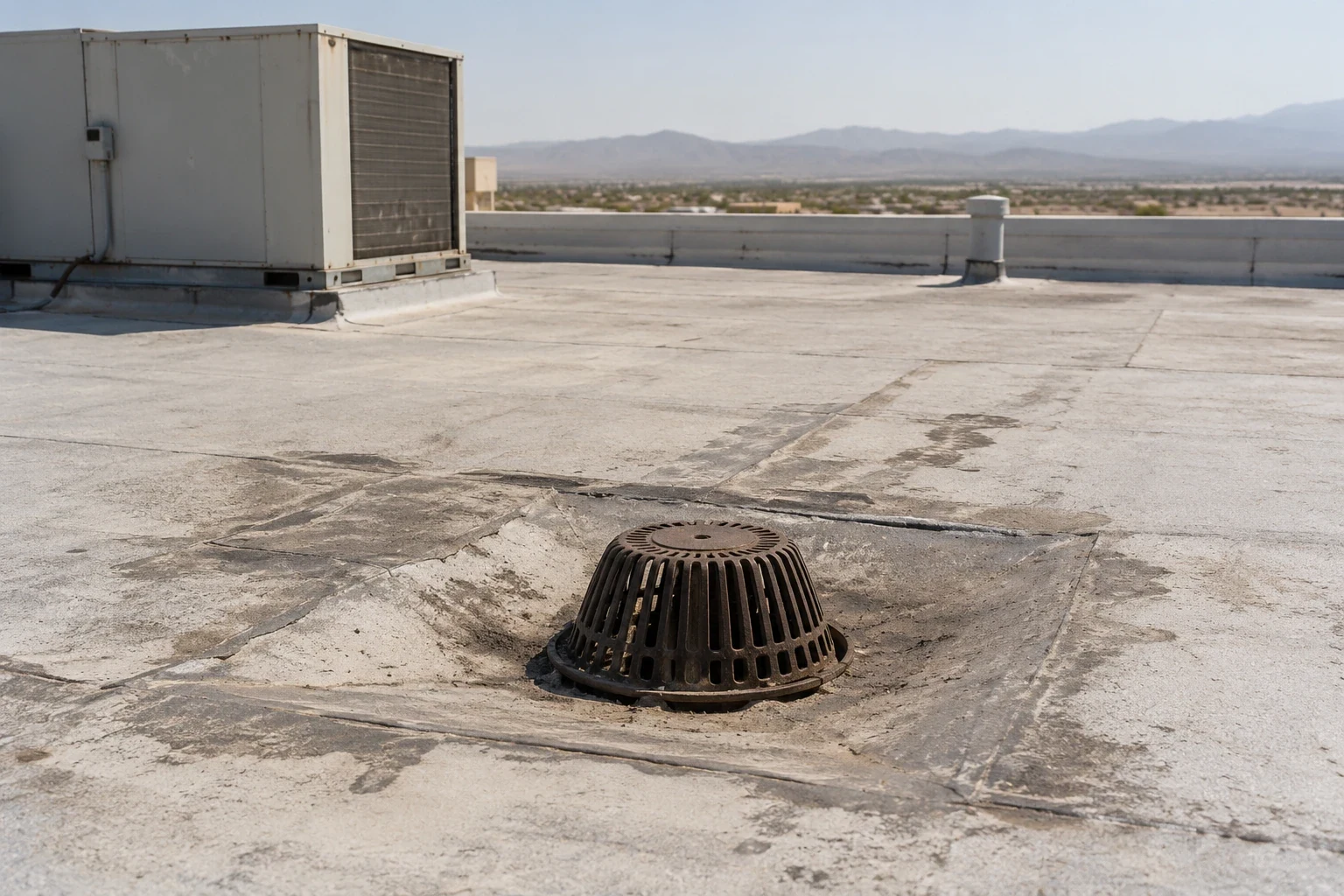
Water often enters where materials meet. We examine curbs, pitch pans, pipe boots, skylights, wall flashings, metal edges, expansion joints, and patch tie-ins. Sealant does not replace a membrane patch or rebuilt flashing where the assembly has separated. We check substrate moisture and bond conditions. Trapped water may require opening the roof instead of sealing over it.
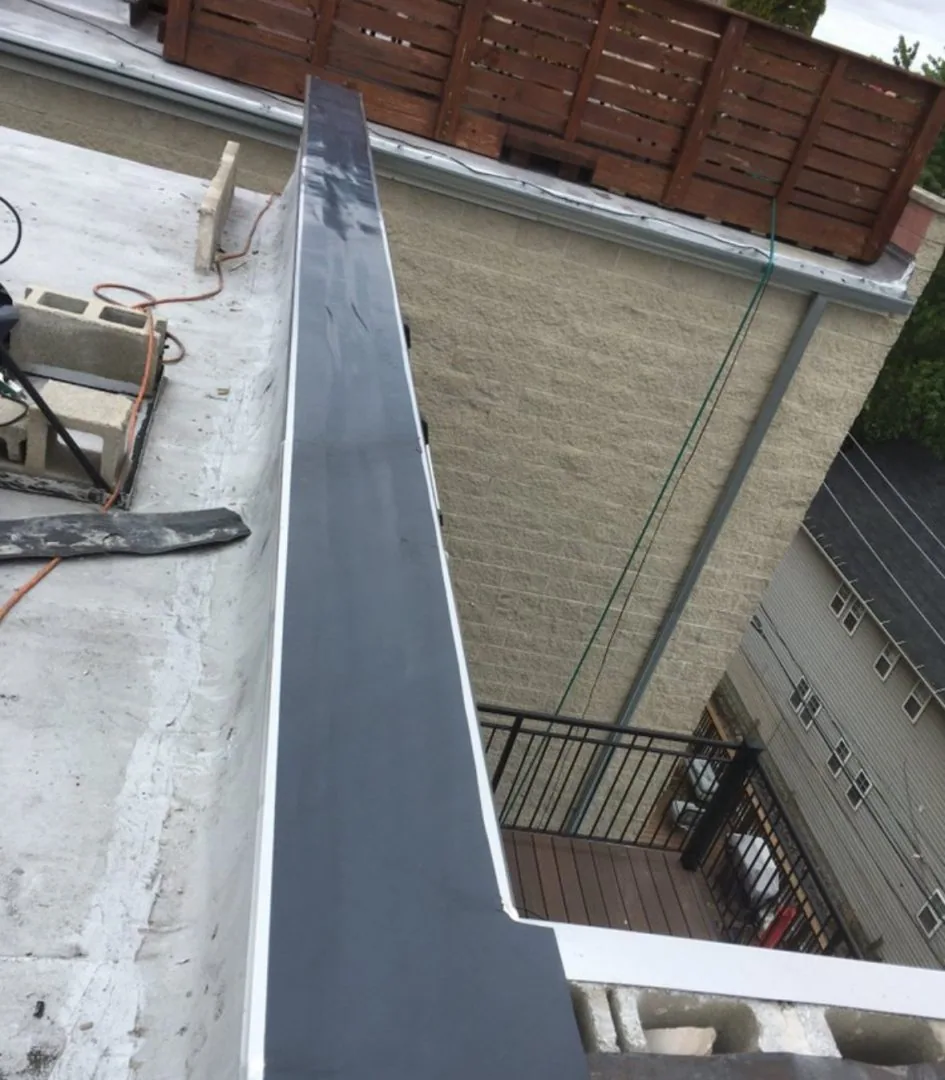
Drainage defects are a separate piece of the water path. A blocked bowl, damaged scupper, or low area can keep water at a weak seam longer than it should remain. Drain and scupper work may be included when it is part of the repair boundary. For membrane or flashing failures, a flashing repair scope can identify the metal transition and membrane tie-in rather than treating the roof field as one undifferentiated surface.
Patch, rebuild, or plan replacement
A localized repair fits when the affected section is limited and the adjacent membrane, insulation, and attachment remain serviceable. A broader repair may be needed when several details have failed in one area. Wet insulation or a weak deck cannot be solved by a surface patch. We show what can be repaired, what should be watched, and what would move the project toward replacement.
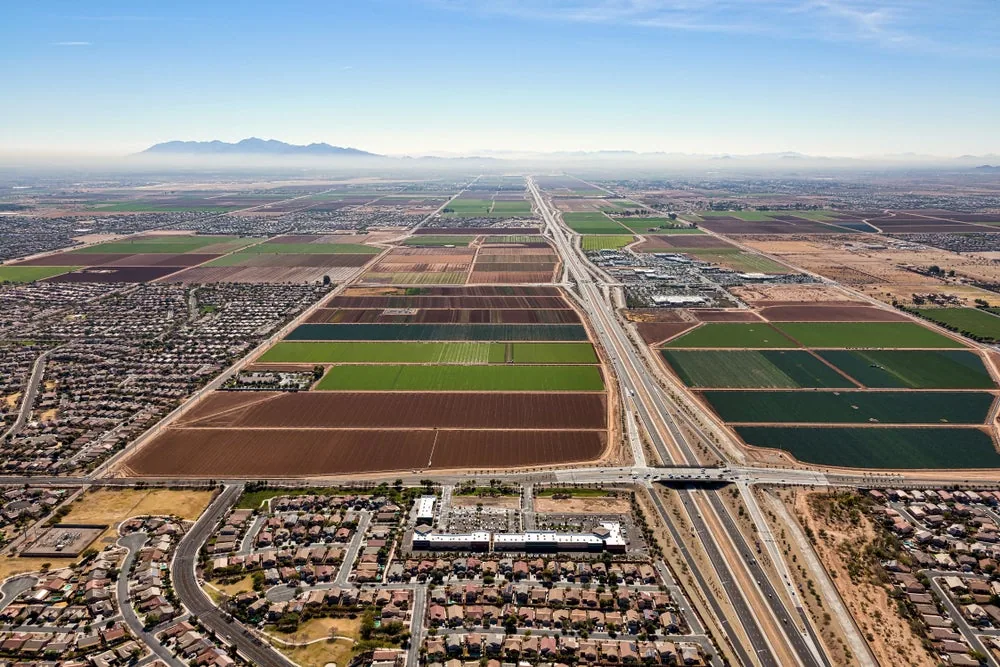
For a building with repeated calls, leak tracing can be paired with a written condition report and a maintenance plan that keeps drains, seams, and flashings on a schedule. That gives the facilities team a record of work and details to recheck after weather. A distribution property near Surprise's Loop 303 corridor can have different access limits from a shop near Village at Prasada, so the sequence follows actual hours and roof access.
Repair without losing the work window
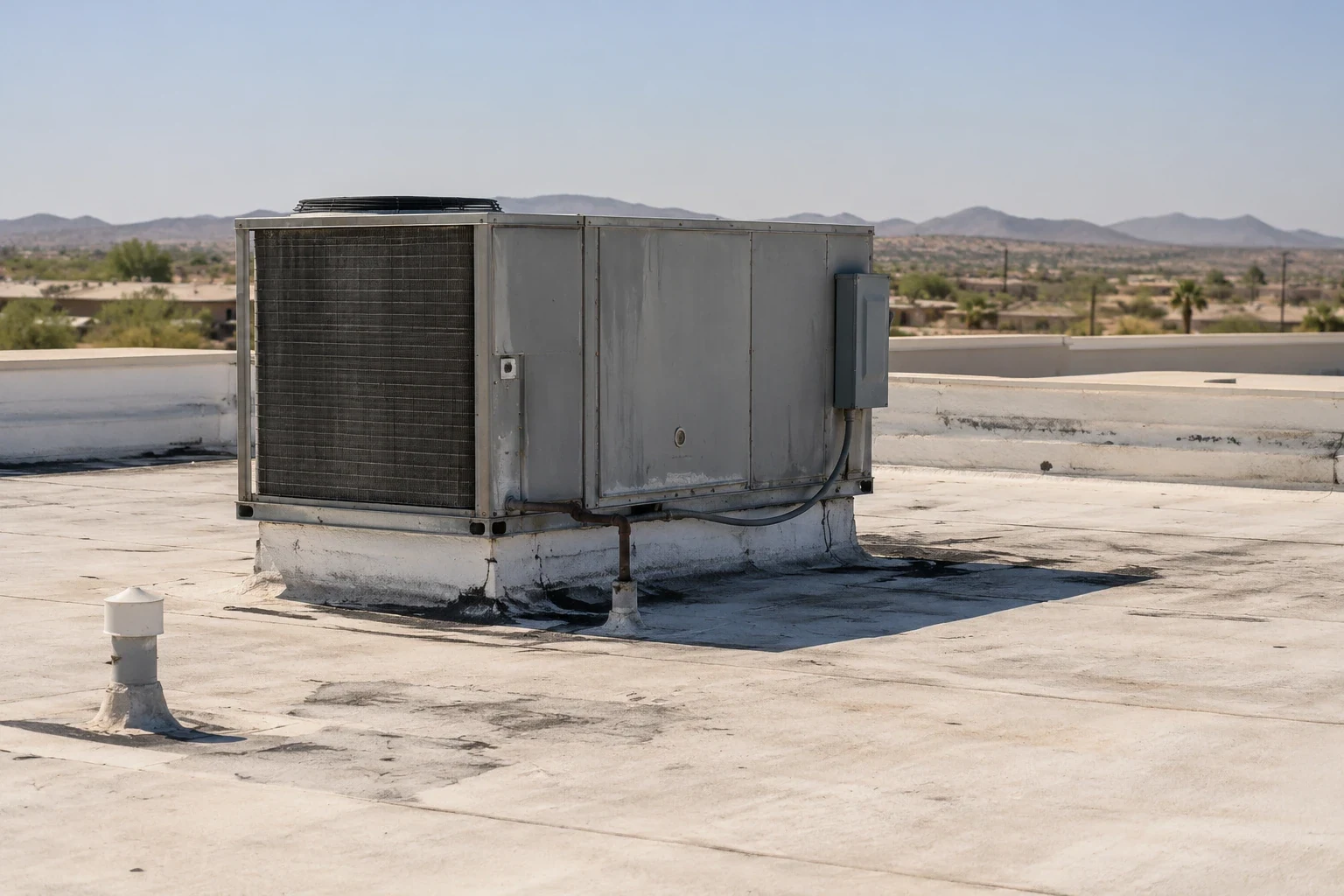
Before work begins, we confirm ladder or lift placement, roof access, and any areas that cannot be interrupted. On an occupied property, we may work around tenant hours, protect a service lane, or isolate a small roof section. Running units need a clear boundary around intakes and service paths. The project lead knows when the roof is open and who verifies handback.
Surprise's Village at Prasada is a multi-property retail and dining district, so access coordination can matter across shared drives and active storefronts. We confirm that property's access rules. Materials stay clear of deliveries and emergency routes, and the repair is protected before the crew leaves. For a time-sensitive leak, response is available around the clock; first we contain water and document accessible conditions.
A repair record that can be used
The closeout should identify the roof section, the detail repaired, the materials used, and any nearby conditions that remain open. We attach dated photos and mark the repair boundary on a roof plan when one is available. That lets a property manager connect the next inspection with prior work. If the roof has additions, we note where the repair ties in so a later contractor does not mistake a patch for replacement.
We can walk with the general contractor or facility lead, review leak history, and separate the repair from follow-up work. A TPO membrane repair is not interchangeable with work on every roof material, and a property-type reference such as warehouse roof planning does not replace checking the actual assembly. Start with the active leak location, recent weather, and roof access window. That gives the inspection a useful place to begin.
Commercial Roofing Questions
Why can the ceiling leak be several feet from the roof opening?
Water can move along a seam, insulation joint, deck flute, curb, or conduit before it reaches the interior. We compare the stain location with roof details above it, inspect likely paths, and mark what is confirmed versus suspected. That prevents a patch at the nearest point from being mistaken for a complete repair.
When can a seam stay in a repair scope?
Only when the adjoining membrane, substrate, and attachment remain stable. The inspection should record the failed length, preparation limits, nearby moisture, and earlier patch edges. If separation recurs across roof sections or moisture extends below the seam, set the repair boundary around the wider condition instead of pricing one joint in isolation. Document where the assembly changes and what supports the selected scope.
What should our staff do while a leak is active?
Move people and sensitive contents away from the drip, protect equipment, and note when the water appears. If it is safe, share photos from inside and identify the roof access contact. We can arrange urgent response at any hour, then inspect the roof when access and weather permit. Interior containment does not replace repairing the roof opening.
Can you fix a leak during operating hours?
Often, but we first check roof access, tenant activity, rooftop equipment, and any area that must stay open. Some repairs can be isolated to a small section; others need a work window that allows safe surface preparation and a dry-in. We coordinate that boundary with the building lead before materials are opened.
How do we know if a repair is only temporary?
The scope identifies the material condition and the area it treats. If wet insulation, deck movement, or broader membrane deterioration remains, we list that separately as a follow-up concern. We photograph the repair and state what should be checked next. That gives the owner a useful distinction between immediate water control and a larger capital decision.
Ready to review the roof scope?
Request a Roof Assessment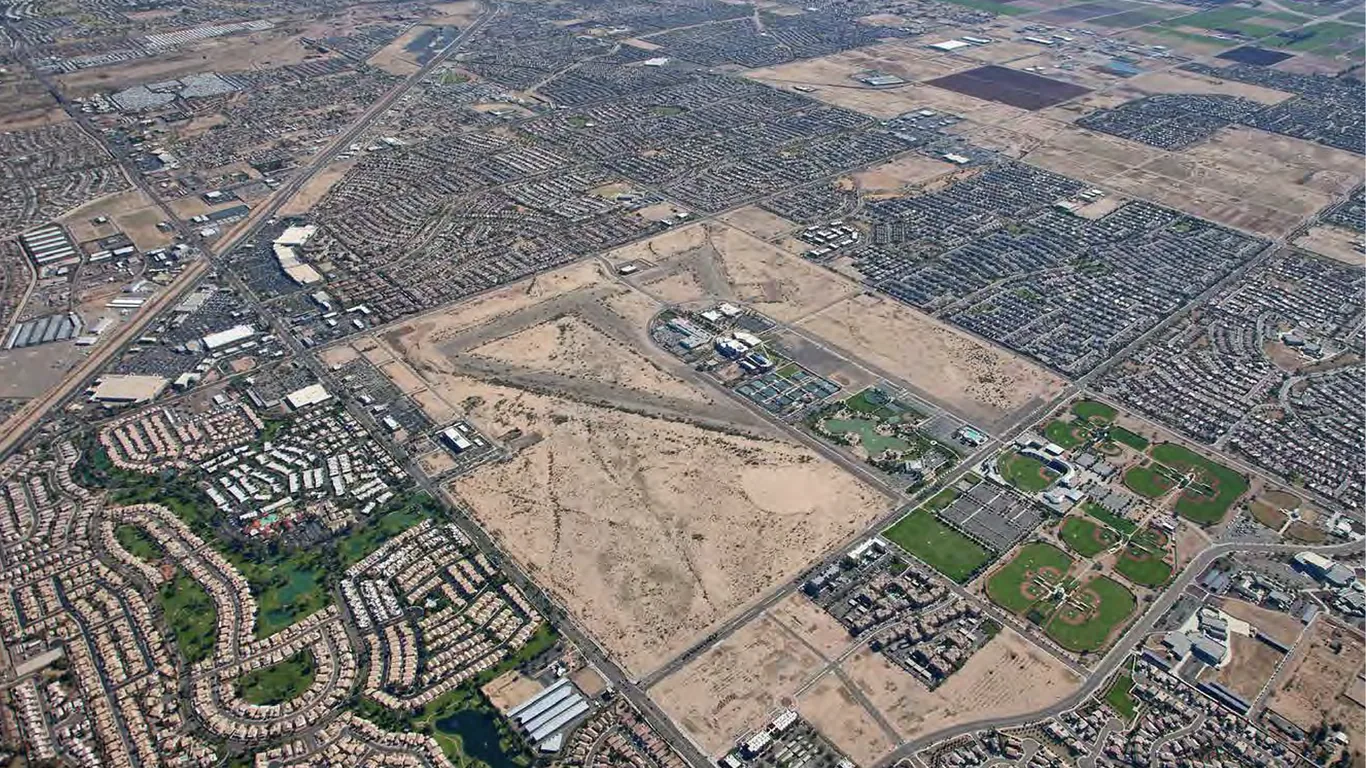
Related Roofing Work
Set the repair boundary
Share the leak location, recent weather, and roof access requirements. We can inspect the likely water path, coordinate a work window, and write a repair scope with photos and any follow-up items separated.