
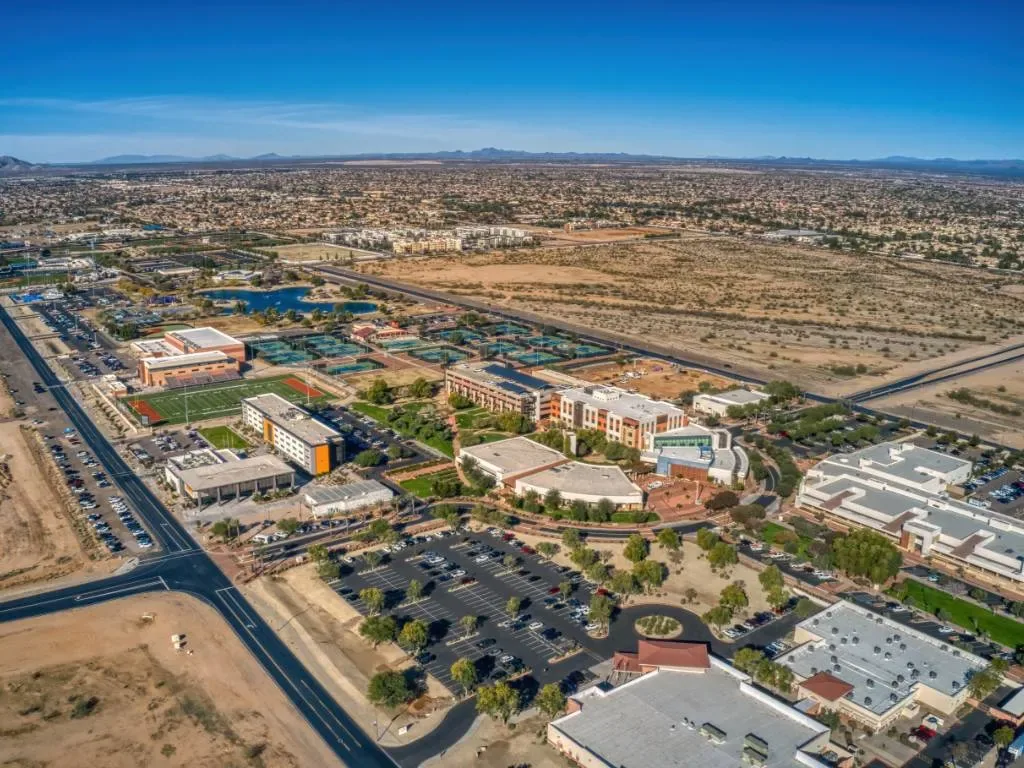
A service building near Surprise City Center can have a roof that looks quiet from the parking lot and still needs a seasonal check at its drains, seams, edge metal, and rooftop equipment. Maintenance is the work that keeps small defects from becoming a shut-down decision during a busy week. We walk the roof, photograph changes, clear drainage paths where accessible, and separate routine service from repairs that need a written scope. The west-valley sun makes surface aging worth watching, while monsoon runoff puts a different test on drains and perimeter details.
A maintenance visit with a purpose
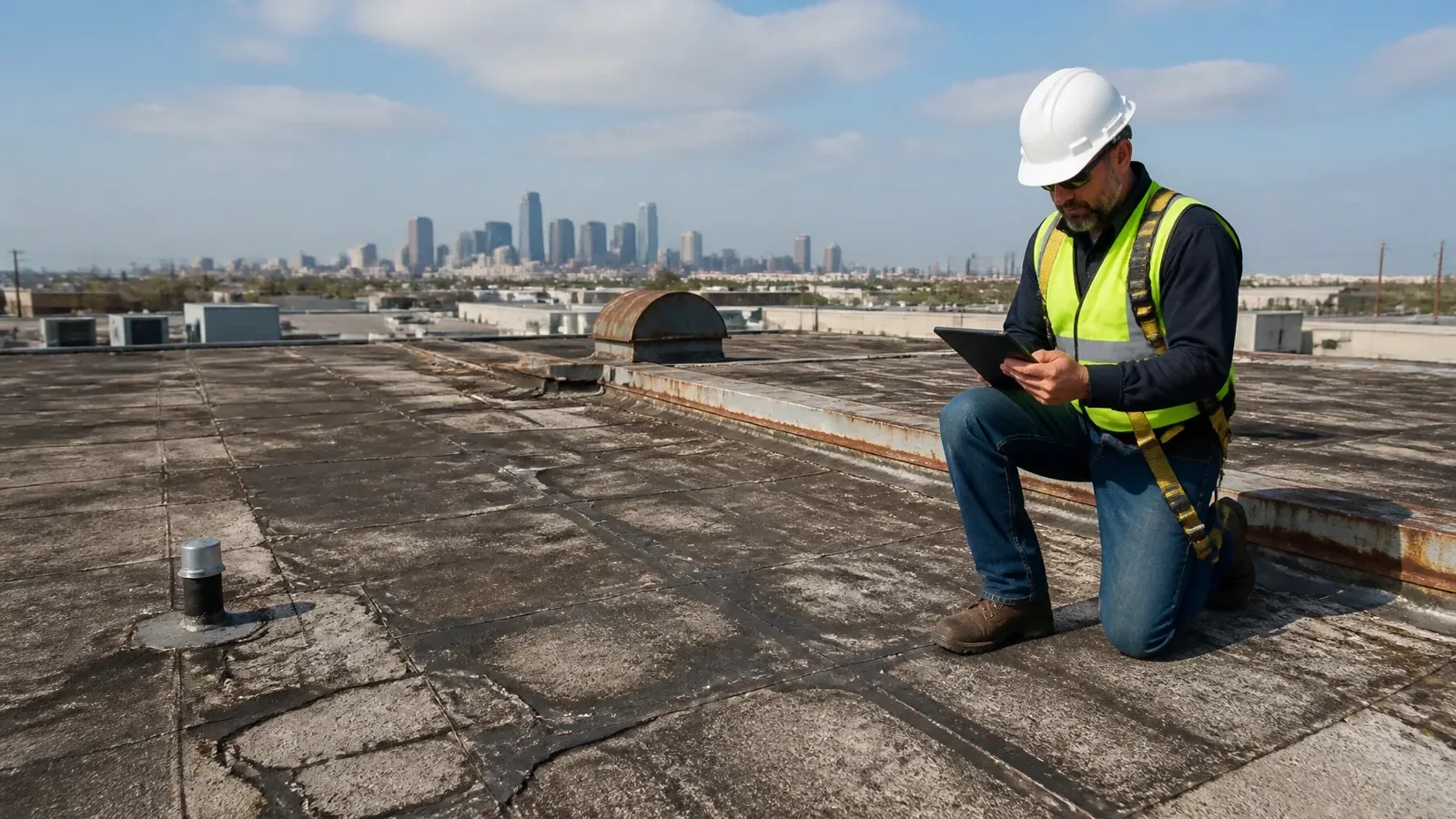
A useful visit starts with the building calendar and the last work record. We ask which rooms have shown water, what equipment trades have opened or altered, and whether a prior patch has moved. On the roof, we trace those items to seams, penetrations, curbs, walls, drains, and edges instead of treating every mark as the same problem. A dated photo and location note let the facility lead distinguish a new condition from an older repair and choose a next step without relying on memory.
Along the Loop 303 corridor, a distribution roof may have long membrane runs and repeated rooftop units. At a smaller City Center property, a single drain or curb can matter more to the day than a broad field seam. The route changes with the roof, but the record stays plain: observed condition, likely repair boundary, access limit, and follow-up timing. That makes a hands-on roof inspection useful even when no active leak is reported.
Seams, penetrations, and the repair boundary
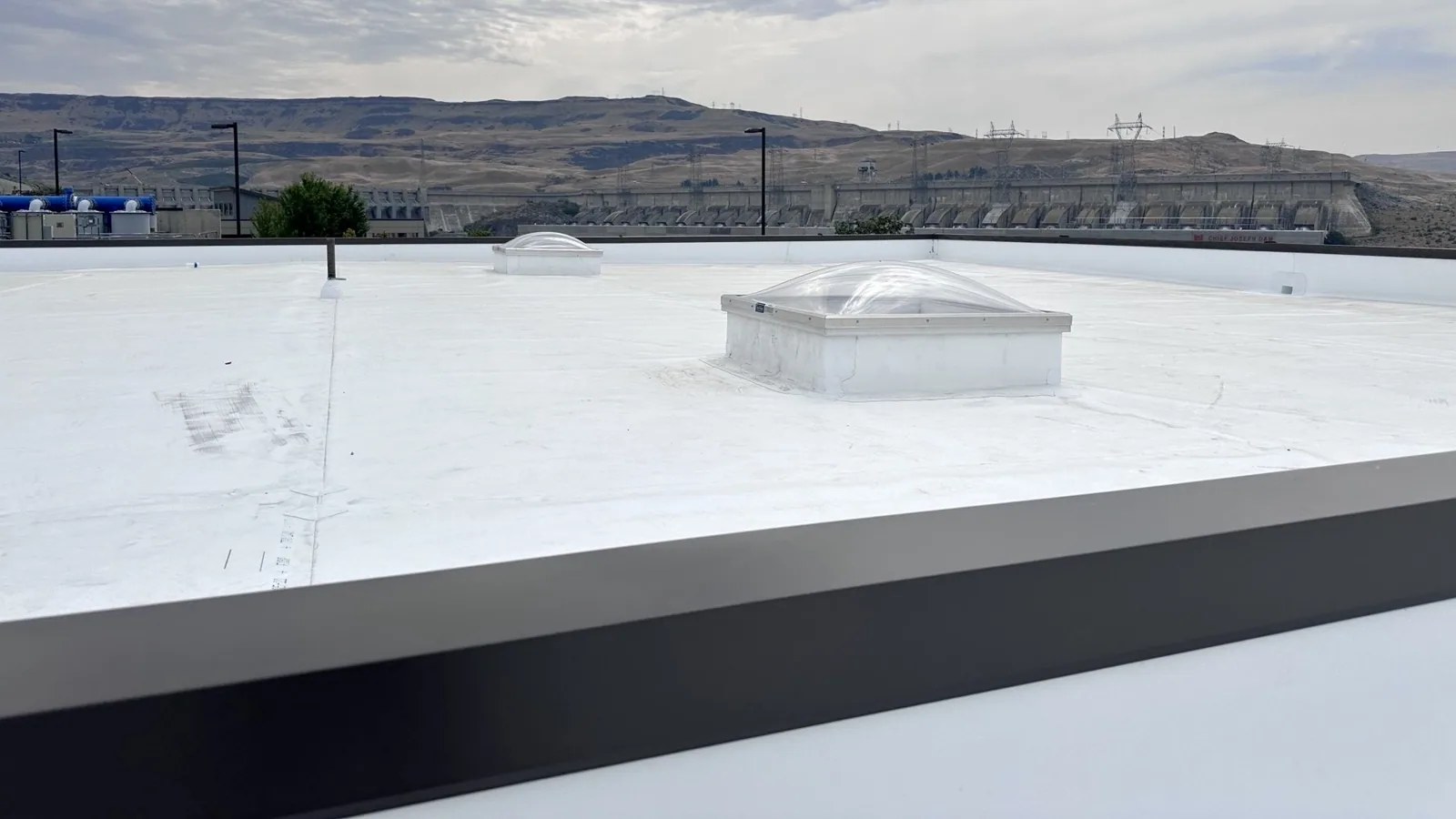
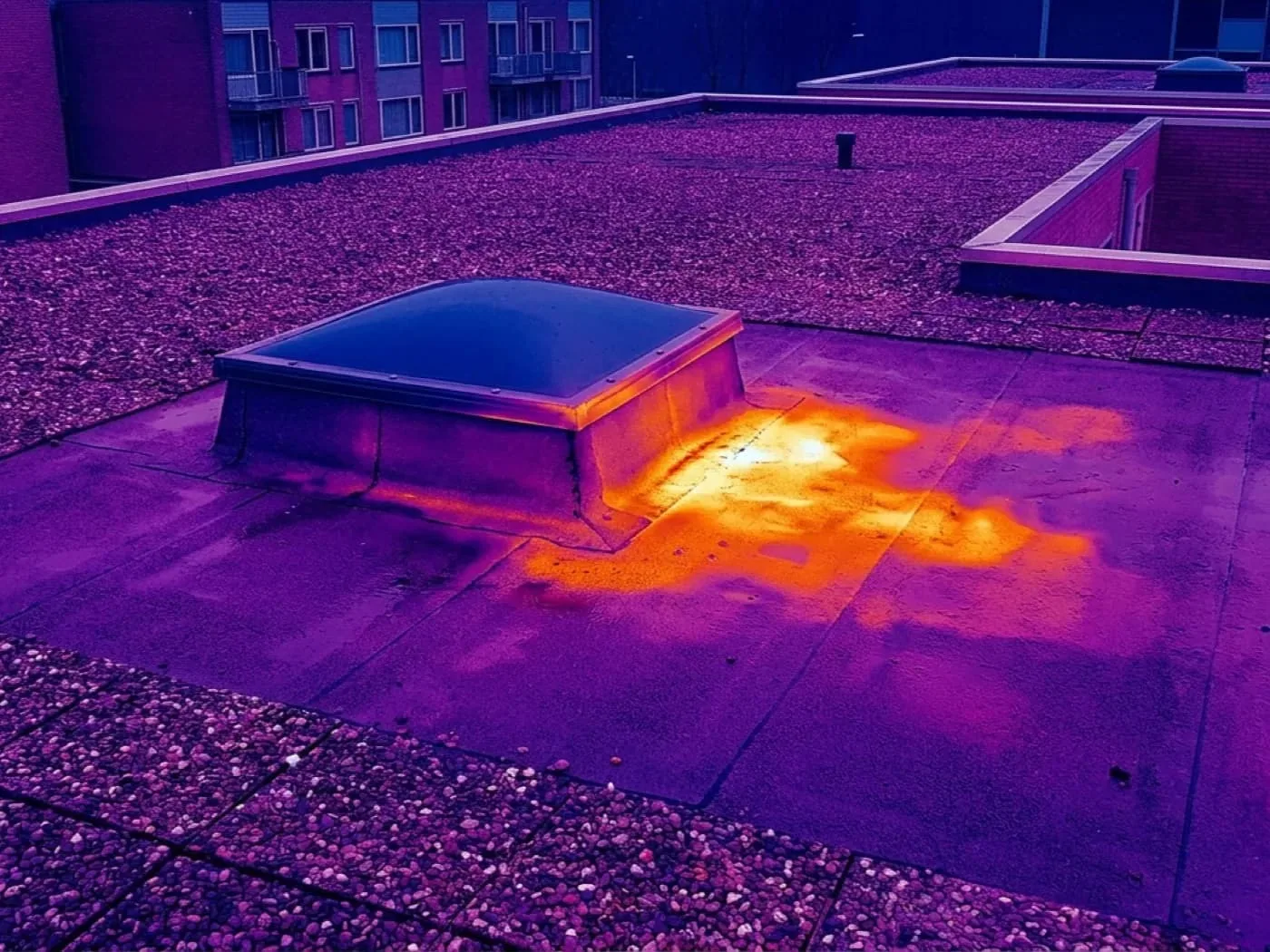
We check membrane laps for lifted edges, open welds, punctures, shrinkage, and repairs that have begun to separate. At a curb or pipe penetration, we look for a split transition, loose counterflashing, or a sealant bead that no longer follows the joint. These are different repair conditions, so the maintenance note should identify the detail rather than simply say that the roof needs attention. Where moisture is suspected below the surface, we can use an infrared moisture survey to help select areas for confirmation instead of opening the roof at random.
Maintenance does not turn a wet assembly dry. If the inspection finds saturated insulation, a deteriorated deck, or widespread attachment trouble, we mark that separately and discuss repair, recover, or replacement. For a sound membrane with isolated wear, a defined patch may be the right next scope. We show the affected area and the limit of the proposed work so the owner can compare what is being corrected with what remains to monitor.
Heat and monsoon checks
Surprise shares the hot low-desert setting reflected in Phoenix Sky Harbor's July normal mean of about 95.5 degrees, a regional benchmark rather than a reading from a Surprise station. Repeated heat makes it sensible to look closely at exposed seams, flashing, and older sealant during regular service. Summer monsoon thunderstorms in Phoenix metro can send heavy rain, gusty wind, and flash flooding across the region. A maintenance route should check the drainage path and edge attachment, while the roof itself determines whether a defect is present.
On a Railplex roof with freight activity, the maintenance plan should include a safe route around equipment and loading operations. For a retail roof near Cactus Road and Loop 303, the timing may need to avoid deliveries and tenant access. We coordinate the walk around those uses, then record which drains were clear, where debris had collected, and whether water marks suggest a recurring issue. A Railplex roof walk and a Cactus Road corridor visit each start with the property's actual access plan.
Drainage that stays in the route
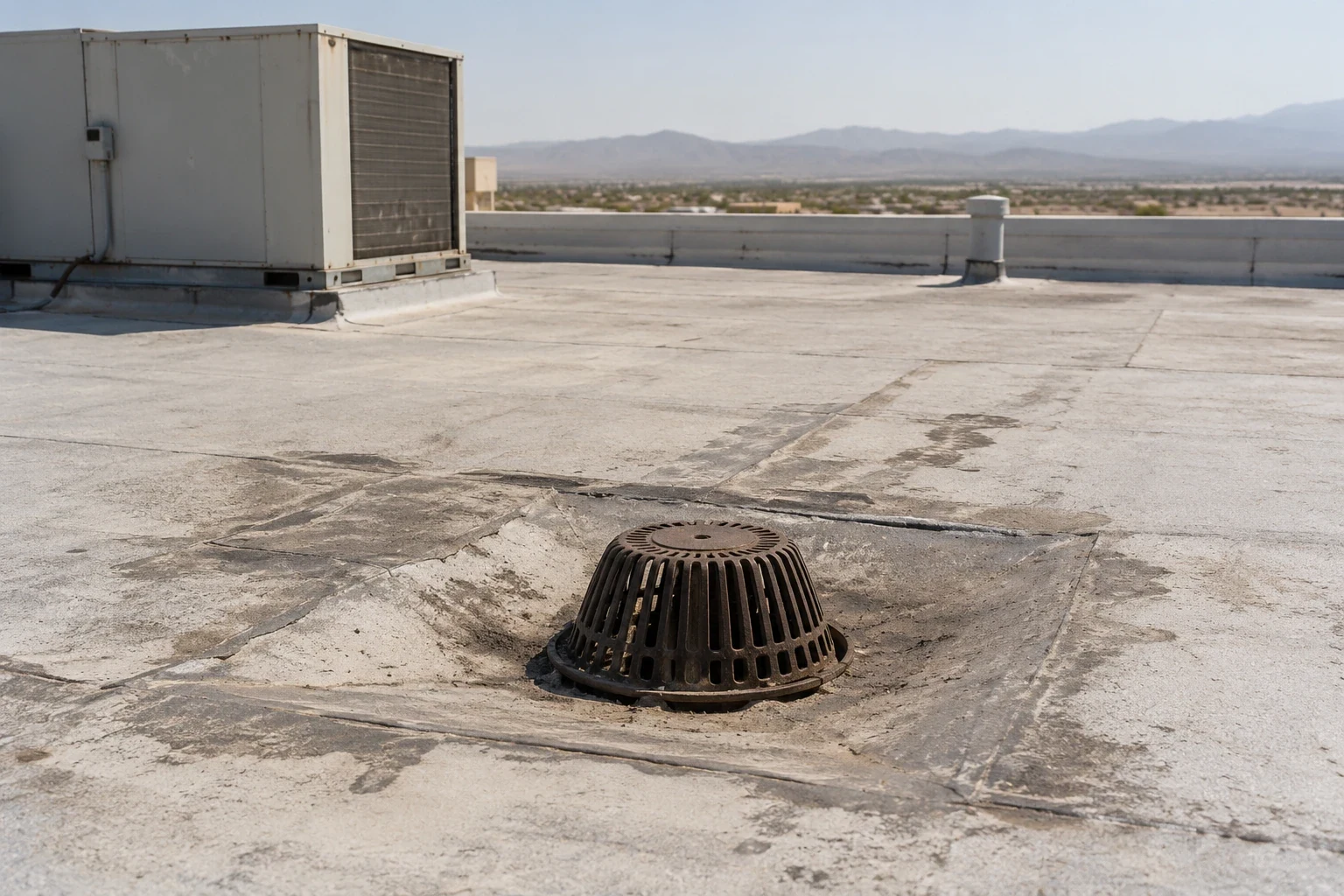
Leaves, dust, packaging, and loose material can restrict a drain even when the membrane field looks intact. We check whether water can reach the drain, whether the strainer and bowl are accessible, and whether a cricket or tapered path is directing runoff the right way. A clogged outlet can hold water against a seam or flashing and make the next inspection harder to read. If the drain, scupper, or surrounding slope needs correction, we document that as a repair rather than hiding it inside a general maintenance allowance.
Drain cleaning also has a boundary. We do not disturb a secured opening or an electrical assembly to reach debris without the right access and trade coordination. The record notes what was cleared, what remains blocked, and what needs another trade or owner decision. Where a water problem needs more than routine service, we can scope drain, scupper, and ponding corrections as a separate repair. That keeps recurring water from being described as a simple housekeeping item.
A repeatable roof record
The adopted Surprise codes include the 2024 International Building Code and International Existing Building Code with local amendments. Keeping roof records together helps a later repair or alteration start with the right assembly history. We can note the membrane type when visible, prior patch locations, changed equipment, drain conditions, and photos that show a developing issue. Before a substantial alteration, the project team can confirm applicable local requirements and scope with the proper design and permitting contacts.
For a multi-building portfolio, the same record format makes roofs easier to compare without implying that each one needs the same work. A manager can sort items into routine cleaning, near-term repair, and further investigation, then tie each item to a photograph and location. Our roof condition reports can support that handoff, and roof asset management can keep maintenance findings with longer-term decisions.
Work that fits the operating day
A maintenance visit still needs a roof access plan. We confirm the ladder or hatch, escort rules, rooftop equipment zones, and any area where a tenant or production task cannot be interrupted. If debris removal or a repair creates noise, fumes, or a temporary opening, the work can be sequenced for a safer window and a clear handback. An occupied City Center property and a Railplex distribution building need different access windows.
Our written list separates what the crew can complete on the visit from repairs that need materials, approvals, or another trade. That helps the owner decide whether to schedule a small repair now or plan a larger scope after additional review. When a leak is active, emergency response is available day or night, including weekends and holidays, with the immediate boundary and permanent work recorded separately.
Commercial Roofing Questions
What should a maintenance report show after a roof walk?
A useful record ties each finding to a roof location, dated photo, observed condition, and proposed next step. We separate clearable debris from a seam repair or moisture investigation, then note limits such as a locked equipment area.
Does a maintenance plan mean the roof is in good condition?
The visit describes what we could observe and what the assembly needs next. It does not certify every hidden layer. If a drain is clear but water marks remain, we record that difference and recommend the next check instead of calling the whole roof sound. A repair boundary or test opening can answer a narrower question.
How do you plan service around a retail or warehouse schedule?
Access, delivery windows, and equipment work set the route. We can agree on a hatch or ladder, mark areas to avoid, and complete the walk in sections that keep the building moving. In Surprise, a City Center tenant schedule differs from Railplex loading activity, so the visit plan should fit the property rather than use one fixed route.
What if the walk finds wet insulation or an old patch that has opened?
We photograph the condition and identify whether the next step is a localized repair, moisture confirmation, or a broader assembly review. Wet insulation may need removal before a durable repair can be made. We state what is visible, what remains uncertain, and what work would answer it, then prepare a separate scope for approval.
Can maintenance help us plan the next capital request?
Yes, when the findings are organized by urgency and tied to a repair boundary. We can group routine service, known defects, and further investigation so the owner can compare immediate work with later replacement planning. Photos and roof locations keep those discussions grounded in conditions instead of an unsupported assumption about remaining life.
Ready to review the roof scope?
Request a Roof Assessment
Related Roofing Work
Set a roof maintenance route
Share the roof plan, prior repair notes, and building access windows. We can coordinate a Surprise roof walk, document drainage and detail conditions, and separate routine service from repairs that need a written scope.