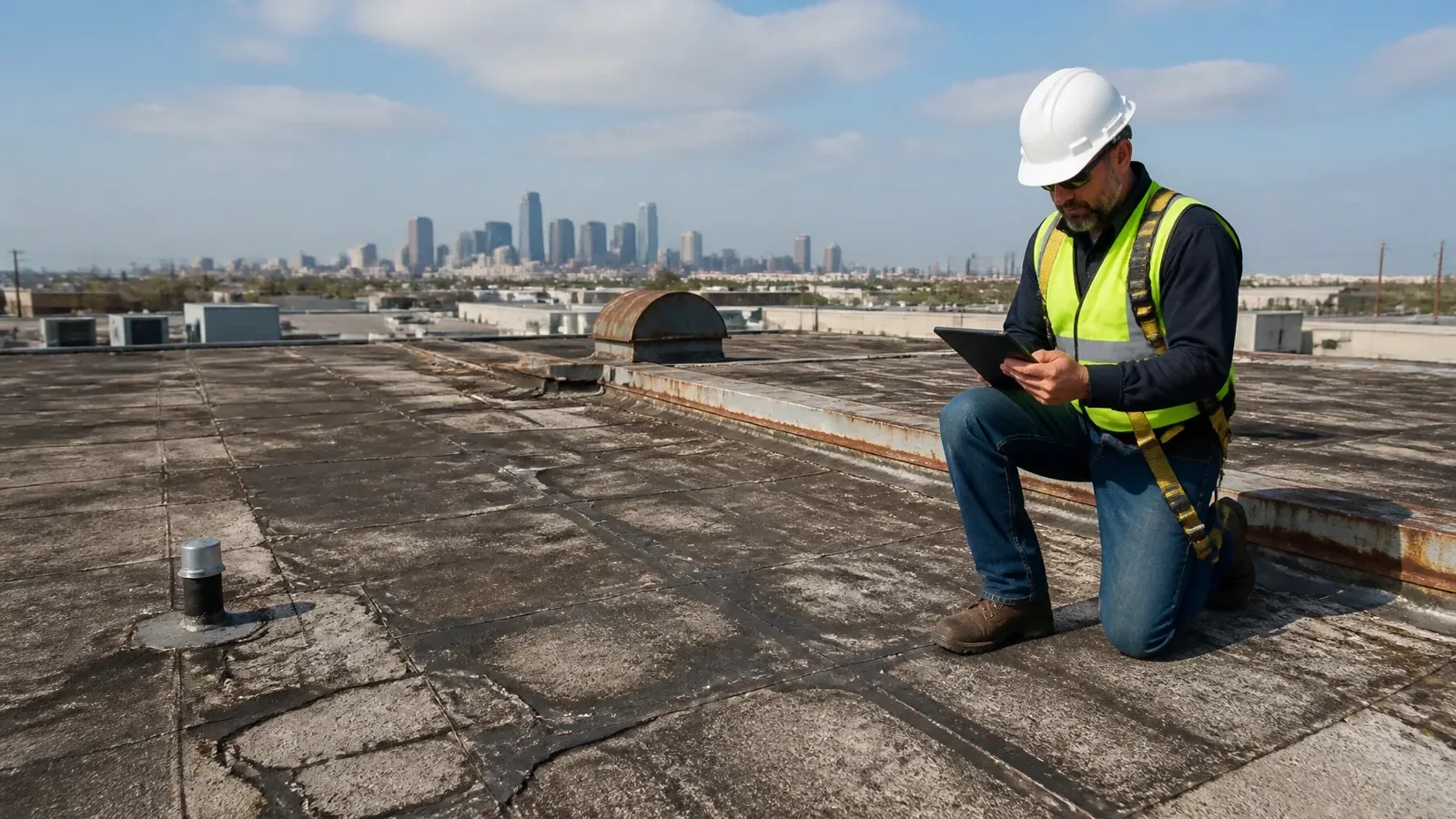
A facility lead preparing work near the Surprise Railplex needs an inspection that separates observed roof conditions from assumptions about the building. We walk the roof, identify the membrane and visible layers, check seams and transitions, and note how water reaches the drains. Rooftop equipment, access routes, and past repairs are recorded against the roof plan when one is available. The result is a practical condition picture: which items need repair, which areas need testing, and what the owner can budget or monitor without treating every roof issue as a replacement.
Start with the assembly and the record
Before stepping onto the roof, we review plans, leak calls, repair invoices, warranties, and any prior inspection photos. The records may identify additions or a membrane change, but the field walk checks whether the roof still matches them. We note access points, ladder locations, rooftop units, skylights, penetrations, and areas where maintenance crews may cross the membrane. A warehouse can have long uninterrupted runs; offices and retail buildings can have more equipment or tenant-specific access limits. We map the actual roof rather than applying a stock checklist to every property.
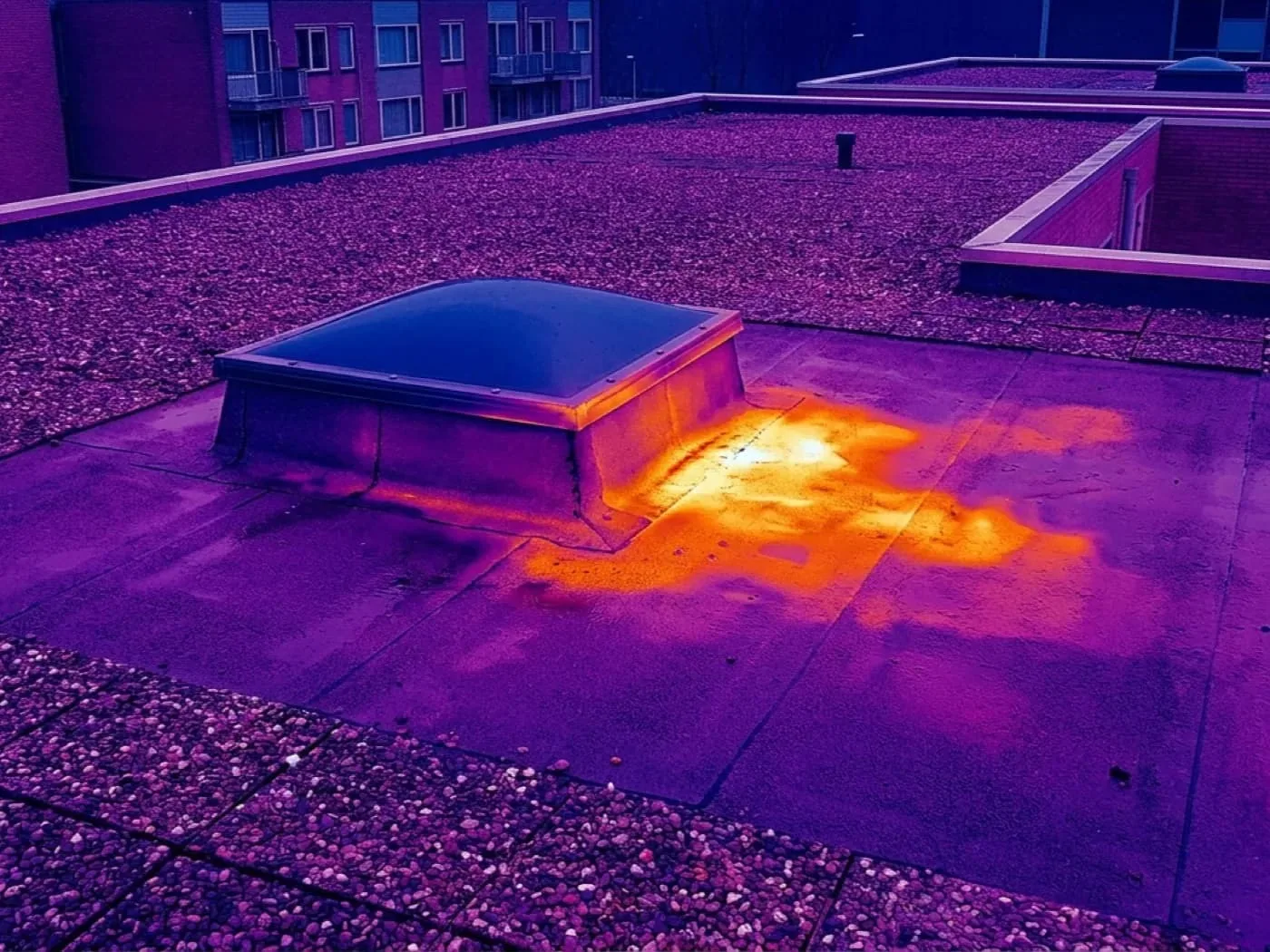
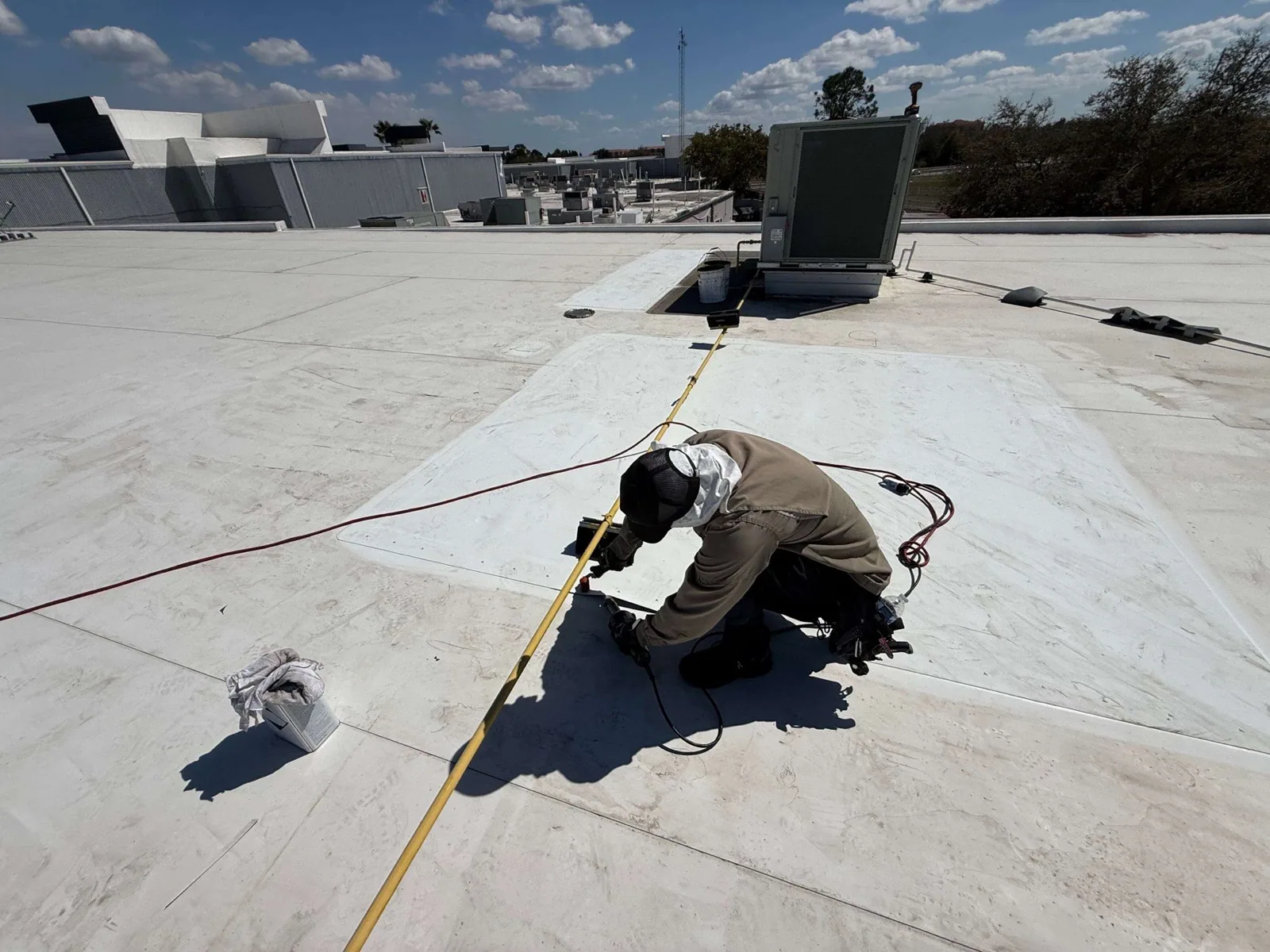
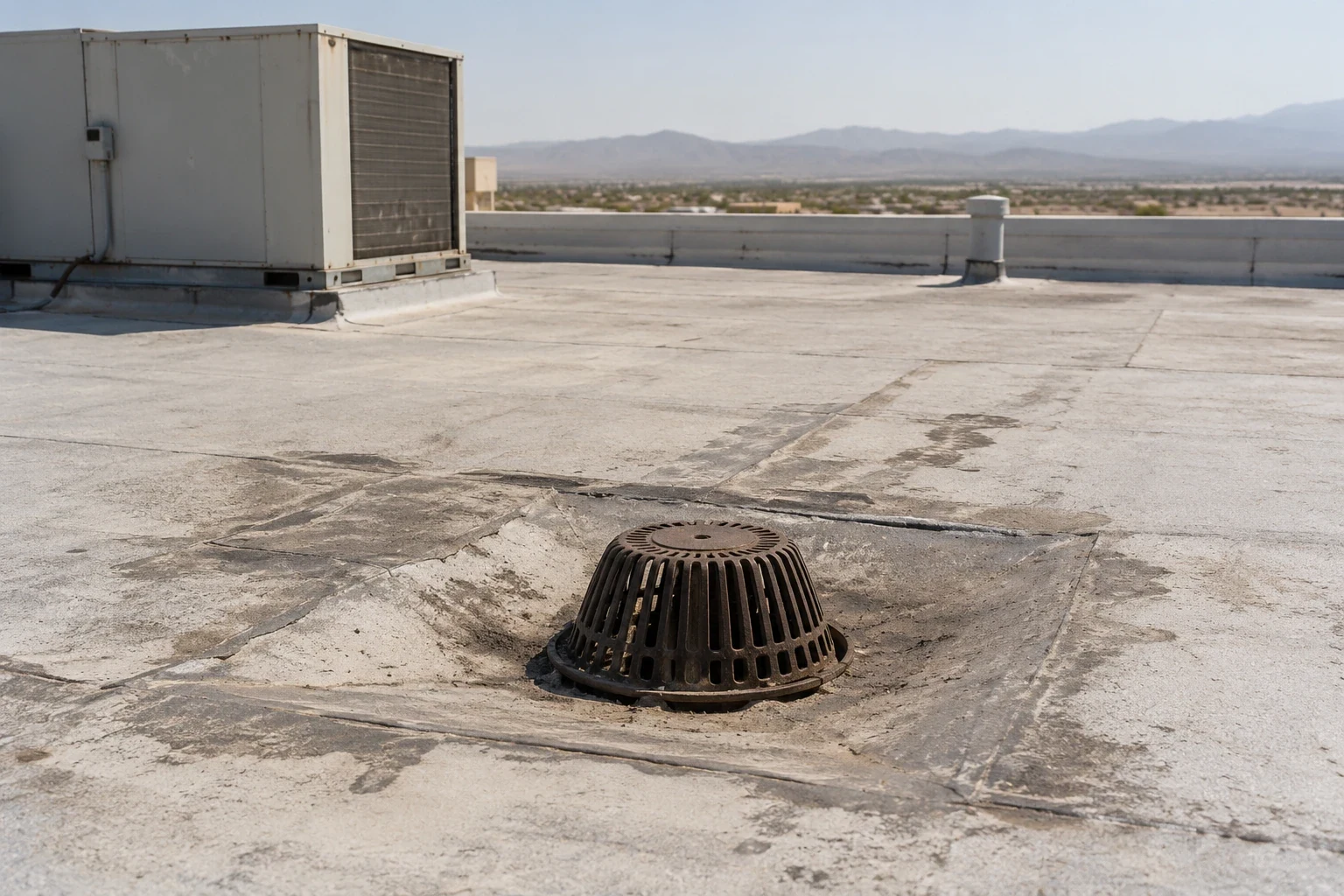
On the surface, we inspect seams, laps, flashings, metal edges, drains, scuppers, expansion joints, and visible patches. We look for open details, loose material, surface wear, ponding evidence, debris, and conditions that warrant a closer test. If an assembly has layers we cannot confirm visually, we mark that uncertainty and discuss a test cut rather than writing a definitive conclusion from a surface view. Drone imaging can supplement the walk on large or difficult-to-access areas, while an infrared moisture survey can help identify locations for field check.
Read the roof in the local weather
The Phoenix region brings long periods of summer heat, and Phoenix Sky Harbor climate normals provide a metro benchmark rather than a Surprise roof reading. Repeated high surface temperatures make membrane, sealant, and flashing condition worth documenting. We note cracks, open laps, brittle edges, and repairs that may not move with the assembly. Those observations help distinguish a maintenance item from a larger system concern without claiming heat alone caused a particular failure.
Monsoon thunderstorms in central Arizona can bring damaging wind and heavy rain. We inspect perimeter attachment, equipment curbs, drainage paths, and overflow points with those conditions in mind. Surprise's Loop 303 corridor connects broad development areas, including the Railplex and northern employment growth. A building near the freeway may have different access and rooftop equipment from a site near Surprise City Center. The report ties findings to the specific roof and uses local weather only as context for what the inspector checks.
Make each finding useful
A strong inspection note names the roof section, the observed condition, the risk it presents, and the next field check or repair step. “Seam open at west unit” gives the crew a place to return; “roof is aging” does not. We use dated photos with clear plan references and separate immediate water entry from maintenance items. If a condition cannot be confirmed from the surface, the report says what test or access is needed instead of filling the gap with a guess.
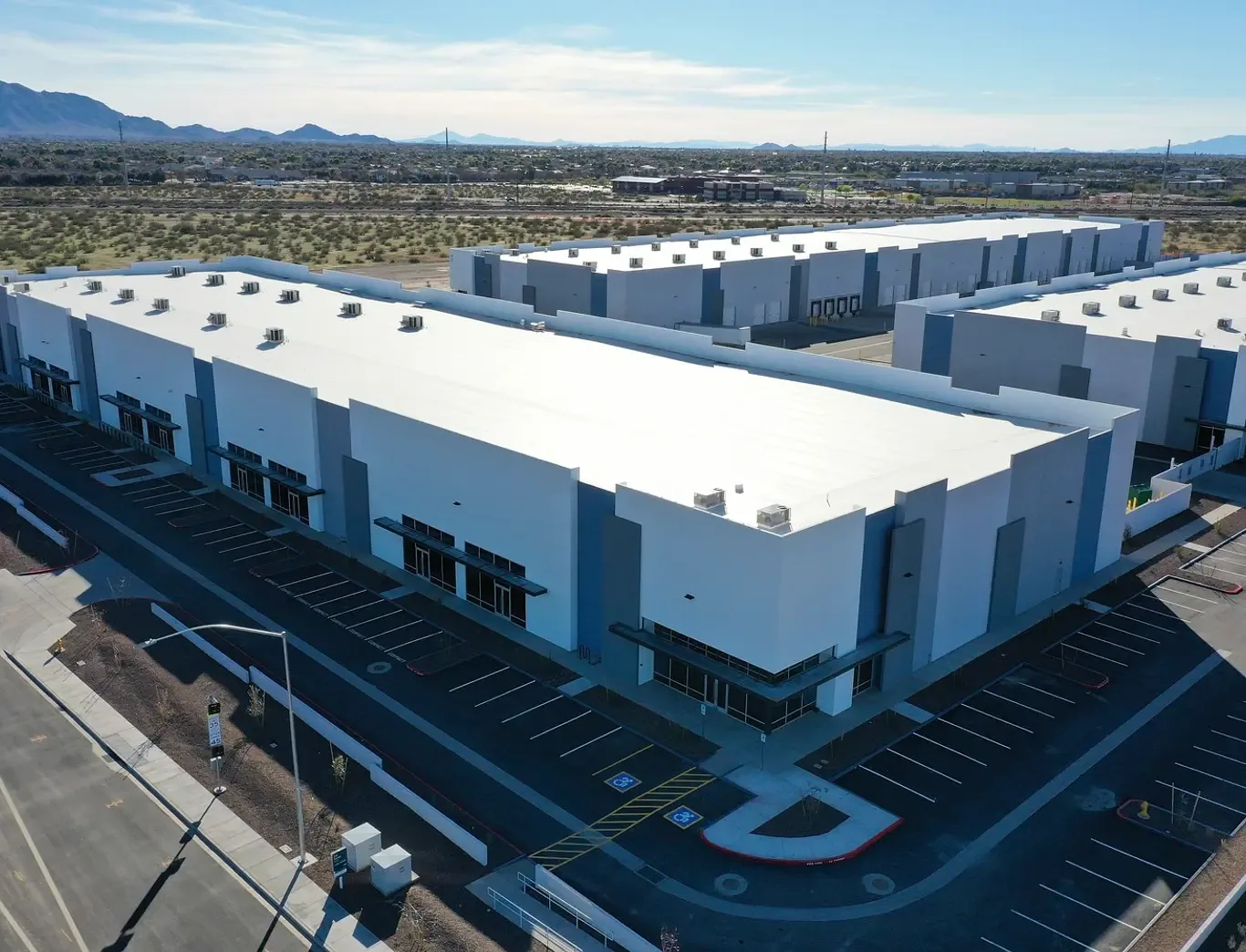
For a warehouse or distribution building, the roof inspection should make clear how dock operations, rooftop units, and repair access fit the work plan. For a retail property, it may be important to mark tenant areas and any drain route shared across sections. We list the material when it can be identified, note visible repairs and transitions, and keep a separate record of what remains concealed. The facility team can then compare one roof with another without mistaking a count of defects for a capital recommendation.
Choose repair, testing, or replacement study
An inspection should help decide what happens next. A single open seam may call for a repair; a wet area may call for a test cut; widespread deterioration, recurring leaks, or compromised attachment may warrant a replacement study. We identify what evidence supports each step and what is not known yet. That keeps a small repair from turning into an unsupported capital recommendation, while also avoiding a cosmetic patch when the assembly needs a closer look.
Where a leak is active, leak tracing can identify the entry path before a repair boundary is set. A roof with recurring drain or scupper problems may need drainage corrections alongside membrane work. For long-term planning, a written condition report can support board, owner, or general-contractor review with photos, observed priorities, and open questions listed separately.
Schedule access around the building
We coordinate the inspection time, roof key or escort, equipment constraints, and any areas the facility team cannot release. The general contractor can identify active construction, roof penetrations in progress, or materials staged above ceiling areas. We set a walking route that avoids unprotected edges and protects fragile skylights or panels. If the roof cannot be safely accessed, we explain which views were available and what additional access is needed before the report is complete.
Surprise City Center is a downtown development area with civic, retail, restaurant, healthcare, hotel, and commercial-service uses across multiple blocks. Those operating needs vary by building, so we confirm the schedule with the property contact rather than assume a common access window. Surprise also adopted updated building and energy codes in 2026 with local amendments. If the inspection is feeding a reroof or alteration scope, the applicable permit requirements should be checked before the owner relies on a budget or assembly recommendation.
A roof record the team can revisit
The report can include a roof plan with marked sections, dated inspection photos, visible assembly notes, repair history provided by the owner, observed conditions, and recommended follow-up. We keep the finding and recommendation distinct: a photo shows what was present during the visit, while a repair or test scope explains what should happen next. If the owner wants a later comparison, consistent photo locations and labels make changes easier to spot.
We can walk the roof with the facilities lead or general contractor, review the findings, and prepare a written scope for the next step. A maintenance program can carry inspection items into a regular schedule after urgent repairs are addressed. For a growing commercial property near North Surprise's employment area, the same plan-and-photo method can help track separate roof sections as construction and occupancy change.
Commercial Roofing Questions
What does a hands-on inspection include?
We review available roof records, walk accessible surfaces, identify the assembly where possible, and check seams, flashing, edges, drains, equipment curbs, and visible repairs. Findings are photographed and marked to a roof plan when available. Any concealed condition that needs a test is listed separately from what was visible on the day of the walk.
Can an inspection tell us how many years remain on the roof?
A roof walk can document condition and identify areas that need repair or testing, but a remaining-life number needs a reliable basis for the specific assembly. We describe what is visible, what records were reviewed, and which conditions affect the next decision. That gives an owner a clearer planning input than a number unsupported by the inspection.
Should we use infrared or core cuts during an inspection?
The method depends on the question. Infrared can help map potential moisture differences under suitable conditions, while a core cut can check the actual layers and moisture at a selected point. We use findings to choose locations for confirmation and explain when surface inspection is enough. Neither method should be treated as proof beyond what it measures.
Can the inspection happen while the building is open?
Often, if safe roof access and the owner's operating constraints can be coordinated. We confirm ladder or escort access, equipment restrictions, tenant hours, and any area under active construction. The walking route avoids unsafe edges and fragile surfaces. If a section cannot be released, we mark the limitation and state what additional access is needed.
What should we receive after the roof walk?
A useful closeout identifies the date, roof sections inspected, assembly observations, photographs, conditions found, and recommended next steps. It should separate a repair from a test or replacement study and list any areas not accessed. We can review the findings with the project team so the scope and budget follow the evidence.
Ready to review the roof scope?
Request a Roof Assessment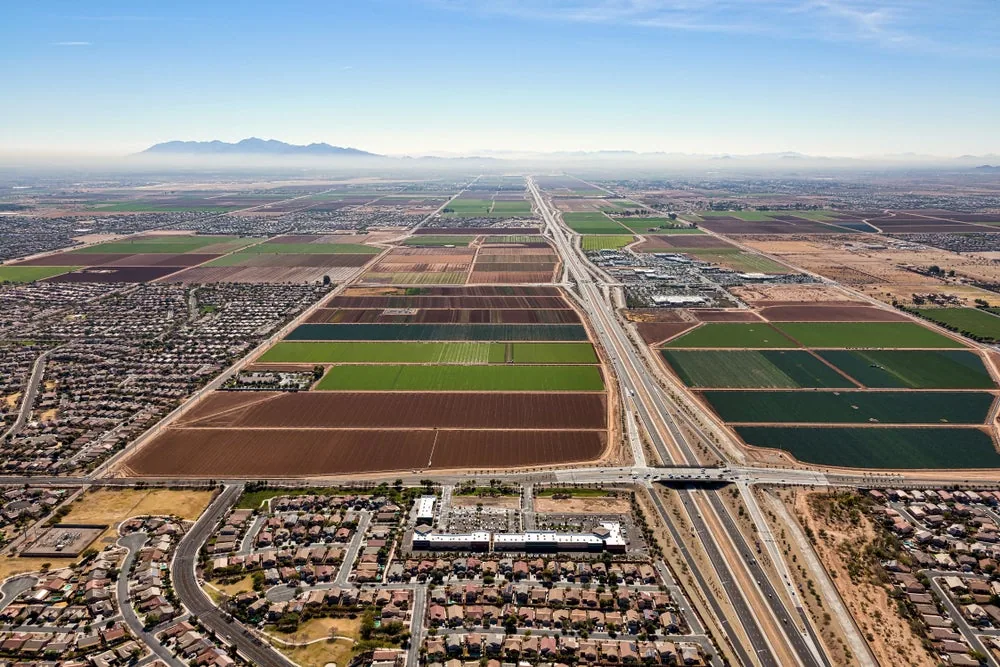
Related Roofing Work

Set up a roof inspection
Share available roof plans, repair records, leak locations, and access requirements. We can coordinate a roof walk with your facility lead, mark findings on the plan, and prepare a written condition record with next steps.