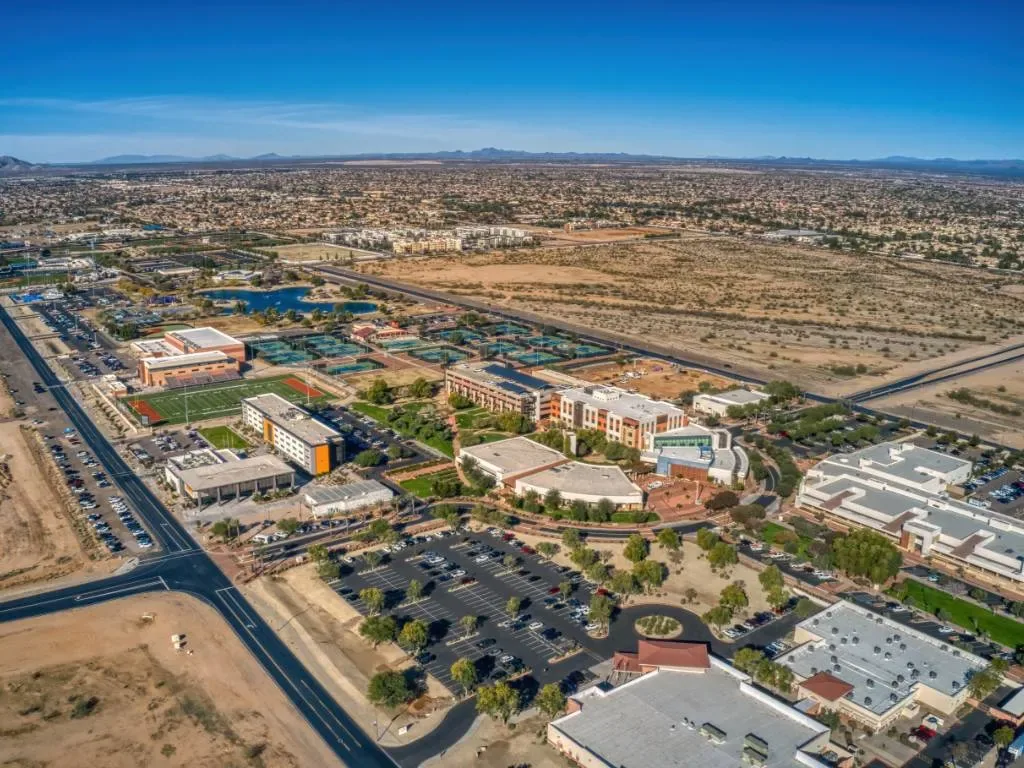
A retail building near Village at Prasada has business hours, deliveries, and rooftop equipment to keep moving while a roof decision is made. A recover overlay avoids removing every layer, but only works when the roof below is dry, the deck is sound, and the added assembly meets project requirements. We inspect, check for trapped moisture and weak attachment, and mark where conditions change. Then we compare overlay with repair or tear-off before material is ordered.
What stays beneath the new roof
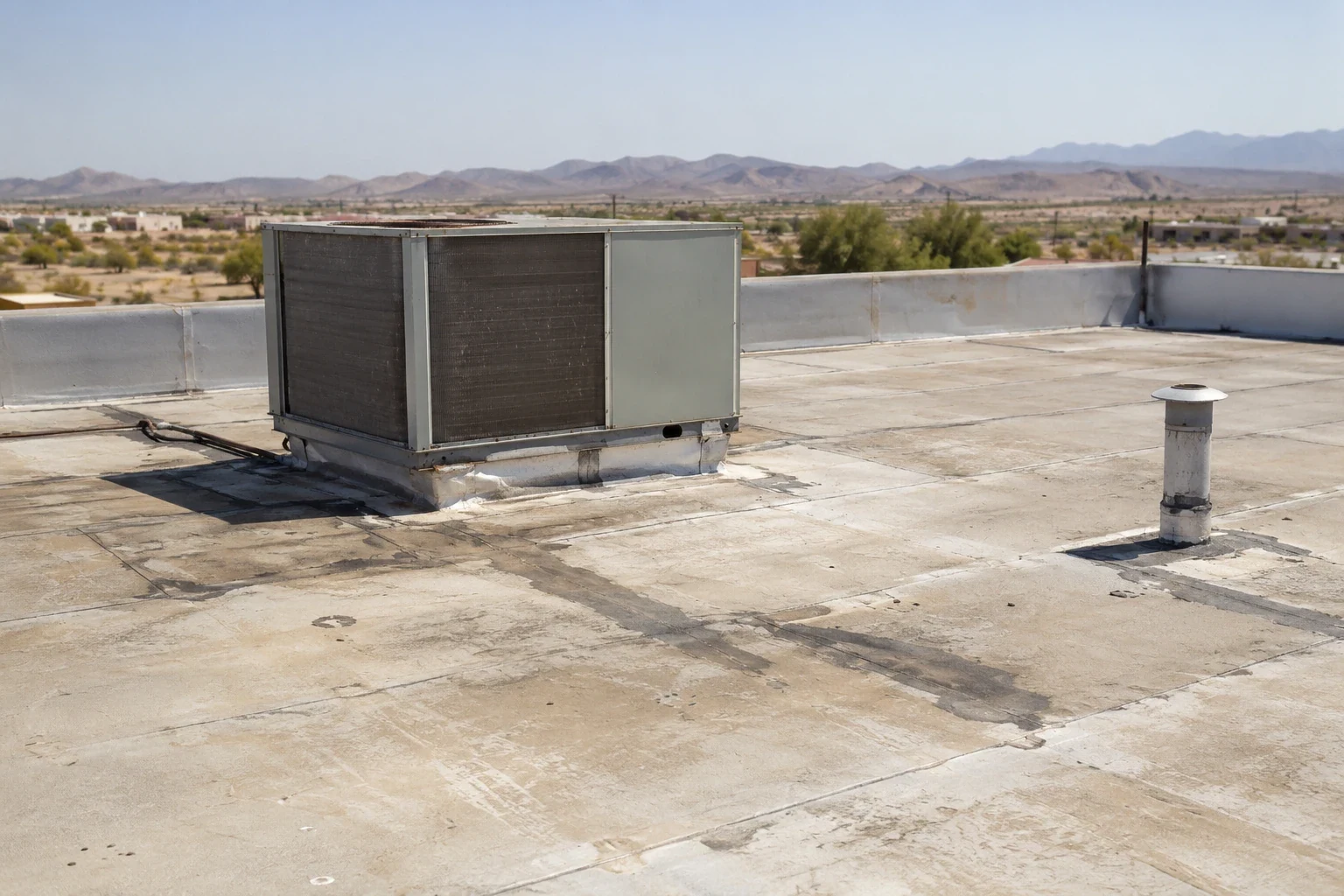
A recover leaves the existing roof in place, so its lower layers matter. We review repair records, roof plans, past test cuts, and the existing membrane. On the roof, we look for blisters, open seams, soft areas, patches, wet insulation, and standing water. A small wet pocket may be isolated; broader moisture can rule out an overlay. A dry surface does not prove the assembly below is dry.
Test cuts answer that question. We place them where observations suggest a change, document each layer, and close the opening to suit the roof. If a recover remains possible, a new TPO membrane can be evaluated against the deck, insulation, edge details, and attachment method. An overlay is not automatically cheaper or faster; access, preparation, perimeter details, and existing defects change the scope.
Added weight and permit path
An added layer adds weight and raises the finished surface at edges, curbs, drains, and thresholds. We check the assembly, deck, available structure information, and details that would be buried. An engineering review may be needed before the scope is settled. New membrane height can affect metal transitions, curbs, vents, and drain flow. Those dimensions belong in the Diligence Notes, not a late change order.
Surprise's adopted 2024 building and existing-building codes, effective in 2026 with local amendments, make the permit path something to confirm for the actual work. We check applicable requirements rather than assume a recover is allowed because another building used one. If the overlay changes insulation or energy performance, the energy code and project scope need review too. That review helps a property team compare roofs near City Center or the Railplex using the same record of what each assembly can support.
Drainage before cover-up
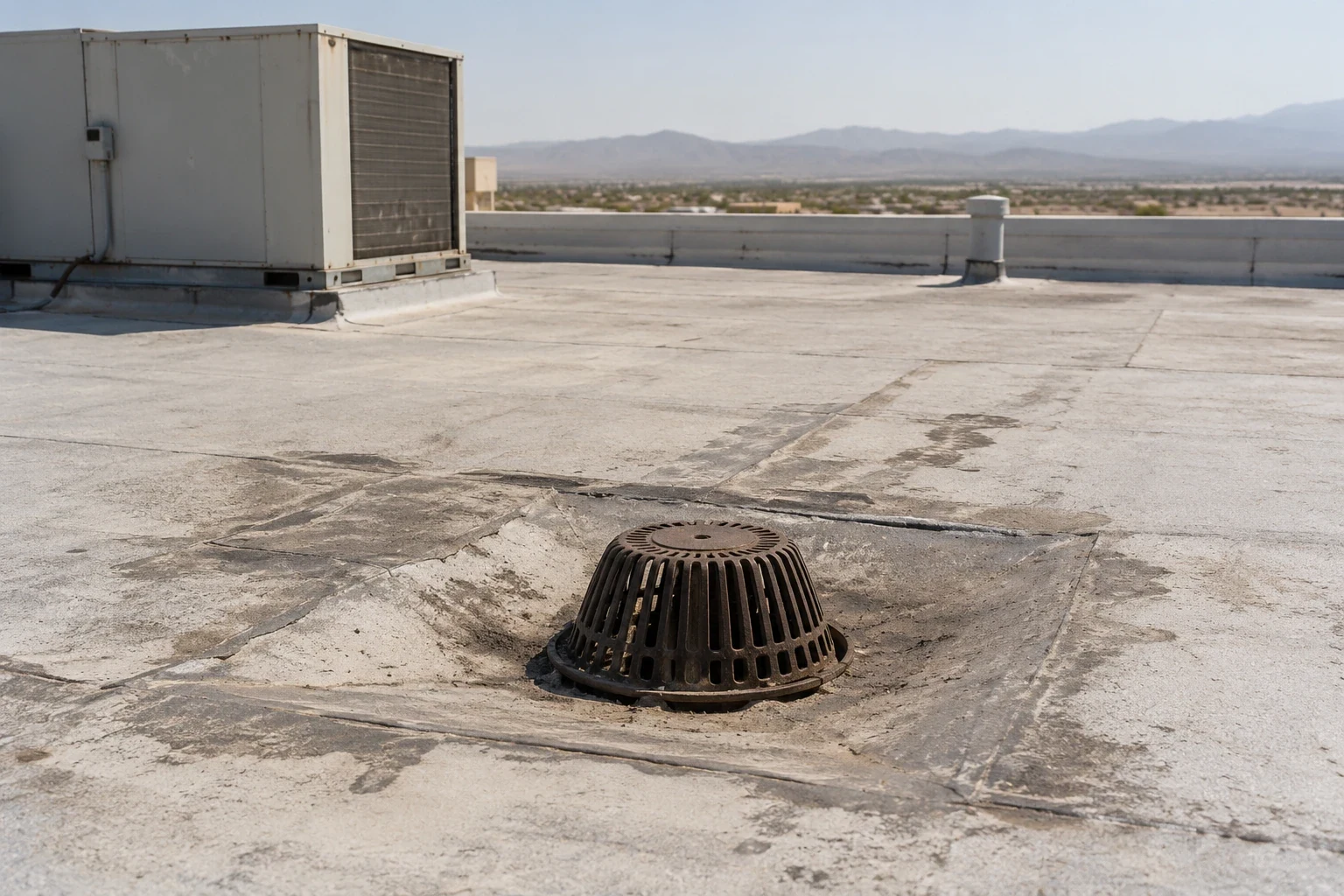
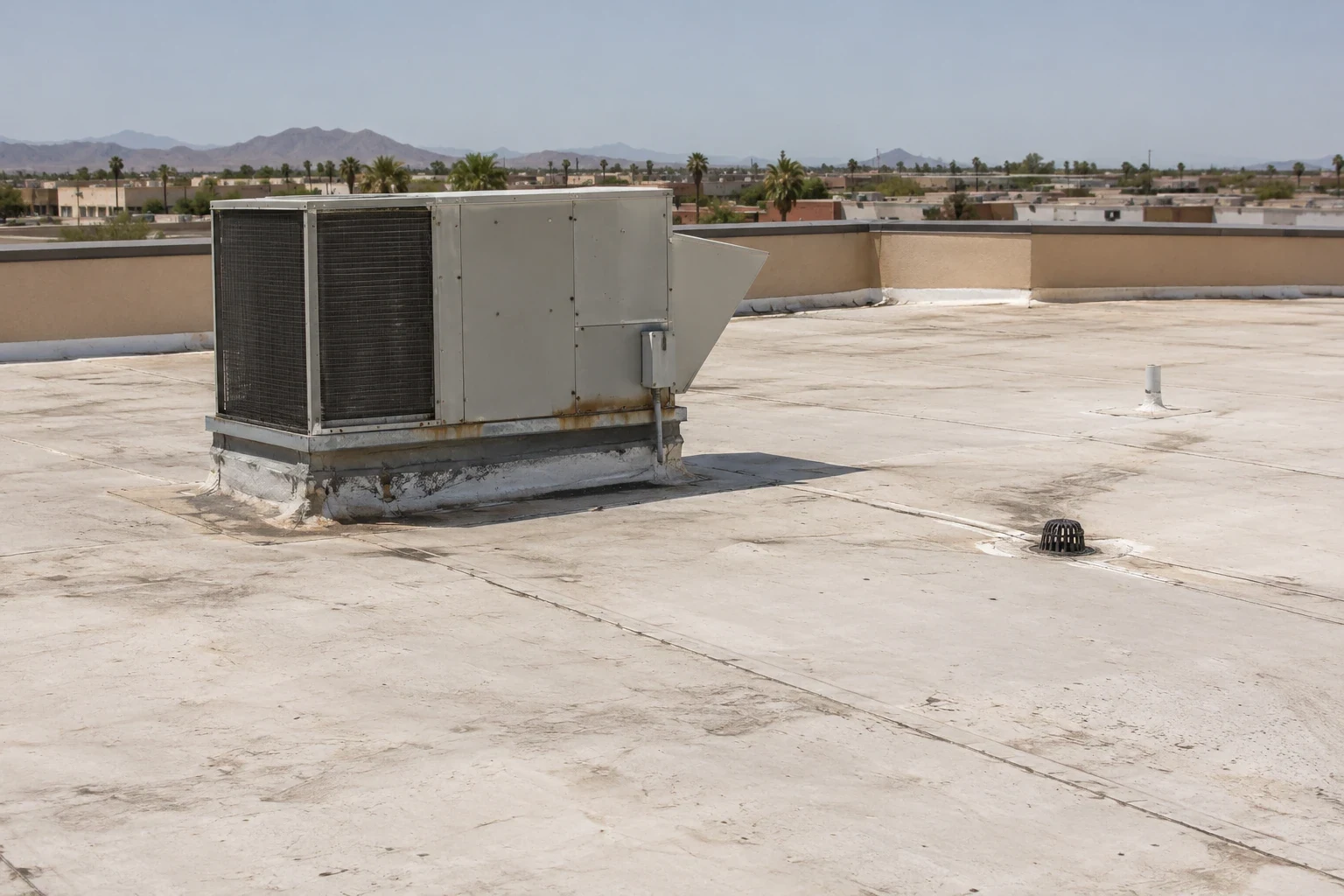
Water that already moves slowly will not disappear under new membrane. We inspect drain bowls, scuppers, crickets, overflow routes, and low points, then note where debris or compressed insulation may be holding water. Surprise monsoon storms can bring intense short-duration rain. A recover plan needs a runoff route, and every drain and scupper must remain accessible through the new assembly.
Where a drain is too low or a roof plane has a persistent depression, the scope may need tapered insulation, drain work, or selective removal before the overlay. We measure and photograph them, separating observed ponding from conditions that need correction. Drain and scupper repairs can be included in the larger work when they are part of the water path. For a building near the Cactus Road and Loop 303 commercial corridor, we also plan material staging and roof access around the site's operating lanes rather than blocking service traffic.
Building the overlay in safe sections
Once the roof is approved for a recover, the sequence begins with cleaning, repairs, and preparation of the existing surface. The crew secures loose material, removes incompatible patches where they interfere with adhesion, and rebuilds selected flashings and transitions. Attachment can be mechanical or adhered, depending on the assembly and substrate. We set test areas where needed and check the finished seam work before the crew advances across a larger section. The details at perimeters and penetrations receive the same attention as the field membrane.
On an occupied property, we divide the work into sections that can be opened, completed, and protected during a shift. That limits exposure if weather changes and gives the operations contact a clear handoff point. The Surprise Railplex is a broad freight-oriented industrial area with a BNSF rail spur and manufacturing and distribution uses. We ask the project lead which routes, equipment, and work windows must stay available before staging materials or setting access.
When repair or tear-off makes more sense
A recover is wrong when the lower assembly is wet, the deck has failed, attachment is unreliable, or too many layers would remain. Removal lets the team correct the substrate and drainage instead of enclosing a problem. If damage is isolated and the surrounding membrane is serviceable, a bounded repair may be sufficient while the owner plans future work. We explain the observed conditions and what each option leaves behind.
We also inspect the existing edge metal, wall transitions, curbs, and penetrations that need a new height or termination. A recover can require new metal even when the old field membrane appears sound. Photos and a marked plan help compare test cuts, scope limits, and allowances. A retail property roof can have many tenant penetrations, while an industrial roof may have large uninterrupted runs; the scope follows the actual layout, not a category label.
A decision record for the next budget
The closeout should show what layers remained, which areas were removed, where new insulation or membrane was added, and how the drains and terminations were handled. We keep dated photos tied to locations on the roof plan, so the facilities team can connect later leaks or maintenance findings with the recover boundary. That record helps when future work is planned near Village at Prasada, where buildings have different assemblies and access needs.
We can review plans, walk the roof with the general contractor, and prepare a written scope naming test cuts, repairs, and exclusions. If conditions rule out a recover, we show what replacement would add and what tear-off would resolve. Ongoing roof maintenance then keeps drains, seams, and flashings on a documented inspection path after installation. The owner can bring the roof plan, known leak areas, and operating calendar to the walk.
Commercial Roofing Questions
What has to be true before an overlay can go over the current roof?
The existing assembly needs to be dry enough, firmly attached, and supported by a sound deck, with a code-compliant path for the added system. We check the roof plan, visible conditions, and test-cut findings where moisture or layer changes are suspected. The review also covers height at drains, edges, curbs, and penetrations. If those conditions do not line up, we compare repair or tear-off instead.
Will an overlay stop water that is already trapped in the insulation?
No new membrane should cover wet insulation as though it were a dry base. We locate suspected areas, make test cuts where useful, and map what must be removed or dried. A recover may still work after selective removal if the remaining roof is sound. When wet material extends across the assembly, tear-off can give a clearer repair boundary and let us inspect the deck.
Can the roof drains stay where they are during a recover?
That depends on the existing elevations and the new assembly height. We check drain bowls, overflow openings, scuppers, and the slope of each roof plane before finalizing the overlay. If the finished surface would leave a drain too low or interrupt a flow path, the scope needs to address that detail before membrane is installed.
How does a recover affect rooftop equipment and service access?
The added layers can raise the roof surface around curbs and service paths. We record curb height, equipment clearances, and access routes, then coordinate any needed curb or flashing changes with the trades. If a unit must remain in operation, the work sequence protects the opening and identifies who handles the utility and equipment interfaces.
What should we compare in two recover proposals?
Compare the inspection basis, test-cut locations, wet-area removal, deck assumptions, insulation and membrane details, edge transitions, drain work, and allowance language. The proposal should make clear what remains under the overlay and how concealed conditions are handled. A lower scope that leaves known moisture or weak attachment in place is not the same job as one that corrects those areas.
Ready to review the roof scope?
Request a Roof Assessment
Related Roofing Work
Check the roof before choosing an overlay
Bring the roof plan, repair history, and current leak locations. We can walk the assembly with your project lead, check moisture and drainage conditions, and put the recover and replacement paths into a written scope.