
A roof budget for a Surprise, AZ property should begin with what the assembly is doing now, not a replacement date copied from a spreadsheet. A low-slope roof with dry insulation and isolated seam trouble may have a repair path, while another with broad wet areas or deck damage may need a larger capital scope. We inspect the roof, mark the evidence and separate confirmed work from allowances that depend on testing. The city's development areas include industrial, office, retail and service uses, so the sequence also has to account for access, tenants and the operation beneath each roof.
Build the forecast from field conditions
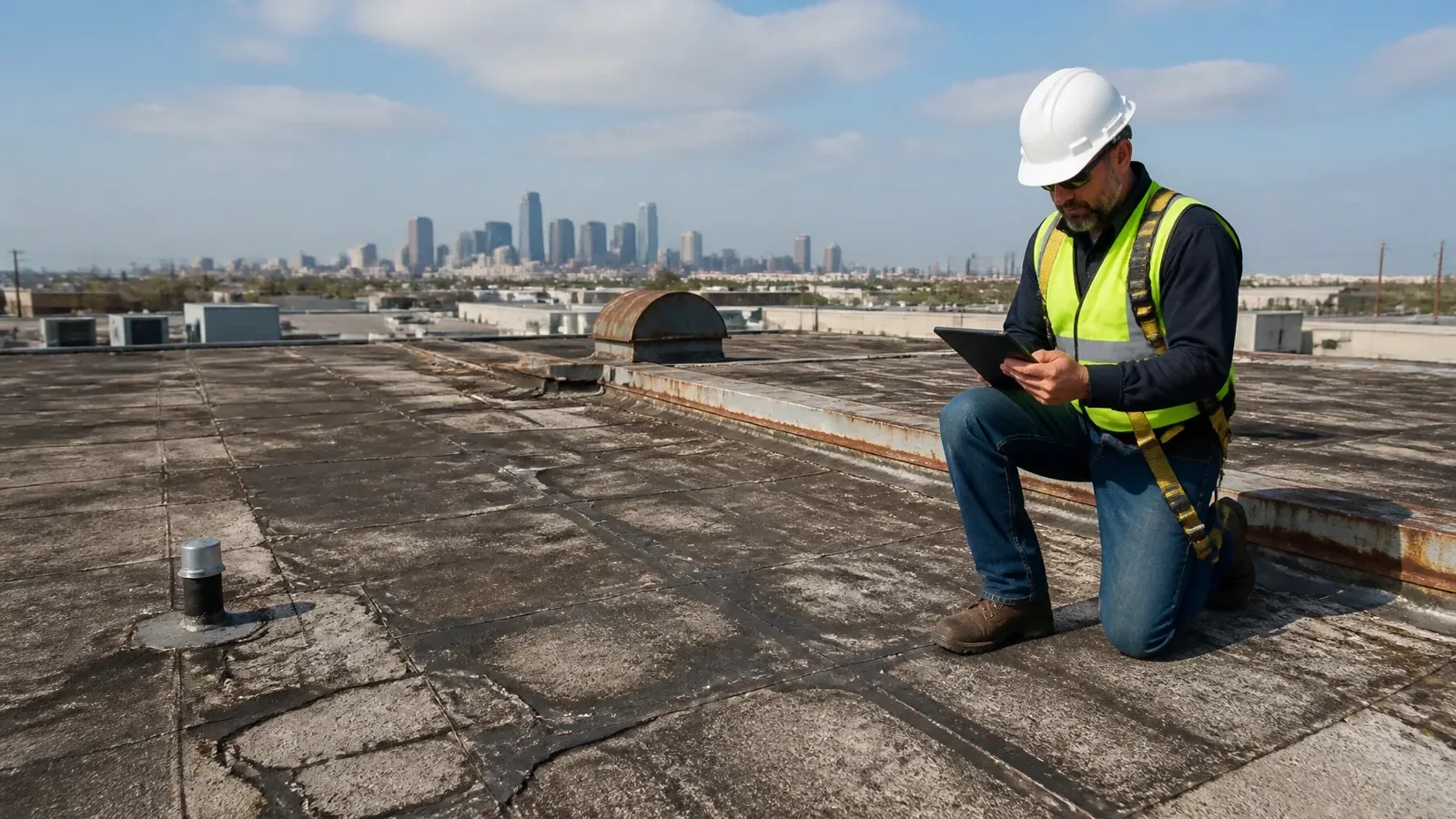
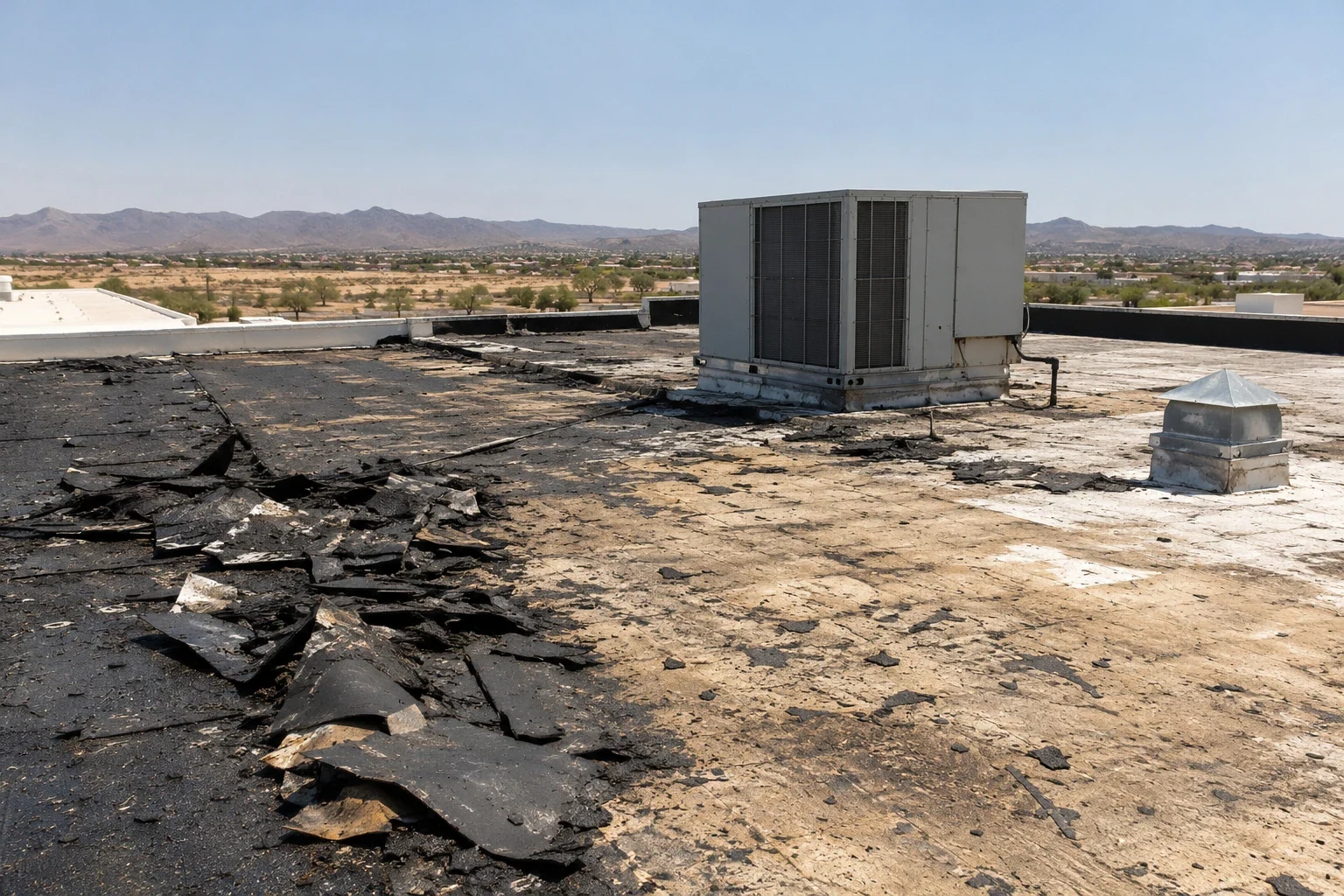
Start each roof line with the system type, approximate age only when records support it, repair history, drainage layout and access conditions. Then list observable issues: open laps, failed flashing, loose edge metal, recurring ponding, surface wear, wet insulation or deck movement. A condition report should distinguish what we saw from what remains concealed. If moisture is suspected but not confirmed, show the testing step and do not treat the entire roof as wet. The photo report gives the owner a way to connect each budget item to a roof section and field finding.
Surprise Railplex spans industrial, distribution, flex-office/warehouse and commercial development across a broad industrial area. Those uses can carry different operational costs: a dock interruption, equipment shutdown or blocked material route may affect project sequencing even when the roof repair itself is localized. The property record should identify those limits beside the roof condition. A portfolio near Surprise City Center can have civic, retail, health-care, hotel and service uses across a compact district, which makes tenant hours and public access part of the planning record.
Heat across the Phoenix region and monsoon thunderstorms are useful context for inspection timing. They are not a remaining-life calculation. We check membrane seams, penetrations, equipment curbs, edge metal and drainage, then note the specific condition found. A roof that has weathered in place should not receive a replacement allowance solely because the calendar has advanced. A roof asset register can retain the findings and repair history for comparison at the next visit.
Compare repair, restoration and replacement
Budget choices need clear boundaries. A localized repair addresses a confirmed defect in otherwise serviceable material. Restoration may be possible when the existing assembly is dry, stable and compatible with the proposed system. Replacement may be justified when moisture, attachment failure, deck deterioration or repeated defects extend beyond a practical repair zone. We can present those options with their assumptions, exclusions and follow-up work so the owner can compare more than the first-year scope.
A recover can reduce tear-off work but depends on the existing layers, wet insulation, drainage elevations, structural capacity and code path. If those conditions are not known, include test cuts or other investigation before treating the number as final. Tear-off allows the team to inspect concealed layers and repair the deck, but it can affect operations, debris handling and staging. Equipment relocation, edge details, insulation thickness, interior protection and occupied-hour restrictions also change cost and schedule. The replacement scope should separate base work from concealed-condition allowances.
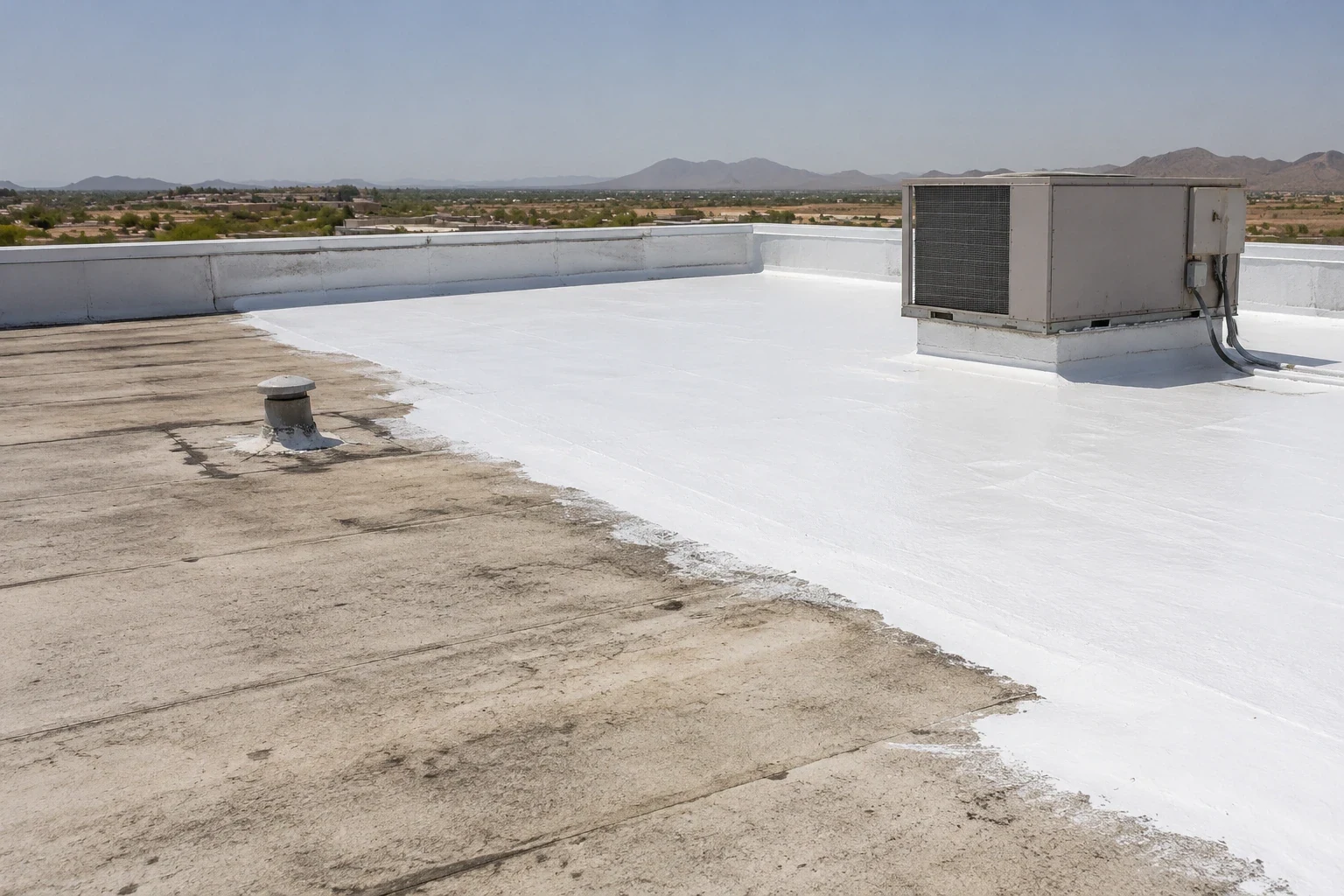
For a roof coating, verify adhesion, substrate condition, preparation, reinforcement and terminations. A coating is not a substitute for drying wet insulation or correcting a failed drain. If the assembly is eligible, a restoration option can be compared with replacement using the same roof area, access and detail assumptions. We note what is excluded and which tests could alter the recommendation. That keeps an early budget useful without presenting uncertain conditions as known.
Set timing around the building
Capital timing is also a building-operations question. A distribution facility may need dock doors and truck movement kept clear; a retail tenant may need a quiet window; a medical office may require control of noise, odors and rooftop equipment shutdowns. We identify staging, hoisting, daily dry-in, fire watch where required, interior protection and the path for removing tear-off. Work can be divided into roof sections when that gives the owner a safer schedule, but each phase needs a defined tie-in and weather protection plan.
Forecasted work in growing parts of Surprise may also interact with site construction and changing access. North Surprise combines growth and employment areas with planned transportation improvements. That supports checking gate routes, staging areas and adjacent work with the project team; it does not establish the condition or timing of a specific roof. At the Cactus Road and Loop 303 corridor, multiple commercial developments and roadway upgrades make delivery coordination relevant for work near active access routes.
For a capital scope, confirm the permit path against Surprise’s current building and existing-structure requirements, including its local amendments. The project team should confirm the applicable permit path before deciding that a recover, insulation change or full replacement is like-for-like. Energy and fire requirements may affect roof scope where the work touches those systems. We provide roof observations and assembly details for design review, and the owner confirms the requirements for the specific project. A preconstruction inspection can close gaps before the schedule is committed.
Make the budget decision traceable
A useful capital memo records the roof section, observed defect, test result, selected scope, alternatives considered and the reason for timing. Include the work that prevents more damage now, the follow-up inspection and any item held pending access or testing. If a storm produces an active opening, we provide emergency roof response at any hour and can document temporary protection separately from the planned capital job. A storm call should not silently become a full replacement recommendation without condition evidence.
We can review roof maps, work orders, tenant schedules and prior proposals with the general contractor or asset manager. If an earlier estimate assumed a dry deck or clear equipment route, we revisit that assumption before the bid is released. A written roof survey can support an acquisition or financing decision when the ownership timeline is shorter than the capital cycle. For multiple properties, a multi-site program can group inspections and scopes while preserving a separate record for each building.
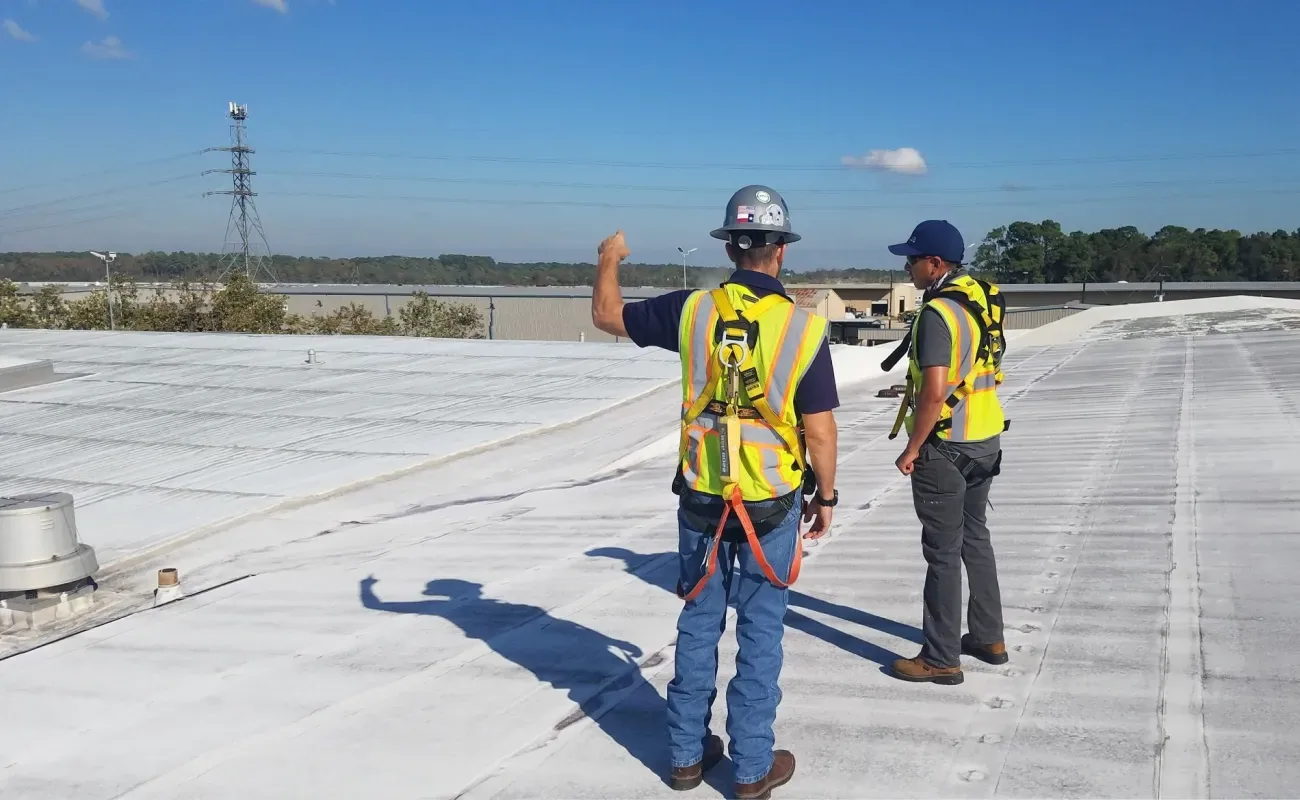
Before the roof walk, identify safe access, equipment contacts and areas that cannot be entered during operations. We will mark findings with photos, explain what can be repaired and what needs more investigation, then prepare a scope the project team can compare against its schedule. At the Loop 303 corridor or a property near City Center, the practical next step is the same: connect the proposed spend to the roof condition and the building's use.
Commercial Roofing Questions
What makes a roof a replacement candidate instead of a repair?
The extent of wet insulation, attachment failure, deck condition and repeated defects matters more than one isolated leak. We map the findings and compare localized work with restoration or replacement using the same assumptions.
Can a budget include a recover before test cuts?
It can be an early option, but unknown moisture, layer count, drainage elevation and attachment should be called out. We recommend the investigation needed before the scope is treated as firm.
How should we handle concealed-condition allowances?
Tie each allowance to a specific risk, such as wet insulation or deck repair, and state how it will be measured if exposed. We keep that work separate from confirmed quantities so the bid can be reconciled in the field.
What can move the roof schedule?
Permit review, equipment shutdowns, deliveries, tenant hours, staging and daily dry-in all affect sequencing. We document those constraints with the roof sections so the project lead can set workable phases.
How often should capital estimates be revisited?
Revisit when an inspection adds new condition evidence, a repair changes the assembly, or project access and scope change. The next budget should use the latest roof map and work record rather than carry forward an old assumption.
Ready to review the roof scope?
Request a Roof Assessment
Related Roofing Work
Put roof evidence beside the budget
Share roof plans, repair records, access limits and the budget window. We can inspect selected sections, compare repair and replacement options, and identify which questions need testing before the scope is set.