A facilities team with several roofs in Surprise, AZ needs one work program without treating every building as the same assembly. A retail roof with a leaking curb, a distribution roof with repeated drain debris and an office roof with aging seams call for different inspections and scopes. We coordinate the schedule and records, then keep observations, photographs and decisions tied to each building. Surprise's industrial, retail, civic, medical and service portfolios span areas such as City Center and the Railplex, where access and operations differ from property to property.
Set a common record with local fields
Start with a list of buildings, roofs, contacts, access rules and current work orders. Give each building a stable identifier and each roof section a repeatable label. Then keep system type, drain layout, equipment, repair history and warranty file at the property level. A shared format helps compare the portfolio, but the field record must preserve the details that make one roof different from another. Unknown membrane type or hidden moisture stays unknown until a survey or test confirms it.
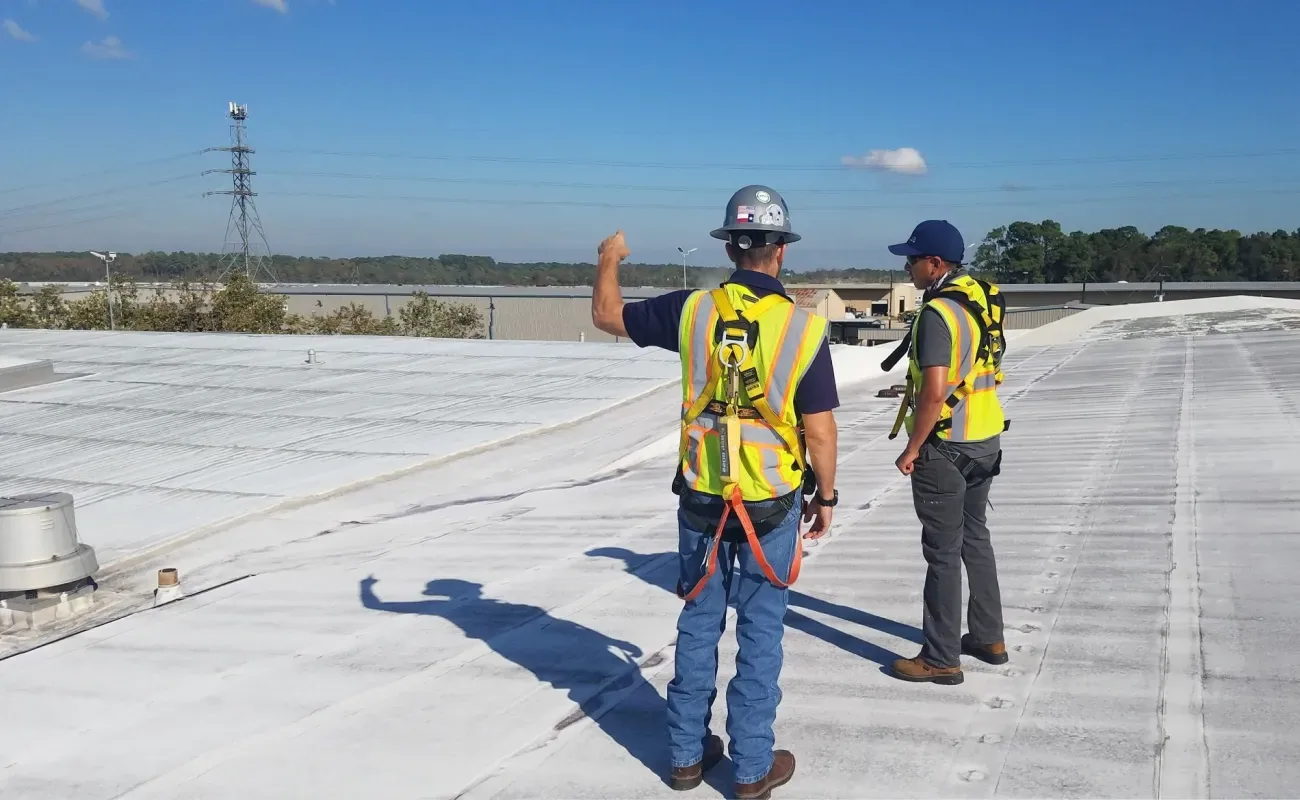
We can combine site visits by geography or access window while preserving a separate report and repair list for each address. In the Surprise Railplex, freight-oriented industrial and distribution uses make dock operations, material delivery and staging relevant to the visit plan. Around Surprise City Center, civic, retail, restaurants, healthcare and hotels may have different tenant and public access hours. We coordinate with each local lead rather than assume a single route or shutdown window fits the whole portfolio.
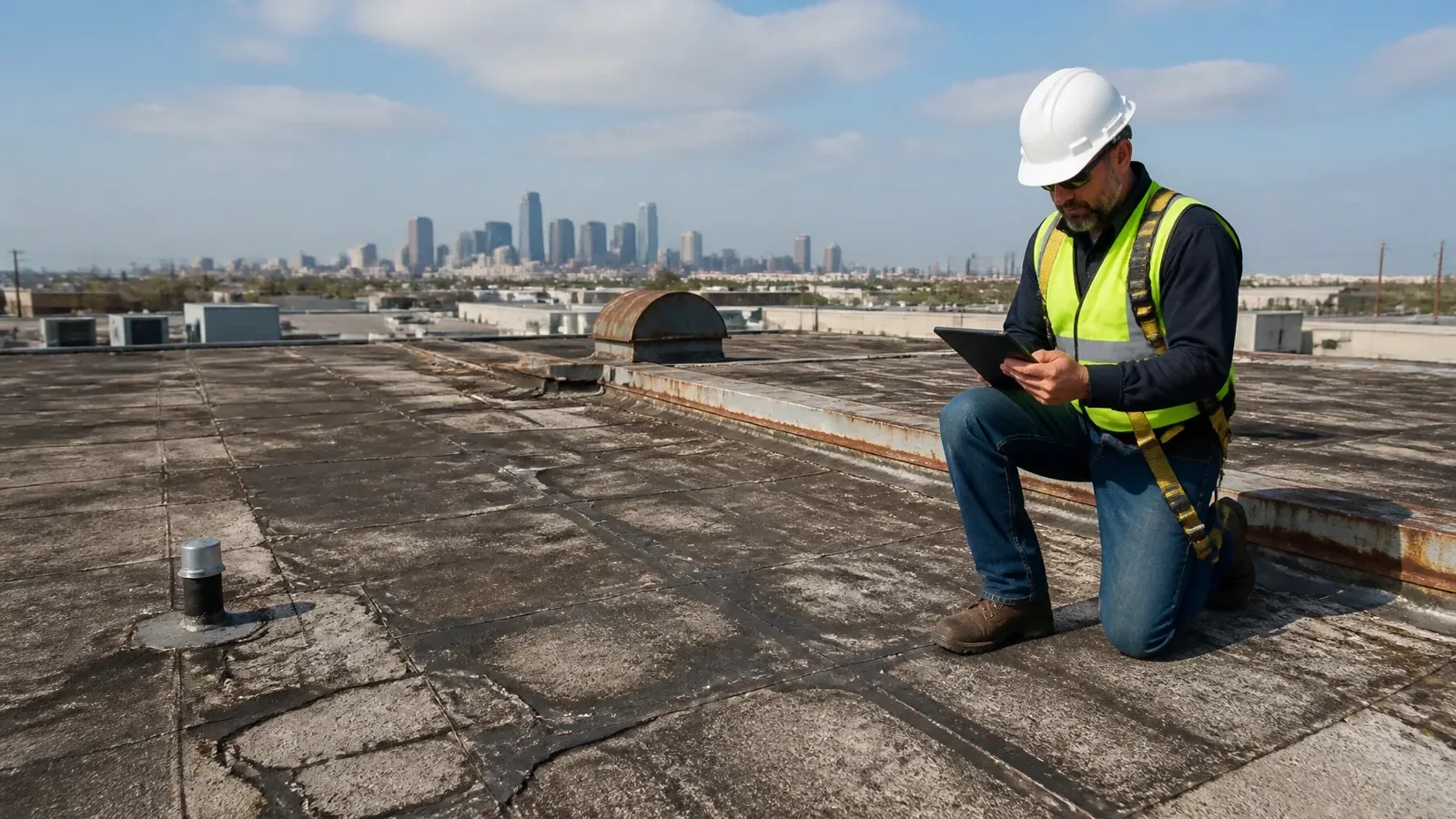
A roof asset register can carry the building identifiers and prior findings. A condition report can keep photos, field observations and open tests at the section level. We can also preserve warranty documents and repair history alongside the current roof record so the next person can see where information came from.
Triage by risk, not by spreadsheet order
Portfolio triage begins with active water entry, safety concerns and defects that can spread into other roof layers. We identify the affected area, building use, consequence of delay and immediate protection needed. A small open flashing above sensitive equipment may outrank a broad but dry surface-aging note. Another roof may require a moisture test before the owner decides whether a localized repair is enough. We explain those differences so the priority list can be acted on rather than read as a generic score.
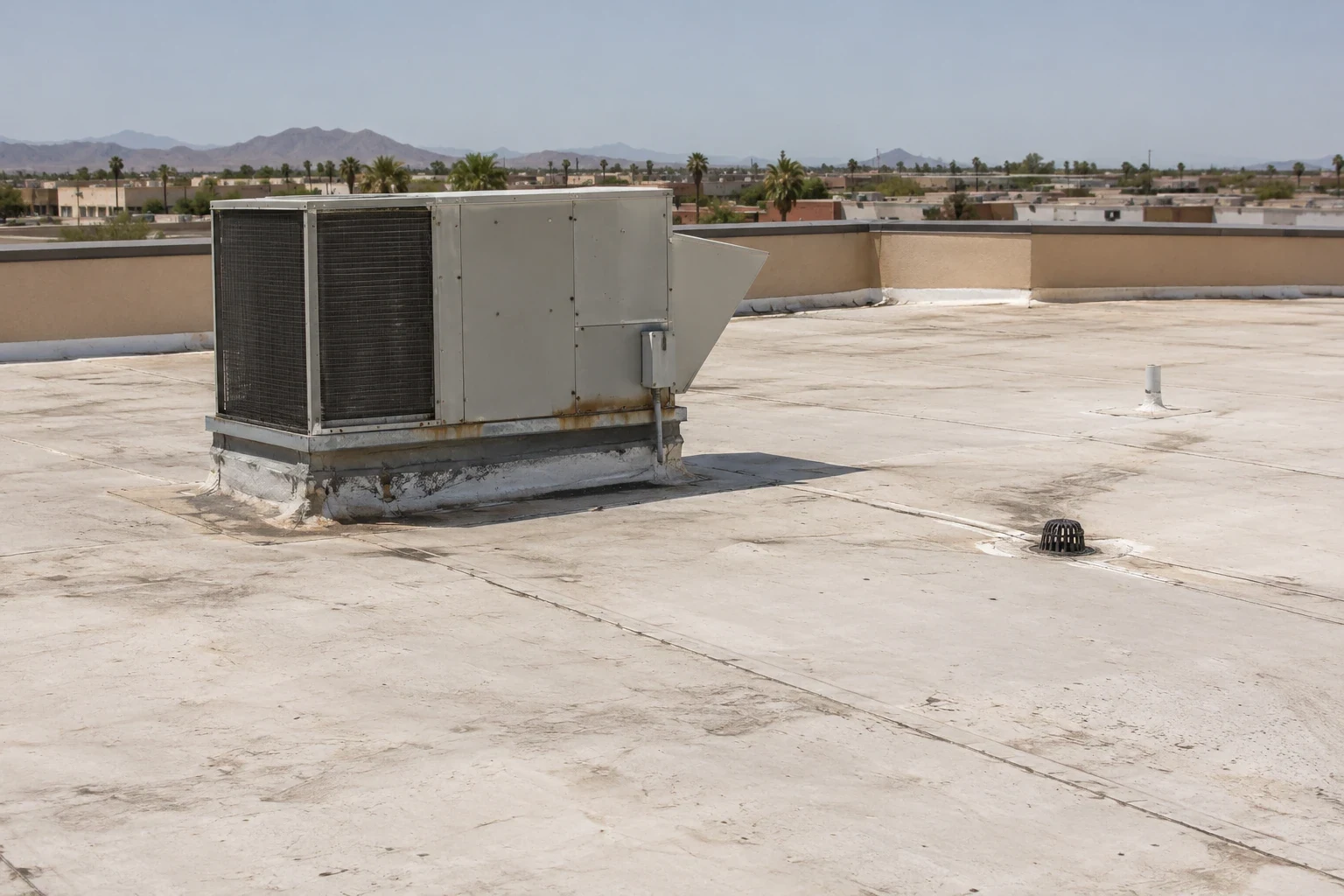
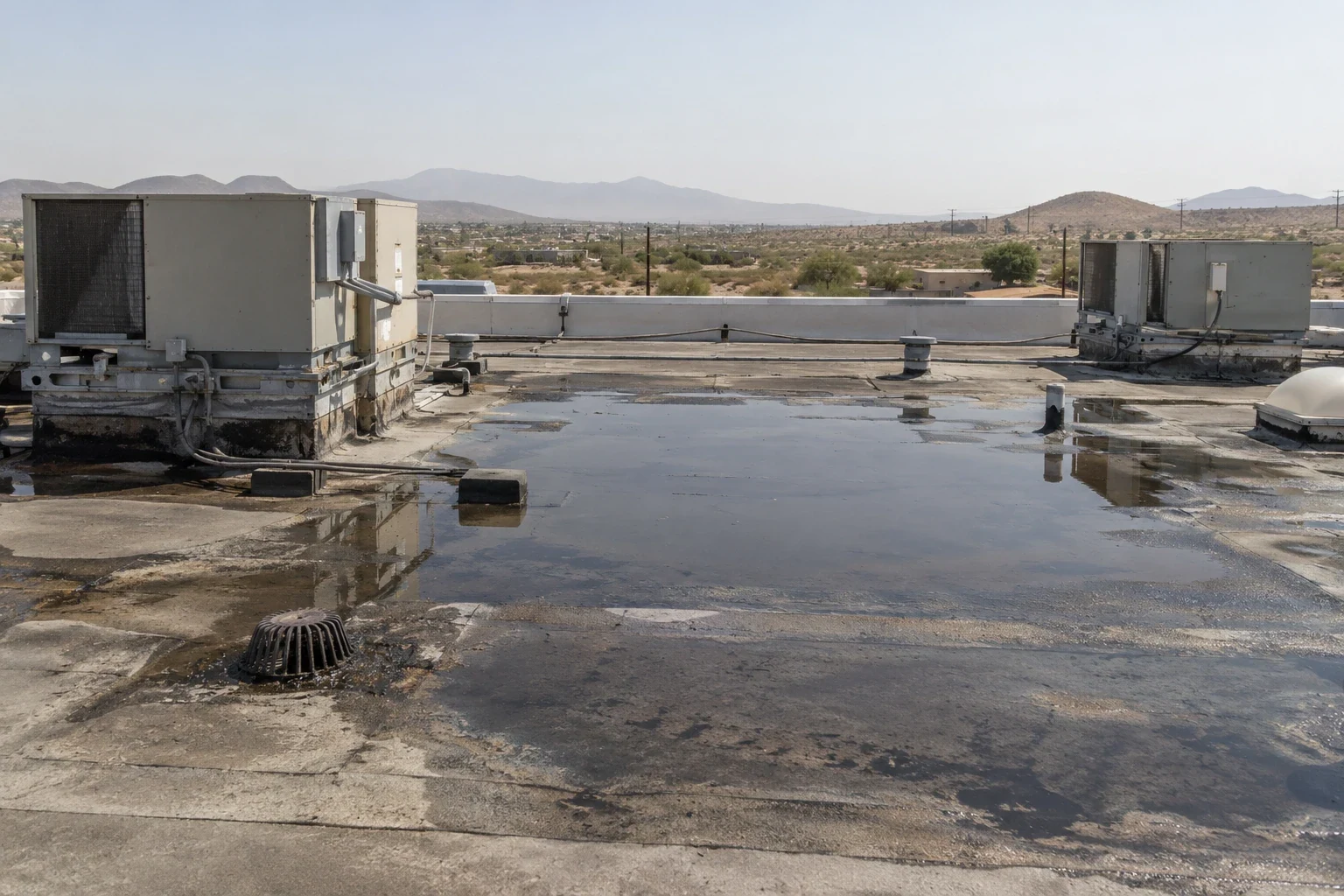
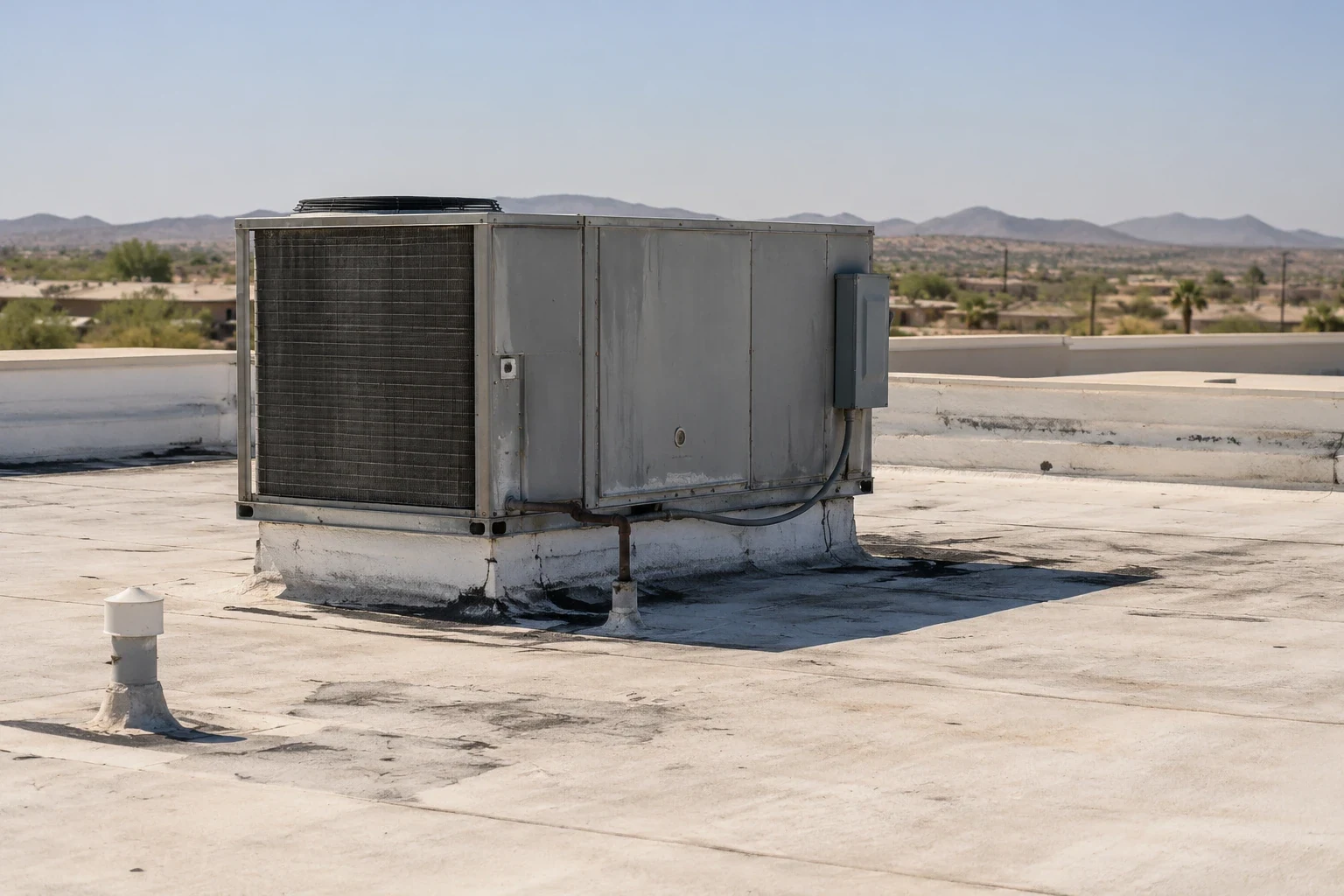
Heat and monsoon storms across the Phoenix metro make seams, equipment curbs, edge metal and drainage useful recurring inspection points. Regional weather does not diagnose a specific roof. We record what is visible at each site and keep storm reports apart from confirmed damage. The heat and UV review or ponding-water assessment can be used where that condition is actually observed. Every work order should have a location, repair limit, material note and completion photo.
Where buildings are occupied, sequence work around tenant hours, loading, equipment shutdowns and interior protection. We can plan temporary dry-in and daily tie-ins by roof section, identify who controls rooftop access and keep a material route clear. At a distribution property, protecting a dock lane may be as important as finishing the membrane patch; at a civic or clinical building, noise and interior access may drive the window. Those constraints belong in the scope before crews mobilize.
Group inspections and scopes carefully
Work can be grouped by task or area when it improves access and purchasing, but the estimate still needs a separate quantity and condition basis for each roof. A maintenance visit can inspect drains, laps, flashings and exposed sealant across several properties. Replacement work needs system-specific review of insulation, attachment, drainage elevations, deck and equipment transitions. Combining invoices should not erase differences in substrate, access or exclusions. The maintenance scope can flag immediate repairs and create a list for the capital meeting.
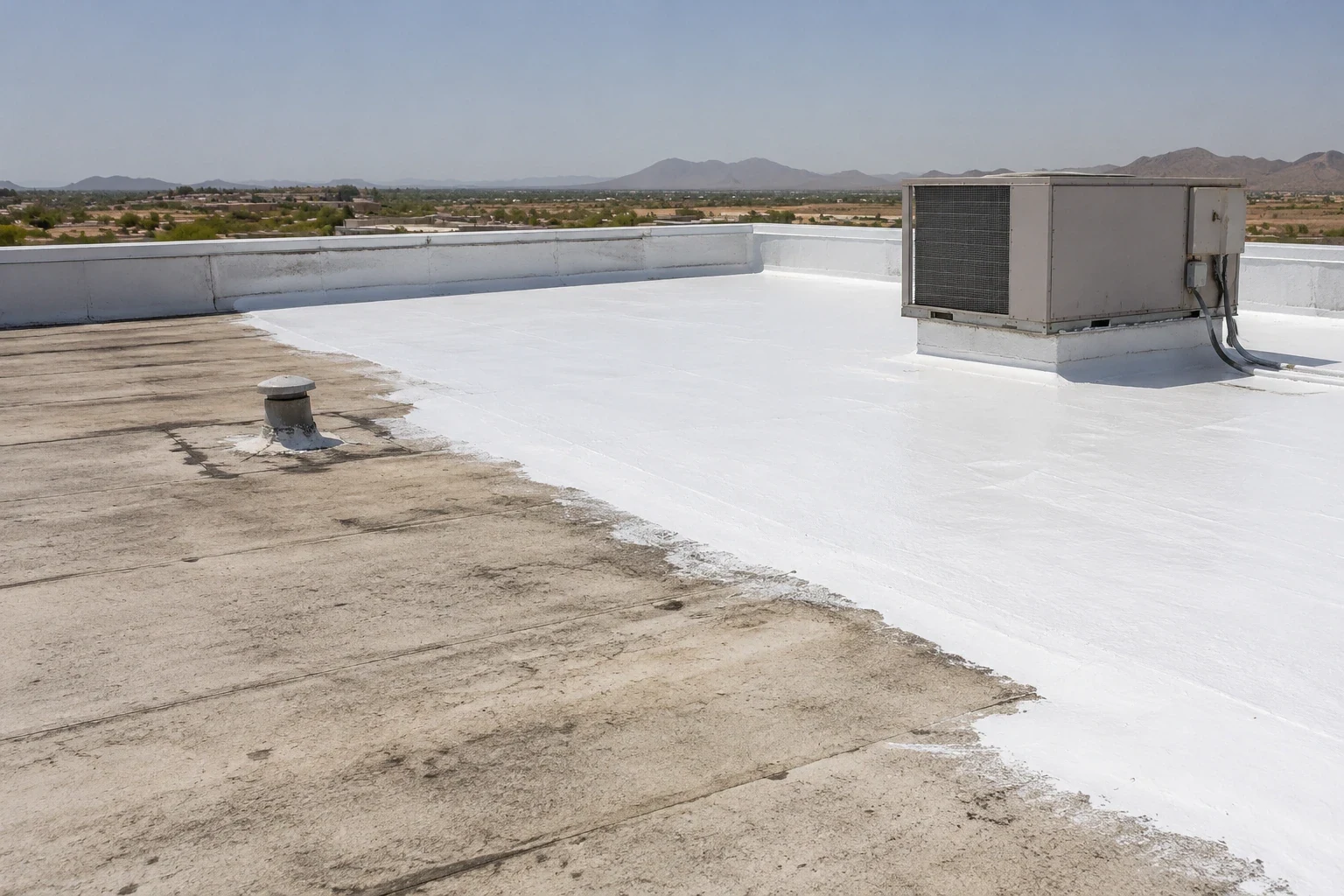
For capital work, we present localized repair, restoration and replacement options with the assumptions that affect price and timing. Moisture, tear-off depth, equipment relocation, edge metal, roof height, staging and occupied-building protection can change the cost. A recover depends on dry, stable layers and a workable drainage and code path. We note whether a test cut or manufacturer's review is required before the program locks the scope. The capital plan can then distinguish approved work, planned work and open investigations.
Surprise’s locally amended permit framework now uses the 2024 building and existing-structure editions, in force from January 1, 2026. If proposed work changes insulation, roof layers or rooftop interfaces, flag project-specific permit and energy review. We provide roof observations and scope information; the design and permitting team confirms requirements for each property. Because the portfolio may include distinct municipalities nearby, validate the permit authority for each job rather than copy one project's notes to another.
Keep handoffs visible across the team
A multi-site program depends on a clean handoff among the owner, general contractor, facilities contacts and roof crew. We identify who can authorize access, move equipment, receive deliveries, protect interiors and sign off on completed areas. If another trade opens the roof, the responsibility for flashing and temporary weather protection needs to be assigned before work starts. A short daily record can show which roof section was completed, which remains open and what changed because of weather or access.
Local growth and road work can affect delivery routes and staging. The City maps Loop 303 as a major north-south corridor serving several development areas, and identifies Cactus Road and Loop 303 as a multi-development commercial corridor. That context may prompt an access check with the site lead; it does not replace a property-specific logistics plan. At a property near Loop 303 or Cactus Road and Loop 303, confirm gates, truck paths, tenant routes and material laydown before choosing a work sequence.
If an active leak occurs outside the planned visit, we respond around the clock for emergency roof protection and repair. Record that call under its building and roof section, then separate temporary cover from permanent work. At the next review, compare the field photos and completed scope with the portfolio register. The program should preserve an open item until it has a clear owner, next action and closeout record. For each completed item, reconcile the approved scope with field quantities and note any condition that changed. A monthly review can then focus on decisions that remain open instead of rereading every closed ticket.
Commercial Roofing Questions
Can multiple buildings use one maintenance schedule?
They can share a planning calendar, but inspection intervals and tasks should follow each assembly, drainage layout and condition. We keep each roof record separate so one site's findings do not become a blanket conclusion.
How do you decide which property comes first?
We compare active leaks, safety concerns, spread risk, building use, access and work constraints. The priority list states why an item is urgent and what additional test could change the sequence.
Can we combine bids across the portfolio?
We can organize bids by property or work type, while preserving individual quantities, access assumptions and exclusions. That lets purchasing compare consistent scopes without hiding roof-specific conditions.
What should each site prepare before an inspection?
Provide roof plans, safe access, recent leak reports, equipment contacts and any areas with restricted hours. We can then set a route that keeps tenants and active operations in view.
How are emergency repairs handled between visits?
We respond around the clock to active roof openings, document temporary protection and identify permanent repair separately. The work record stays with that building so the next portfolio review can close it out.
Ready to review the roof scope?
Request a Roof Assessment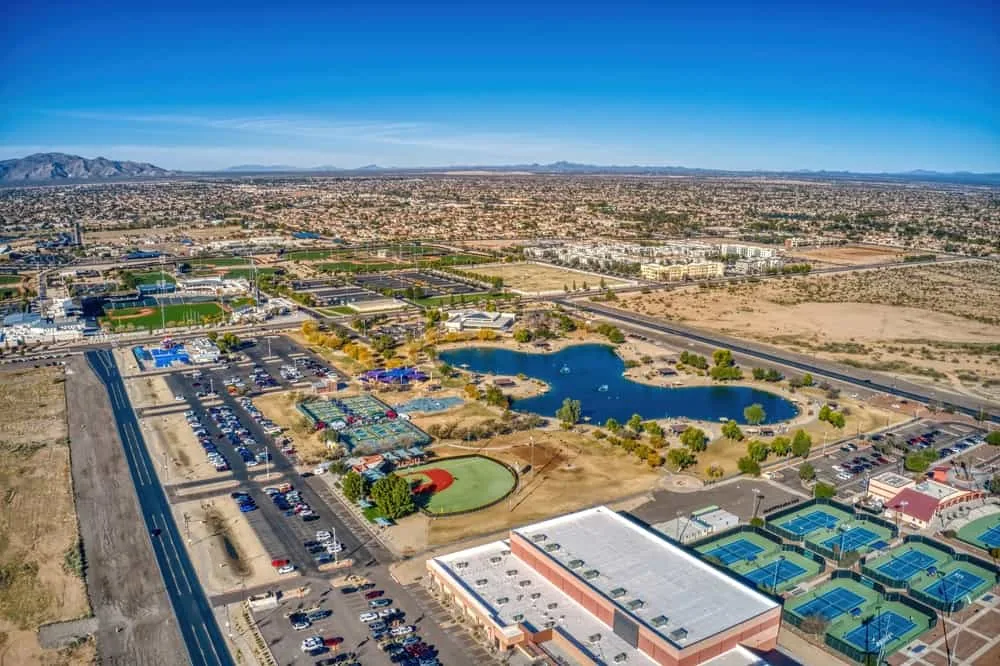
Related Roofing Work
Coordinate the next portfolio roof walk
Send the building list, roof plans, work orders, access windows and local contacts. We can group site visits, document each roof separately and return a sequence for maintenance, repair and capital decisions.