
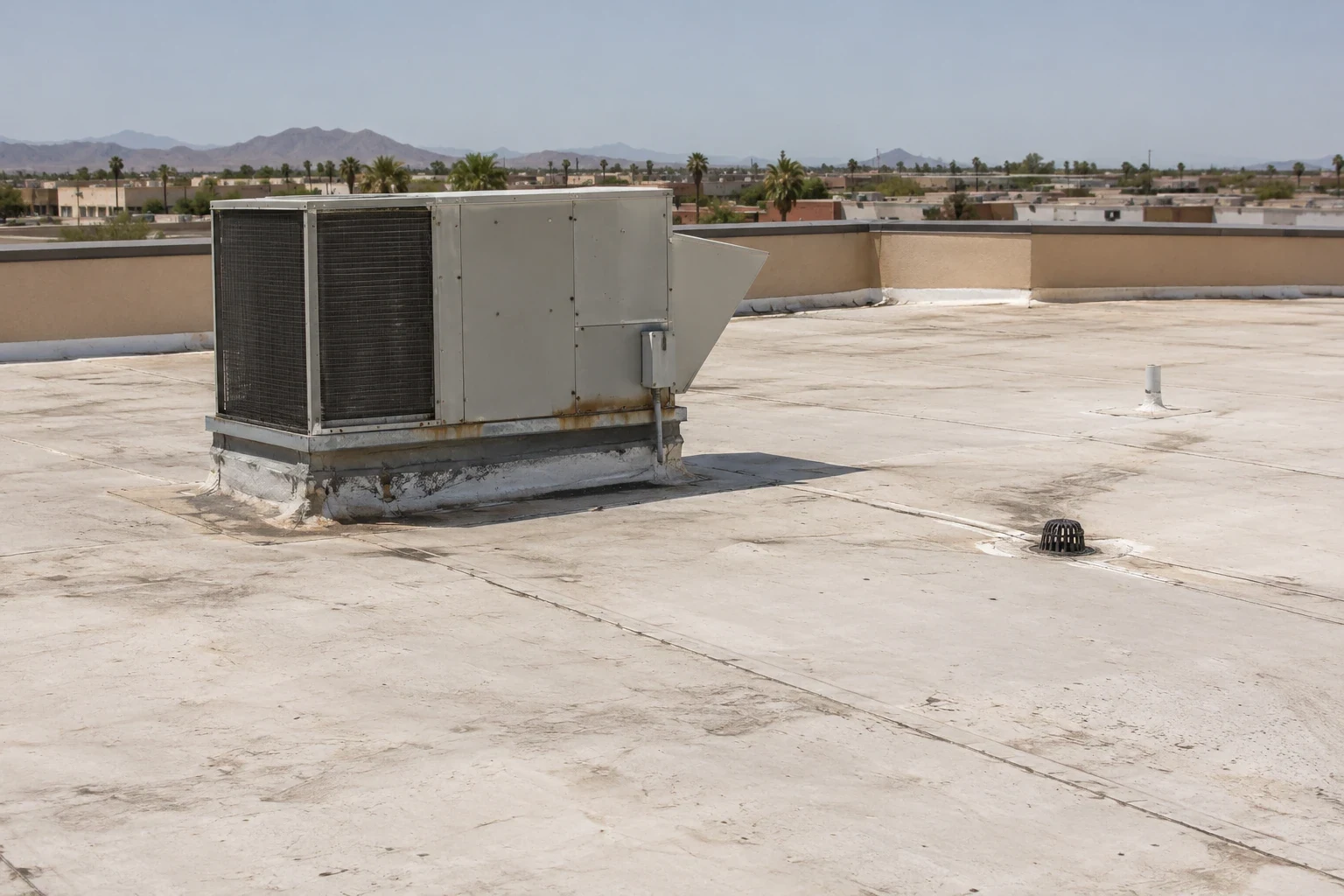
A retail roof near Surprise's Cactus Road and Loop 303 corridor can hold water where a low point, clogged outlet or compressed insulation interrupts drainage. A shallow puddle after rain is an observation, not a diagnosis. We mark its location, check how water reaches the nearest drain or scupper, and look for membrane stress, open seams and wet insulation before choosing a repair. The work may be as direct as clearing and rebuilding an outlet detail, or it may need a slope correction that changes the roof assembly.
Follow the water route
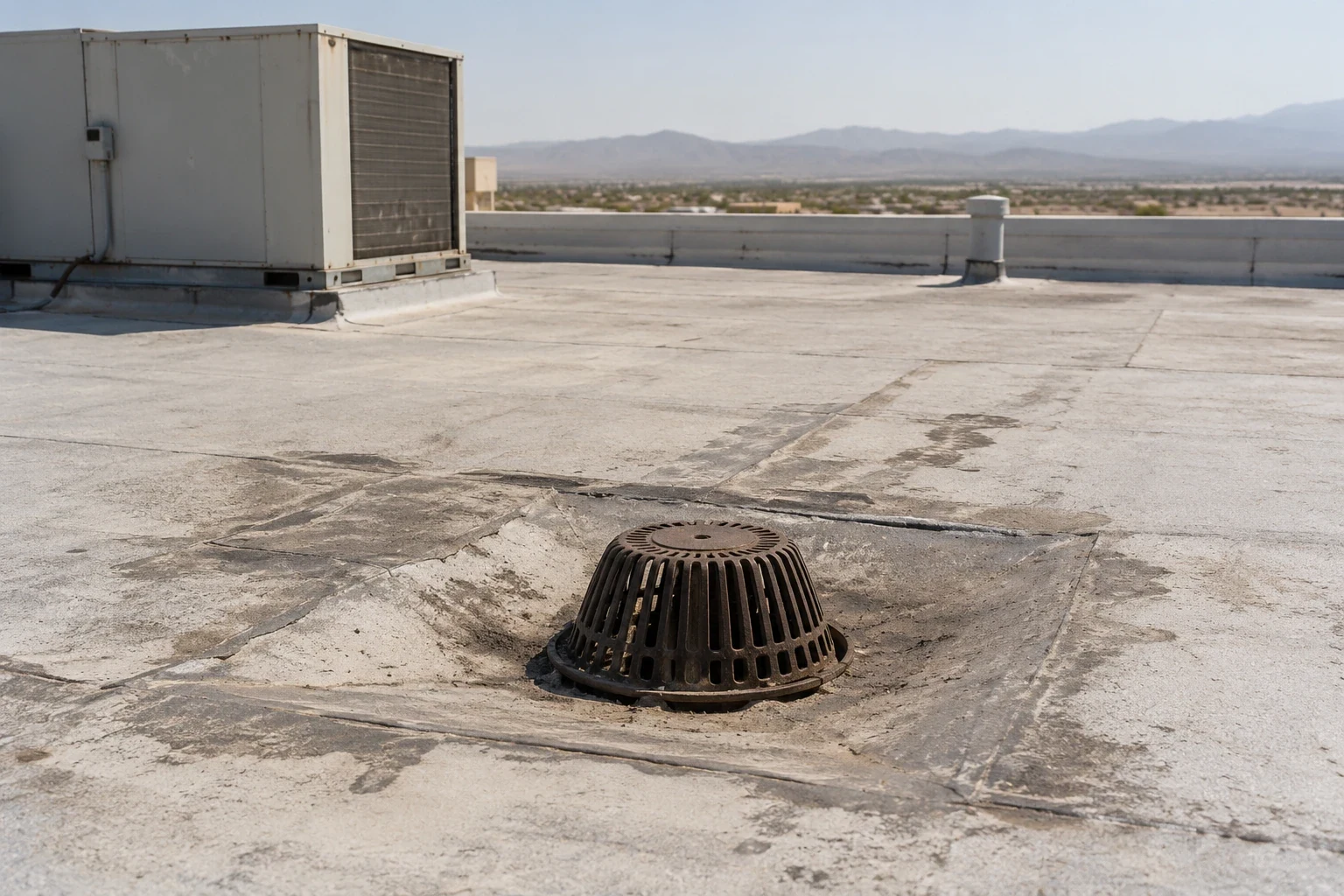
We trace the low area to its outlet, checking drain bowls, strainers, scuppers, overflows, crickets and transitions. Debris can block a path; a loose ring or split flashing may let water beneath the membrane. We record the wet area and compare it with plans or earlier photos. The report distinguishes standing water from staining or a dark surface that only looks wet.
Surprise's adopted 2024 International Building and Existing Building Codes, effective January 1, 2026 with local amendments, make permit review project-specific when drainage or reroof work changes the assembly. We document the outlet and proposed work. A drain repair may be limited to a bowl or flashing, but framing or insulation concerns can require design coordination before changing roof elevation. The drain and scupper scope should state which condition is included.
A roof walk may cross equipment, ladders, solar panels or tenant access. We set a safe route and identify outlets needing access equipment. The Railplex is a broad industrial area with freight-oriented development, so a facility roof walk may need to fit around active loading or a production shift. Those uses inform the access plan; they do not reveal a particular roof's condition.
Find what the puddle is telling you
Persistent ponding can add load, keep seams wet longer and expose weak flashing details to extended moisture. We inspect the membrane around the low area for wrinkles, open laps, blisters, punctures and prior patches. At drains, we look for separated clamping rings, cracked sealant, loose strainers and signs of movement. If the roof feels soft or the surface has sunk, the scope may need a test cut to check insulation and deck rather than another surface patch.
Phoenix Sky Harbor's July 1991-2020 normal mean temperature is about 95.5°F, a regional benchmark rather than a Surprise roof reading. Low-desert exposure makes laps, flashing and sealant near drains worth inspecting; heat-related aging can make a separate condition to record. We note visible condition without assigning a specific cause. A flashing repair addresses a separated transition only when the inspection confirms that detail is part of the water route.
Water can travel beneath a membrane or along a deck flute before it appears indoors. We compare ceiling marks with the roof plan, trace the outlet path and look for multiple entry points. A stain directly below a drain does not prove that the drain is the only source. Leak tracing can separate a roof opening from condensation or another building condition, keeping the repair boundary tied to what the roof walk can verify.
Choose between cleaning, repair and slope work
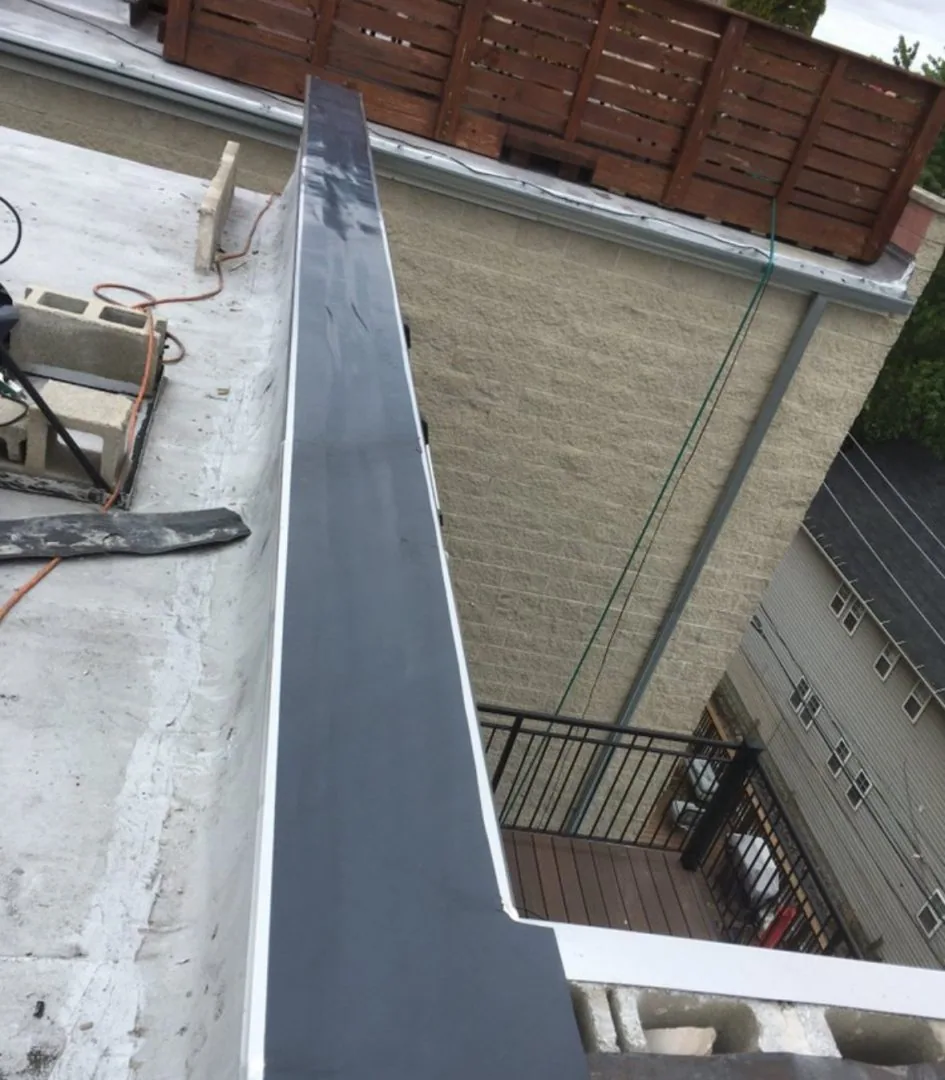
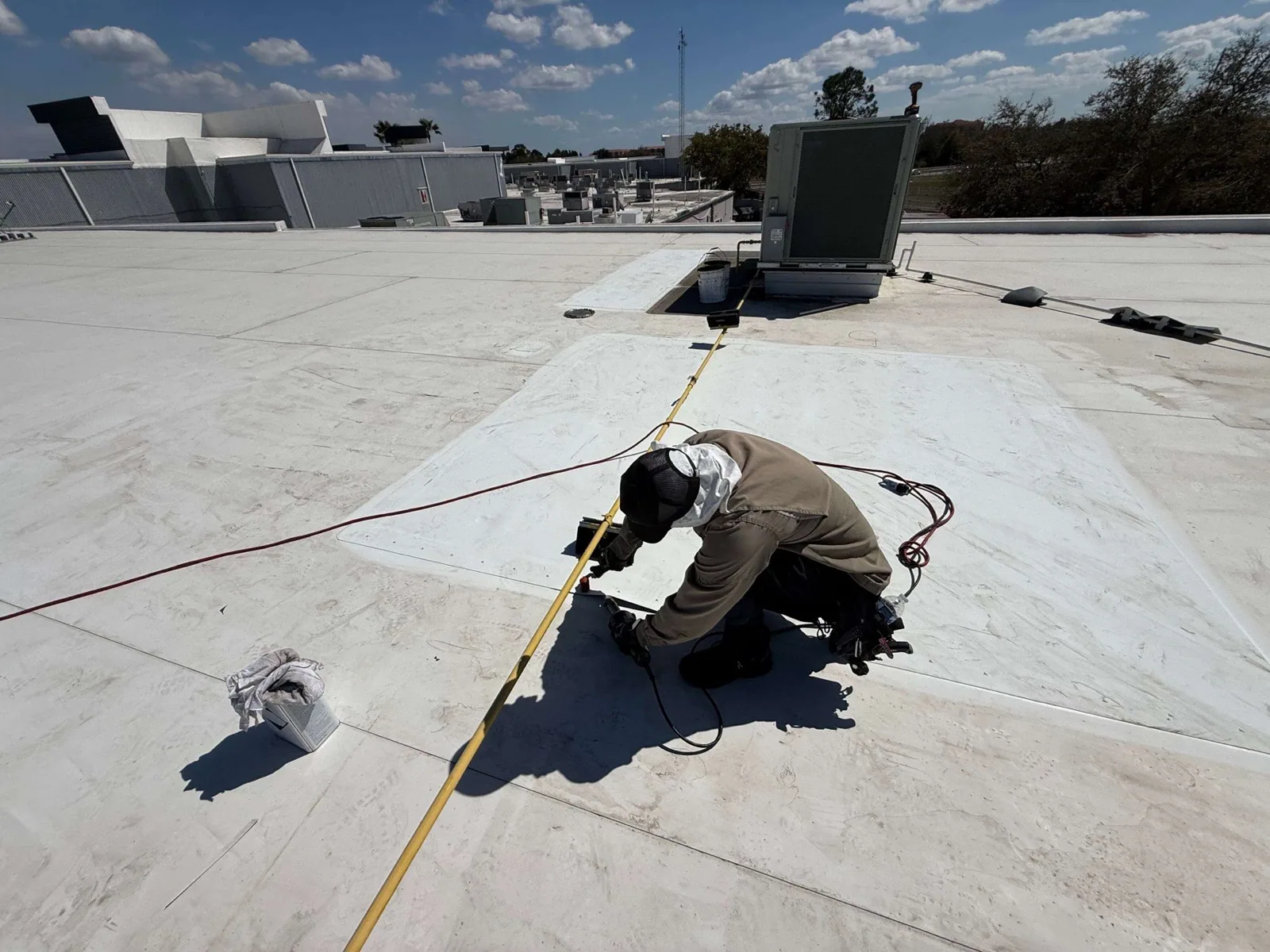
When debris is the obstruction, clear it and confirm the outlet works without damaging the membrane. If a drain flashing has separated, the repair may require removing the compromised material, preparing the substrate and rebuilding the tie-in with compatible components. A scupper may need new metal, secure attachment and a membrane transition that directs water through the opening instead of behind it. We photograph the detail before and after, then leave the outlet and overflow path clear.
Low areas caused by compressed insulation or an inconsistent roof plane need a different scope. Tapered insulation, crickets or a broader reroof can redirect water, but added thickness affects edges, curbs and drain heights. We check deck condition and existing layers before comparing an overlay with tear-off. A recover option should not cover wet insulation or leave the same drainage defect below the new membrane. Where the existing assembly is sound, a localized correction may avoid widening the project.
In City Center's mix of retail, medical, hospitality and civic uses, roof work can affect operating hours and access. We coordinate lifts and protect entrances while isolating the roof area. The Surprise City Center district includes more than one block and building use; each property's path from low point to outlet still needs its own plan. Tear-off, insulation, deck and outlet work, edge changes and available work zones affect cost.
Keep the roof dry between shifts
Each work period should end with a complete water-shedding detail. We avoid leaving the roof open, protect material from storms and keep debris out of drains. A multi-section slope correction must preserve active outlets and move temporary protection with the crew. Weather can change the sequence, so the roof lead needs authority to pause before the next area is opened.
Commercial work may run overnight or on a holiday when access is easier, and urgent response is available around the clock. Substrate dryness and product limits govern permanent work. A temporary dry-in can hold until materials can be installed correctly. The owner should know which step restores immediate protection and which step resolves the drainage issue.
Before permitting or specifying a larger alteration, compare the observed roof plane with the intended assembly and local amendments. Surprise's 2026 code set includes the International Energy Conservation Code as well as building codes; energy-related reroof requirements should be checked against the proposed scope. We can describe roofing layers, drain changes and insulation assumptions, while the project team confirms applicable design and permit requirements.
Leave a drainage record
Closeout marks each repaired drain, scupper and low area on a plan with dated photos and material notes. It records observed water, route changes and conditions under monitoring. Any remaining shallow area needs a boundary and recheck date. That lets the facilities contact compare conditions after later rain.
For a portfolio, group similar outlets by roof section and track repeated service calls. A photo-based condition report helps distinguish a recurring blockage from a membrane or deck issue. If several roofs need capital work, a roof capital plan can sequence drainage corrections with replacement timing. Notes should let the next walk begin at the same low point.
We can walk the roof with the project lead and provide a written boundary. Separate unrelated findings, and identify completed work, design questions and the next check after rain.
Commercial Roofing Questions
How long should water remain on a low-slope roof?
The roof design and drainage layout determine the intended water path. We document where water remains, then check outlets, slope, membrane and insulation before recommending work; a photograph alone cannot show whether the assembly beneath is wet.
Can a clogged drain cause a leak?
A blocked outlet can keep water at a seam or flashing longer, but the entry point still needs inspection. We clear accessible debris, check the drain detail and compare the interior mark with the roof route before defining the repair.
Does ponding always mean the roof needs replacement?
No. A limited obstruction or failed drain transition may be repairable. Soft insulation, recurring low areas or widespread moisture can require a wider correction, so we separate immediate repair from any replacement recommendation.
Can you correct slope without replacing the entire roof?
Sometimes a defined area can receive a tapered correction, but drain height, edge details, curbs and the existing assembly affect the boundary. We inspect first and identify where a local change would meet the surrounding roof.
What should be recorded after drainage work?
Keep the roof-plan mark, before-and-after photos, work materials, outlet condition and any remaining low area together. We can also note when to recheck the path after rain or maintenance work.
Ready to review the roof scope?
Request a Roof Assessment
Related Roofing Work
Trace the drainage route
Share the roof plan, known low areas and access limits. We can walk the outlets, document the assembly, and scope a drain repair or slope correction around the building's operating window.