
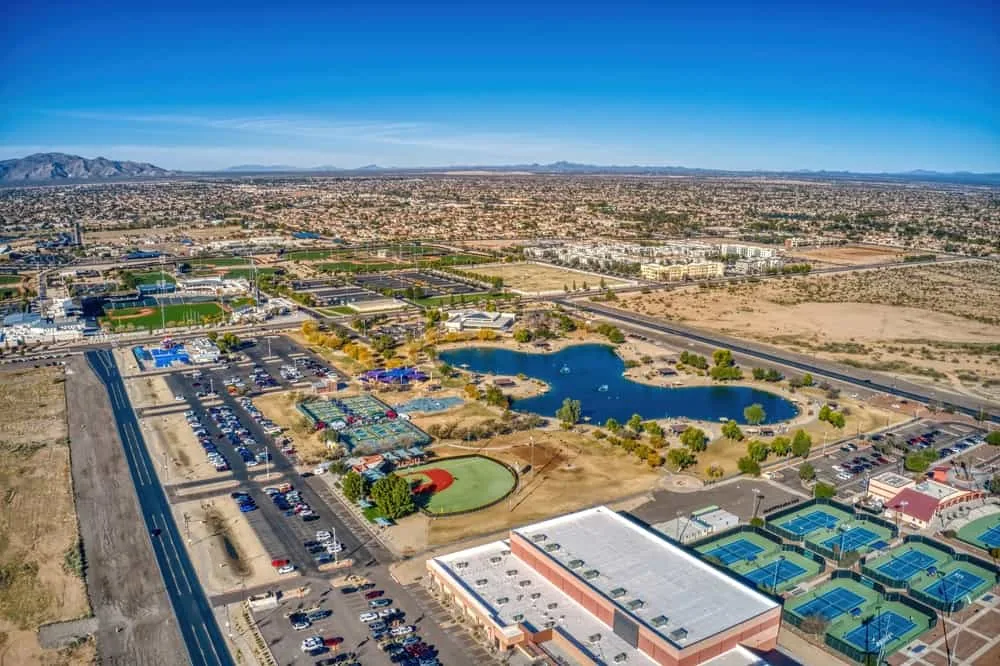
A roof above a Bell Road commercial property in Surprise, AZ has to be inspected with the traffic and building use below it in view. Bell Road is a major east-west commercial and transportation corridor serving central and southern Surprise, with retail and mixed-use areas identified around it. That broad context can inform access planning; it does not reveal a particular roof's system, age or condition. We confirm the building, inspect its membrane and transitions, trace any water entry and give the owner a repair boundary tied to observed conditions.
Start with the building's operating window
For an occupied commercial property, the first roof decision can be where the crew and materials enter. We identify customer paths, delivery doors, service lanes, tenant hours and safe lift placement with the site lead. Bell Road and Loop 303 access planning and the bridge over the Agua Fria River appear in regional transportation plans, so confirm current routes before scheduling a delivery. A plan document is not proof of today's traffic or property access; the site contact confirms the gate and work window.
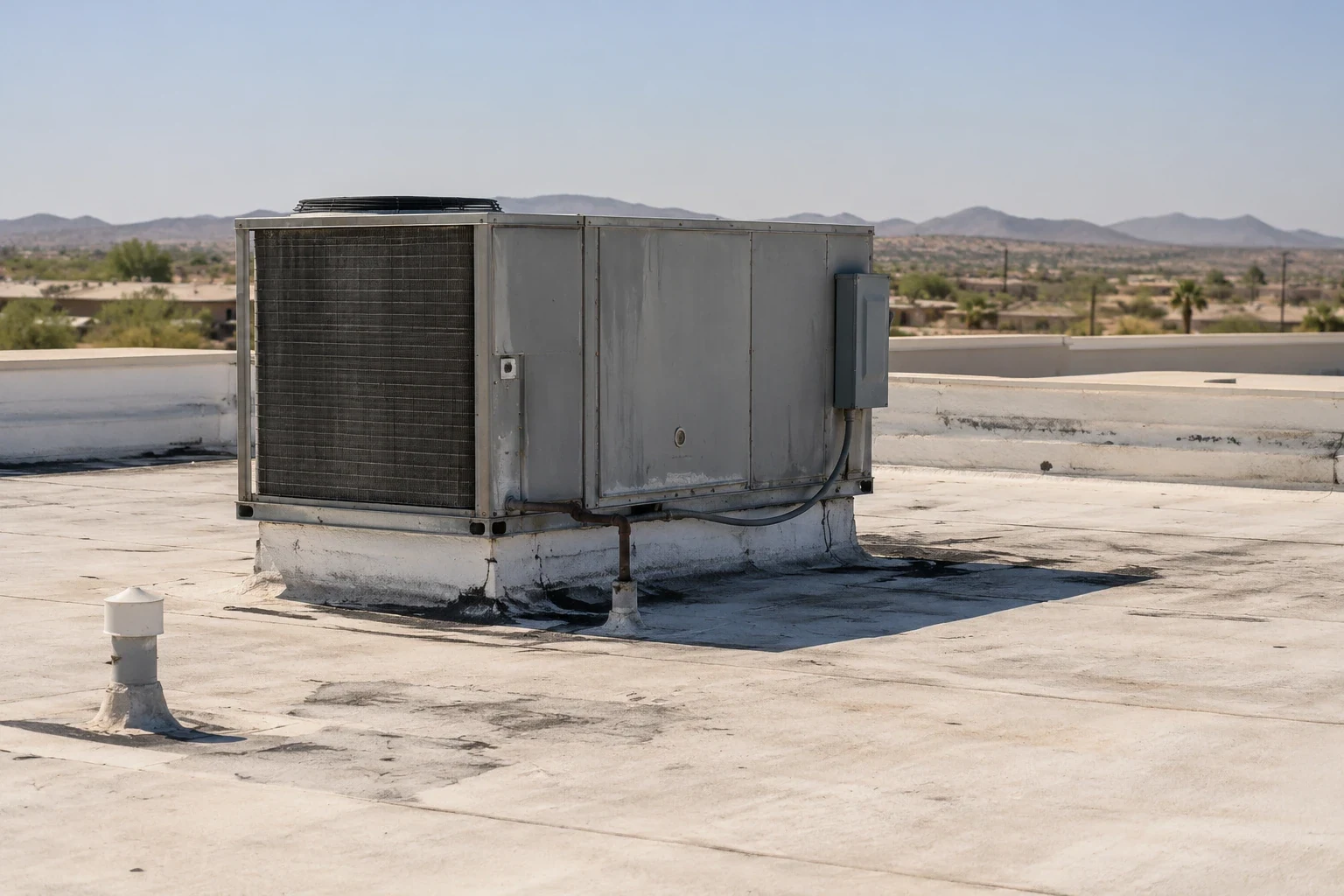
On the roof, use a section plan so every observation can be found again. Check drains, scuppers, seams, edge metal, wall transitions, curbs, penetrations and prior patches. If a leak appears over a tenant space, compare its location with roof slope and nearby details. Water may travel before it becomes visible inside. A leak repair visit can address a confirmed opening; a broader roof inspection can document other conditions without expanding a small repair into an undefined project.
The City Center district lies near Bell Road and includes civic, retail, restaurant, health-care, hotel and service uses across several blocks. Farther along the southern part of Surprise, Cactus Road and Loop 303 is another multi-development commercial corridor. The City Center and Cactus Road corridor have different site contexts, but both require property-specific access and roof assessment. Keep the district name as location context, not as a claim about the building's roof.
Trace the path through roof details
Leaks around low-slope roofs can begin at a seam, curb, wall transition, drain, skylight or penetration. We check each detail against the interior mark and document the path that is confirmed. If the evidence points to more than one possible entry, keep those as separate findings and identify the test needed to settle them. A patch should reach sound, compatible material and leave the owner able to see where the repair stops.
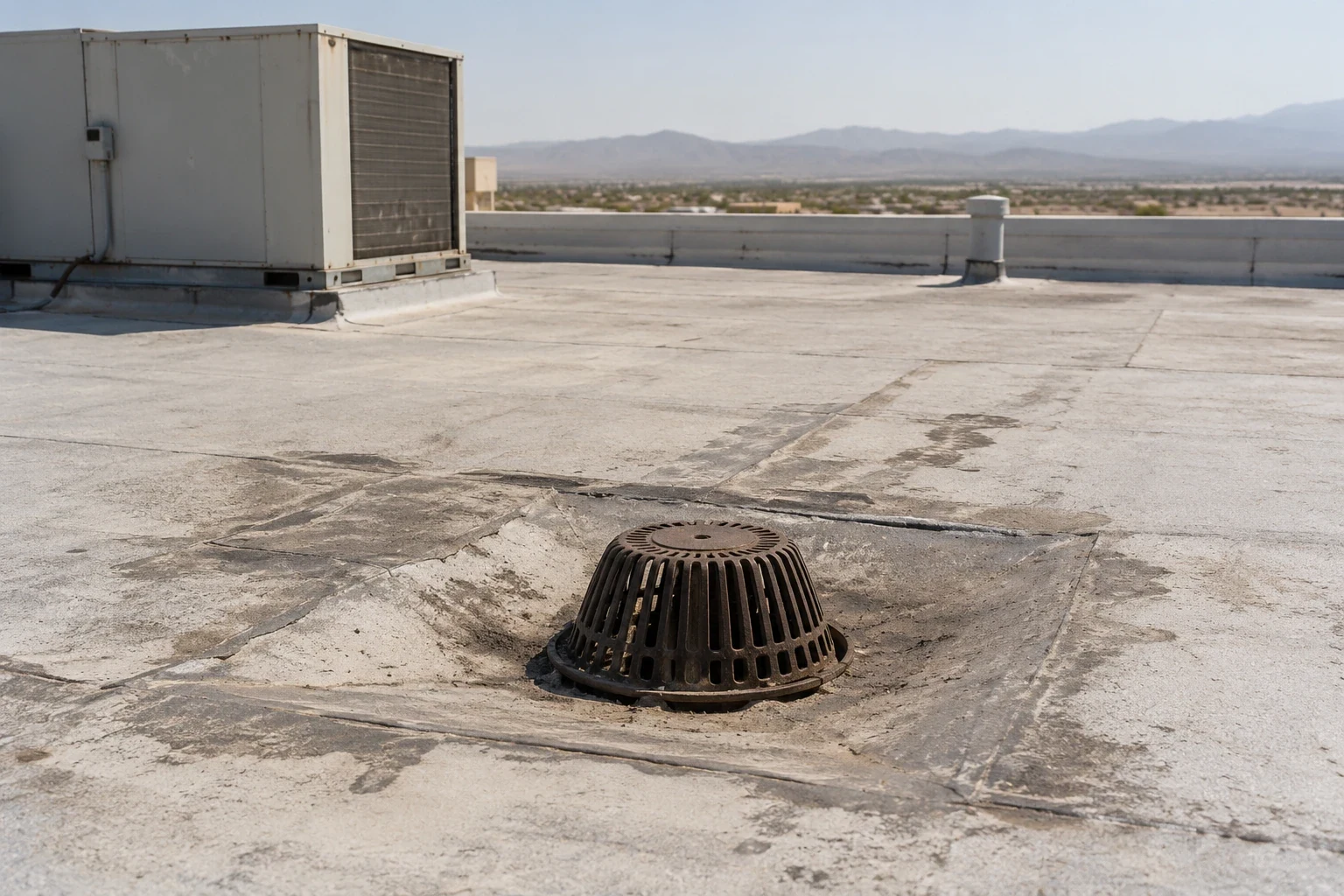
Drainage is especially important where runoff meets a low point or an outlet. We check the drain bowl, flange, strainer, scupper and overflow path. If standing water remains, mark its location and review whether slope, insulation or deck movement is involved. A drain repair should correct the observed outlet or membrane connection. A coating cannot raise a depressed deck or repair wet insulation, so determine what lies below before considering a broad surface treatment.
Summer heat in the Phoenix region can stress exposed membranes and sealants over time. Monsoon thunderstorms may bring wind, heavy rain and flash flooding across the metro. Those are conditions for inspection, not proof of damage to a Bell Road property. We record any loose coping, open seam, split sealant, shifted curb or blocked outlet found during the walk. If the problem follows strong wind, the wind repair assessment can keep edge findings separate from ordinary aging. A maintenance visit can then return to the same locations and check whether the repair remains sound.
Match the repair to what is below
A localized defect may need a seam weld, flashing replacement, compatible patch or drain detail repair. The scope names the assembly, preparation, material, repair limit and final check. If the roof is brittle across several areas, insulation is wet or attachment has failed, a wider review may be needed. We can compare localized work with restoration and replacement after checking moisture, deck, existing layers, drainage, equipment and access.
Costs and timing shift with roof height, lift location, tear-off, insulation, deck repairs, equipment moves, tenant restrictions and interior protection. If a recover is considered, confirm that the existing roof is dry and stable and that the assembly can accept the added layer. A coating needs a suitable substrate, preparation and termination detail. A replacement scope should distinguish known work from allowances for conditions hidden beneath the membrane.
The city uses its 2024 International Building Code and Existing Building Code with local amendments, effective January 2026. A new roof layer or insulation change should be checked against the permit and energy review for this particular project. We document what is installed and the proposed tie-ins, then the design team confirms the required path before work is released. That review should happen before a repair becomes a capital project with a different assembly or schedule.
Document the work for the next visit
Before the crew leaves, record the repair area, material, photographs, nearby conditions and anything that remains open. If the work is temporary, identify the cover and the permanent follow-up. If equipment needs to be serviced, note the roof route and who is responsible for restoring the flashing. An inspection report can preserve the plan labels and findings, and a roof asset register can carry the history into future maintenance and budget reviews.
For an active leak outside regular scheduling, our emergency response operates around the clock. We can protect the interior, stabilize the roof opening and prepare a permanent repair scope once the assembly is safe to work. Keep the emergency visit's temporary action separate from any larger replacement recommendation. The photo record should show the condition before and after, and what area still needs attention if rain returns. Add the date, weather-protection limits and a contact for the next roof entry. If the repair affects a tenant area, include the interior check and any equipment reset before the building lead closes the work order.
We can meet the general contractor, property manager or facilities lead at a Bell Road building, inspect the roof and provide a written repair or replacement scope. Share the roof plan, recent leak notes, equipment work and access restrictions. The next step may be one repair, a moisture test, a maintenance visit or a capital comparison. We will state what supports that choice and what observation could change it. An address on a commercial corridor deserves a building-specific roof decision, not a borrowed conclusion from a nearby property.
Commercial Roofing Questions
Can you inspect a roof without interrupting the business?
We can plan access and noisy work with the site lead, then phase the roof area and protect the interior. The schedule depends on the operation, repair boundary and safe lift route.
Does Bell Road traffic planning tell us where materials can be staged?
No. Regional plans describe corridor improvements, while staging and access are confirmed at the property. We coordinate the delivery and lift position with the building contact.
How do you investigate a recurring ceiling leak?
We compare the interior mark with roof slopes, seams, drains, curbs and wall transitions. If more than one entry path is possible, we document each and identify the test needed before setting the repair limit.
When is coating appropriate for a Bell Road roof?
Only when the substrate is dry, stable and compatible, and the preparation and terminations can be completed. We inspect moisture and details before comparing coating with repair or replacement.
What should be included in emergency closeout?
The record should show the temporary protection, materials used, photos, repair location and permanent work still needed. We can return after stabilization to complete a defined scope.
Ready to review the roof scope?
Request a Roof Assessment
Related Roofing Work
Set an inspection around business access
Send the building address, roof plan, operating hours, loading schedule and recent leak details. We can inspect the roof and prepare a repair boundary that fits the site's use.