Retail buildings in Prasada North need roof scopes that account for tenant turnover, rooftop equipment and the order in which properties come online. The district lies north of Waddell Road and east of Loop 303 in Surprise, AZ. The developing regional retail cluster has numerous businesses open and others planned. That mix is a reason to inspect each roof on its own terms, especially where new work meets existing buildings and active operations.
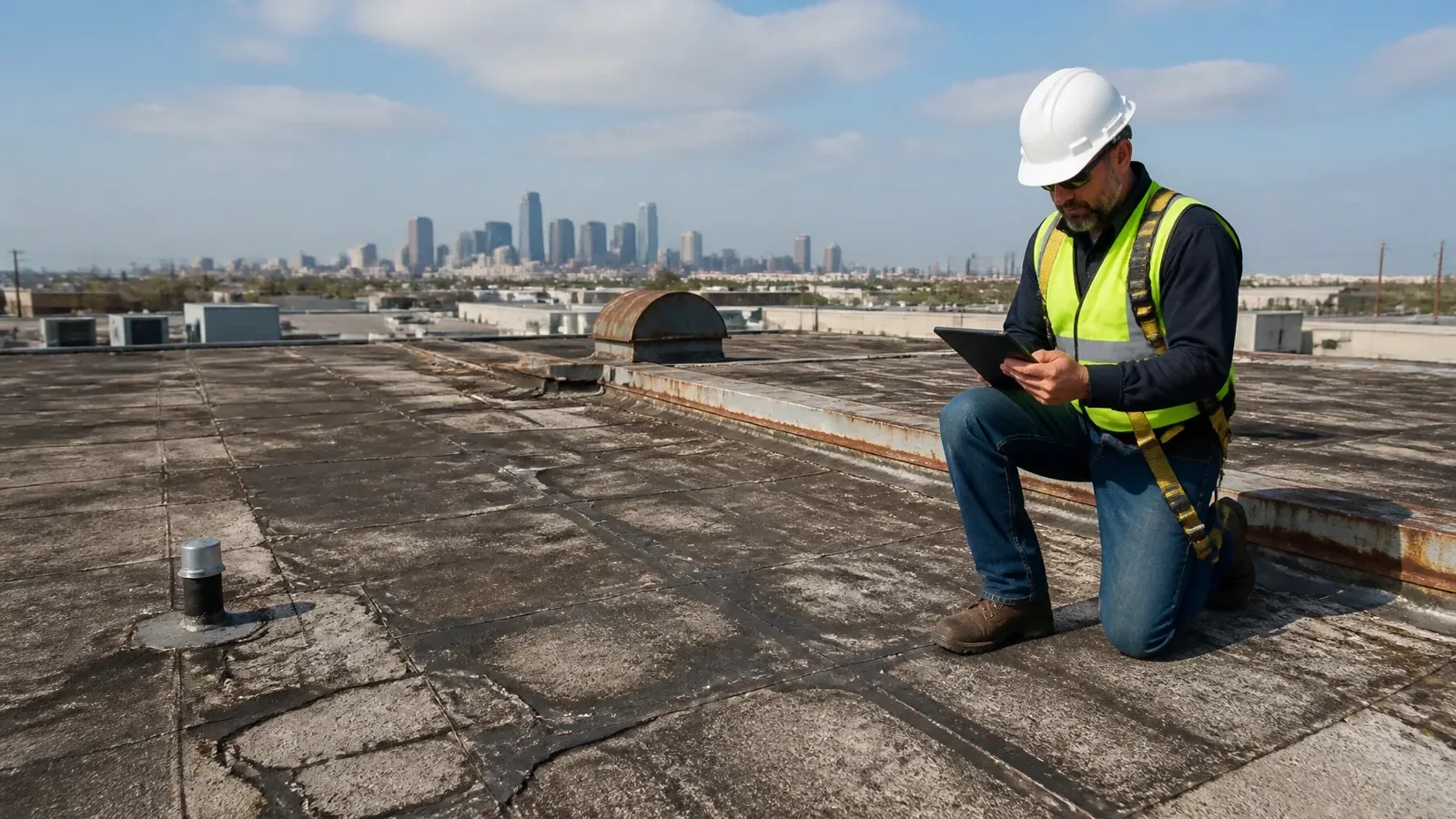
We identify the membrane type, check seams and flashings, test drainage paths and note any areas where water may have reached insulation. The report ties each condition to a repair or capital option. If an owner needs a photo-backed record before leasing, budgeting or scheduling work, our roof condition reports make the inspection useful beyond the day of the visit.
A district with work in progress
Prasada North is part of the commercial and mixed-use sector near Loop 303 and Waddell Road. Retail activity is developing, so roof needs can range from warranty-period detail checks to repairs on established buildings. Open and planned retail activity does not establish an individual building's roof age or system. We verify the assembly, records and visible condition before recommending work, and we keep planned construction separate from operating property in the scope.
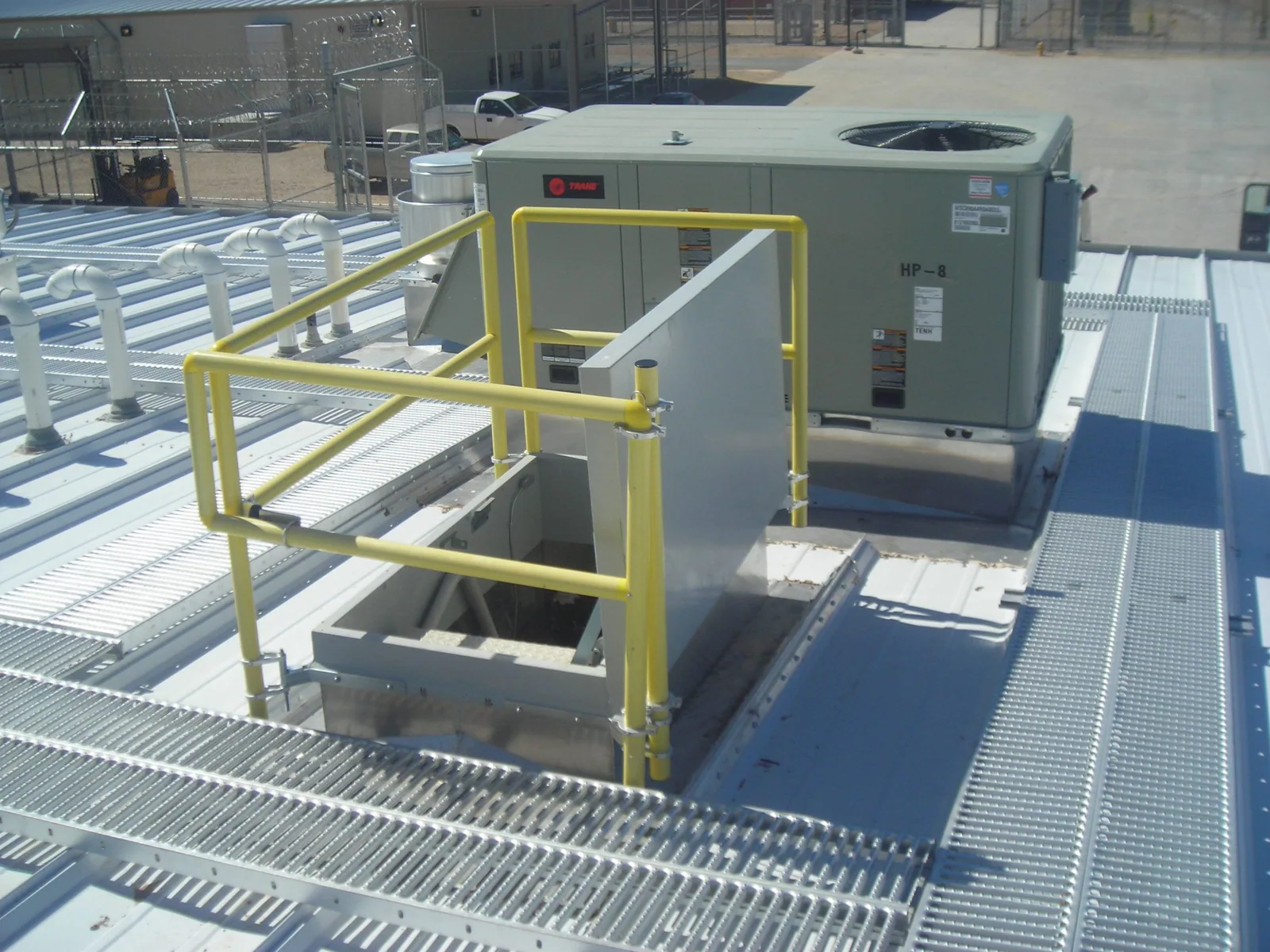
At a retail roof, corners, penetrations and equipment curbs can be harder to maintain than the open field. We check whether flashing is tight, fasteners remain secure and service paths are clear. If equipment has moved, abandoned curb openings need a durable closure that matches the assembly. Our curb and rooftop-equipment work addresses the roof transition, not just the equipment sitting above it. A durable tie-in can prevent a service call from turning into repeated water entry.
Access also changes as a district adds property and tenant activity. Before bringing material in, we confirm which gate and staging area serve the building and whether deliveries or customer circulation will be affected. Work can be phased by roof zone, with temporary openings closed and protected at the end of each shift. The property manager should know which areas are active, what remains accessible and when a noisy task is planned.
Heat, wind and drainage belong in one inspection
In the 1991 to 2020 climate record, Phoenix Sky Harbor's July normal mean is about 95.5 degrees. That reading serves as a metro benchmark, with Surprise sharing the low-desert setting. Heat cycles put seams, sealant and flashing under stress, particularly where details meet the field sheet. We examine those details before coating or repair because a material choice must fit the surface condition and installation window.
In central Arizona, monsoon storms can bring wind damage and flash flooding to the Phoenix metro. Hail also remains possible during a severe storm. Around Prasada North, we inspect perimeter securement, drains, scuppers and overflow routes as part of the same visit. Wind can loosen edge components; heavy rain tests whether outlets and conductors move water away without backing up. Hail observations should be documented by roof zone and compared with prior records, not treated as proof that an entire system has failed.
Water over a tenant ceiling can travel before it appears inside. We start above the reported area, then follow seams, penetrations and drainage features toward the likely entry. A damp insulation reading can change the recommendation, because a recover over wet material traps a problem instead of solving it. Where visual inspection leaves a question, we can discuss further testing and explain what result would alter the proposed scope.
Separate a contained repair from system work
A localized repair is appropriate when the defect has a clear edge and the surrounding assembly remains sound. We prepare the surface, make a compatible patch and inspect the tie-in. If several zones show open seams, brittle flashing or wet insulation, repairing one point at a time may leave the main failure pattern untouched. A condition report lets the owner see which items are immediate, which need more investigation and which belong in a planned replacement budget.
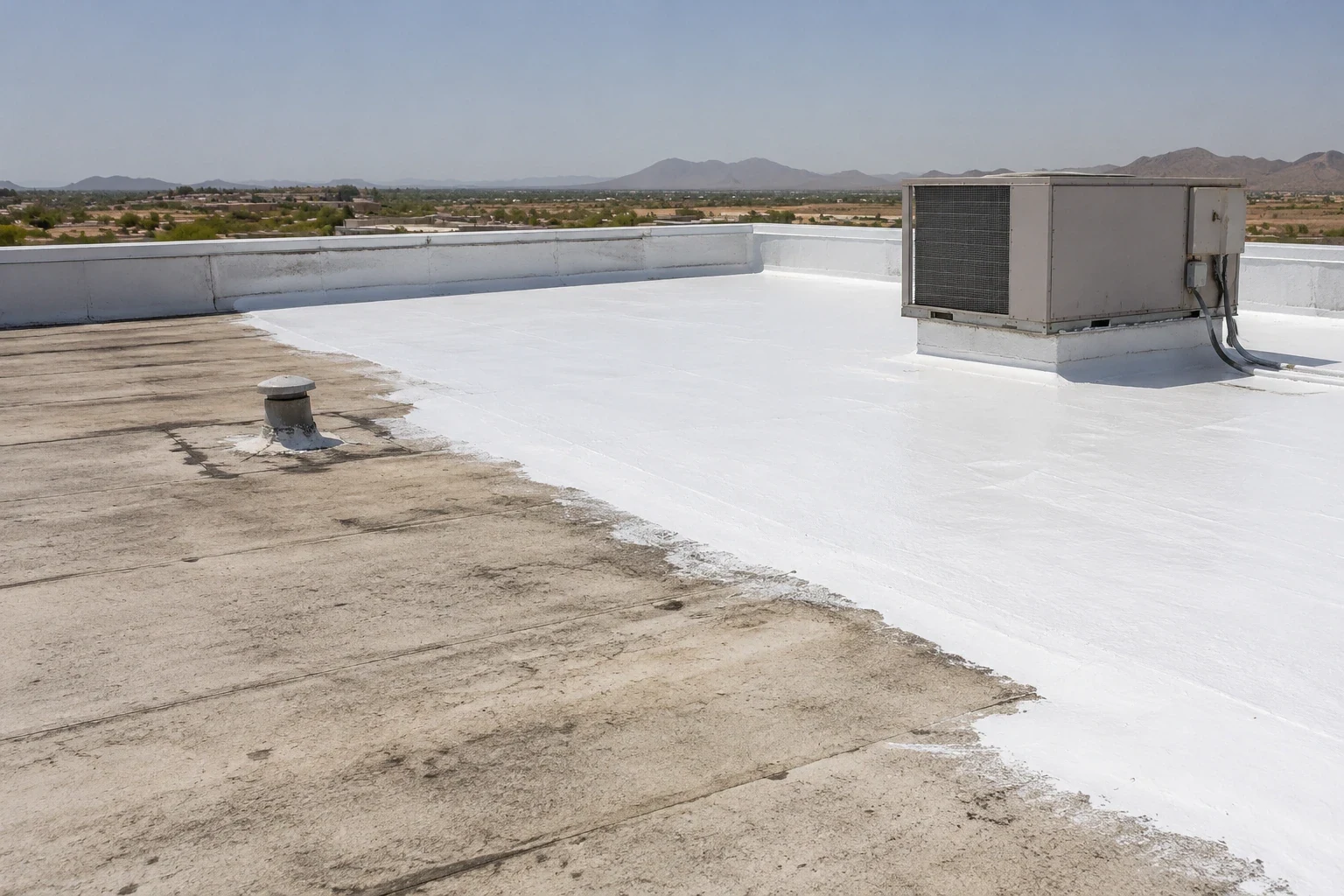
Recover or coating options require a dry, stable substrate and sound attachment. We check for trapped moisture and evaluate transition details before recommending a surface treatment. If the roof is not a candidate, we compare repair and replacement scopes, including insulation, edge metal, tear-off, disposal and staging. Our roof coating and restoration service begins with that suitability check; recover and overlay planning addresses eligibility and tie-ins before a new layer is considered.
Cost and schedule turn on actual quantities and access. The number of penetrations, roof zones, drains and edge transitions affects labor. Equipment shutdowns, material delivery and tenant hours can set the sequence. We describe those drivers in the proposal so the property contact can compare a short repair window with a longer capital project. Emergency stabilization can happen at any hour, holidays included, when water is actively entering.
Check permit and tenant constraints early
Permit work in Surprise follows 2024 building and existing-building codes, in force since January 1, 2026 and subject to local amendments. Energy, fire and electrical rules can also affect a reroof that changes insulation or touches rooftop systems. We confirm the applicable permit path against the specified work before pricing the assembly. This keeps the owner's decision focused on compliant options and makes room for questions before materials arrive.
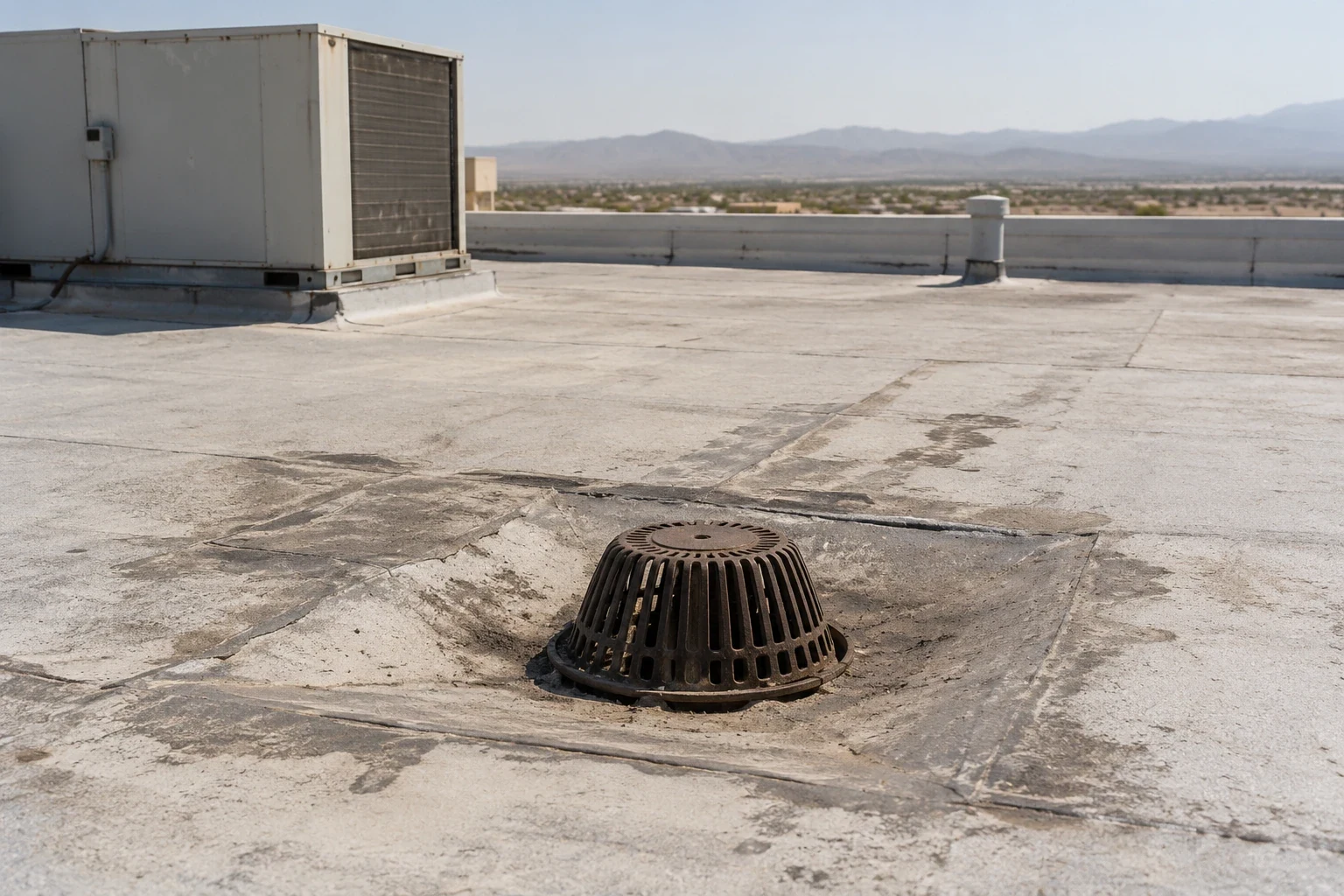
Prasada North connects to the broader Loop 303 and Waddell Road commercial area, but each property's access and operations still need a site review. We coordinate with the manager on roof access, tenant notices, deliveries, fire lanes and mechanical work. For occupied retail buildings, our occupied-building reroofing plan can sequence work around open spaces. For roof drainage issues, drain and scupper repairs trace the obstruction or failure before a patch is selected.
Nearby properties in the established Village at Prasada district and planned Prasada East project have their own development status and roof histories. We do not assume one building tells us what another needs. A first inspection confirms materials and conditions, photographs the problem areas, and gives the owner a practical sequence. That record also gives the next maintenance visit a point of comparison.
When a building is new, keep closeout records, warranty details and contractor notes where the facility team can find them. When the roof is older, assemble prior repair tickets and leak maps before we arrive. Either way, the visit ends with a distinction between what is visible, what needs testing and what can be repaired now. We can then price the next step without blurring a developing district's plans with the condition of a specific roof.
Commercial Roofing Questions
How do you inspect a Prasada North building if construction is still nearby?
We coordinate property access and staging with the building contact, then inspect only the roof in the scope. Nearby development does not establish the roof type or condition of an operating property. We photograph its membrane, transitions, drainage and reported leak areas so the recommendation stays specific.
Can new rooftop equipment create a leak even when the membrane is newer?
Yes. A curb cut, abandoned opening or poorly flashed support can admit water independently of the field membrane. We inspect each transition and check whether equipment changes are recorded. The repair should close the roof opening and restore compatible flashing around the support.
When should we choose a recover instead of replacement?
A recover needs a dry, stable assembly and compliant attachment. We look for trapped moisture, weak seams and failing edge details before considering it. If those conditions are not right, we show repair or replacement options with the insulation and disposal work described separately.
What does a roof report help us decide before a tenant opens?
A report records visible conditions, leak locations, photos and repair priorities. It can separate immediate corrections from items to monitor or investigate, giving the property team a scope to schedule before regular tenant activity begins. It does not assign a roof age unless reliable records support one.
Ready to review the roof scope?
Request a Roof Assessment
Related Roofing Work
Get the roof checked before the schedule fills
Share any leak notes, closeout records and access requirements. We will inspect the roof serving your Prasada North property and provide a condition-based repair or project scope.