A distribution roof near the Surprise Railplex may have rooftop units, conduit, gas lines, and pipe supports spread across long membrane runs. Each support interrupts the roof differently, and a leak at one curb can travel before it reaches the ceiling below. We inspect the flashing, attachment, equipment movement, and nearby seams, then set a repair boundary that keeps the mechanical system in view. The roof detail and the trade schedule have to line up before a curb can be opened or reset.
Read the support before opening it
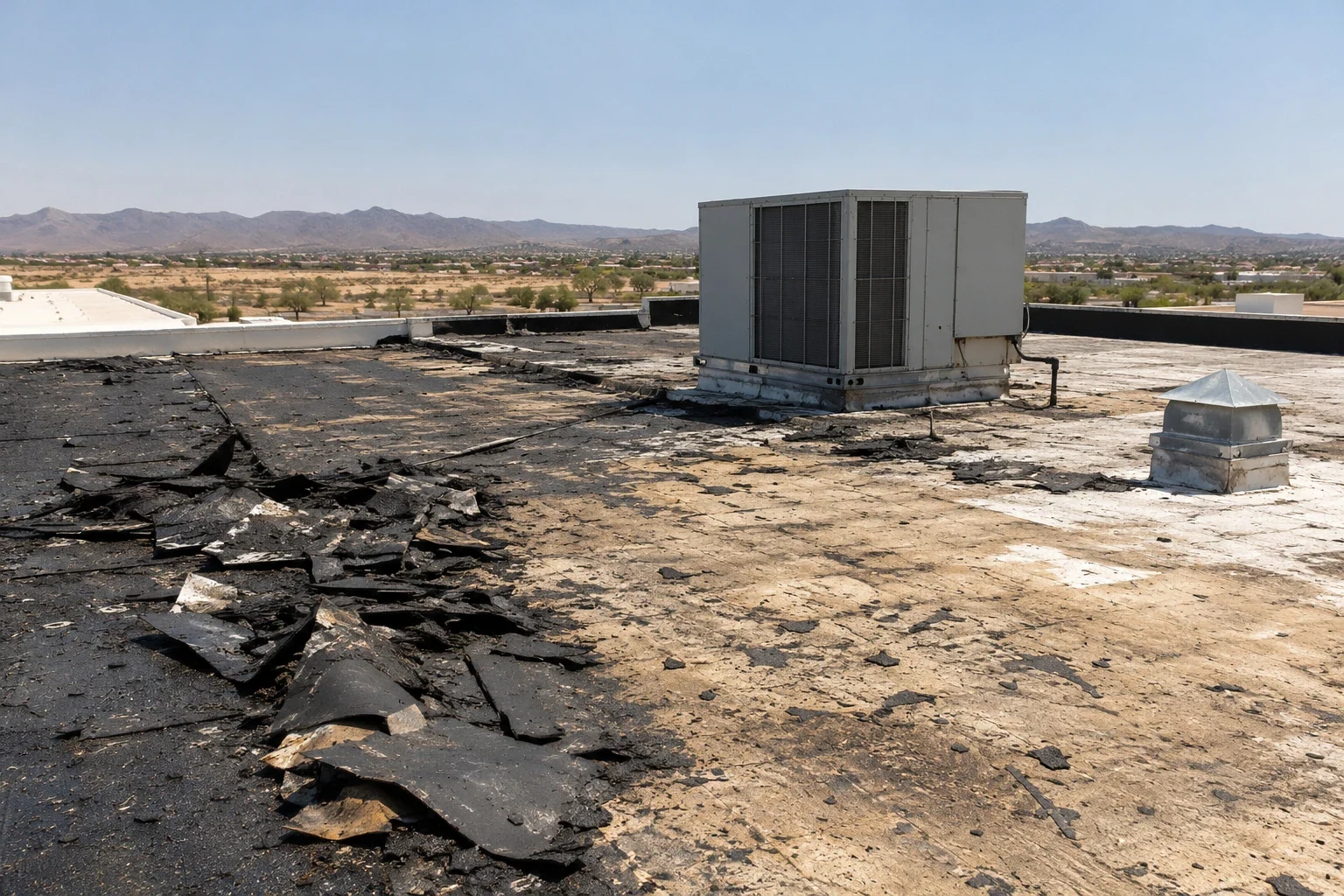
At a rooftop unit, we check the curb-to-membrane transition, corner reinforcement, counterflashing, and the condition of the surrounding roof. We look for cracked sealant, lifted flashing, loose fasteners, or movement where the unit vibrates. Pipe supports and sleepers need a stable bearing surface that does not pinch the membrane or block runoff. If a support has shifted, the mechanical or structural trade may need to reset it before we can close the roof around it.
We record the unit or line location and the safest route to reach it. On a North Surprise employment-area property, access can include broad development zones and road improvements, so the project lead should confirm delivery and lift timing for the specific building. A North Surprise roof walk starts with the site access plan, while a hands-on roof inspection can map nearby seams and penetrations before the repair is set. We also note the support footprint and nearby water path, so a new bearing pad does not cover a drain or hold runoff against the curb.
Keep the mechanical and roof scopes aligned
Equipment replacement can change curb dimensions, service clearances, and pipe locations. We coordinate with the HVAC contractor before the old curb is removed, confirm who will lift or support the unit, and protect the roof opening while the work is in progress. A curb that is too short or improperly aligned can leave a water path at the flashing. If a unit must be moved, we agree on the new position and the membrane tie-in before materials are ordered.
The work boundary also has to preserve maintenance access. A walkway, electrical disconnect, and service route may compete for the same roof area, and a new support cannot create a low pocket that holds runoff. For an occupied building, we coordinate any shutdown with the facility contact and identify which rooms or tenants may be affected. A written sequence should show the mechanical trade's step, roof closure, and final equipment check so neither scope is left incomplete. Where several units share a service lane, the work plan should keep the path open for the next scheduled maintenance call.
Heat and monsoon exposure at openings
Low-desert summer exposure makes curb seals and membrane transitions worth checking during a roof walk, with the repair scope tied to what is actually loose or open. Hot roof surfaces can stress sealant and flashing over time, especially where equipment vibration adds movement. Phoenix-area monsoon storms can bring damaging wind and heavy rain that test curb corners, pipe boots, and edge details. We inspect those points as part of the repair, but the local weather pattern is not proof that a particular curb has failed.
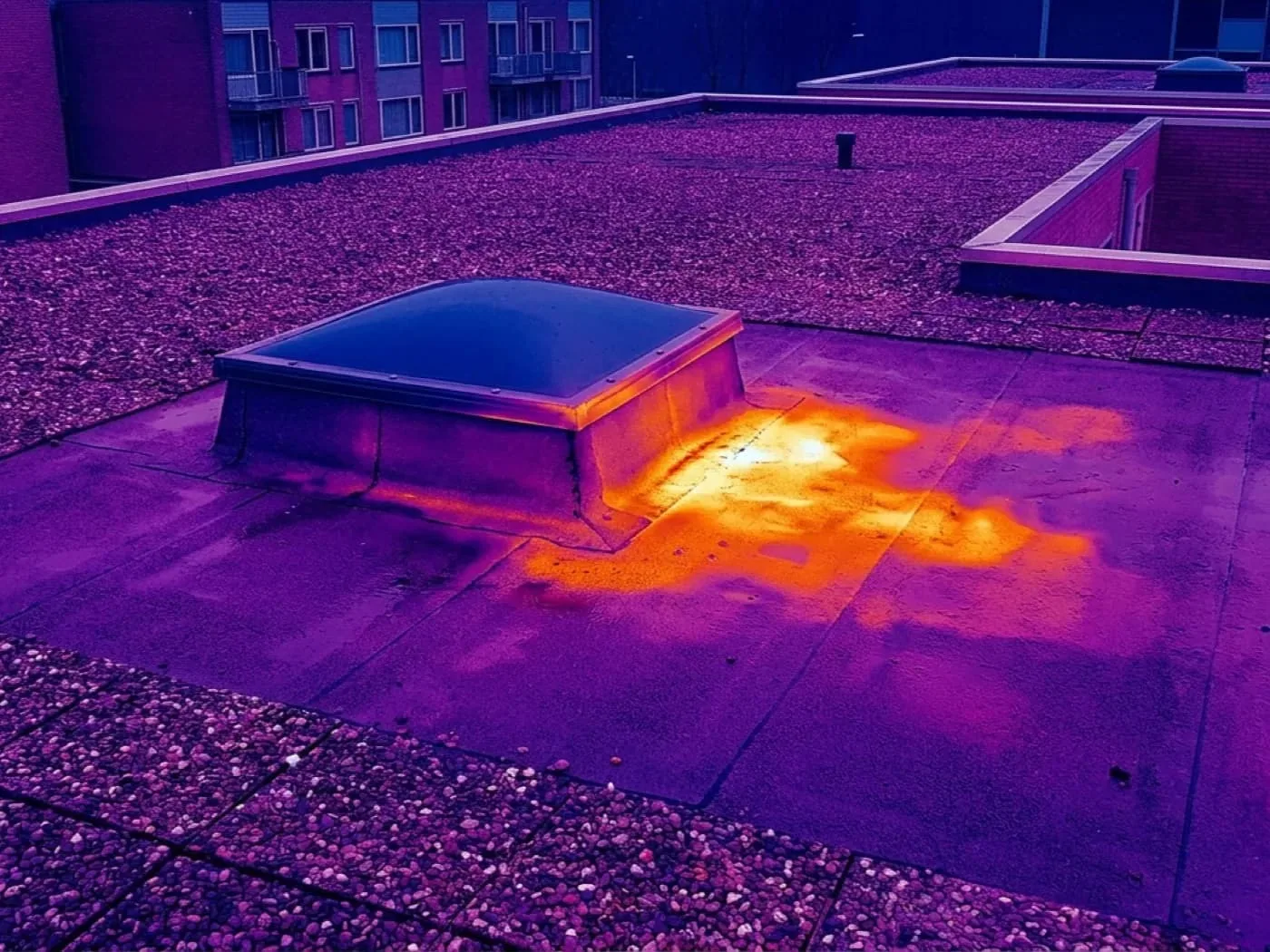
The Railplex is a broad industrial area with manufacturing, distribution, flex-office, and warehouse uses. For a roof serving the Cactus Road and Loop 303 commercial area, equipment access and tenant operations can shape the route and timing for curb work. A roof repair near either place needs a route that accounts for equipment service, truck movement, and tenant hours without treating every building the same. We can use infrared moisture screening to help identify areas for confirmation when hidden water is suspected; the opening still needs a direct inspection before the repair is finalized.
Build a watertight transition
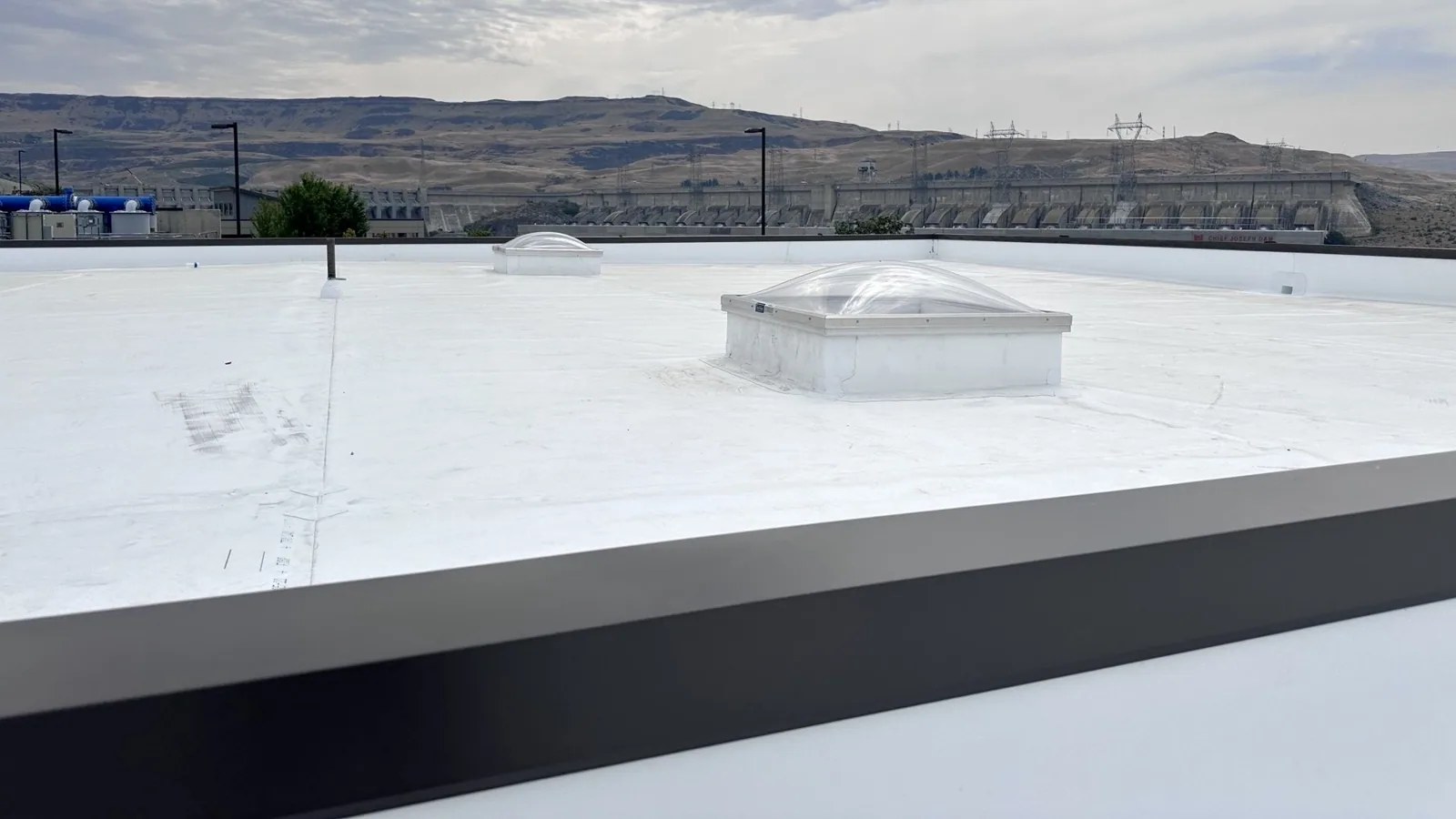
We remove failed flashing to sound material, prepare the curb or support surface, and install a compatible transition with secure terminations. A pipe boot must fit the line and clamp without covering a joint that needs movement. A unit curb may need a higher or wider flashing leg, depending on the assembly and the way water approaches the base. We keep the repair boundary clear and photograph any insulation or deck condition found when the existing material is opened.
If moisture has spread below a curb, the wet area may need removal before the new flashing goes in. A patch over wet insulation does not correct that hidden layer. We discuss localized replacement, a broader repair, or a larger roof replacement scope when conditions support a wider boundary. If the opening is part of a larger membrane project, TPO system details can be reviewed for compatibility with the curb and roof assembly.
Record the curb and equipment boundary
After work, we photograph the completed transition, note the unit or pipe location, and list any nearby condition left outside the repair. We also confirm whether the equipment trade returned the system to service and whether the roof access route is clear. A dated record prevents later confusion about which curb was opened and what material was installed. Where a larger equipment change is planned, the roof and mechanical scope should be reviewed together before the next project window.
Surprise's adopted 2024 International Building and Existing Building Codes have local amendments and took effect in 2026. A new curb, structural support, or altered roof opening may need design and permit review, which should be confirmed before construction. We document the roof transition and coordinate with the building team; the design professional determines any structural requirements. Our roof condition report can keep equipment locations with the inspection record. For a more extensive Railplex commercial roof project, we can plan access and phasing around the property's service lanes. Those photos give the facility lead a clear handback.
Commercial Roofing Questions
Can a leaking equipment curb be repaired without shutting the unit down?
Sometimes, but access and the location of the failed flashing control the sequence. We coordinate with the HVAC trade before loosening a curb or moving a unit. If the repair requires lifting equipment, a shutdown window and a secure temporary cover must be planned first.
What causes a roof leak around rooftop equipment?
Common roof-side conditions include separated flashing, a cracked corner, a loose fastener, or a pipe boot that no longer fits. Vibration or service work can disturb those details. We inspect the base and adjacent membrane, then note whether equipment movement or a trade adjustment is part of the repair.
Do you repair pipe supports as well as unit curbs?
We can repair the roof transition and support interface, with the mechanical or structural trade handling any line relocation or load-bearing change outside our roof scope. We identify the trade boundary before removing a support, so the roof is not left waiting on an unplanned reset.
How do you keep water moving around a new curb?
We review the curb position, nearby drains, crickets, and membrane slope before installation. If the curb sits in a low path, the layout may need adjustment or a separate drainage correction. The detail is photographed so the owner can see how the flashing ties into the surrounding roof.
What should be in a curb repair proposal?
The proposal should name the unit or line, flashing work, equipment trade coordination, temporary protection, and any wet material excluded from the base scope. We list the access window and the final check as well. That makes it clear what can be completed before the equipment returns to service.
Ready to review the roof scope?
Request a Roof Assessment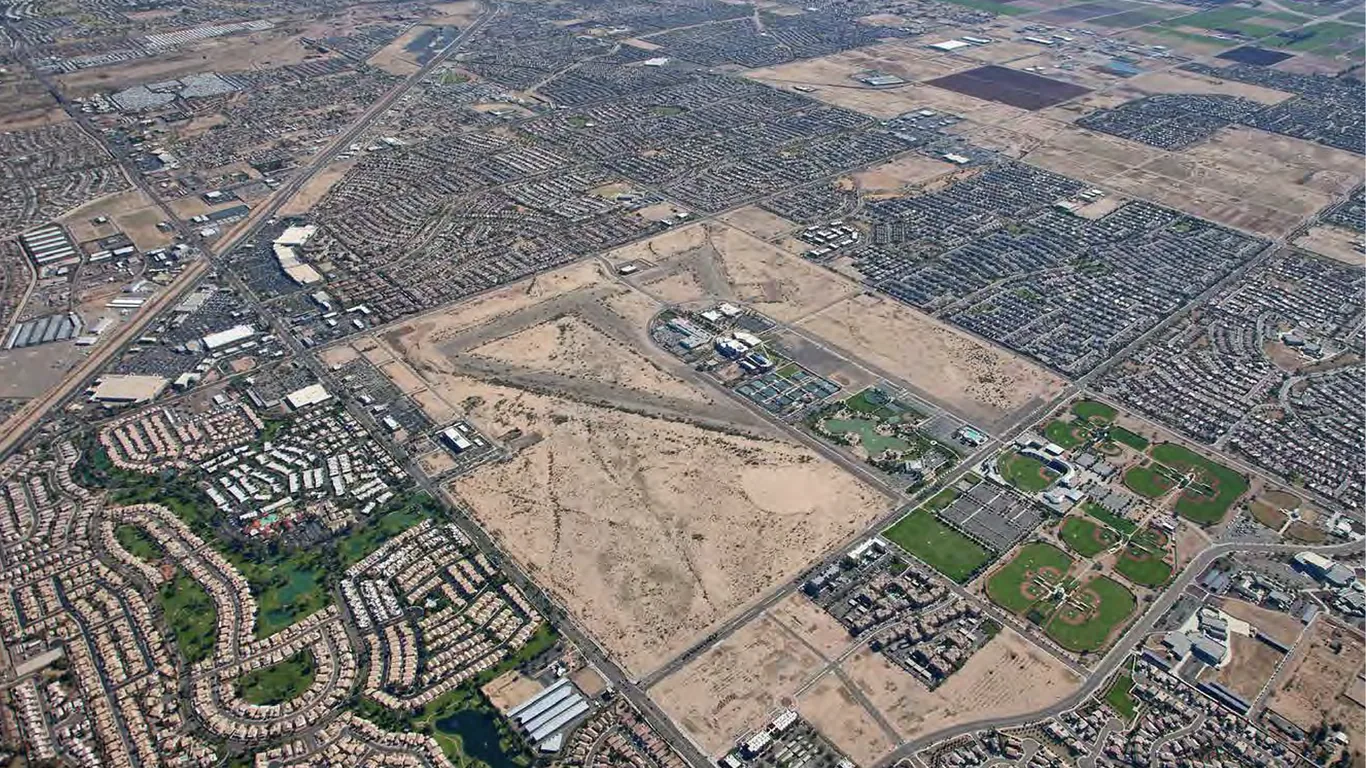
Related Roofing Work
Coordinate the curb and roof detail
Share the equipment list, roof plan, and mechanical schedule. We can inspect the Surprise curb or support, agree on a safe access window, and document the roof repair boundary with the building team.