A commercial roof in Youngtown, AZ needs a building-specific inspection, even when the property sits within the same West Valley network as Surprise and Peoria. Youngtown is an incorporated West Valley municipality between the Surprise and El Mirage area and the broader Peoria-Glendale employment network. That geography helps a project team think about service access, but it does not describe a particular roof or business. We inspect the building's membrane, transitions, equipment openings and drainage, then set a repair boundary from what is visible and tested.
Establish the route and roof sections
Before climbing, confirm who can open the building, where a lift can stage and which interior areas need protection. We ask for the roof plan, recent leak locations, equipment contacts and schedule restrictions. A safe route matters even for a small repair: ladders, walk pads, fragile surfaces and electrical lines can change where the crew works. We mark the areas reached and list any section that could not be inspected so the owner does not read a partial walk as a full roof condition assessment.
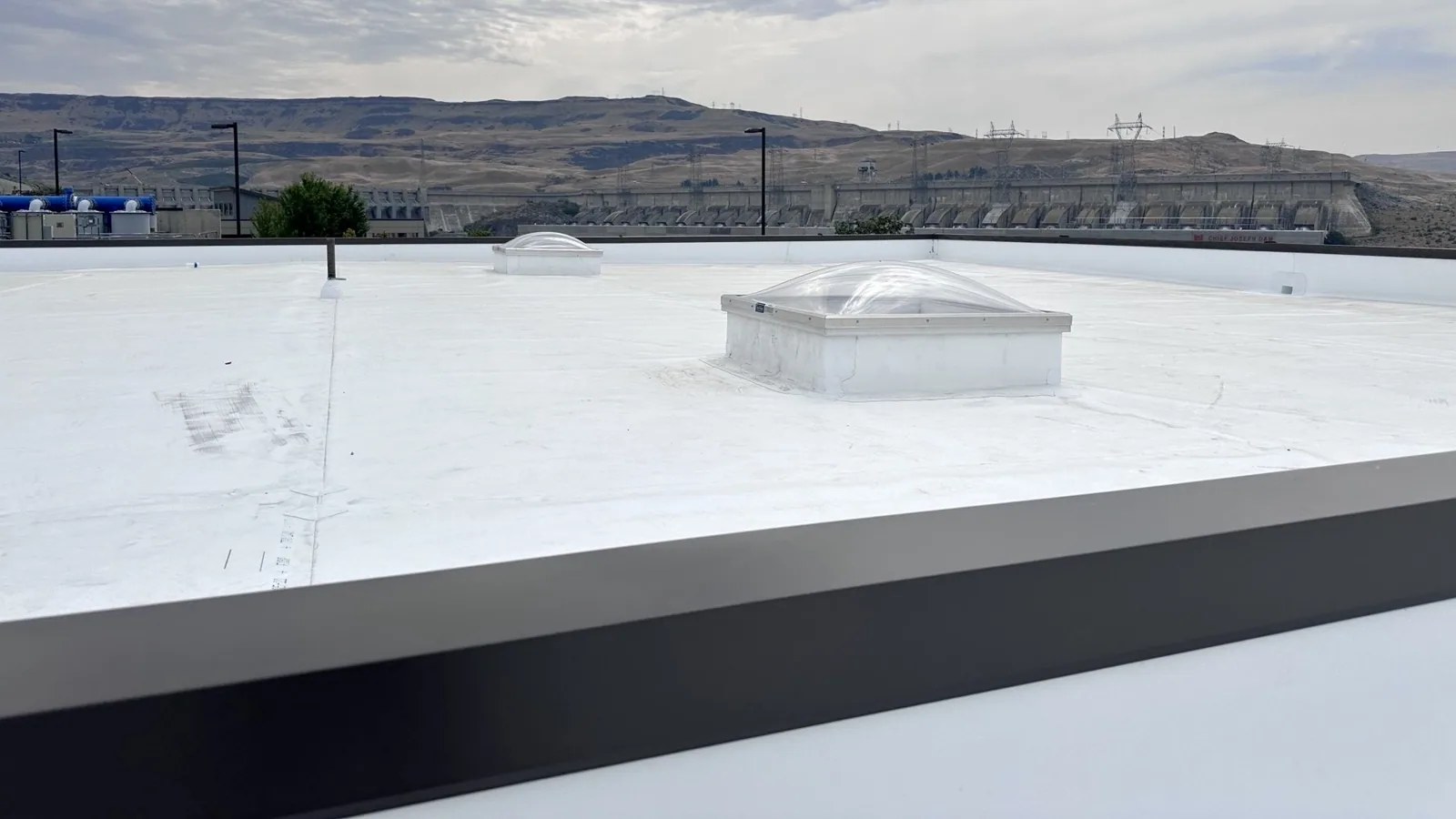
On the roof, check seams, laps, drains, edge metal, parapets, curb flashing, skylights, wall transitions and previous repairs as they apply to the assembly. If water appears inside, compare the interior mark with roof slope and possible paths instead of patching directly above the ceiling. A commercial roof inspection can map findings, while a leak repair addresses a confirmed opening. A moisture scan or test cut may be needed where the surface cannot show whether insulation is wet.
Youngtown's location between the Surprise/El Mirage area and the Peoria-Glendale network is a real regional context, not evidence of a shared roof assembly. A property near El Mirage or Peoria still needs its own inspection record. We keep the municipality, building name, roof section and work limit attached to each photo and proposal. That avoids carrying one address's repair assumptions to another property along the same service route.
Review seams, edges and drainage
The Phoenix-area summer monsoon can bring severe thunderstorms, damaging wind and heavy rain. That regional exposure makes exposed membrane, sealants, roof edges and drains worth checking, but it does not establish wear or storm damage at a Youngtown property. We look for a split lap, brittle flashing, a loose coping joint, separated sealant, a blocked outlet or movement around a curb. The report describes the physical finding and its likely water path, then notes which test or repair would settle the question.
At a roof edge, inspect attachment, laps, corners and the wall beneath the metal. A loose edge may need fastening and a rebuilt tie-in rather than another bead of sealant. At a curb, look for flashing height, open corners, equipment lines and clearance for maintenance. A coping and edge repair should assign the roof trade and equipment trade their boundaries before work starts. Record curb height and nearby seams so the next crew knows what the repair must connect.
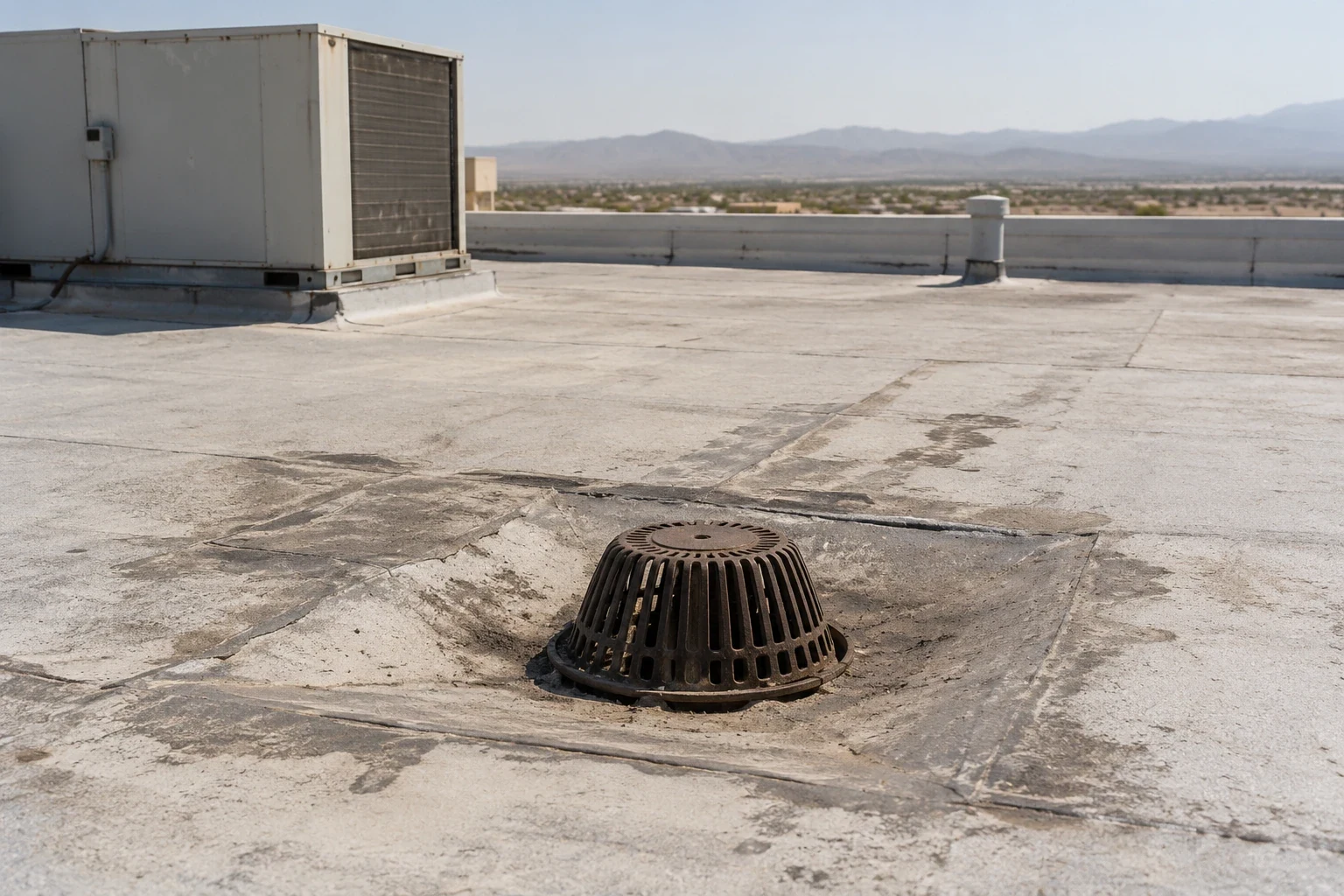
At a drain, verify the bowl, flange, strainer, scupper and overflow route. If water remains after rain, record its location and whether the surrounding surface appears depressed. A drain repair may address a blocked or separated detail; standing water may require checking slope, insulation or deck movement. We avoid applying a surface layer before confirming that the substrate is dry and stable. A coating can renew an eligible assembly, but it does not correct a drain or repair hidden wet material.
Price what is known and identify what is not
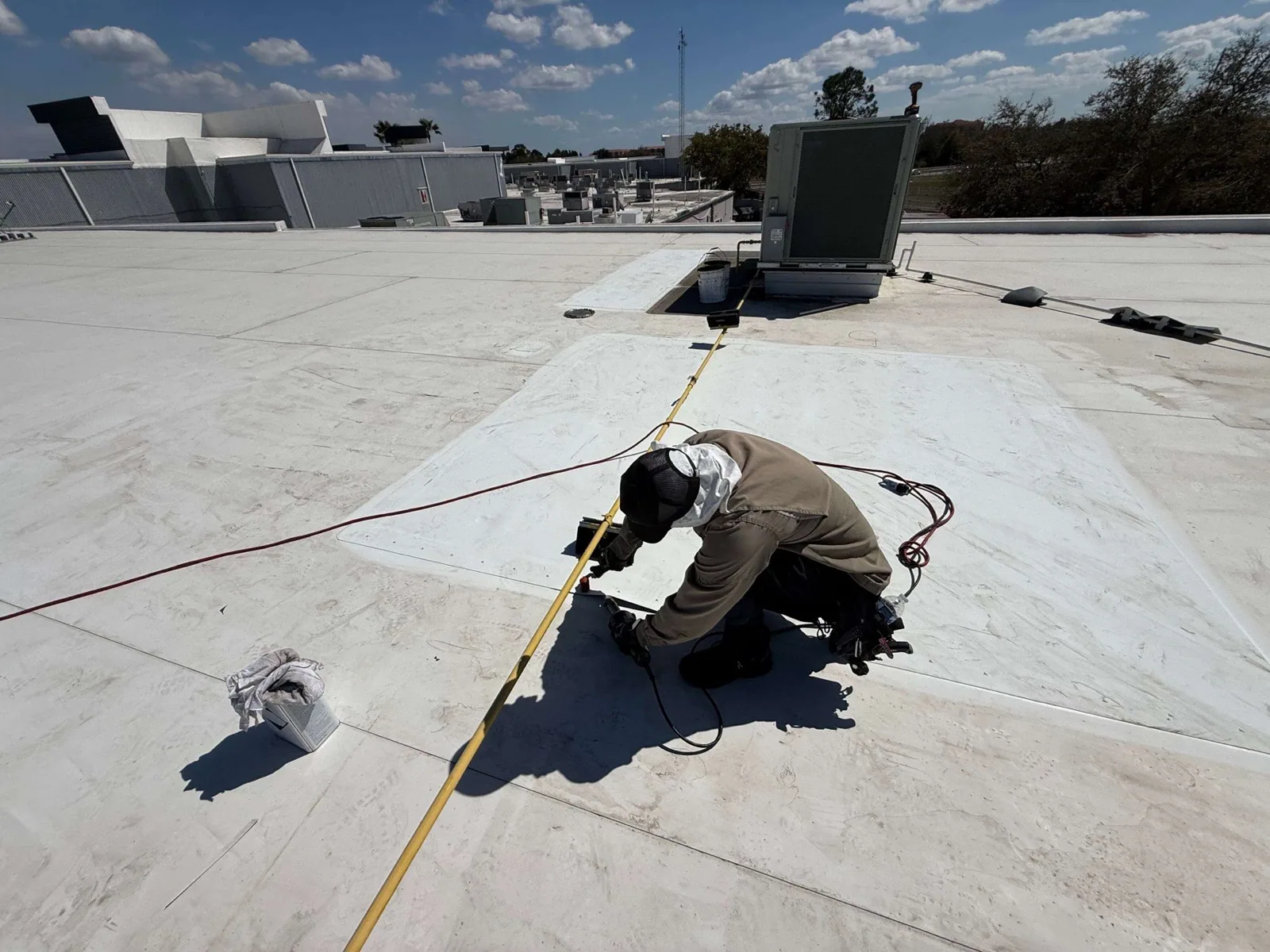
For a limited defect, we specify preparation, compatible patch or flashing materials, seam tie-in and a final check. If the roof has repeated openings, loose attachment or suspected moisture over a broad area, compare the repair with restoration or replacement. A recover depends on the existing layers, drainage, attachment and moisture condition. Tear-off shows more of the assembly but affects debris handling, tenant activity and staging. We state the assumptions and areas excluded so the owner can compare a repair with a capital scope.
Cost and timing change with roof height, access, lift placement, equipment relocation, material type, test cuts, insulation, deck repairs, interior protection and working hours. If the roof is over an occupied room or sensitive equipment, coordinate protection and shutdowns before opening the assembly. When weather creates an active opening, emergency response is available around the clock; temporary protection should be recorded separately from permanent repair.
Permit requirements belong to the property address and the authority responsible for that project. Before work is priced, we document the observed roof layers, insulation, drainage and proposed details so the project lead can confirm the review path for the right jurisdiction. A scope should state whether testing, interior protection or equipment coordination is included, and name the assumptions that could change once an assembly is opened. That gives the owner a useful decision point before schedule and materials are committed. A repair proposal should separate the confirmed opening from nearby details that remain untested. If the deck feels soft, the membrane is wet below the surface or water returns after a drain clears, pause the finish work and agree on the next test. That sequence limits hidden-condition surprises and keeps a small repair from being priced as a full replacement without evidence.
Keep the next inspection connected
The repair record should include the plan label, photographs, material installed, repair limit, test result, areas not reached and any follow-up trigger. If the same leak returns, compare the new path with the documented patch edge and nearby drains or curbs. A condition report keeps photos and observations together. For several managed properties, an asset register can retain separate histories by address and section.
We can walk a Youngtown property with the owner, general contractor or facilities manager, review available records and prepare a written scope. Share a roof plan, access rules, leak history and any scheduled rooftop work. The inspection will identify what can be repaired, what needs verification and what should be compared with a broader option. If you also manage roofs in Surprise City Center or along the Loop 303 corridor, keep each municipality's building and permit record distinct.
For an urgent leak, call at any hour and we can protect the opening while planning the permanent repair. For scheduled work, agree on tenant notice, service access and a daily dry-in plan before the crew mobilizes. A written scope should make clear who removes equipment, who restores flashing and who checks the interior after work. That handoff keeps the roof decision useful to the next person responsible for the building.
Commercial Roofing Questions
Does Youngtown share the same roof conditions as nearby cities?
The regional climate and street network provide context, but each assembly and repair history is different. We inspect the Youngtown building and record its own roof findings.
Can a leak be traced from the ceiling stain?
The mark is a starting point, not always the entry point. We compare it with roof slope, drains, seams and penetrations, then document the path that is confirmed and any test still needed.
What if a roof section is not accessible?
We identify the section, access barrier and return step. The report states that it was not inspected rather than treating adjacent conditions as proof of what is under the restriction.
When might replacement be better than patching?
Broad moisture, repeated failures, loose attachment or a deteriorated deck can change the comparison. We show the findings and identify any test needed before a replacement quantity is set.
What should happen after emergency protection?
Record where temporary cover was installed, how far it extends and what permanent work remains. We can return to inspect the assembly and prepare a defined repair scope once it is safe.
Ready to review the roof scope?
Request a Roof Assessment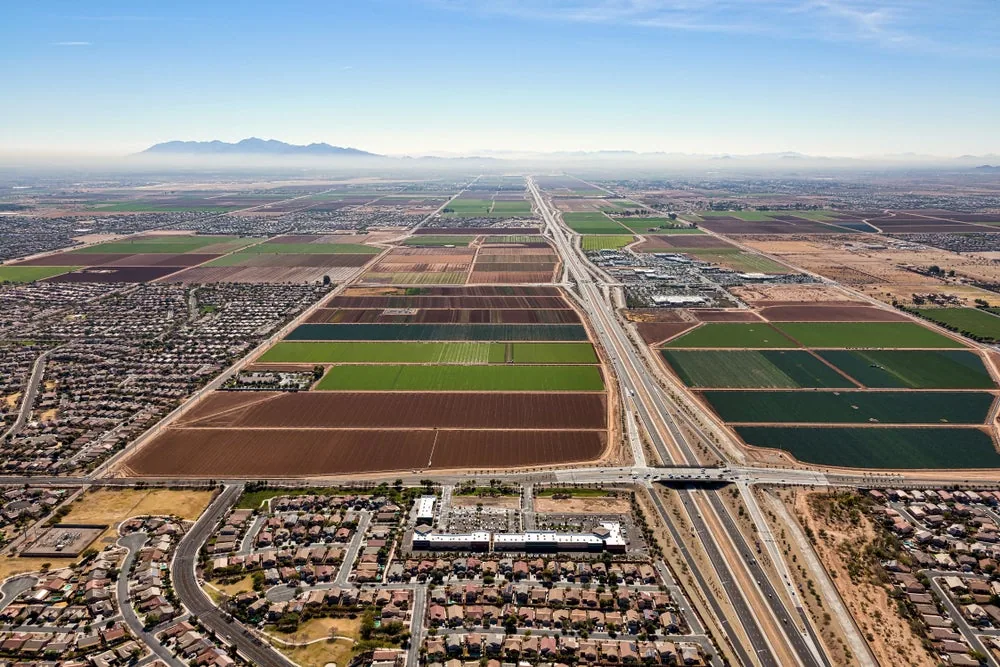
Related Roofing Work


Plan a roof visit in Youngtown
Provide the property roof plan, access rules, operating hours, leak history and equipment schedule. We can inspect the building and return a mapped repair or testing scope.