A retail manager near Surprise City Center may have water entering over a tenant space during business hours. The first call is about safety and containment, not choosing a roof system over the phone. We respond around the clock, confirm where water is reaching the building, and identify a safe path to inspect. If weather or access blocks a lasting repair, we protect the opening where possible, explain the limit, and set a return visit with the building contact.
Make the interior safe first
Keep people away from wet ceilings, lighting, electrical panels, and equipment that may be exposed to water. Protect stock or furnishings only when it can be done without entering an unsafe area. Tell us which room is affected, when the leak began, and whether it changes with rain or equipment use. A safe photo can help locate the roof zone, but cannot confirm the entry detail.
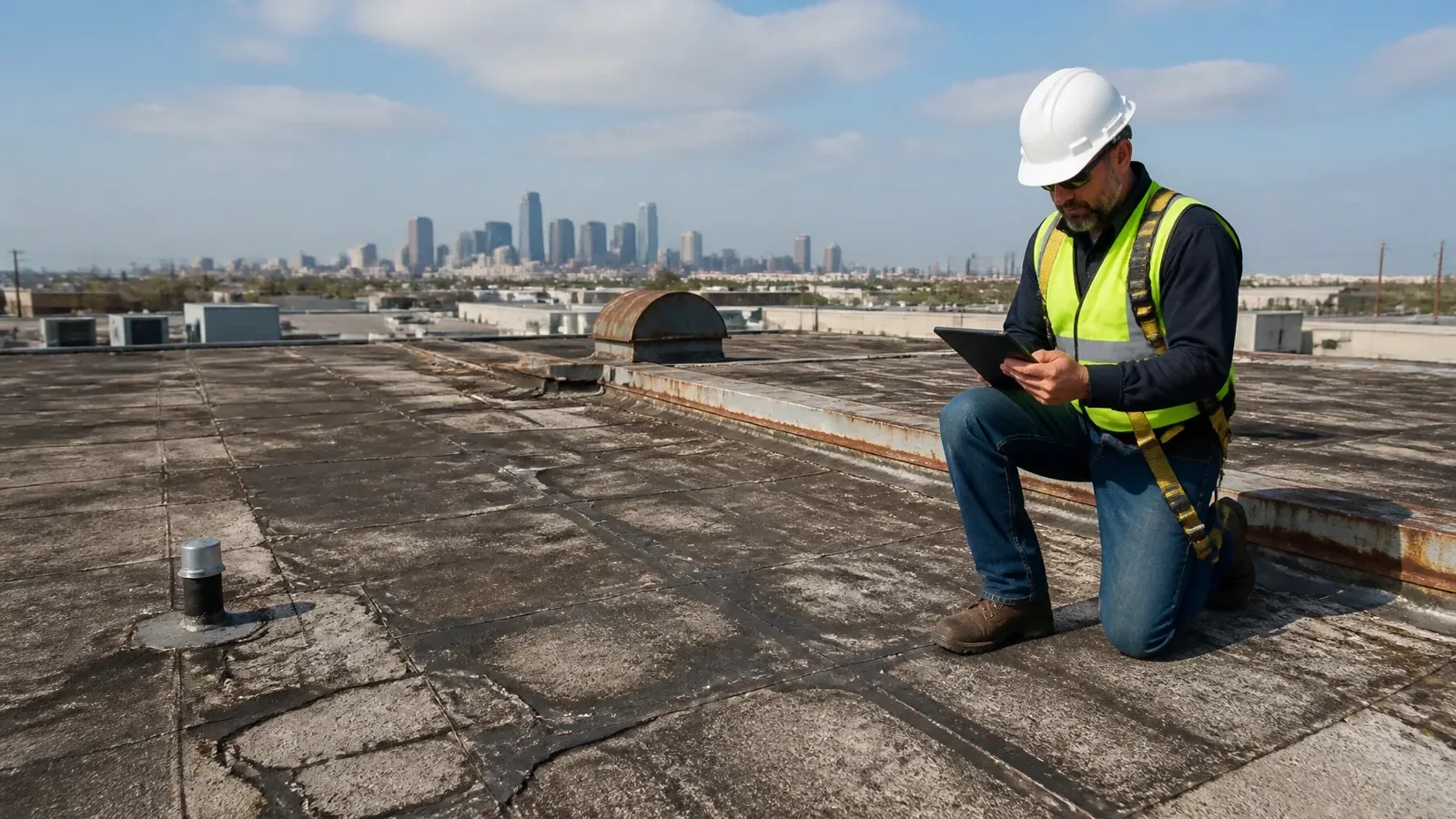
We coordinate roof and interior access with the facility contact. We look for the opening, likely water path, and nearby drain or flashing issue. The first objective is to reduce water entry without opening more roof than needed. We document what was contained and whether a permanent patch, flashing rebuild, or broader inspection needs a return visit.
Temporary protection has a boundary
A tarp, temporary membrane patch, or other dry-in can limit water entry when the roof surface and wind conditions allow it. It is not the same as a permanent repair. We note where protection begins and ends, how it is secured, and which nearby conditions remain unchecked. A wet or unsafe section is not treated as complete. The project lead gets a handoff describing what remains protected until durable repair.
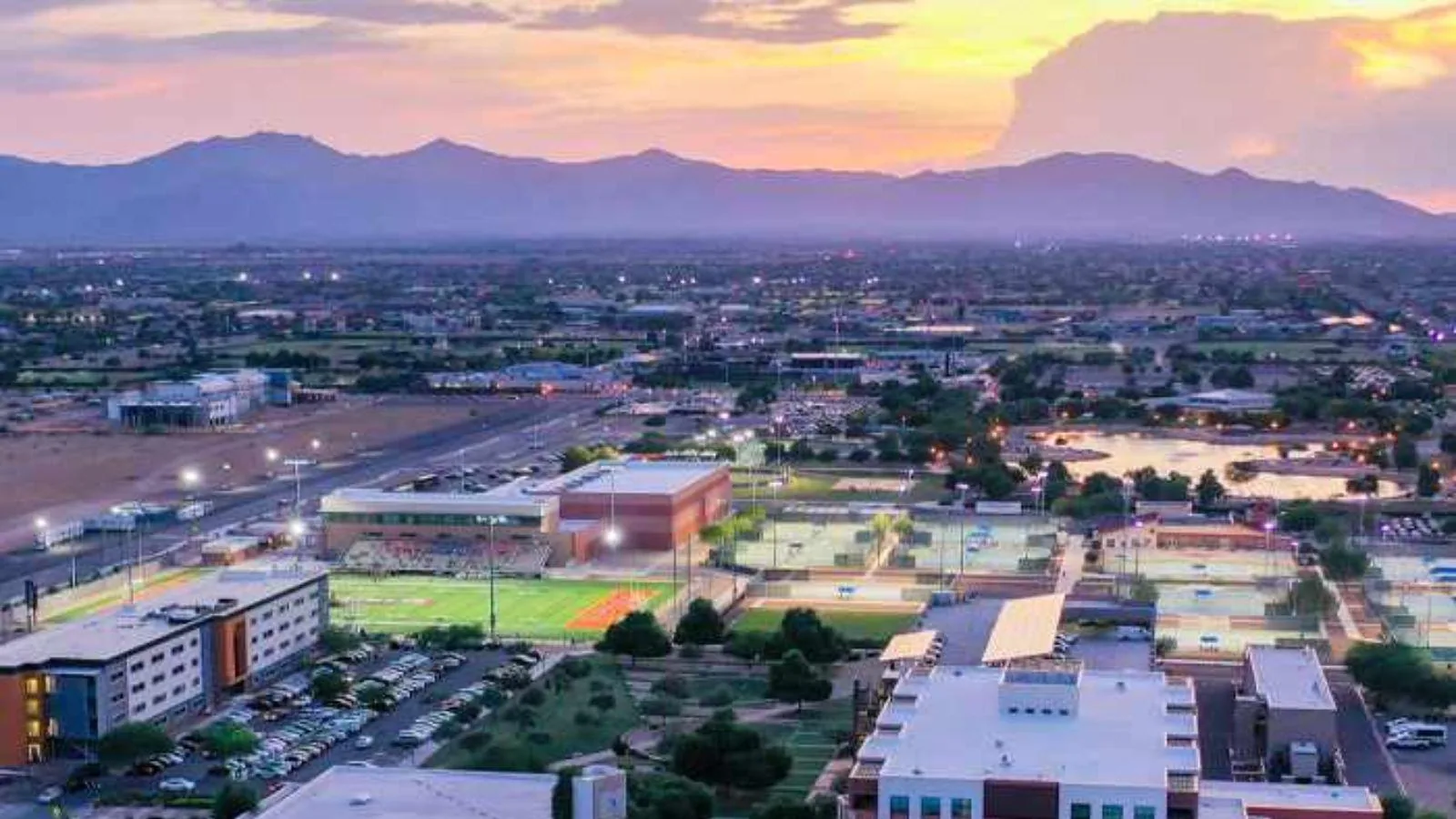
Surprise sits in a low-desert setting where summer monsoon storms can bring damaging wind and heavy rain across the Phoenix metro. During and after a storm, roof access and bond conditions can change. We use the safe window, keep materials clear of drains and open edges, and protect penetrations before leaving. A property on the Cactus Road and Loop 303 corridor may have service traffic, so the access plan protects that route too.
Find the failure that needs the next visit
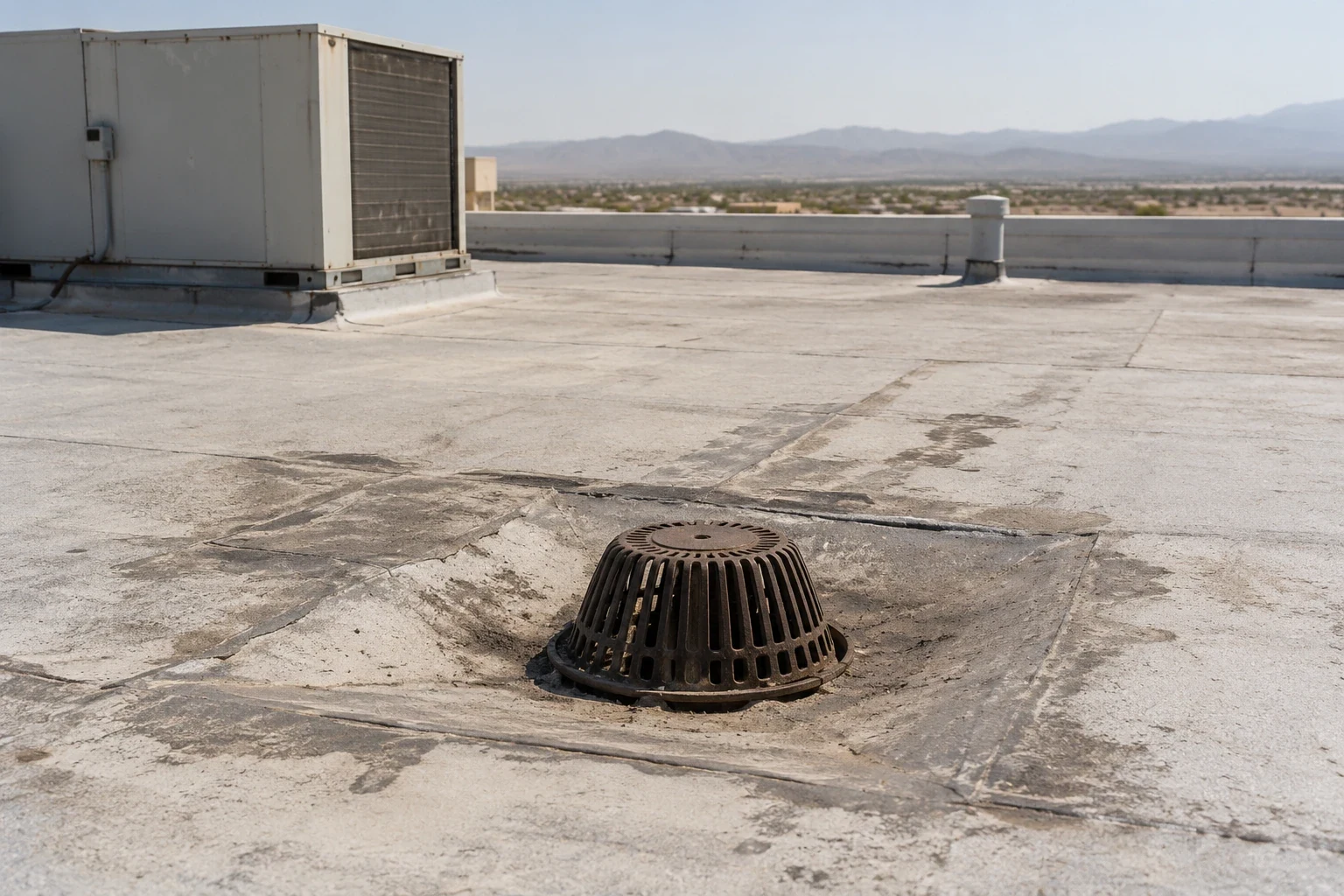
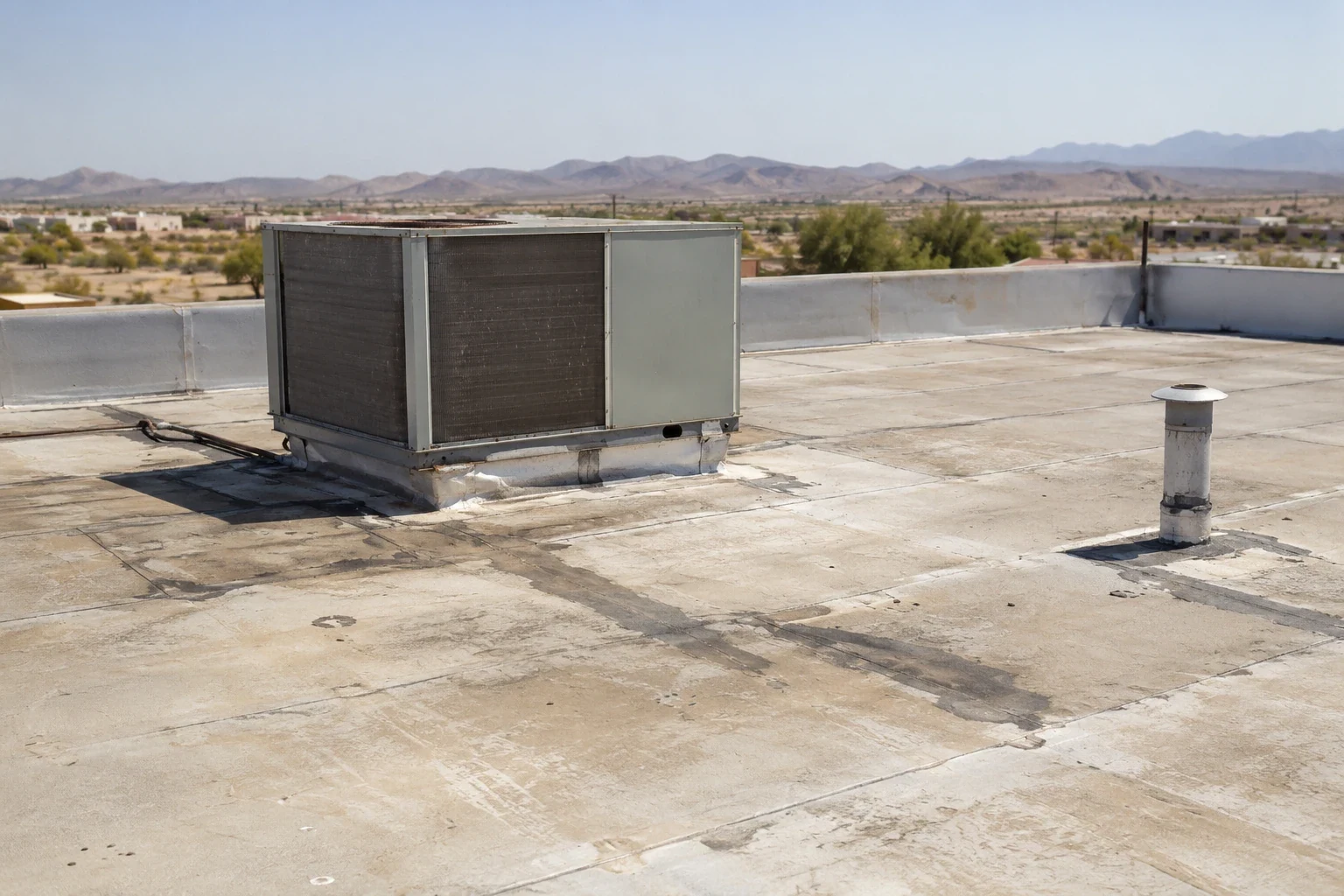
Once the immediate threat is controlled, we inspect seams, edge metal, wall transitions, rooftop equipment curbs, skylights, drains, and scuppers. Wind can lift a termination or displace flashing; water can back up at a blocked drain and find an older opening. We distinguish storm observations from confirmed failures and photograph the area before cover-up. A test cut may be needed if wet insulation is suspected.
For an active leak that has moved beyond the initial opening, commercial leak tracing can follow the water path and mark the repair boundary. A damaged drain or overflow route may call for drain and scupper work before the next rain. The Surprise Railplex includes industrial, distribution, and flex-office/warehouse development, so a building lead may need to protect operations while the roof is checked. We confirm the site's actual loading and equipment constraints rather than assuming a standard emergency sequence.
Return with the right repair
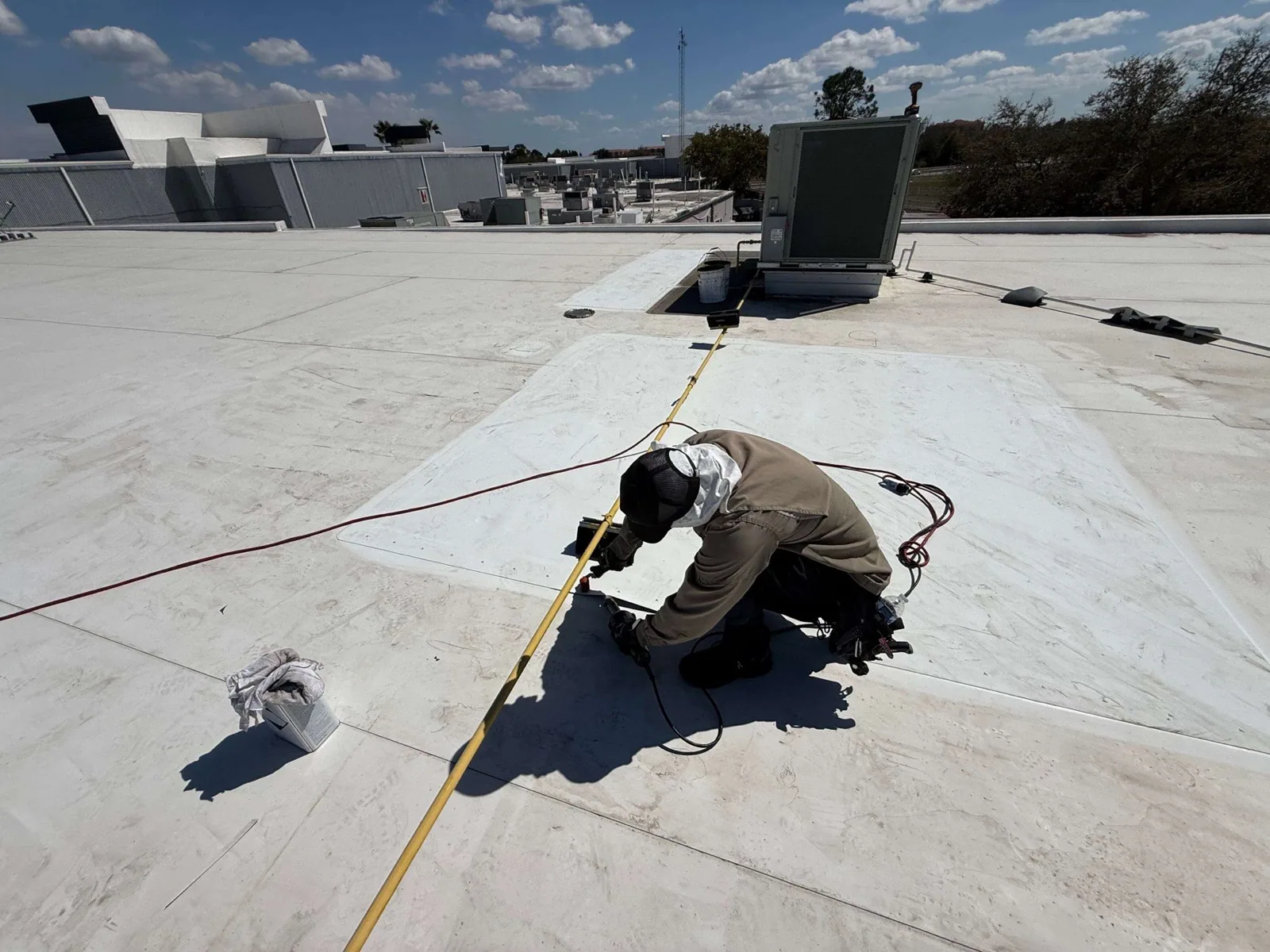
A permanent repair depends on the membrane and the condition beneath it. We clean and prepare a bond surface, then use a compatible patch, weld, flashing detail, or replacement of the affected section. If wet insulation is below, we remove it where scoped, inspect the deck, and close the assembly in layers. If the surrounding field has repeated failures, we show where a targeted fix ends and a larger repair or replacement decision begins.
We can prepare a follow-up repair scope with photographs and markups so the owner can compare the emergency work with the permanent solution. A roof using TPO membrane needs a repair compatible with its material and attachment. On an occupied office or retail property near Surprise City Center, we schedule the return around roof access, tenants, and any work below the affected area. The permanent scope should state what is fixed, what remains, and when the dry-in can be removed.
Coordinate the handoff
An emergency repair is easier to manage when the facility team knows who is opening the roof, what must stay powered, and which room needs a clear path. We identify a site contact, confirm ladder or lift placement, and keep materials clear of loading and emergency routes. The property manager relays the isolation boundary and work window to affected tenants. We do not ask a building team to guess which roof section has been opened; we mark it and review the handoff before leaving.
After the immediate repair, a written roof condition record can combine dated photographs, roof-plan locations, materials, and remaining concerns. The record helps the owner decide if a single repair is enough or if a broader inspection should follow. We can also set a maintenance visit to check the repair and surrounding drainage after weather. That follow-up is a separate scope, scheduled with the facility lead rather than assumed as part of emergency response.
Call with the details you have
Tell us the address, the room or operation affected, the start time, recent weather, and who can authorize roof access. Plans and repair records can help us locate the roof section, but a complete file is not required. We will confirm safe access, inspect what can be reached, and explain what can be contained now. If the roof cannot be permanently repaired in that window, we document the temporary protection and what needs another visit.
For a distribution or manufacturing property near Loop 303, include any dock, shift, or vehicle routes that cannot close. For retail near Village at Prasada, note tenant hours and shared access rules. The emergency response is available at any hour, every day. A short, clear call lets us bring the right access equipment and protect the building without assuming the failure from an interior stain alone.
Commercial Roofing Questions
How quickly can you respond to an emergency roof leak?
Emergency response is available around the clock. Timing depends on safe roof access, weather, and the information needed to reach the affected area. Tell us the building contact, interior location, and any immediate safety issue. We will confirm the response window and the first action we can take.
What can be done if it is still raining?
We can coordinate interior protection and assess whether roof access is safe. A temporary dry-in may be possible, but a permanent patch needs the right surface conditions and bond. We identify what is protected, what remains exposed, and when the crew can return to make the durable repair.
Will you repair the roof during the first emergency visit?
If the opening is accessible and the surface is safe and prepared, we may make the permanent repair on that visit. If conditions call for temporary protection first, we will explain why and document the return scope. The response is not complete until the facility lead knows what was fixed and what remains to be checked.
What should we include in the first call?
Give us the address, where water appears, when it started, the person who can provide roof access, and any electrical or equipment concern. Recent weather and previous repair notes are useful too. A safe interior photo can help identify the roof zone, but the field inspection confirms the opening.
How do we keep tenants or loading operations moving?
We agree on the area that must stay open, the access route, and any equipment that cannot be interrupted. The crew stages clear of loading lanes and emergency access, then hands back a marked section and any temporary protection. A permanent repair can be scheduled around the building's hours when the roof conditions permit.
Ready to review the roof scope?
Request a Roof Assessment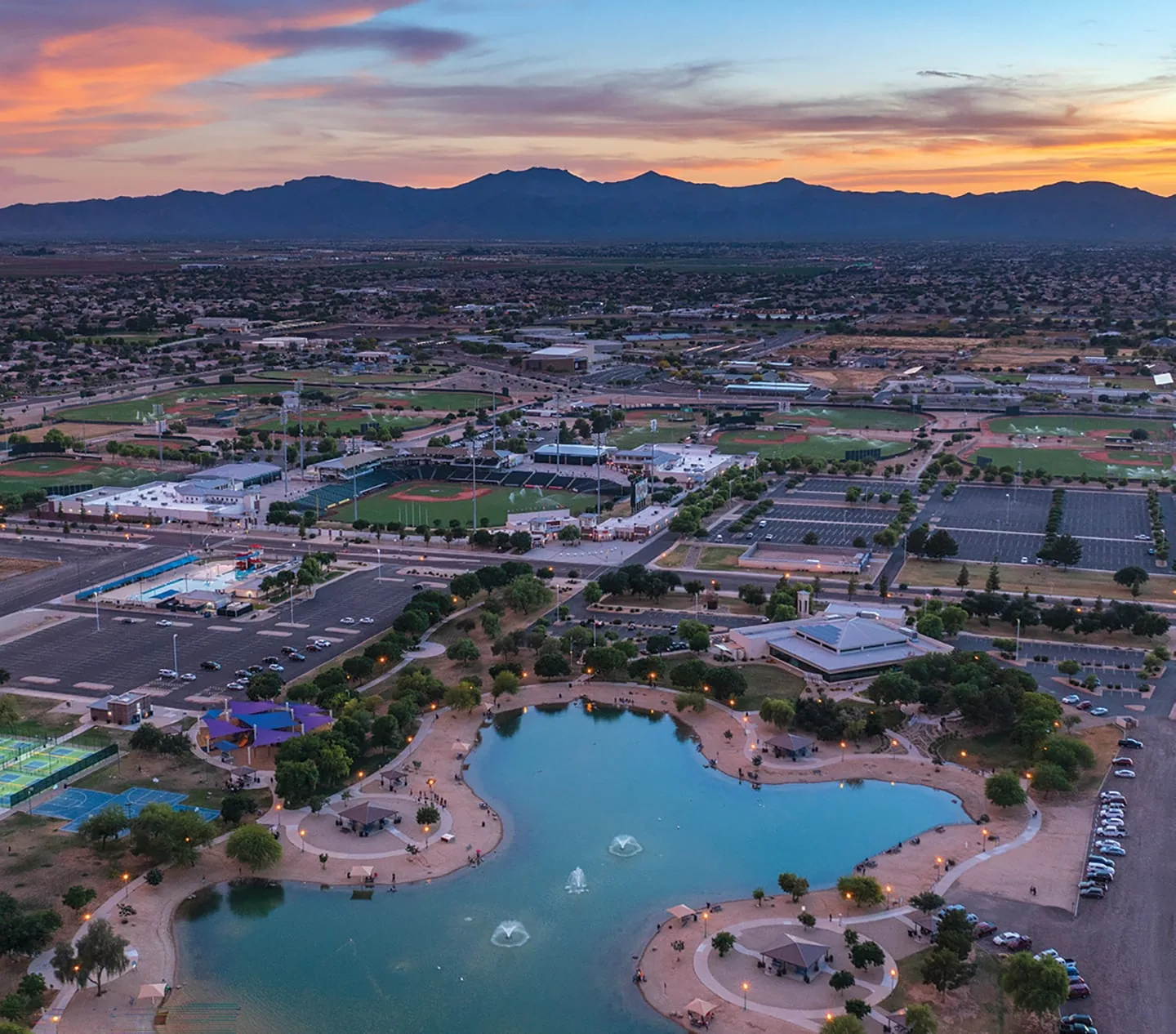
Related Roofing Work
Get an emergency roof response
Call with the affected area, recent weather, and roof-access contact. We can coordinate a safe inspection, protect the opening where conditions allow, and document the permanent repair or follow-up scope.