
A clinic or office roof near Surprise City Center may have skylights, exhaust curbs, conduit, and other openings that cannot be treated as one flashing detail. Water can enter at a cracked curb corner, loose counterflashing, fastener, or membrane transition, then travel before it reaches the ceiling. We inspect each opening, mark the likely entry point, and note what must be protected while the repair is made. The fix has to suit the roof assembly and keep equipment or occupied rooms in service.
Find the failed transition
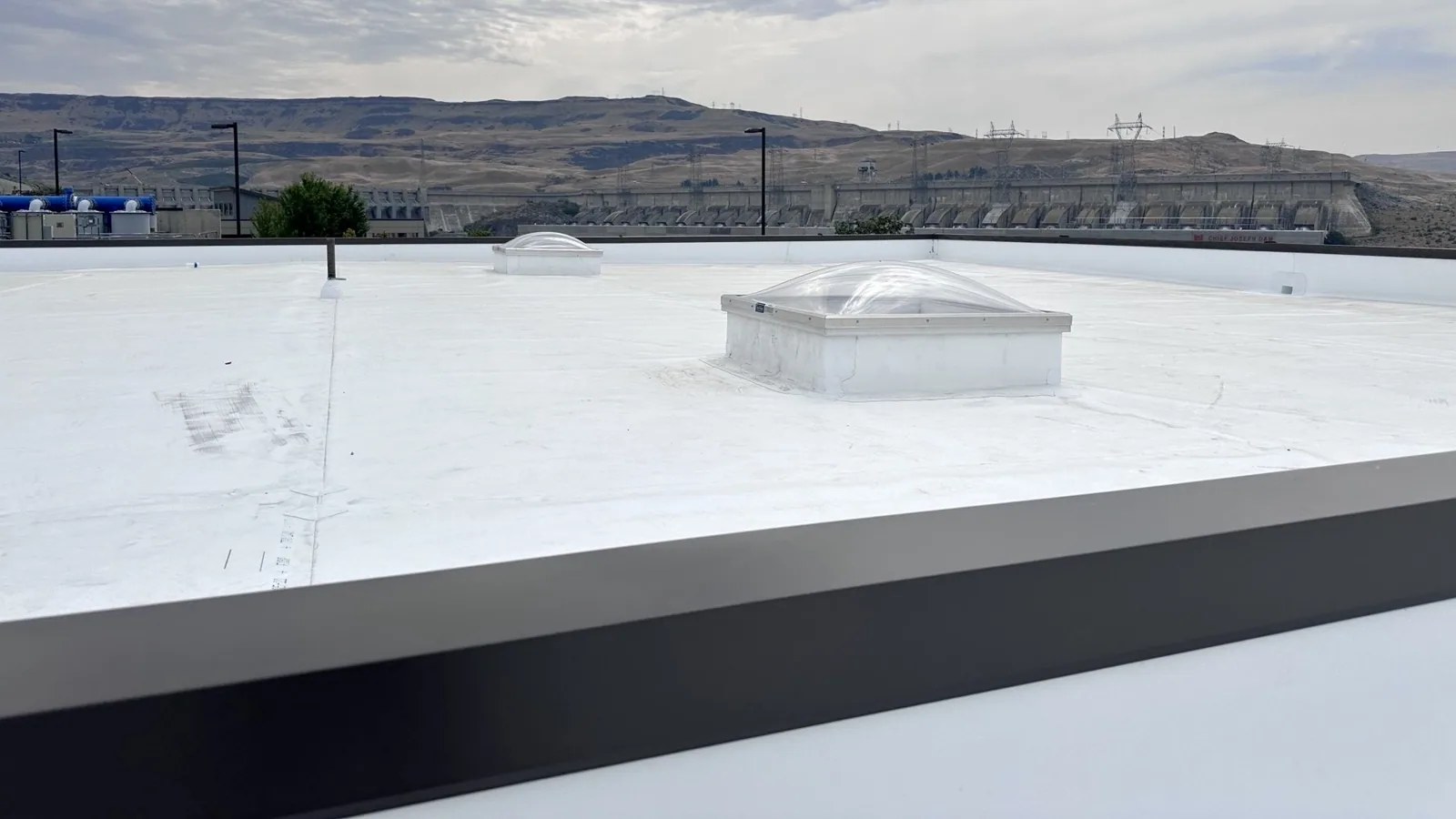
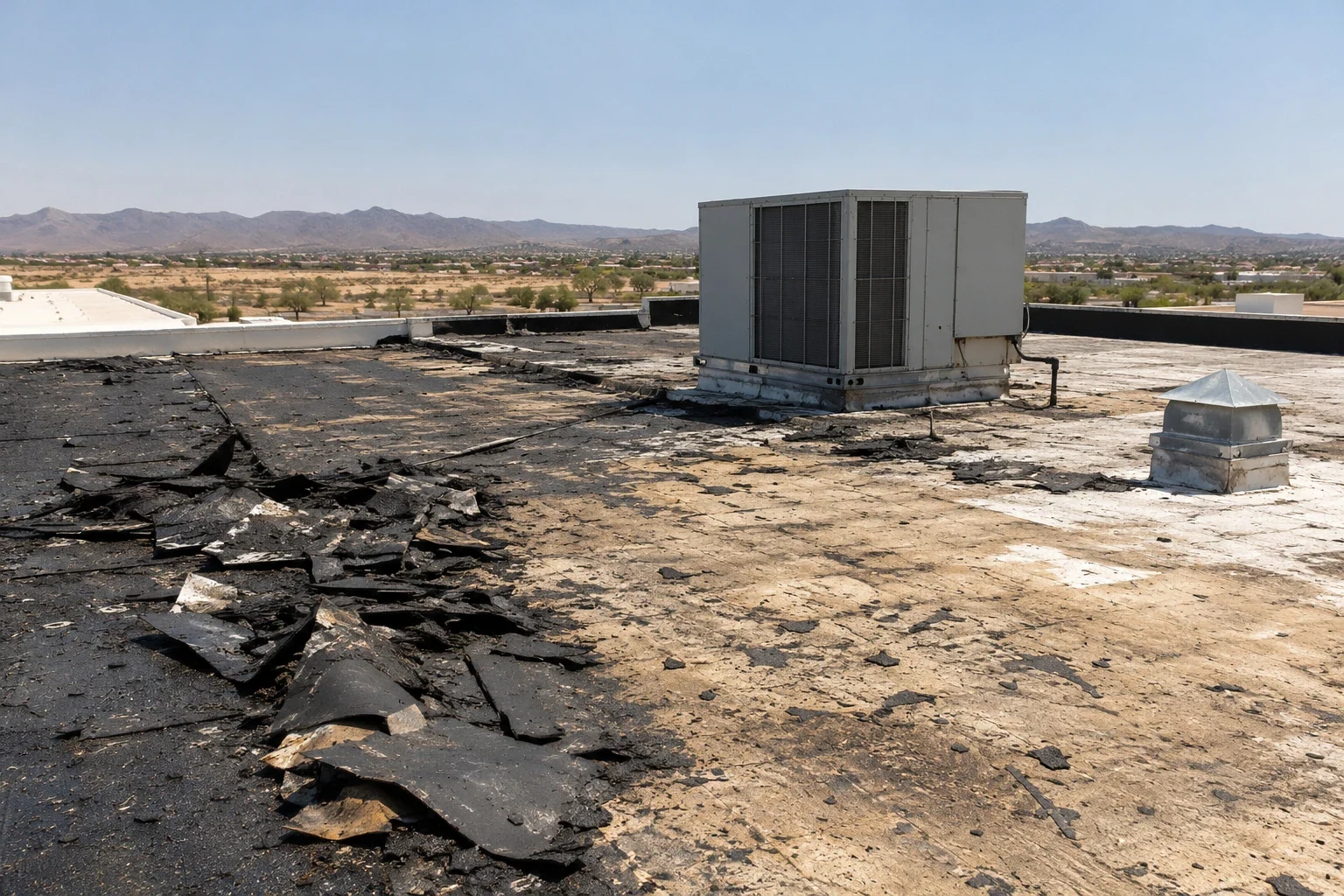
We look at the skylight frame, curb height, corners, cover, and the membrane turn-up around it. At a pipe or conduit, we inspect the boot, clamp, seal, and nearby membrane for splits or movement. Around HVAC curbs, we check whether the flashing is continuous and whether vibration or service traffic has disturbed the detail. Photos show the whole opening and close views of the defect so the repair can be tied to its location instead of described as a general roof leak.
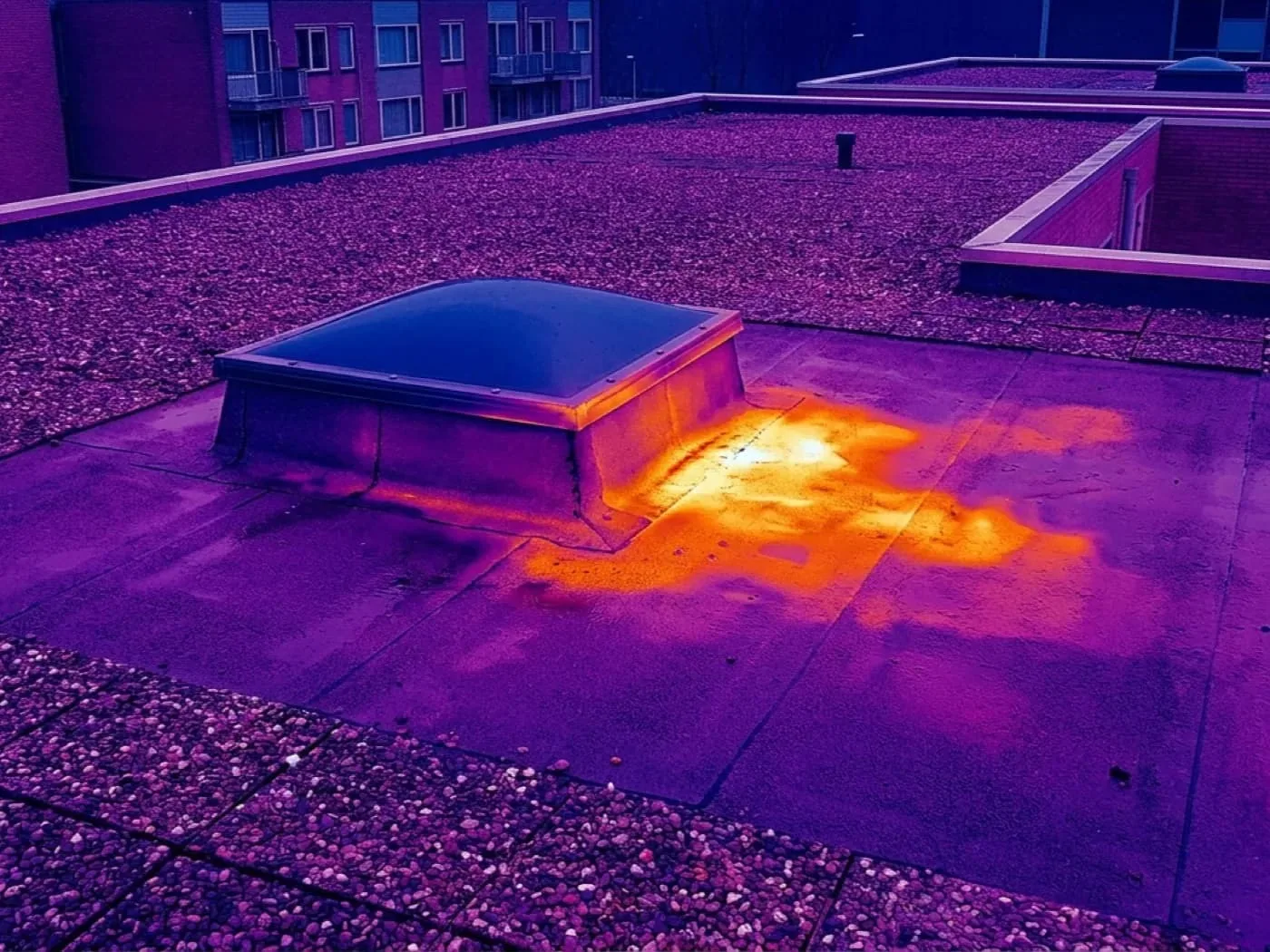
When the interior stain is offset from the opening, we compare the reported timing with the slope, seams, and roof layers that could carry water. A hands-on commercial roof inspection can trace adjacent conditions, and infrared moisture screening can help identify areas for confirmation where wet insulation is suspected. The tools narrow the question; an opening or membrane repair still has to address the actual defect.
Curbs and skylights have different limits
A skylight curb may be sound while the flashing has separated, or the frame may be cracked and require a glazing trade. We identify which component is involved before proposing roof work. The curb-to-membrane transition needs a compatible membrane tie-in, reinforced corners where required, and a termination that will not leave a water path behind the frame. If a skylight is no longer wanted, infill is a larger scope with framing, insulation, decking, and roof-system connections to coordinate. If a probe shows wet insulation near the curb, we mark its boundary and include drying or replacement decisions before closing the roof.
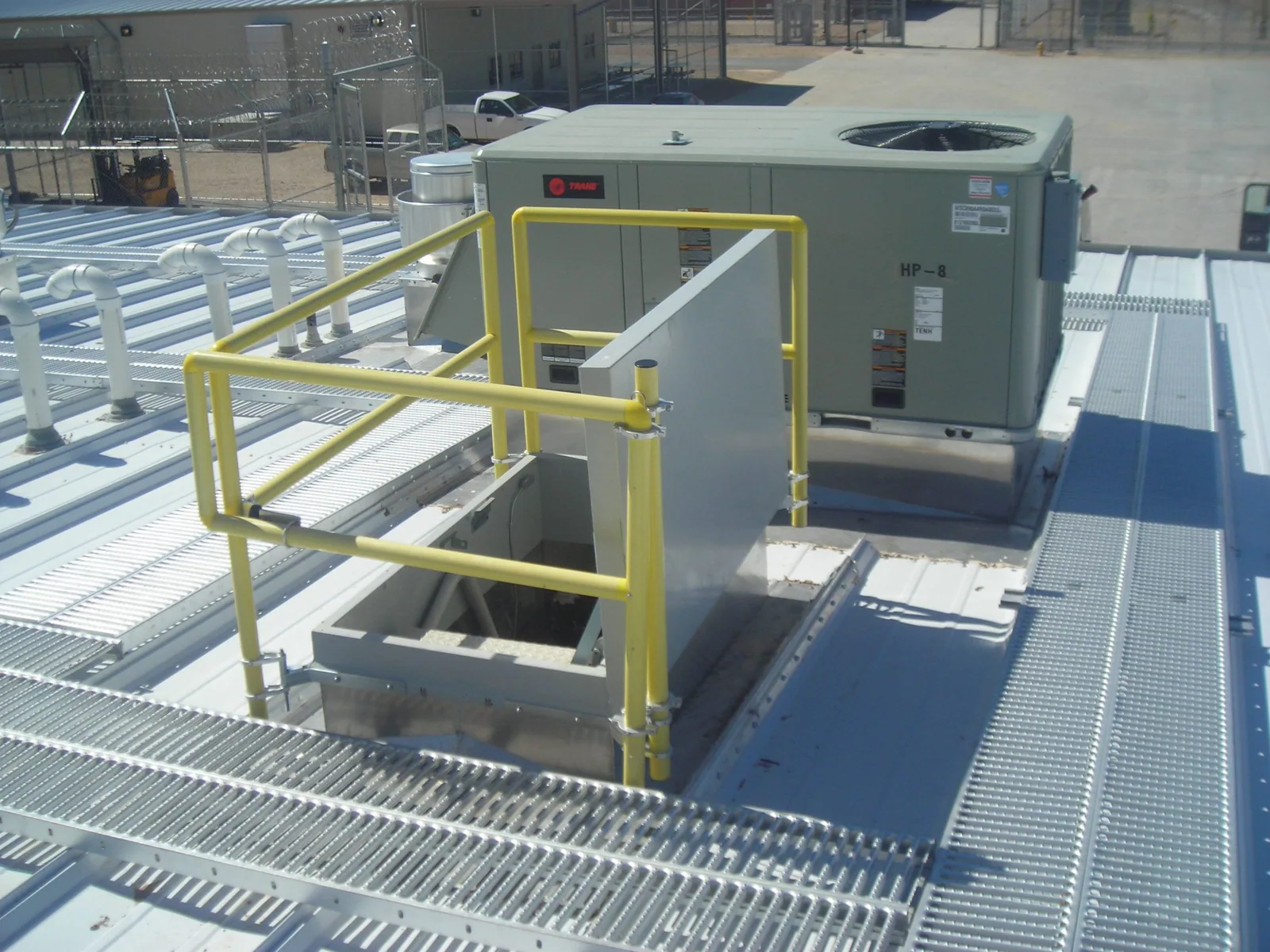
Penetration boots also have a limit. If the pipe moves or a trade adds a new line, a boot that once fit can split or lose its clamp. We ask who owns the equipment and whether it can be shut down or moved for access. For a rooftop unit, curb and equipment support repair may need to be coordinated with the HVAC contractor. The roof detail cannot be closed until that interface is ready.
Heat, rain, and open roof work
The 1991 to 2020 July normal mean at Phoenix Sky Harbor is about 95.5 degrees, a metro indicator rather than a Surprise station measurement. High roof-surface temperatures can affect sealant and membrane work windows, so we plan the repair for conditions suited to the material. Summer monsoon storms in the Phoenix metro can bring wind and heavy rain. An open curb or skylight during that period needs a defined temporary cover and a clear plan for closing the detail before the workday ends.
The Cactus Road and Loop 303 area includes multiple retail and commercial developments, while City Center includes healthcare, civic, and service uses. Those building operations affect where a lift or staging area can go and whether an intake needs protection. We coordinate access with the facility contact, keep debris away from the opening, and check the interior area after the repair. For a City Center roof walk, the schedule should consider staff, tenant movement, and any room directly below the opening.
A repair that closes the assembly
We remove loose or failed material only far enough to reach a stable substrate and sound membrane. Then we rebuild the curb or penetration transition with compatible components, secure the termination, and check that adjacent seams remain intact. Where a skylight frame or equipment curb is damaged, that part must be addressed with the responsible trade before the membrane can be closed. The scope states whether it includes flashing only, a frame replacement, curb work, or an infill. The number of openings, access to the underside, and any needed shutdown can change the sequence and time required.
If multiple penetrations have been added over time, the roof may need an inventory before replacement or recover work. We can mark each opening and identify which ones are active, abandoned, or awaiting a trade decision. That prevents an unused conduit from being covered without approval. A larger roof replacement plan can include the known openings and a sequence for resetting equipment, while edge metal and coping details remain a separate perimeter scope.
Keep room and roof records together
Before work, we confirm the access hatch, roof route, interior protection, and any shutdown needed for equipment. If a room cannot be entered, we note that so the handback does not imply it was checked. The completed record includes the opening location, photos, materials used, and any nearby condition left outside the repair. A dated file helps the next roofer or facility lead see what was actually changed rather than guessing from a patch on the surface. We also note who can report a return leak after the next rain.
Surprise's locally amended 2024 building codes took effect at the start of 2026. An infill, changed opening, or broader roof alteration can require a separate permit and design review. We describe the roof assembly and repair boundary; the owner and design team confirm project requirements before construction proceeds. A photo-based roof condition report can preserve those details for the next capital decision. We keep openings protected through the work and return the roof to a secure state before leaving the area for the next team.
Commercial Roofing Questions
Can a leaking skylight be repaired without replacing the whole roof?
Often the repair can stay local when the frame, curb, and surrounding membrane remain sound. We identify which part has failed and whether a glazing or equipment trade is needed. If wet insulation or deteriorated deck extends beyond the opening, the repair boundary has to include that material.
Why is a leak showing up away from a roof penetration?
Water can travel along a membrane, insulation joint, or structural deck before it appears inside. We compare the stain with the roof slope, curb flashing, seams, and drainage path, then document what supports the likely route. A test opening may be needed when the hidden layer remains uncertain.
Who handles a skylight frame that is cracked?
The frame may need a glazing or skylight specialist, while we handle the roof membrane transition. We identify the trade boundary early and coordinate the sequence so the roof is not closed against a component that still needs replacement. The scope should say who supplies and resets each part.
How do you protect a roof opening during repair?
We plan a temporary cover before opening the detail and keep the work section small enough to close securely. Weather, material cure, and access control the sequence. If wind or lightning makes the roof unsafe, the crew waits for a workable period and the facility contact protects the room below.
Can an unused roof penetration simply be covered?
First we confirm what passes through it and who owns the line. An abandoned pipe or conduit may still need removal, capping, or approval from another trade. Once the opening is clear, we can prepare a compatible infill and membrane tie-in rather than burying an unknown connection.
Ready to review the roof scope?
Request a Roof Assessment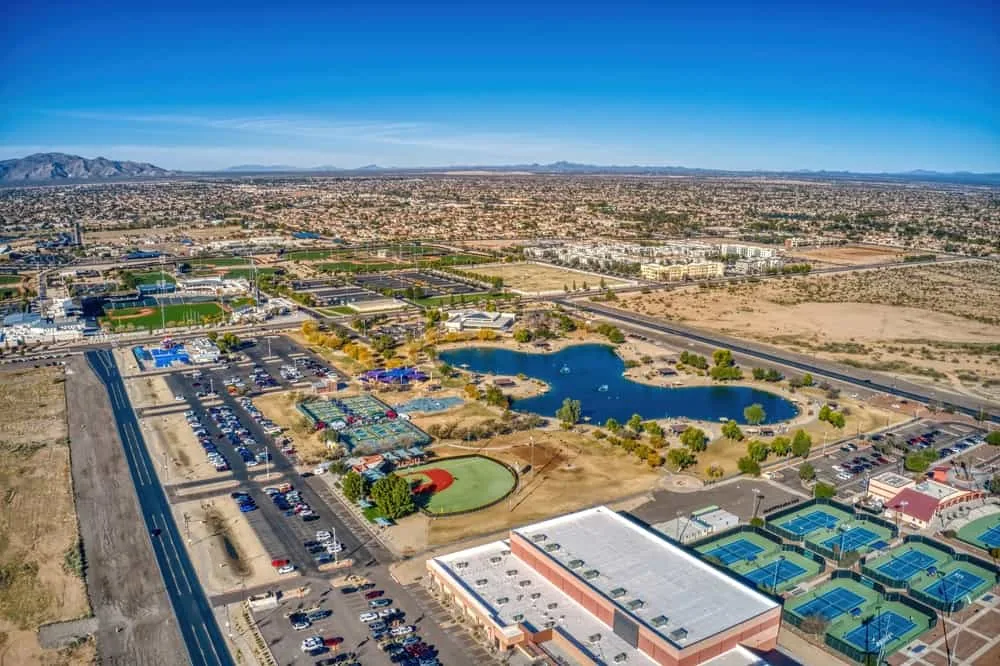
Related Roofing Work

Inspect the roof opening
Share the room location, roof plan, and equipment contact. We can inspect the Surprise skylight or penetration, coordinate the right trade, and document the repair boundary before closing the detail.