
A rooftop service route on a Surprise distribution building can cross membrane near equipment, ladders and stored materials. One puncture may be small, yet water can spread beneath the sheet before it appears inside. We locate the opening, check the membrane and substrate around it, and establish how far a patch needs to extend. The Railplex's manufacturing and distribution setting makes loading and maintenance paths relevant to roof access, but the inspection still has to identify the actual damage on each building.
Find the opening and its edges
A puncture can come from a dropped tool, sharp debris, a misplaced fastener, a ladder foot or repeated traffic over an unprotected route. We inspect the cut or hole, then check for scuffs, displaced ballast, crushed cover board and nearby seams. A round opening is easy to photograph; a long scrape may be harder to see once dust settles. We mark the point on a roof plan and record the approximate size, material and nearby fixed feature.
Not every mark is a puncture. Surface abrasion, a prior patch edge or a discoloration may look similar from a distance. We clean a small area as appropriate, check whether the membrane is breached and inspect the surrounding sheet for loss of bond or stress. If the substrate feels soft or holds moisture, a surface patch can trap the condition below. A test opening may be needed before selecting the permanent repair.
At Cactus Road and Loop 303, multiple commercial developments sit within a broader retail and service corridor. That district context can mean shared service access or active customer movement below a roof. We agree on the work zone with the building contact, protect the route and keep rooftop equipment accessible when required. The district's development mix does not establish any particular roof assembly or damage history.
Check what surrounds the puncture
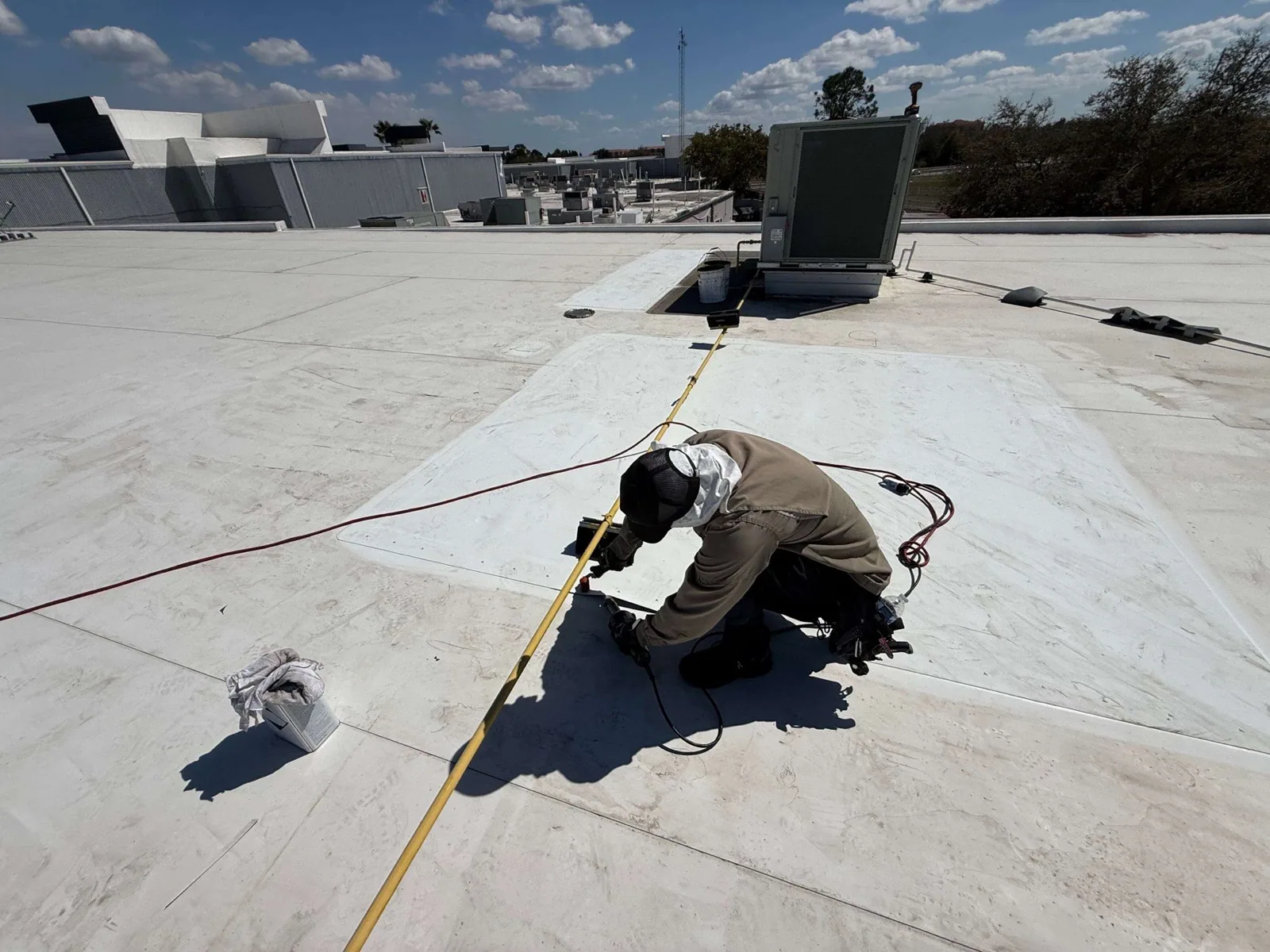
We identify whether the roof is TPO, PVC, EPDM, modified bitumen or another system before bringing repair material to the roof. The patch has to be compatible with the membrane and any coating or previous repair. On thermoplastic sheet, the preparation and weld need suitable temperature and a clean surface. On EPDM, the repair may use a compatible tape or patch with prescribed primer and pressure. Built-up or modified-bitumen roofs need a different tie-in and fire controls.
Water may have traveled away from the hole. We compare interior reports with roof slope, drain locations, deck direction and visible insulation transitions. If the puncture sits near a curb, wall or seam, check those details before deciding the hole explains the leak. The leak-tracing process can separate a confirmed membrane opening from a second route that needs its own inspection.
Hail is a possible severe-storm hazard in the Phoenix metro, alongside damaging wind and flash flooding. That makes a post-storm check reasonable when a roof shows impact marks, but a regional hazard does not establish hail damage at a specific building. We look for punctures, bruising, splits and displaced components, and record what the inspection can verify. If a storm is part of the report, note its date separately from the observed roof conditions.
Patch the membrane without hiding moisture
For a small opening in sound sheet, we prepare the surface and install a compatible patch that extends beyond the breach. The patch corners, weld or adhesive edge and transition to existing material all need inspection. If the opening crosses a seam, we may need to rebuild the joint rather than lay a patch over a weak lap. A seam repair can be a separate item when the field weld has also opened.
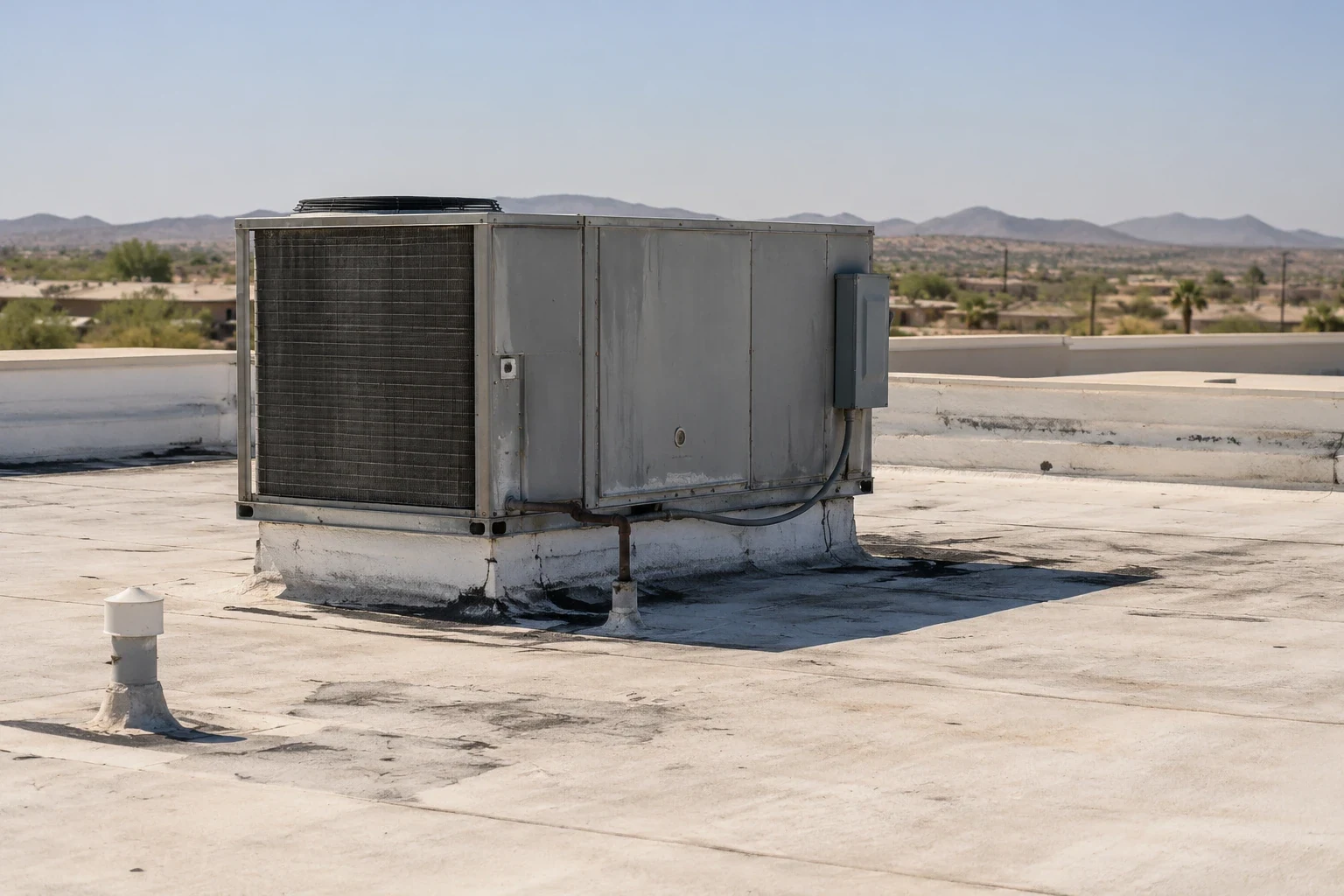
When insulation is wet or cover board is crushed, remove affected material to a sound boundary, replace it and restore the membrane system. The scope identifies how far the opening extends and whether the deck requires review. A puncture near an equipment curb may need flashing work as well; the transition repair should not be omitted because the hole is easier to see.
Costs depend on access, membrane type, patch area, substrate condition, equipment movement and whether interior protection or a lift is needed. If several punctures follow one service route, install a walkway or define a protected access path after repair. A maintenance program can record those routes and bring the membrane back into view during routine inspections, before new foot traffic hides or adds damage.
Coordinate roof access
Before repair, confirm who can open the roof hatch, where materials may be staged and whether HVAC or electrical equipment needs a shutdown. The owner may need a spotter if a ladder crosses a loading lane or customer entrance. We plan around tenant hours and keep a clear route to drains, access points and emergency equipment. If the puncture sits above a sensitive room, identify interior protection before opening the membrane.
At Surprise City Center, civic, retail, restaurant, healthcare and hotel uses are planned across a square-mile district. The range of building operations makes a specific work window a property-level question. A clinic, shop and hotel may have different quiet hours, deliveries and access controls. The City Center district is useful geographic context, while the property contact sets the route and operating limits for the roof crew.
Urgent response is available around the clock, including nights and holidays, to assess active water entry and stabilize conditions. Permanent repair still depends on a dry substrate and material application limits. We state whether the first visit is containment or completed patch work, and identify any return visit needed to remove wet material or complete a compatible tie-in.
Leave a usable damage record
Closeout should show the puncture location, patch size, material, repair method and any substrate opened. Before-and-after photos need enough context to distinguish roof section and nearby equipment. If moisture or deck damage remains concealed, list it as unresolved and identify how to check it. The repair record should avoid a broad statement that the whole roof is sound when only one opening was patched.
Keep the roof plan, photos and materials with the building's maintenance file. A roof condition report can map the puncture beside seams, curbs and access paths for future walks. Inspect the patch edges after another trade visits the roof or after significant weather. If a second issue appears, record it separately instead of extending the original repair description.
We can review the marked area with the general contractor or facility lead and provide a written repair boundary. For broader roof damage after wind or hail, a storm-response scope can document separate observations, immediate protection and permanent repairs. The owner should know which work is finished, what remains open and when the area should be checked again.
Commercial Roofing Questions
Can a membrane puncture be patched in place?
Yes, when the surrounding sheet and substrate are sound and the repair material matches the roof system. We inspect the opening, check nearby seams and note any moisture that needs removal before closing the area.
Could water travel far from a small hole?
It can move along insulation joints or the deck before appearing inside. We compare the interior report with slope and nearby details, then mark confirmed and suspected paths separately.
What if the puncture is over wet insulation?
A surface patch can trap moisture. We define the opening needed to remove affected material, inspect the deck and restore the layers to a sound boundary before tying in new membrane.
How can we prevent repeat damage from roof traffic?
Identify the service route and protect it with an appropriate walkway or access plan after the repair. We can note equipment paths and future trade access in the maintenance record.
Does a storm report prove hail punctured the roof?
No. We document the date separately, then inspect for actual holes, bruising, splits or displaced details. A regional hail hazard alone does not establish damage on one property.
Ready to review the roof scope?
Request a Roof Assessment
Related Roofing Work


Locate the puncture and protect the route
Send the roof plan, leak location, system type and access rules. We can inspect the membrane, identify any wet substrate and write a compatible patch scope with photos and follow-up items.