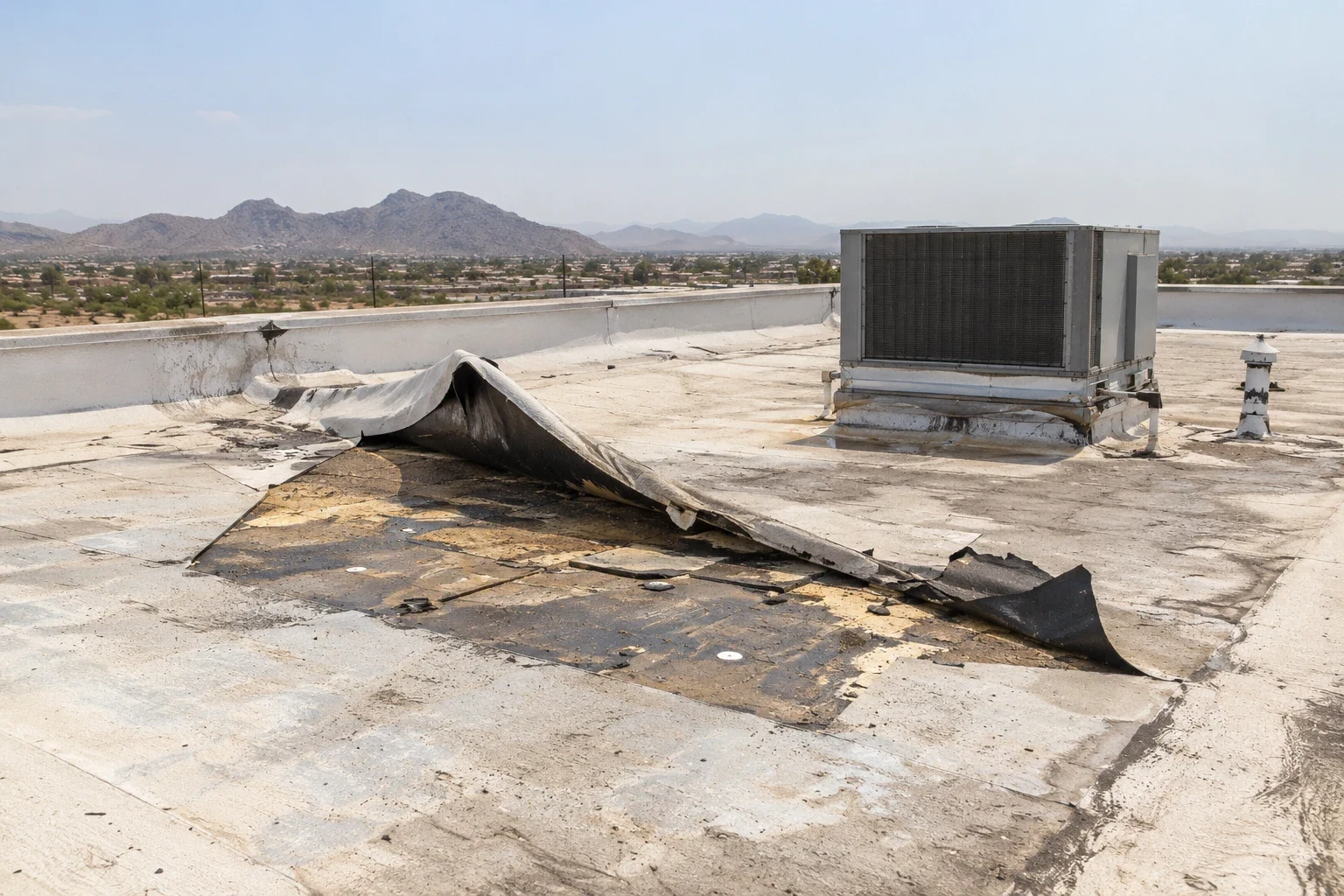
On a warehouse roof in Surprise, a seam can run across a long field while loading continues below. A small open weld may admit water, but the right repair depends on how far separation extends, whether the sheet is sound and what sits beneath it. We clean and inspect the seam, probe the affected edge and mark both the repair length and any adjoining concern. Near the Surprise Railplex, freight and industrial uses make staging and roof access part of the work window, while the seam itself still determines the assembly repair.
Read the seam before patching
A seam joins membrane sheets or roof components. On a heat-welded thermoplastic roof, dirt, moisture, incorrect welding conditions or movement can leave a channel at the lap. On EPDM or modified bitumen, adhesives, tapes, fasteners and surface preparation affect the joint. We identify the roof system first, then check whether separation is limited to the seam or continues into the field sheet, flashing or substrate.
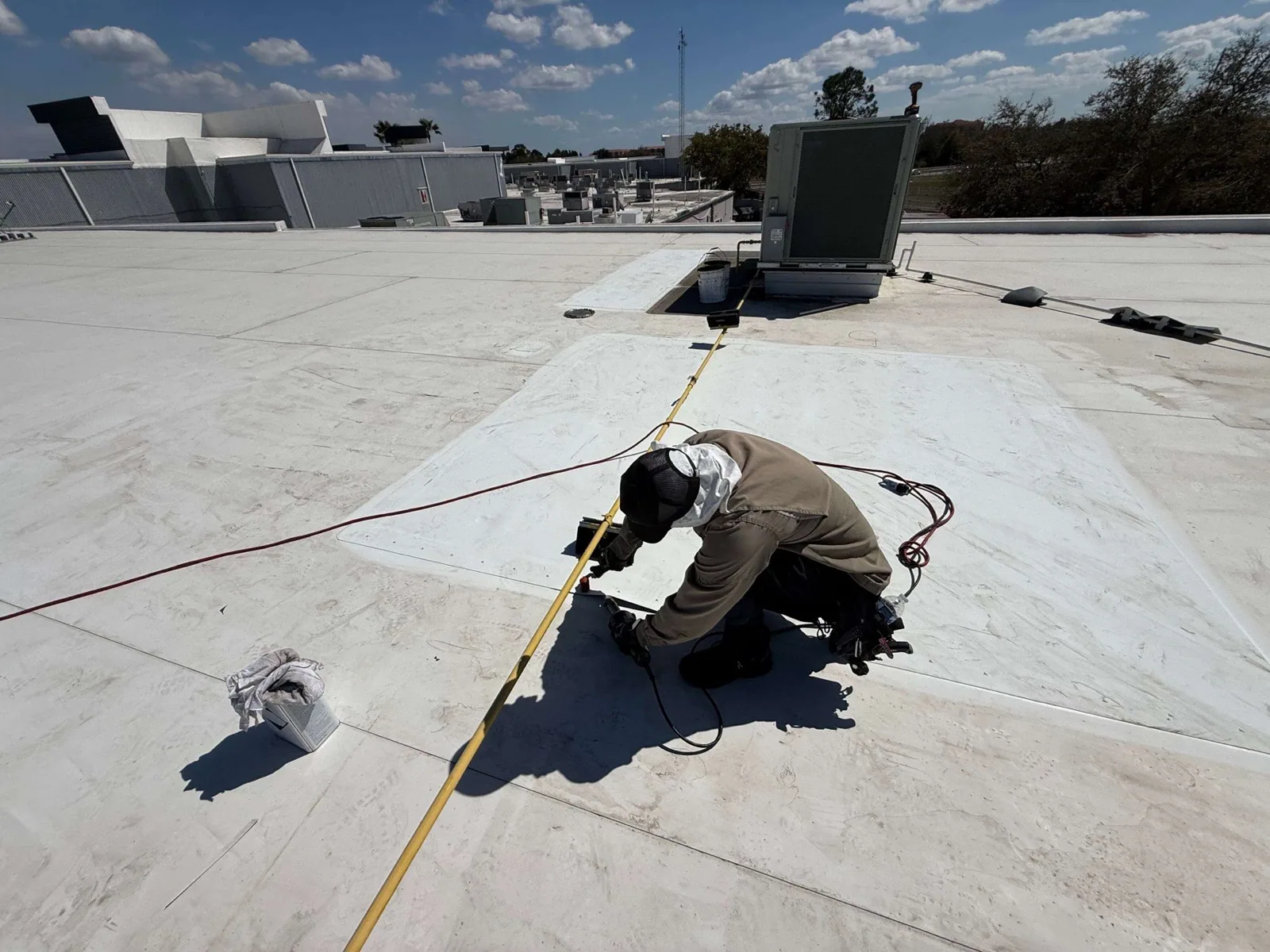
A probe is useful only after the surface is prepared and the seam is cool enough to check accurately. We look for a consistent weld, open T-joints, fishmouths, contamination, wrinkles and older patches. Photos should show the failed length and nearby roof features so a second visit can return to the same line. If the seam is over wet insulation or a soft deck, closing the top edge may not resolve the water path.
Persistent summer heat in the Phoenix region makes exposed laps and sealants worth checking. We record weld condition, surface movement and nearby repairs rather than assigning a cause from climate alone.
Trace the water and roof layers
A ceiling stain may sit away from the seam opening because water travels beneath a membrane, along insulation joints or across a deck flute. We compare the reported interior location with roof geometry and inspect nearby drains, curbs, penetrations and transitions. If the stain appears after rain but the seam is dry, check the full water route before assigning the leak to that joint. Leak tracing can document suspected and confirmed paths separately.
Surprise's monsoon thunderstorms can bring damaging wind and heavy rain across the Phoenix metro. That regional exposure gives a reason to revisit seams and terminations after a storm, not to claim that one event opened a particular joint. We compare repair photos or maintenance notes when the owner has them, then inspect for new separation, debris or water entry. A wind-damage assessment may cover nearby edge movement, but it should remain distinct from the seam repair unless findings connect the two.
A roof plan helps locate long seam runs, slope changes and equipment crossings. On larger roofs, divide the field into sections and mark where each weld starts and ends. If multiple seams fail in one area, note whether they share a substrate, installation direction or exposure. That pattern can change whether a local patch or broader evaluation is appropriate.
Rebuild a compatible joint
For a thermoplastic membrane, permanent repair may require cleaning, drying and hot-air welding compatible sheet over the prepared area. The installer controls temperature and travel speed, makes a test weld when conditions change and probes the cooled production seam. A patch should extend beyond the open section and finish with sealed edges. If the membrane is brittle, contaminated or incompatible with new material, a small overlay may not hold.
EPDM and modified-bitumen seams need their own preparation and joining method. Adhesive and seam tape depend on clean, dry surfaces and correct pressure; bitumen repairs may require compatible asphaltic materials and protection from heat. We record the existing system and proposed products so the building owner can review what is being tied together. A TPO repair is not interchangeable with work on an EPDM or multi-ply roof.
Where the seam turns into a curb or wall, flashing may be part of the failure. We follow the joint to that transition and define whether the scope includes both pieces. A flashing repair can address the vertical detail while the seam scope closes the field lap. If water or saturated insulation extends past the visible separation, a test opening may be needed before pricing a larger repair.
Fit the repair around active operations
Before cleaning or welding, confirm roof access, lift placement, fire controls and any equipment restrictions. A warehouse may keep docks open; a clinic or retail building may need patient, customer or tenant paths clear. We agree on which roof section is isolated, how materials move and who receives the handback. The occupied-building work plan can identify hours and daily boundaries without turning the whole roof into a closed zone.
Heat and weather affect work quality. Surfaces must meet the material's application conditions, and the crew needs a stop point if wind or rain could compromise an open seam. We protect materials from dust, keep drains free of debris and close the roof section before leaving. Urgent service is available around the clock, including nights and holidays, but permanent welding or adhesive work still requires suitable field conditions.
Costs vary with seam length, access, membrane type, cleaning, moisture testing, substrate repair and whether adjacent details must be rebuilt. A written estimate distinguishes the direct repair from investigation or replacement work. That gives the general contractor a clear quantity and lets the owner compare immediate water control with a broader roof project.
Record what was joined
At completion, the seam should be tested using the method appropriate to its membrane. We document the repaired length, patch dimensions, materials and any test results required by the project. The roof plan should show the exact line and nearby landmark. If adjacent membrane remains separated or concealed substrate was not opened, list it as a follow-up condition rather than implying that the entire roof field is corrected.
Keep dated before-and-after photos with repair records and product information. A roof condition report can mark seams, transitions and moisture observations so the next inspection compares the same area. The next walk should check patch edges and nearby T-joints, not only the middle of the new weld. If traffic or another trade crosses the roof later, note the access route and any protection needed to avoid a new puncture.
A seam that separates repeatedly deserves a wider review of movement, attachment, substrate and system condition. We can inspect the adjoining sections and separate confirmed findings from concealed questions. If the repair count is growing across roof areas, a full roof inspection can support a repair-versus-replacement decision. The recommendation stays tied to what the assembly shows and the portions of roof the owner can release for work.
Commercial Roofing Questions
Can an open seam be sealed from the top?
A surface bead may cover the gap without rebuilding the membrane joint. We identify the system, prepare the surface and use a compatible seam repair; if substrate moisture or brittle sheet is present, the scope may need to open wider.
How far should a seam repair extend?
The repair should continue beyond the separation to sound, compatible material. We probe the surrounding length and check adjacent transitions before setting the boundary, then record the dimensions on a roof plan.
Can traffic cause a seam to open?
Foot traffic can stress a seam or damage nearby membrane, but the roof needs inspection before assigning a cause. We document the location, check for scuffs or punctures and distinguish those observations from installation or movement issues.
What if the same seam opens again?
Compare earlier photos and test results with the current condition. Repeated separation may involve movement, attachment or wet material beyond the lap, so we inspect adjacent assembly before repeating the same patch.
How soon can a welded seam be checked?
After it cools enough for probing, the installer can check the weld and record any repair. The closeout should identify the seam length, material, test method and roof location for later inspection.
Ready to review the roof scope?
Request a Roof Assessment
Related Roofing Work
Map the open seam
Share the roof system, leak location, roof plan and access window. We can inspect the seam, mark the repair length and prepare a written scope for the compatible joint and any related transition.