An investor reviewing a Surprise, AZ, asset needs a roof record that connects condition to the next capital decision. A retail property near Cactus Road and Loop 303 has a different operating profile from an industrial building in the Railplex, and neither district tells us what a specific assembly contains. We inspect the roof, note visible defects and limits, and separate immediate repair from recover or replacement options. That gives an acquisition or portfolio team a useful basis for diligence without turning a broad market fact into a roof claim.
Diligence that follows the assembly
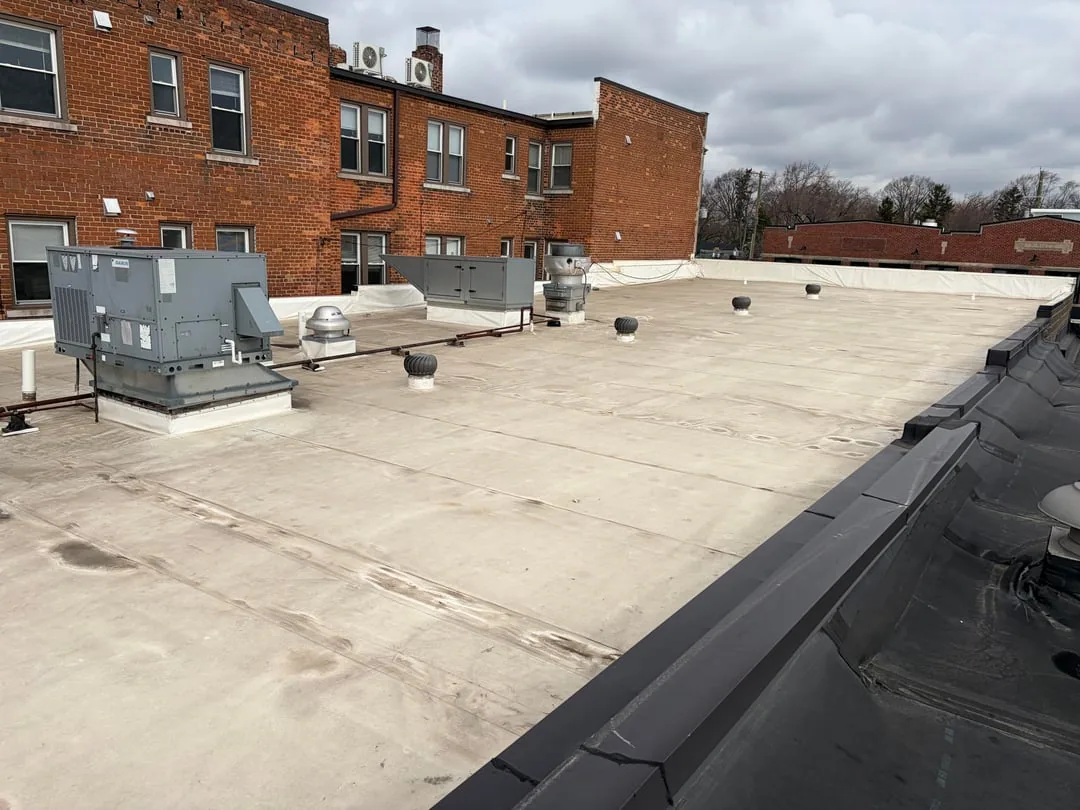
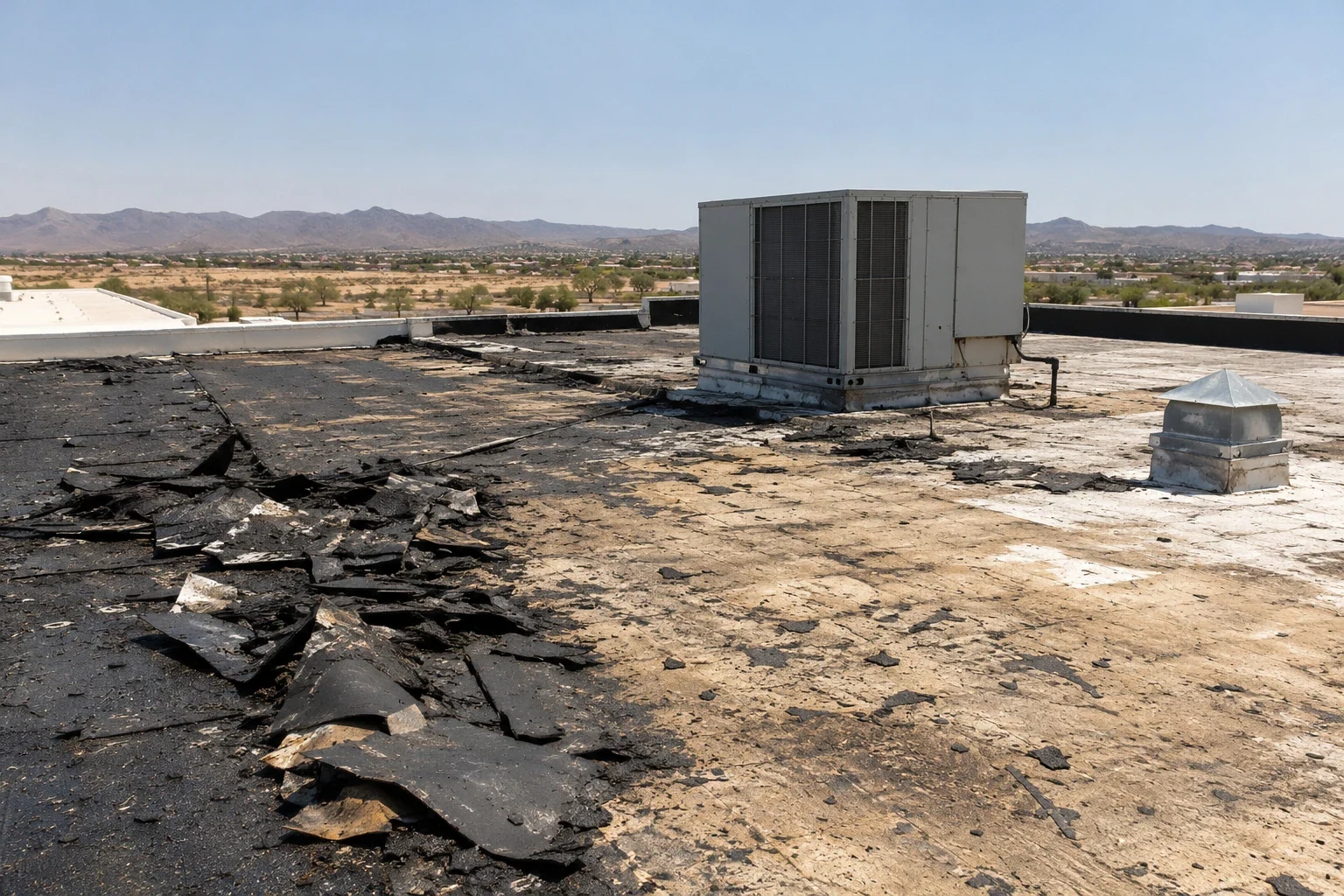
A roof walk should identify membrane type, visible layers, edge and wall conditions, drains, penetrations, rooftop equipment, and prior repairs where records are available. We connect each photo to a roof-plan location and distinguish observed conditions from items that need a test cut or design review. The report should also state what could not be accessed. A stained ceiling without a roof-level trace is not enough to set a capital allowance.
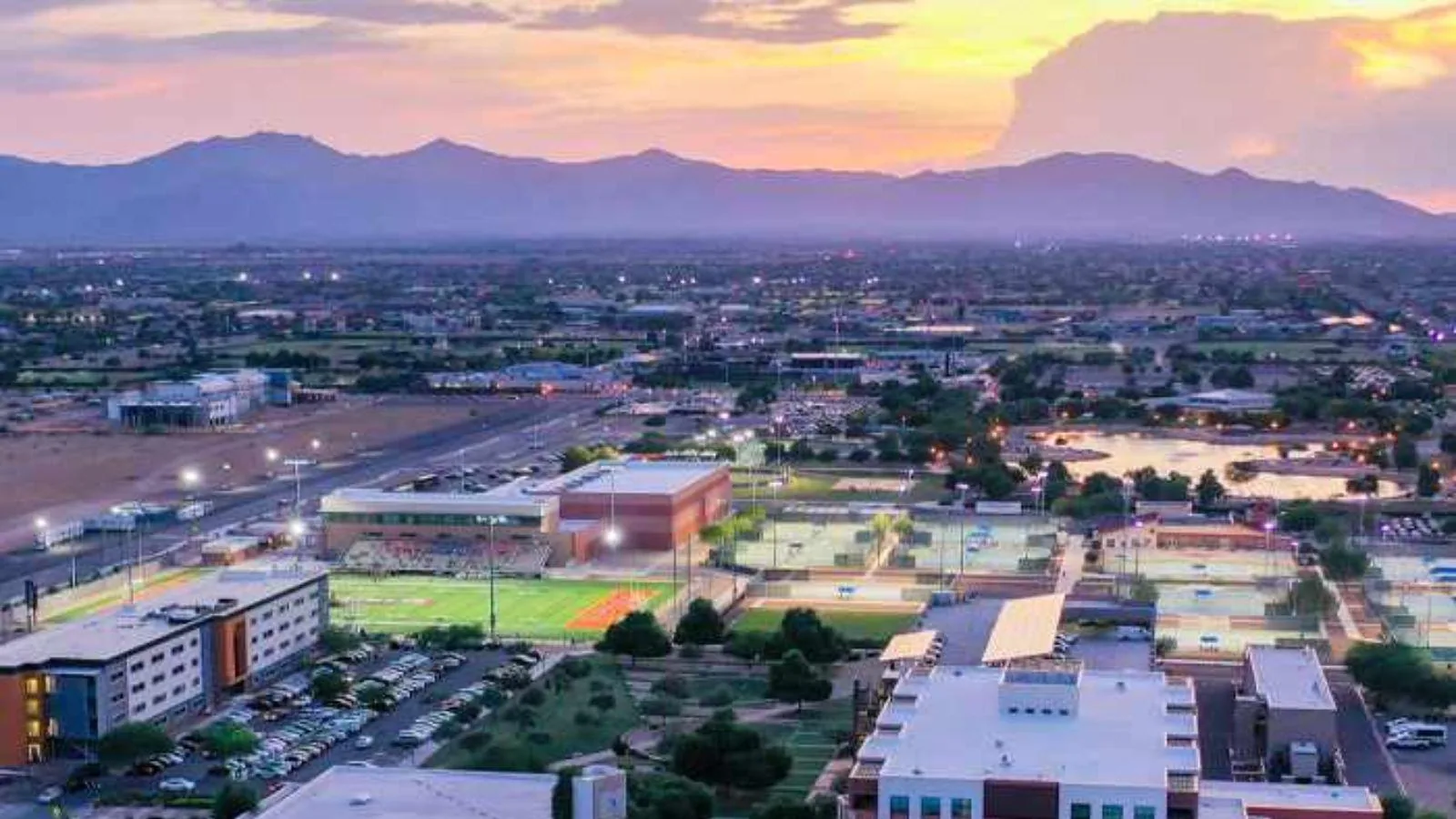
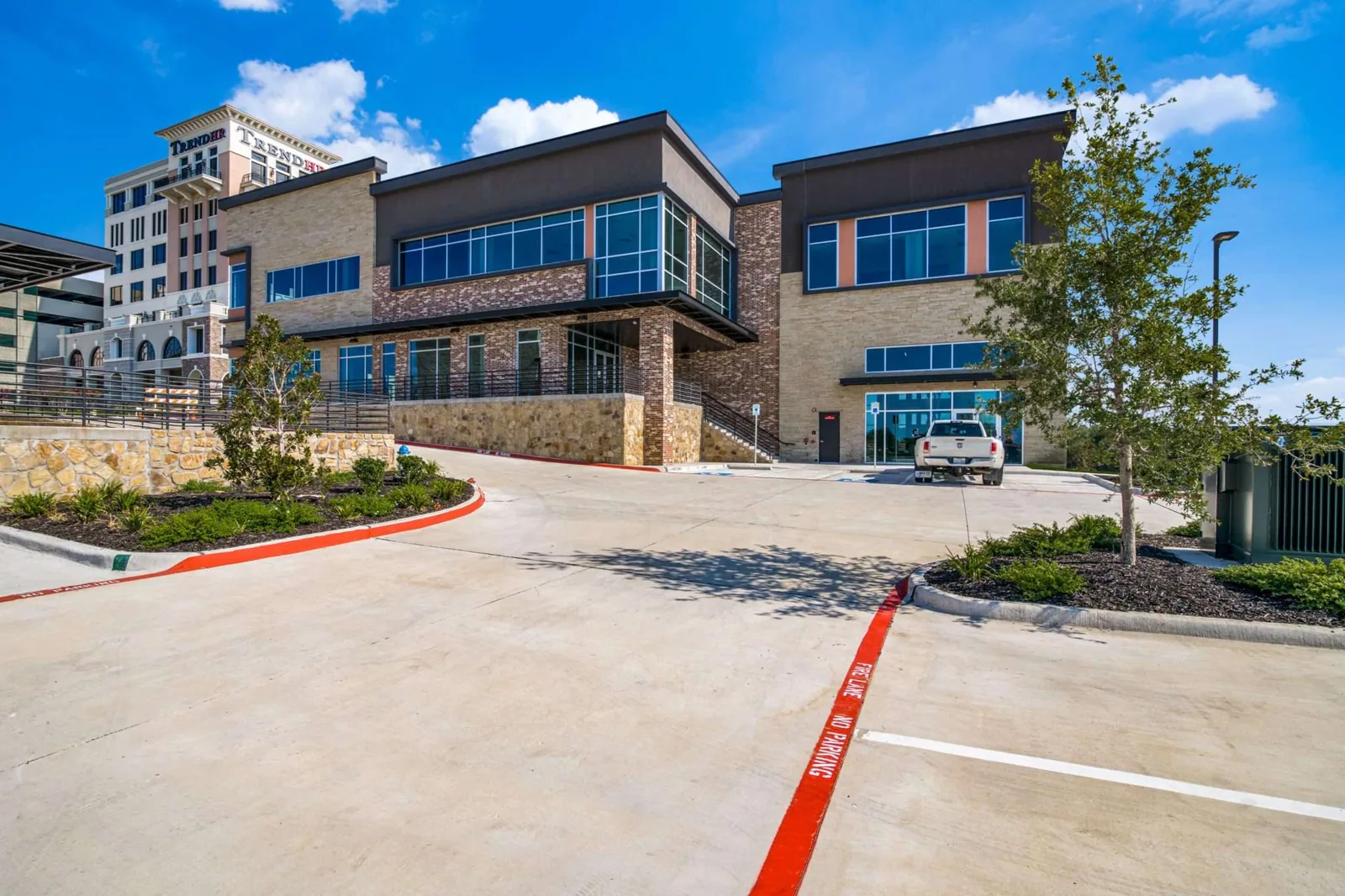
Surprise's Cactus Road and Loop 303 corridor includes multiple commercial developments. Retail and service properties there may share access roads but not roof assemblies, tenant schedules, or drainage details. The Cactus Road corridor is a place context, not a condition survey. For the asset in diligence, we inspect its actual drains, curbs, field seams, and perimeter before estimating repair or replacement needs.
A due-diligence roof survey can separate immediate water entry from aging that belongs in a longer capital plan. We list repair boundaries, assumptions, and any access limits so a buyer can compare the result with maintenance records and the seller's disclosures. We do not infer roof age or remaining service life from a building's construction date unless project records establish it.
Turn findings into a reserve decision
Capital planning starts with the condition that changes the decision. A localized open seam may support a repair allowance; wet insulation, a soft deck, or widespread attachment trouble can point toward a larger assembly project. We compare repair, recover, and tear-off using the known layers, drainage, curb heights, disposal, substrate work, and the owner's operating limits. The replacement scope should state its included roof areas and the conditions that could change the work.
At a portfolio level, properties need comparable records but not identical recommendations. Surprise City Center has a mix of civic, healthcare, retail, restaurant, hotel, and commercial-service uses across a square-mile downtown development area. Those uses can bring different tenant and public-access constraints. The City Center district is useful geographic context; individual roof decisions still come from field conditions and project files.
A roof capital plan can group repairs by urgency and show where a larger replacement merits design work. If a portfolio includes separate owners or managers, property-management coordination keeps access rules, work orders, and tenant notices attached to the correct building.
Protect operations while the scope is open
A leak during diligence may need stabilization before the final investment decision. Around-the-clock emergency response can protect an interior opening and document the temporary work boundary. The follow-up visit should then check nearby seams, drains, walls, and rooftop equipment to determine whether the event exposed a local detail or a broader assembly issue. Leak repair should describe what was sealed, what remains untested, and what the owner should inspect after the next rain.
Surprise's hot low-desert summers and Phoenix-area monsoon storms make drainage and perimeter details practical items to check. The regional pattern does not establish that a roof has storm damage. We look for uplifted metal, opened laps, punctures, ponding, and displaced sealant at the property itself. If wind has moved an edge, the repair scope should include the termination and adjacent attachment rather than only the visible flap.
Occupancy is another risk driver. A building with continuous retail hours may require smaller work zones than a vacant asset, while a warehouse in the Railplex industrial area may depend on dock access. A written sequence identifies staging, lift points, interior protection, temporary dry-in, and the daily stop line before a crew begins.
Compare a recover with tear-off
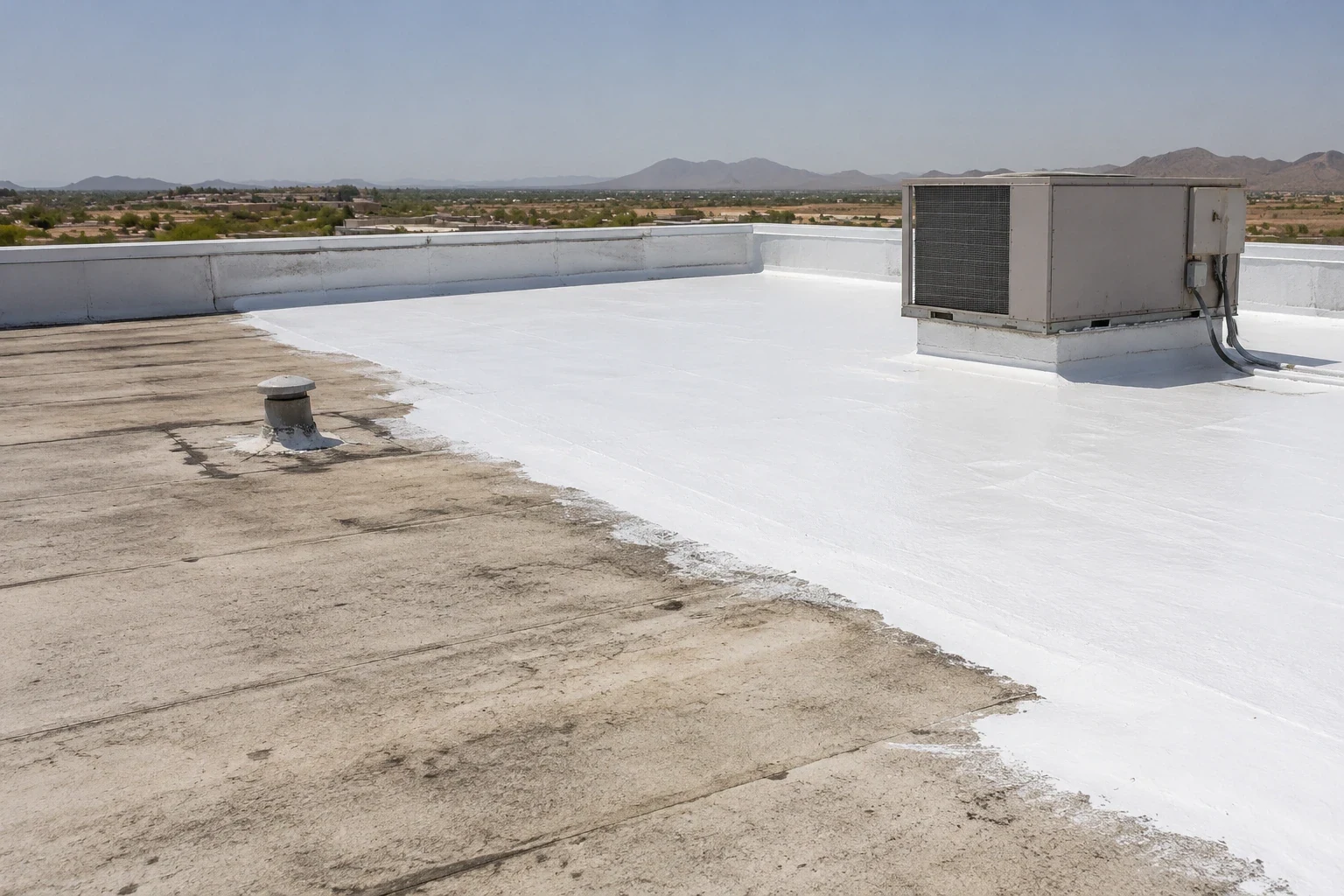
A recover can reduce disruption when the existing assembly is dry, stable, and eligible for another layer under the project requirements. It may not be appropriate where water is trapped, the deck is weak, prior layers exceed limits, or details cannot be raised cleanly. We describe what was visible and where testing is still needed. The recover evaluation should state the substrate assumptions and drainage adjustments, not only the new membrane.
Removal exposes the deck and insulation but adds disposal, interior protection, weather sequencing, and possibly repairs below the roof surface. Those are cost and schedule drivers that should appear as separate scope lines. A general contractor's project schedule can help coordinate structural, mechanical, and electrical work that shares the roof. The roofing scope identifies its trade boundaries and any temporary opening protection.
For industrial or distribution assets, the Railplex planning area's mix of manufacturing, warehouse, flex-office, and distribution buildings makes staging and equipment access relevant. It does not prove the roof type at any one parcel. We use the owner's drawings and a site walk to establish that information before recommending a system or a capital year.
Keep the roof record useful after closing
A buyer or asset manager needs records that can be handed to the next facilities contact. We can organize photos by roof area, note repairs and remaining tests, and list the assembly components identified during the walk. If a warranty applies, its terms come from the actual project documentation. A clear record avoids treating a temporary patch as a completed replacement or a visual inspection as proof of concealed conditions.
City employment clusters in healthcare, education, retail, consumer services, and government/social services point to a varied commercial property mix in Surprise. A property record should capture use and access constraints alongside roof condition because work above a clinic, office, or retail tenant may require different phasing. Condition reporting can keep those details with the property instead of leaving them in an email chain.
Send the roof plan, available maintenance records, leak tickets, and transaction schedule to arrange a survey. We can identify urgent protections, document the assembly, and prepare repair or replacement options that state assumptions and open questions for the investment team.
Commercial Roofing Questions
Can an inspection establish remaining roof life?
A visual walk can identify current condition and visible repairs, but concealed layers or deck conditions may need testing. We report findings and assumptions; remaining life is not assigned from appearance alone.
What should a buyer receive before setting a roof reserve?
A roof plan with located photos, assembly notes, repair boundaries, access limits, and separated near-term and capital options gives the buyer a practical starting record.
How does a recover compare with full replacement?
A recover can avoid tear-off where the existing roof is dry, stable, and allowed by project criteria. Wet layers, weak deck, multiple assemblies, or drainage details may make removal the sounder option.
Does a commercial corridor tell us a building's roof condition?
No. Cactus Road, Loop 303, City Center, and Railplex describe broad areas and building uses. We inspect the specific property before describing its assembly or repair needs.
Can work be priced before a tenant schedule is known?
A preliminary scope can identify assumptions, but staging, access windows, interior protection, and phasing can change cost and timing. We include those limits for the asset team to confirm.
Ready to review the roof scope?
Request a Roof Assessment
Related Roofing Work
Review the roof before the capital decision
Share the roof plan, maintenance record, leak history, and transaction timing. We can inspect priority areas and return repair, recover, or replacement scopes with stated assumptions.