
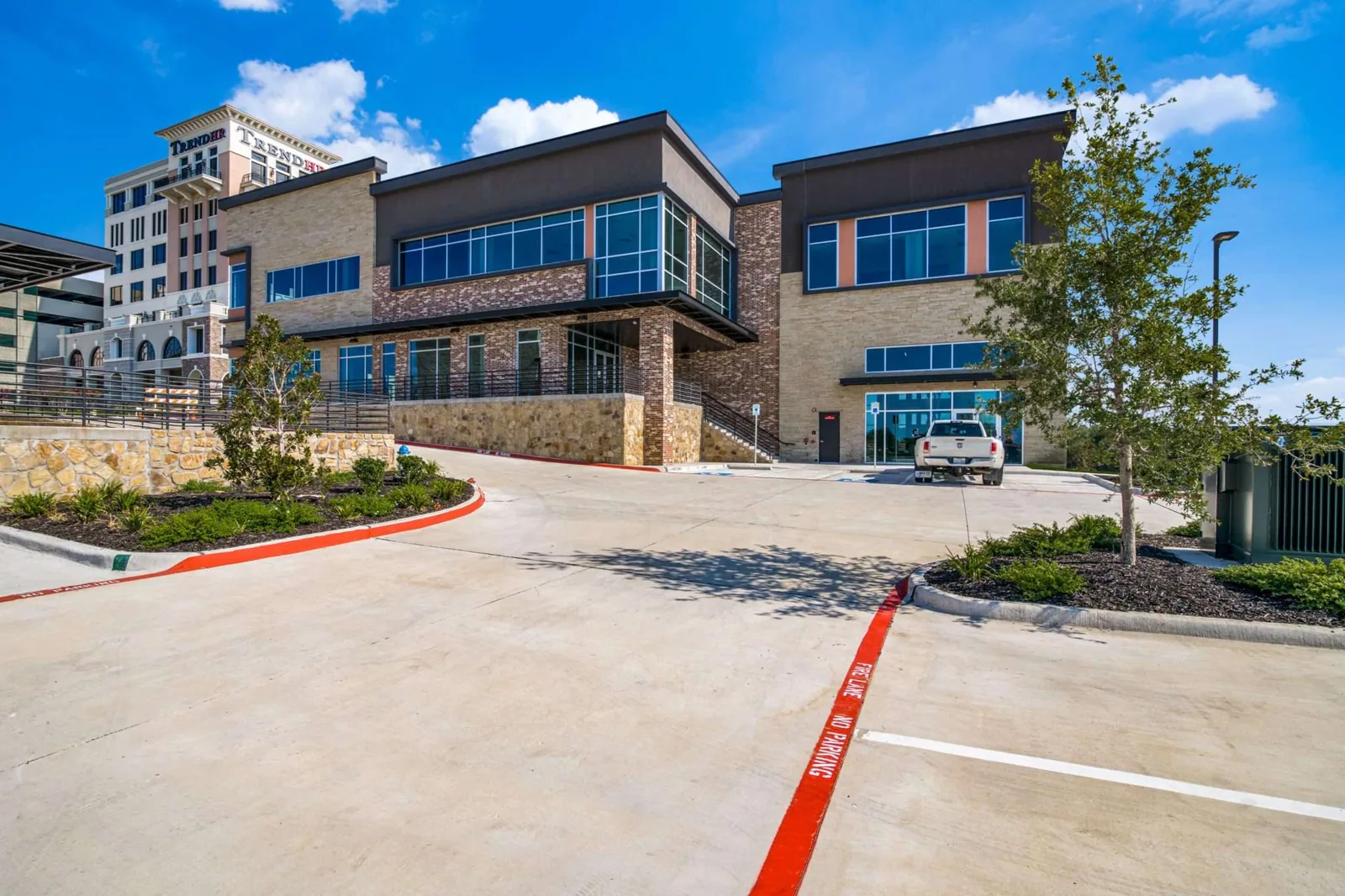
A senior living roof protects rooms that cannot be treated as empty space. A ceiling stain near a resident suite, therapy room, dining area, or medication station can disrupt care before the roof itself is understood. We begin with the location and timing of the report, then inspect the membrane, parapet, equipment curbs, skylights, and drainage above it. Surprise City Center includes healthcare and commercial uses, and the Cactus Road corridor has a different mix of retail and service buildings. Each community still needs its own roof walk, access plan, and repair boundary.
Keep resident areas in service
A repair plan should fit resident routines. We identify which doors, courtyard paths, loading areas, and mechanical rooms must stay clear, then set a route for ladders and materials. If a task creates noise above an occupied room, it can be grouped into a short work window instead of spreading disruption across a full day. The crew closes and protects each opening before leaving the roof. Staff receive a marked zone and the next access time, so deliveries and care teams know what will be different. This coordination is part of roof work for occupied buildings.
Follow the leak to its detail
Water can travel below a membrane before it shows indoors. We compare the reported room with drains, seams, curb corners, and wall transitions above it, then document the likely path with photos. A small opening at a flashing may call for a focused repair; repeated leaks or damp insulation can change the scope. We identify the roof material before choosing a compatible patch or weld, and we mark where the repair stops. The owner can then compare a local fix with a larger section repair using a documented roof inspection as the basis for the decision.
Heat and monsoon runoff
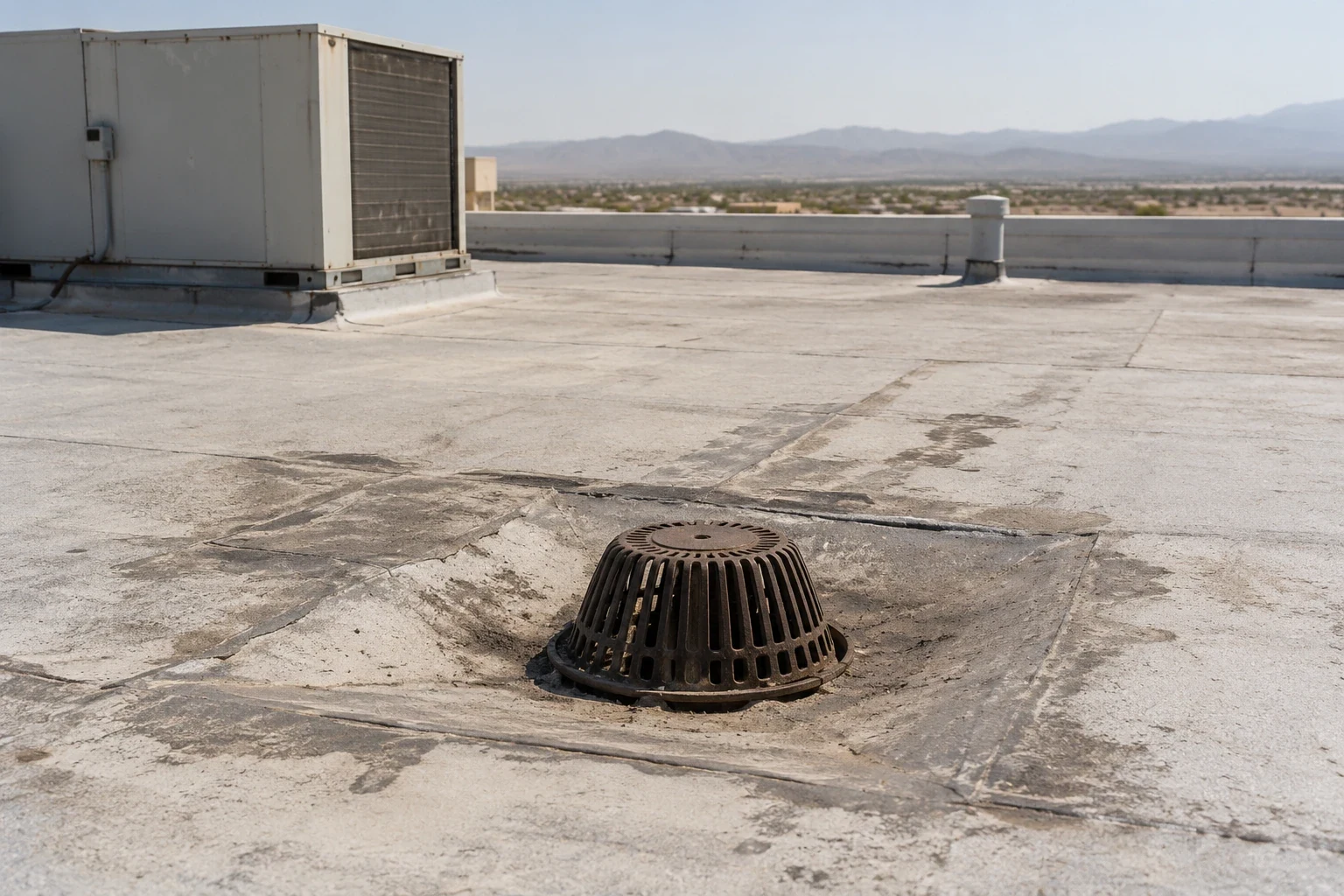
The west-valley sun keeps exposed roof surfaces hot for much of summer. Phoenix Sky Harbor normals provide a regional heat reference, not a reading from this particular community. Monsoon storms can add short periods of heavy rain and gusty wind, so we check drain bowls, scuppers, edge metal, and equipment supports after a reported event. Hail is possible in the region, but a mark alone does not tell us that a membrane has failed. We look for punctures, opened laps, displaced flashing, and interior evidence before recommending drain and scupper repairs or storm work.
Plan around care and deliveries
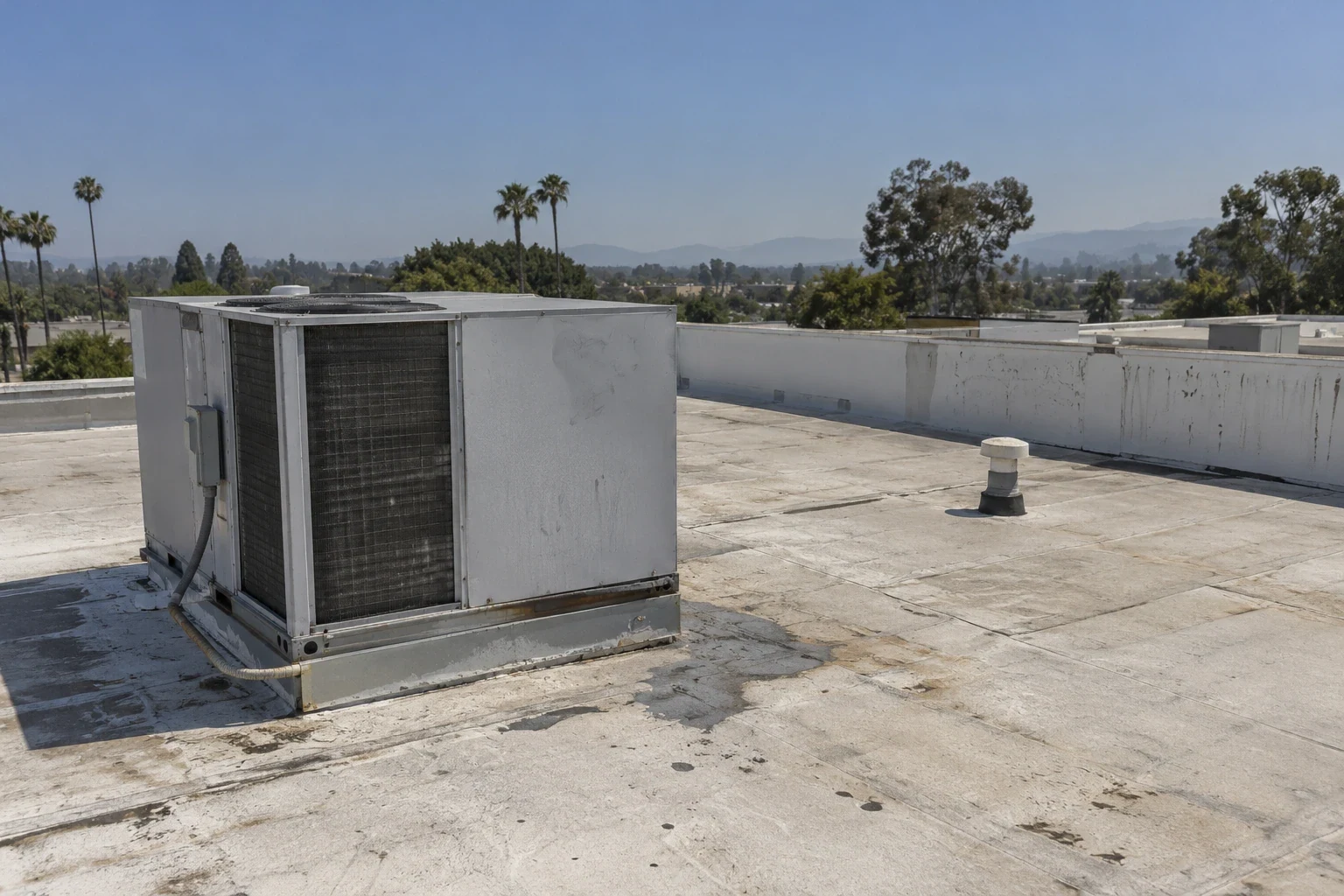
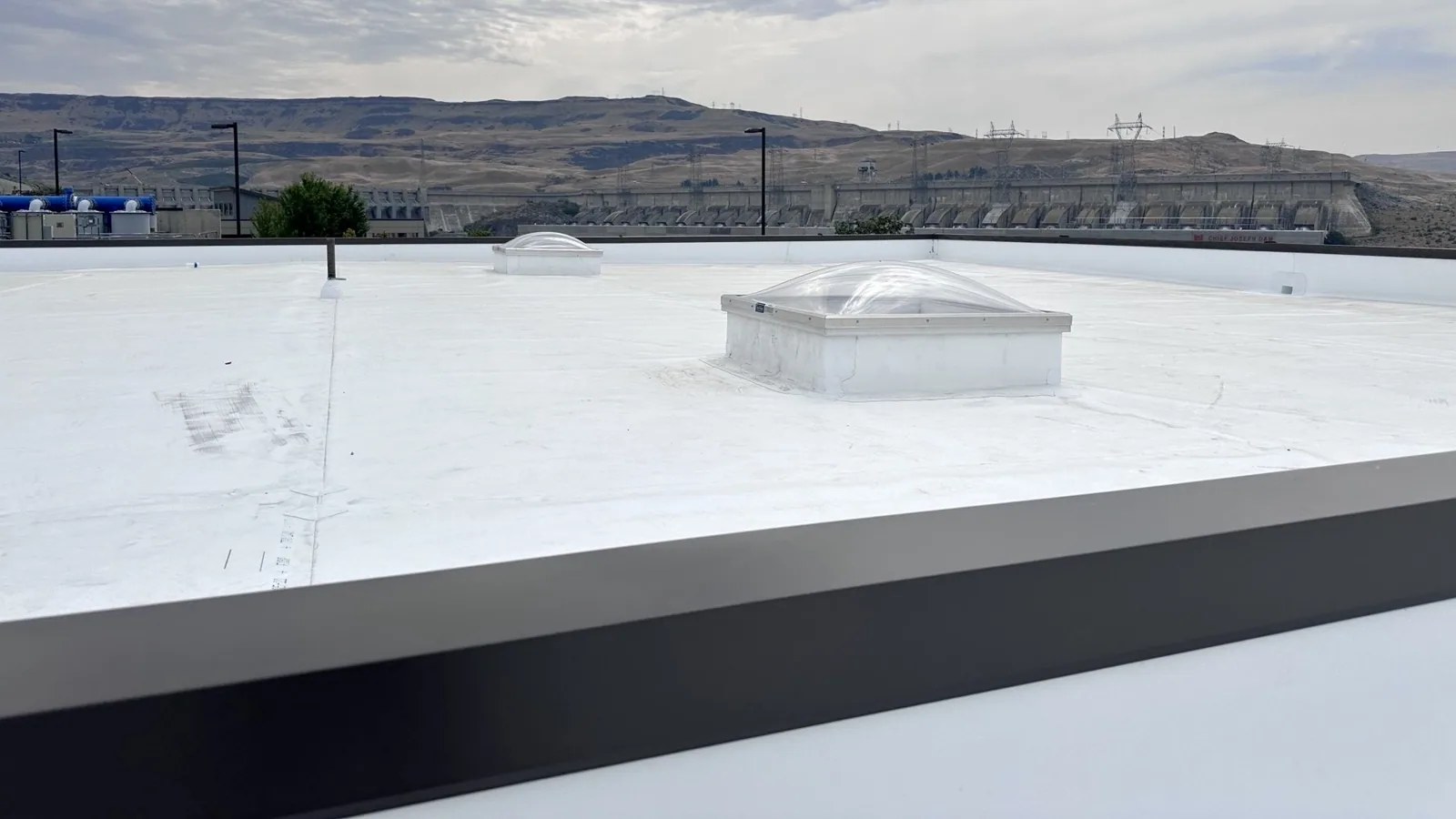
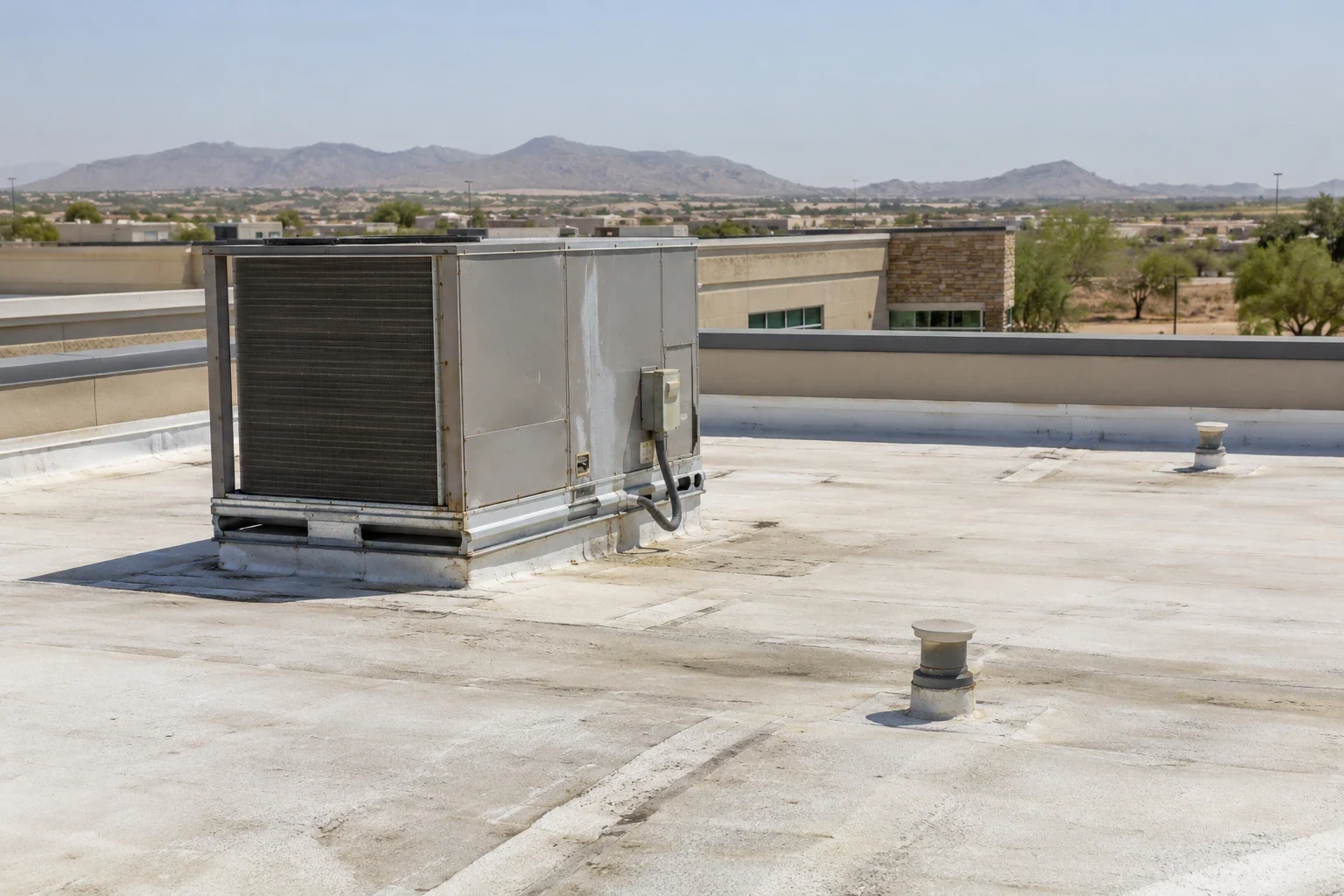
A care roof often carries HVAC units, exhausts, satellite equipment, and service walkways. We inspect the curb flashing and nearby membrane for splits, loose termination, or wear where technicians turn and set tools. If maintenance traffic has damaged one route, a repair can be paired with walkway protection after the underlying condition is corrected. We do not cover an active leak with a coating or add material over a wet assembly. When a single-ply field remains suitable, TPO membrane work may be repaired or renewed at a limited area; the inspection determines whether that is appropriate.
Check the roof around equipment
The roof is only one part of a community's operating plan. The Village at Prasada is a broad commercial district with retail, dining, and health-related businesses, while Surprise City Center includes civic and service uses. That local mix makes clear phasing familiar, but it does not establish the construction details at another property. We verify the fire lanes, lift positions, resident entrances, and staff notice process for the site in front of us. A short map can show which wing stays untouched, where materials arrive, and how a temporary weather cover will be secured if the roof is opened.
Choose the right size of work
A repair can be enough when the field membrane is stable and the leak traces to one failed detail. A roof with several open seams, soft insulation, or failing edges may need selective replacement or full renewal. We separate confirmed conditions from items that need a test cut, then price the options and state their limits. The scope can include healthcare roofing support for a multi-building operator, with photos and a location tag for each repair. That record helps compare work across properties without assuming each building has the same assembly or history.
Separate urgent repairs from reserve work
Budget decisions are easier when urgent exposure and longer-term wear are listed separately. We can mark active openings, failing drain connections, and damaged curb flashing for immediate work, then note seams or sealants that should be watched. If replacement is being considered, the estimate should identify removal, insulation, edge metal, tie-ins, protection, and access assumptions. A coating only belongs in the comparison when adhesion, drainage, and the condition of the existing roof support it. For a building near the community uses of Surprise City Center, office roof planning can offer a related view of equipment density and occupied access, while central Surprise service keeps the local route in view. A marked roof plan can also guide the next maintenance visit, with drain cleaning, curb inspection, and interior reports tied to the same zone.
The same notes support a phased budget: active leakage is listed first, followed by work that can be scheduled before another wet season. We identify the assumptions about access, insulation replacement, and protection so ownership can compare options on equal terms. A marked roof plan can also guide the next maintenance visit, with drain cleaning, curb inspection, and interior reports tied to the same zone.
For a multi-wing community, a roof map should identify each section by the rooms and equipment it serves, not by a vague label such as north roof. We note the nearest ladder, drain, HVAC curb, and interior report location, then mark whether the work affects a resident suite, kitchen, or shared corridor. That level of detail helps a facilities lead compare a recurring issue with the next inspection instead of reopening the same question. Where several buildings share a maintenance team, a hospital roof plan can offer a related way to separate clinical access, equipment zones, and repair priorities, while the actual scope remains specific to the senior living assembly and its operating hours. A marked roof plan can also guide the next maintenance visit, with drain cleaning, curb inspection, and interior reports tied to the same zone.
Maintenance records also help distinguish a fresh opening from a detail that has been patched more than once. We review prior work orders, invoice notes, and dated ceiling photos when they are available, then check whether the membrane or flashing around that spot has changed. A repair should identify its material and boundary so another technician does not cut through it during equipment service. If the condition is not visible from the surface, we can recommend a test area and explain what the result would change. That gives ownership a clear choice about additional investigation before a larger project is scheduled. A marked roof plan can also guide the next maintenance visit, with drain cleaning, curb inspection, and interior reports tied to the same zone.
Commercial Roofing Questions
How do you handle a leak above a resident room?
We coordinate the room report with the roof details overhead, then establish whether repair requires access to the suite. The facility contact sets privacy and timing rules.
Can maintenance continue in other wings during roof work?
Often, if roof zones, lift routes, and resident entrances are separated. We mark the area affected each day and close the roof opening before work pauses.
What makes replacement more practical than repeated repairs?
Recurring openings, wet insulation, and failing transitions can make another patch short-lived. We document the condition and compare a larger scope.
Will the report identify areas that need more testing?
Yes. We separate visible findings from hidden conditions and state what a test opening would confirm, so ownership can decide whether to authorize it.
How can an operator plan reserve work?
A priority list separates active leaks from aging details that can be scheduled. We include the affected area and access assumptions for each option.
Ready to review the roof scope?
Request a Roof Assessment
Related Roofing Work
Coordinate a care-centered roof walk
Share the resident areas, staff hours, and access rules affected by the roof. We will map the reported conditions and outline a repair sequence for the facilities lead.