Industrial, retail and service properties along Grand Avenue need roof work planned around access, drainage and the way each building is used. In Surprise, AZ, US 60 also carries the Grand Avenue name and connects the city with Peoria and the wider West Valley. We inspect the membrane, seams, penetrations, edge metal and drainage, then lay out repairs, restoration or replacement against the actual conditions.
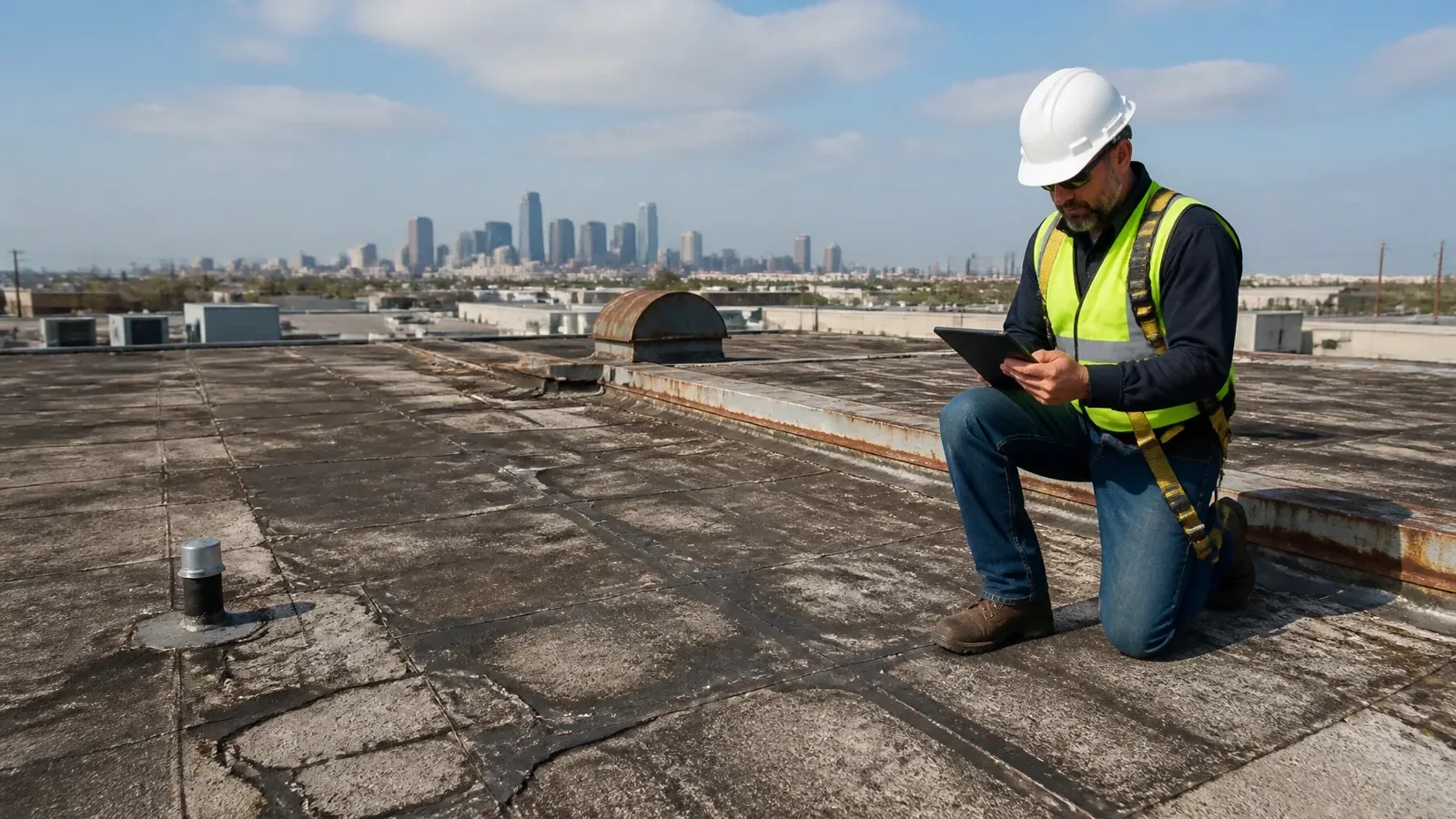
Some buildings need a quick repair before the next storm; others need a written plan that can be priced and scheduled without interrupting daily use. Our first walk records visible conditions and photographs problem areas so an owner can compare the scope with maintenance history. For a broader look at how an inspection becomes a work plan, our roof condition reports explain the decisions we document.
Where the corridor changes the roof plan
Grand Avenue is more than a street name on a service call. The mapped growth along Grand Avenue and adjoining Surprise corridors includes industrial, retail and service development. A major interchange improvement is planned at the US 60 and Loop 303 junction. We check where equipment can stage, which entrances must stay open and whether a repair can be isolated from active tenant areas.
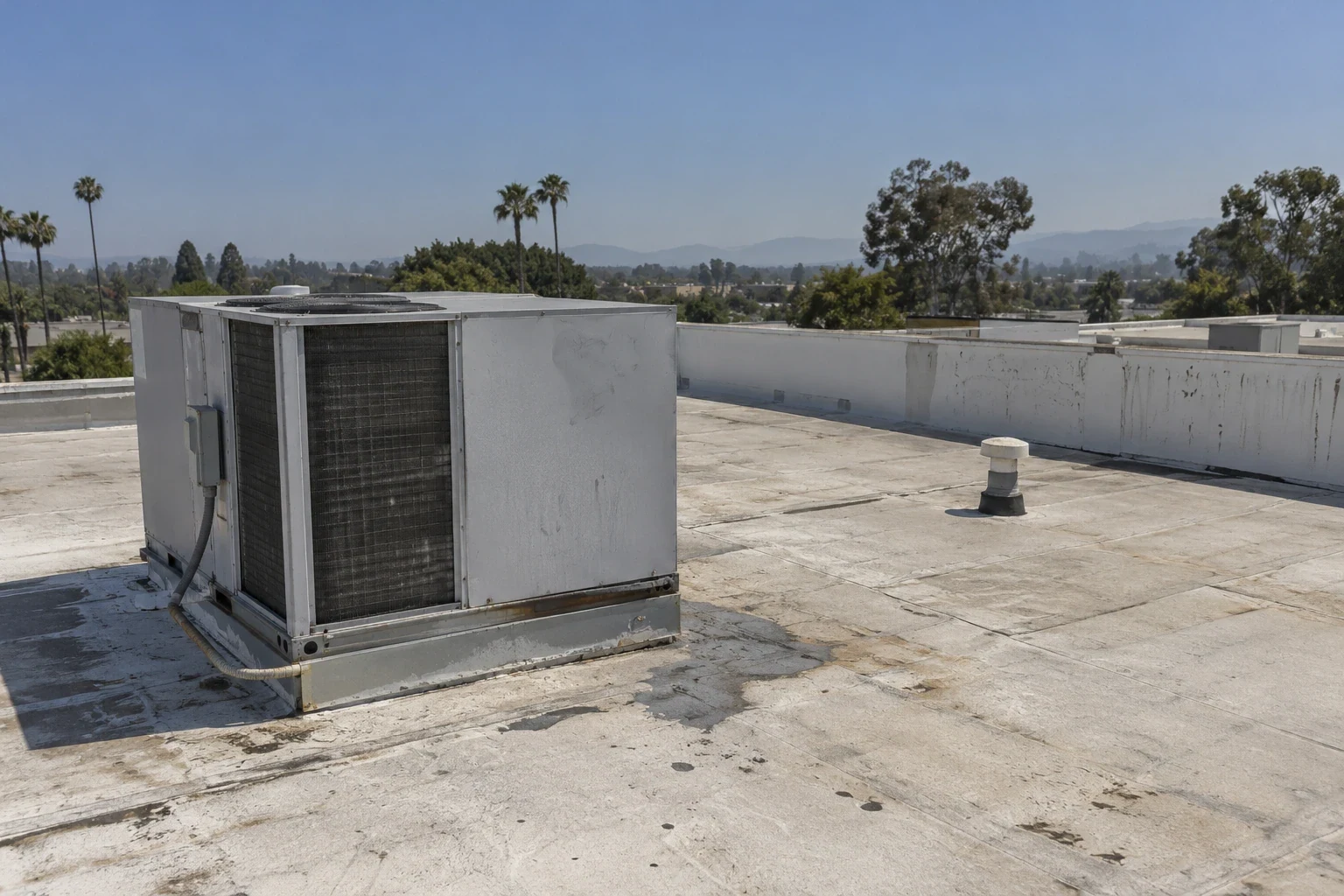
A commercial roof tells its own story at the transitions. We look for open laps, brittle flashing, loose edge metal, compressed insulation and stains that may trace back to a drain or penetration. An industrial roof with rooftop equipment needs secure curbs and clear service access; a retail building needs safe customer routes and clean work zones. Owners can compare material choices through our guide to TPO roofing when a low-slope membrane is under review.
Heat and monsoon water meet at the details
At Phoenix Sky Harbor, the July 1991 to 2020 normal mean is about 95.5 degrees. That station is a metro benchmark, while Surprise shares its hot low-desert setting. Repeated heat puts membrane, sealant and flashing condition on the inspection list. We pay particular attention to seams that have lost bond, exposed fasteners, sun-baked pitch pockets and repairs that no longer move with the surrounding roof. A coating can help only when the existing assembly is suitable, dry enough and properly prepared.
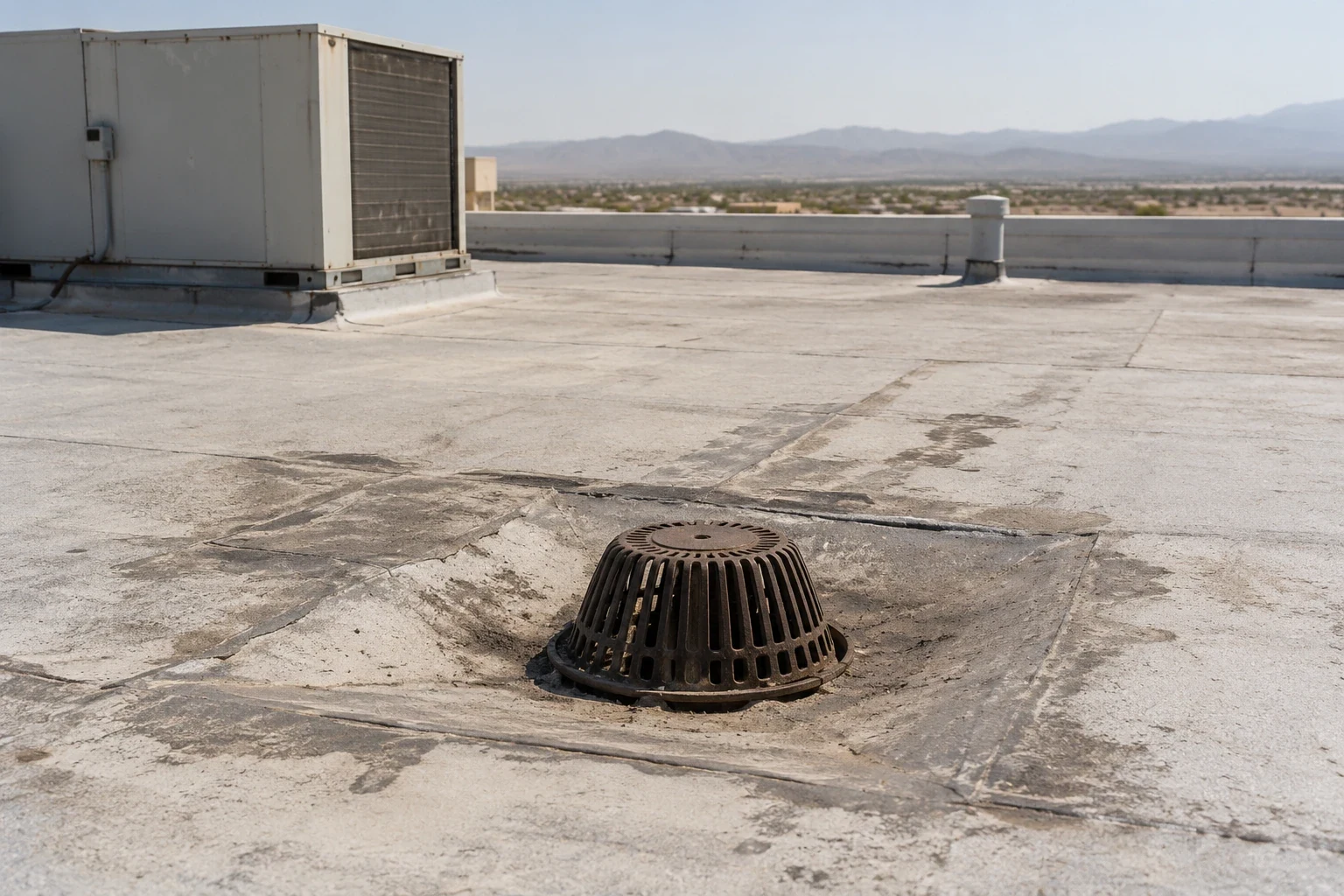
Phoenix-metro summer monsoon patterns include damaging winds and flash flooding; hail is another possible severe-storm hazard. That makes drainage and perimeter details worth a close look before storm season. We clear and inspect drains, sumps, scuppers and overflow paths, then check whether debris or ponding points to a blockage, a low area or a design issue. A storm inspection records visible impacts on the inspected roof. For buildings with recurring drainage trouble, our drain and scupper work starts with flow paths and outlet condition.
For a project permitted after January 1, 2026, Surprise uses the 2024 editions of its building and existing-building codes with local amendments. Energy, fire and electrical requirements can also come into play where insulation, rooftop equipment, fire protection or solar is part of the work. We verify the path for the scope before specifying materials. That early check helps avoid pricing a membrane assembly that cannot be installed as proposed.
Repair the leak or reset the assembly
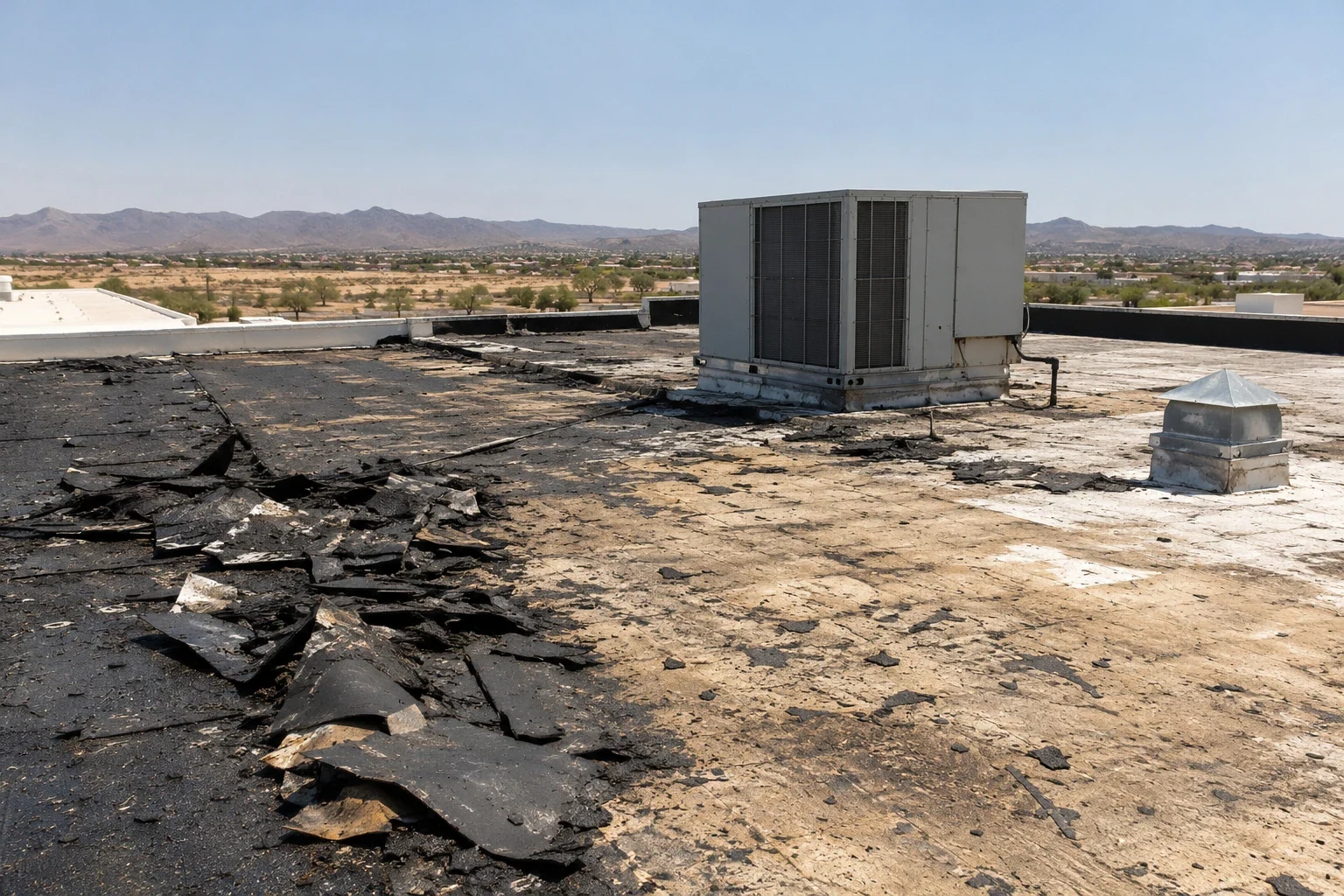
When water shows up inside, the first task is tracing the path above it. Roof water can travel along insulation, a deck flute or a mechanical curb before it appears on a ceiling. We inspect the area above the stain and nearby seams, drains and penetrations, then distinguish a localized opening from broader membrane fatigue. A targeted repair is sensible when the field remains sound and the defect has a clear boundary. If seams, flashing and insulation show repeated failure across multiple areas, a larger repair or replacement plan may be more dependable.
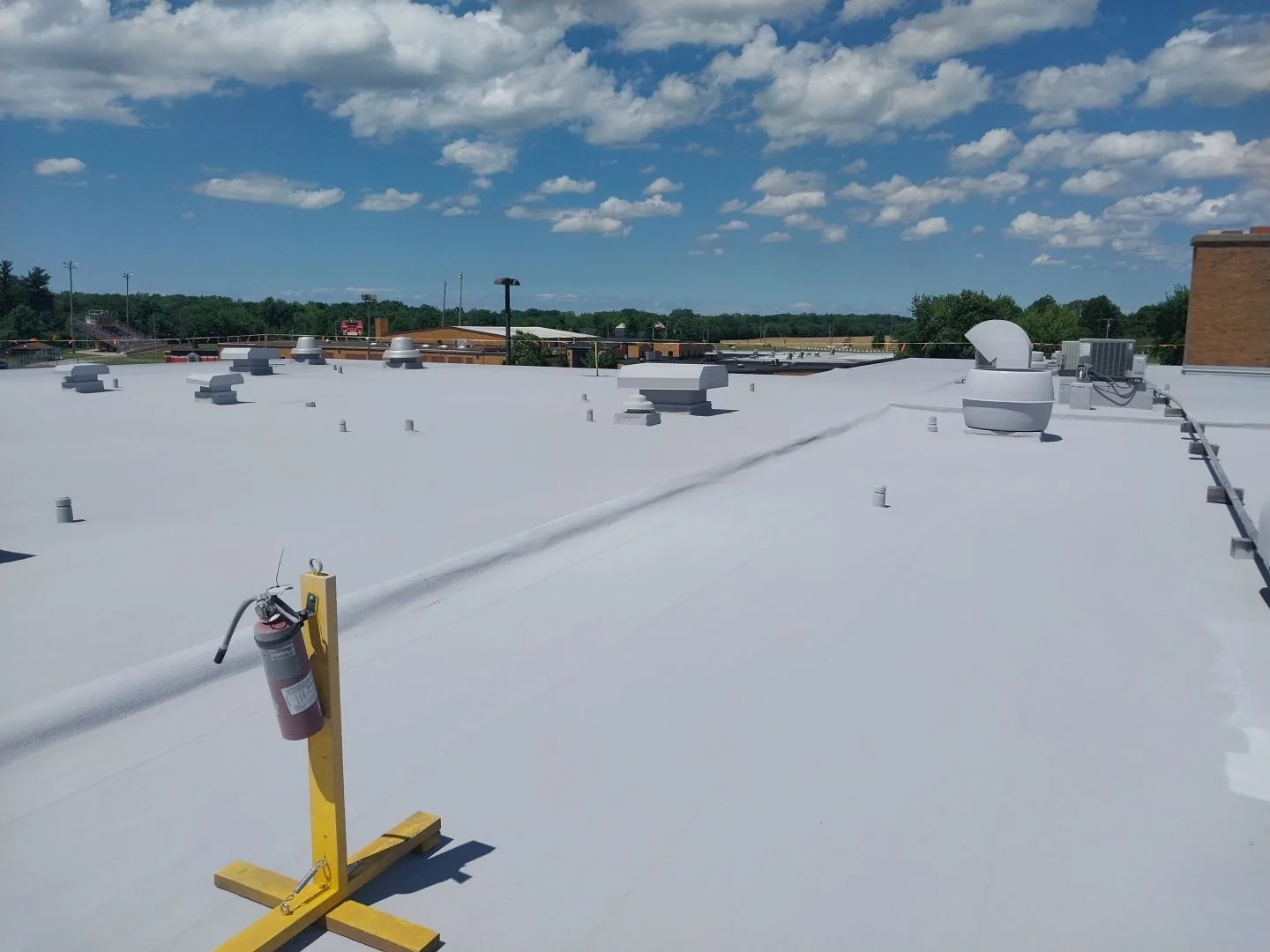
For an assembly that remains serviceable, a recover or coating may extend useful life when moisture conditions and attachment allow it. We verify that the roof is dry enough, confirm adhesion and detail the transitions before recommending that route. Where replacement is appropriate, the scope compares tear-off, overlay eligibility, insulation needs and disposal access. Our roof recover and overlay work begins with those checks, while replacement planning addresses the full assembly and sequence.
Timing and cost follow measurable conditions: how much membrane has failed, whether insulation is wet, the number of penetrations and drains, edge length, access for equipment, and how the work can be phased. We can document both paths with photos and a clear list of included details, exclusions and coordination needs.
Keep operating space usable
Roof work beside active industrial, retail or service operations needs a sequence. We identify loading areas, customer entrances, rooftop service routes and noise-sensitive periods before setting a crew plan. Temporary openings are protected at the end of each shift, debris is controlled, and the work area is kept distinct from pedestrian or vehicle traffic. When the roof has several zones, phasing can keep essential areas in service while repairs or replacement move across the building.
Regional access differs from the delivery route and staging choice at an individual property. A roof with frequent HVAC visits needs clear equipment paths; a building receiving regular freight needs loading access protected. We confirm those constraints with the manager and map them into the scope. For occupied properties with multiple trades or tenants, our occupied-building reroofing approach keeps access and daily operations in the plan.
Photos of seams, penetrations, drains and perimeter work make later maintenance more specific. We can set a practical follow-up inspection interval based on roof condition and exposure, then note changes instead of repeating the same checklist blindly. A small repair caught early is easier to price than a wet insulation area that has spread unnoticed.
A useful first visit
Bring whatever roof records are available: prior repair invoices, leak locations, warranty documents and any drawings that show additions or equipment changes. We do not need a perfect archive to start, but the history can explain why one area behaves differently from another. On site, we confirm safe access, inspect the assembly and photograph conditions. If a concealed moisture question remains, we can discuss infrared or other testing after checking whether the roof conditions make that method useful.
Grand Avenue properties sit within a larger Surprise commercial network, and the right scope comes from the roof itself. We mark each finding as repair, monitor or further evaluation, then discuss the sequence and cost drivers with the owner. If a storm has opened the roof, emergency response is available around the clock, including holidays. For a planned assessment, a nearby Surprise commercial district and the wider northern growth area have different property contexts, but the same first rule applies: inspect the actual roof before choosing the assembly.
Commercial Roofing Questions
Does a leak near Grand Avenue always mean the membrane needs replacement?
No. We trace the entry point and inspect the surrounding field, flashing and drainage first. A bounded seam or penetration defect may call for a repair; widespread seam failure, wet insulation or repeated leaks can support a broader scope. The photos and condition notes show why we recommend one path over another.
Can you inspect a roof while retail or service tenants remain open?
Yes, the visit can be planned around access and customer movement. We agree on the entry route, rooftop access, staging area and any restricted hours with the property contact. For active work, we phase noisy or disruptive tasks where practical and keep temporary openings protected at the end of a shift.
What makes a coating a poor choice for an older commercial roof?
Moisture below the surface, weak adhesion, unstable repairs or failing edge details can make coating the wrong fix. We check the existing assembly and substrate before pricing it, because a new surface cannot correct trapped water or loose components underneath. If conditions do not support coating, we show repair or replacement options instead.
What should I have ready before a roof assessment?
Prior leak locations, repair records, warranty papers and notes about equipment changes are useful. We can still inspect without them. Clear access to the roof hatch and mechanical areas helps the visit move safely, and a building contact should point out interior leak marks so we can compare them with conditions above.
Ready to review the roof scope?
Request a Roof Assessment
Related Roofing Work
Put the roof conditions in writing
Tell us where water is entering, what work has been tried and how the building operates. We will inspect the roof, document the findings and lay out a practical next step for your Grand Avenue property.