
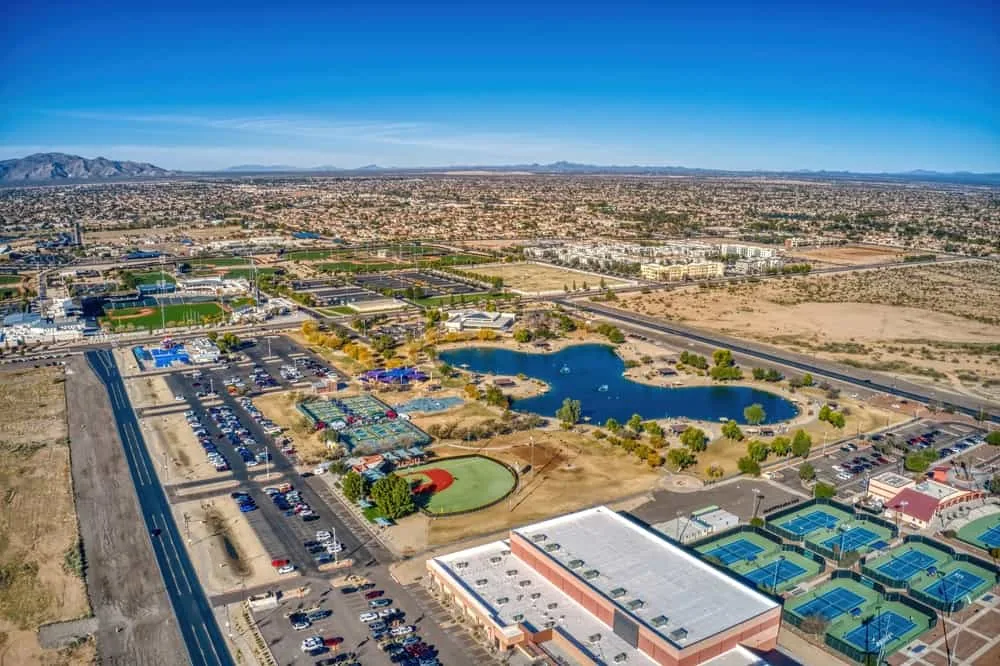
A retail or restaurant operator with several Surprise, AZ, locations needs roof work that respects customers, deliveries, and the hours each store can release. Cactus Road and Loop 303 is a multi-development commercial corridor, while the Village at Prasada sits within a broader retail and dining area. Those places show the market's commercial mix, not any individual roof condition. We inspect each property, identify its drainage and equipment details, and schedule the work around its actual service window.
Keep each store on its own roof record
A chain may use one maintenance ticketing system, but each roof still needs its own plan, leak location, assembly, and repair boundary. We tie photos to the store's roof map, separate an active opening from older wear, and list access limits for the service lane or customer entrance. That prevents a repair note from one address from becoming a default scope for another building with a different membrane or drainage layout.
In 2025, Village at Prasada was an operating multi-property center with retail, dining, and health or beauty businesses. It is a multi-property commercial area, not a single tenant building. The Village at Prasada district provides a local setting for varied storefront roofs, while our field findings come from the specific store or restaurant in the work order.
Surprise City Center also includes retail, restaurants, healthcare, hotels, and civic uses across several blocks. Shopping-center roofs may share common areas and service drives; a restaurant roof can have exhaust, grease, and frequent maintenance traffic. The roof scope should account for those building details rather than apply the same checklist to every logo in a chain.
Find the entry point above the customer area
A ceiling stain above a dining room or sales floor may sit away from the roof defect. We trace the water path through the roof plan, checking membrane seams, penetrations, parapets, drains, kitchen exhaust, and past repairs. If water is active, the first task is to protect the interior and mark the temporary repair boundary. The next inspection checks nearby details so a small patch does not hide a second opening.
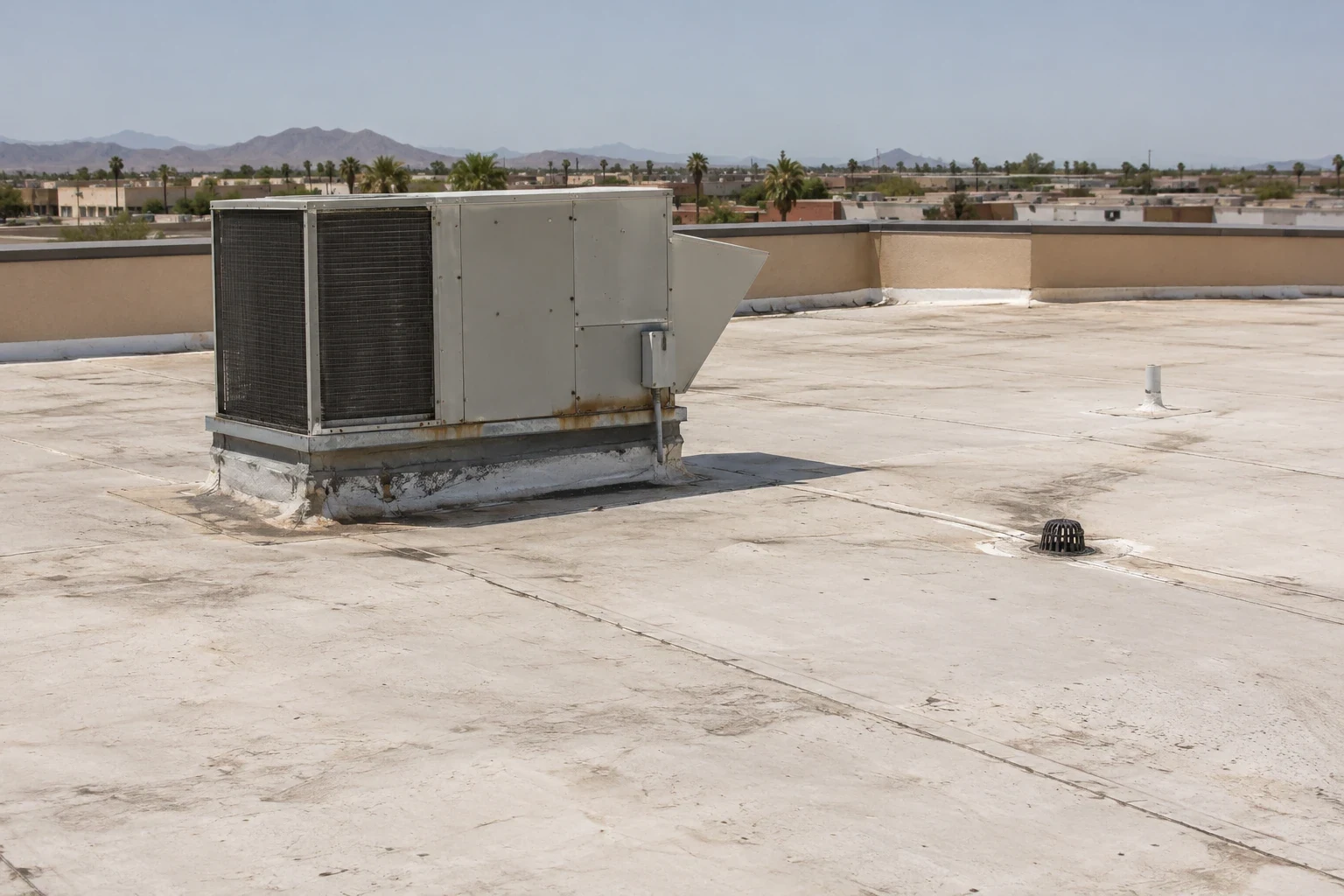
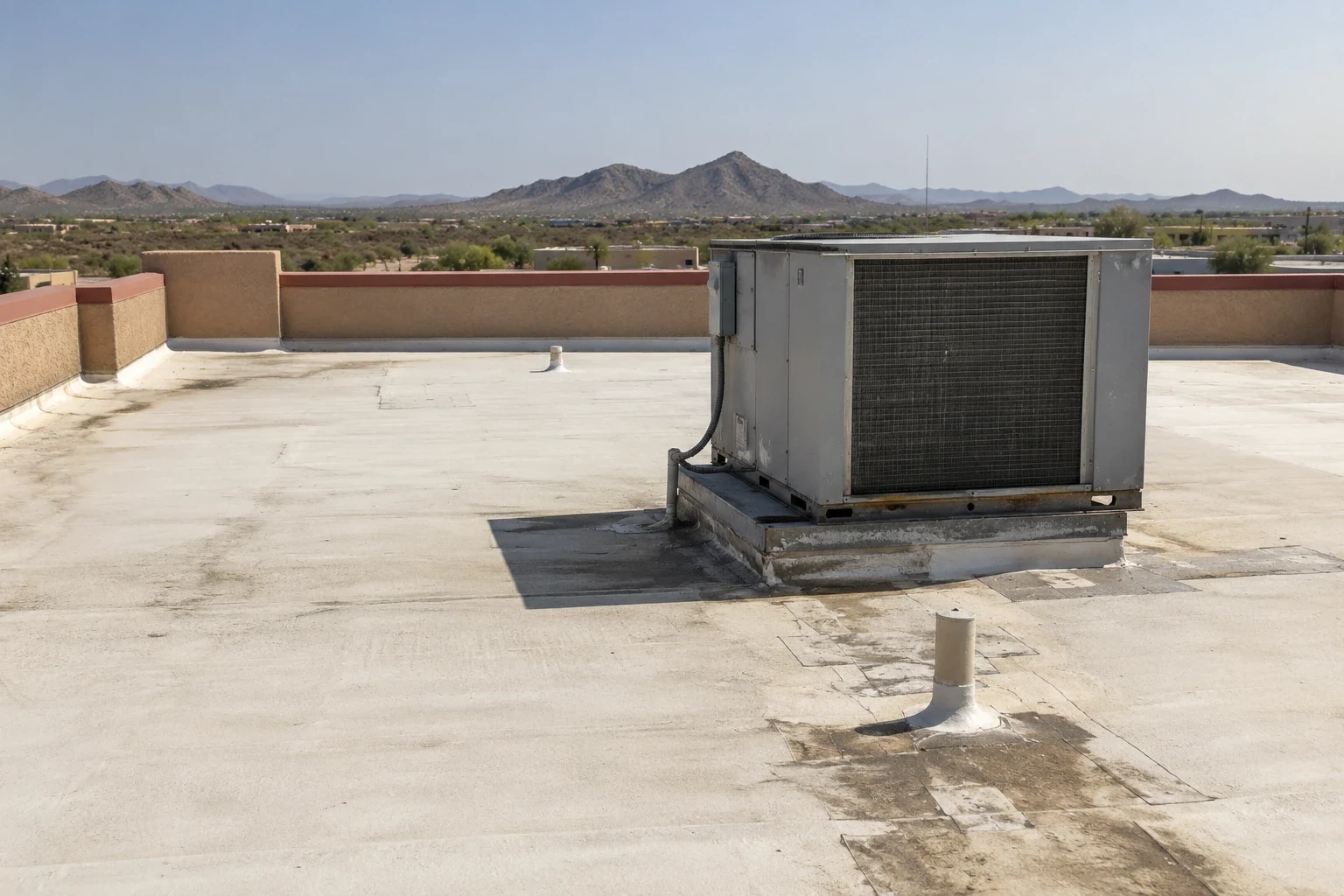
Rooftop exhaust and make-up air units create curbs, duct transitions, and service paths that can stress flashing. Before a unit is moved, we coordinate disconnection, roof protection, flashing, and restart with the mechanical trade. A commercial roof inspection should record curb condition, membrane terminations, drain route, and the interior area affected. If a storm opens the roof, around-the-clock emergency response can stabilize the building before the next service period.
Surprise's low-desert heat and Phoenix-area monsoon storms make exposed seams, edge metal, and drainage worth checking. Regional weather does not prove damage at a store. We photograph actual lifted flashing, punctures, blocked outlets, or open laps and distinguish them from conditions already in the repair history.
Schedule around deliveries and customer flow
Work can affect the front entrance, drive-through, loading lane, rooftop equipment, and parking areas. We confirm delivery windows, high-traffic hours, lift locations, and the path customers should keep using. A site plan that shows the roof zone and ground route makes a temporary restriction easier for store staff to communicate. For a chain, we can align dates across addresses while leaving each manager's hours and access requirements visible.
Replacement needs a daily watertight stop point and a plan for material staging and debris removal. If customers remain inside, phased occupied-building work can keep the repair zone separate from the sales or dining area. A curb repair, exhaust reset, or drain correction may need another trade; we identify that handoff before the crew opens the membrane.
At Village at Prasada, Waddell Road and Loop 303 shape the broader commercial setting, while actual deliveries and service access depend on each property's site plan. A roofing schedule should use the store's receiving rules, not an assumed route based on the district. We confirm where materials can land and when the lane can be clear again.
Compare repair, recover, and replacement
A roof with a localized seam or flashing failure may be repaired without disturbing a sound assembly. Wet insulation, a soft deck, multiple roof layers, or widespread attachment problems may require a larger project. We identify the existing membrane and record the drainage, perimeter, equipment, and previous repair details before proposing an option. A TPO system may suit a replacement when the deck, insulation, fastening, and project requirements align.
A restaurant exhaust curb and its service access can age flashing differently from a long HVAC field above a retail floor. We inspect the actual penetration, look for grease or heat exposure that is visible, and note whether the curb or membrane needs repair. The store's use informs the roof walk; the observed condition sets the scope.
Cost and timing depend on removal depth, deck repairs, insulation, curb heights, edge metal, disposal, and the work window each store can release. We show those drivers in a written scope and state what could change after tear-off. The selection should also account for kitchen exhaust and rooftop service access, not just the open field area.
For a multi-location program, the property manager can coordinate owner approvals and tenant notices through property-management operations. A hotel or food-service operator can also have different work windows from a daytime store; hospitality roof planning considers guest turnover and building services. The system recommendation remains specific to each roof's condition.
Return stores to normal service
Before the crew leaves, the work area should be dry, debris cleared, customer routes restored, and any remaining restriction communicated to the store contact. Closeout can include photos tied to the roof plan, materials installed, repaired details, and the next maintenance item. A temporary patch is labeled as temporary, and any area that needs a later test stays on the record.
Chain facilities teams can compare roof work across locations when each report uses the same basic fields but preserves the property's own assembly and conditions. The Cactus Road and Loop 303 corridor includes varied retail and service development, and the Village at Prasada includes multiple retail and dining properties. Neither district supplies a roof history for an individual store; inspection and maintenance records do.
Send the store list, roof plans, delivery schedule, and leak tickets to arrange a review. We can prioritize active leaks, coordinate roof walks, and return separate scopes with each location's access window, repair boundary, and closeout steps stated clearly.
Commercial Roofing Questions
Can roof work happen before a store opens?
Often, if the roof area, lift access, noise limits, and equipment schedule fit the available window. We confirm the opening time, temporary tie-in, and which customer or delivery routes remain restricted.
How do you handle an exhaust unit that sits over a leak?
We coordinate with the mechanical trade, identify the curb and flashing condition, and agree who disconnects, protects, and resets the unit. The roof opening stays protected until the assembly is closed.
Can one roof scope cover every store in a chain?
A program can use consistent inspection fields, but each address needs its own assembly, drainage, tenant hours, and repair boundary. We keep pricing and work limits tied to the specific store.
What if water enters during a dinner or shopping period?
Around-the-clock response can stabilize the opening and protect the interior. We coordinate a safe access route with store staff, then schedule the permanent roof repair around service hours.
What should facilities keep after a roof repair?
Keep the roof-plan location, dated photos, repair method, materials, and any follow-up inspection with the store's maintenance record. That helps the next visit start at the right detail.
Ready to review the roof scope?
Request a Roof Assessment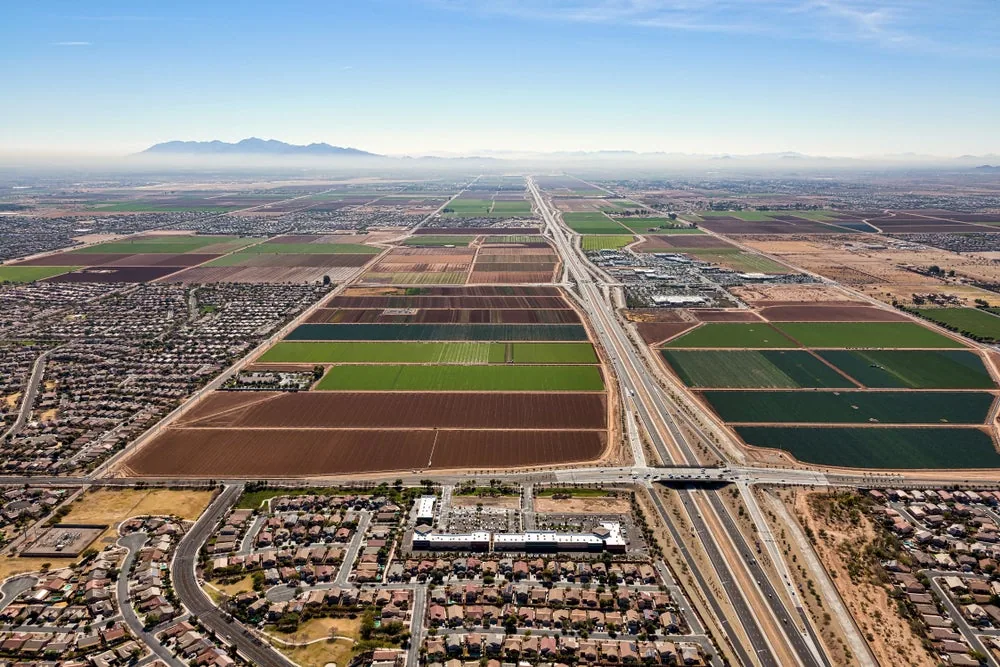
Related Roofing Work
Coordinate the next store roof walk
Share store locations, roof plans, service hours, delivery windows, and active leak tickets. We can schedule inspections and return site-specific repair or replacement scopes.