
A school district planning roof work in Surprise, AZ, has to weigh classroom schedules, summer access, food service, and the rooms that must stay protected. Education is one of Surprise's major employment clusters, alongside healthcare, retail, consumer services, and government services. Surprise City Center and the Railplex represent different commercial settings within the same city, a reminder that district facilities also need property-specific scopes. We inspect each roof, map the work area, and coordinate the sequence with the building calendar.
Use the school calendar as a roof constraint
A school may be quieter during a break, but the roof still has summer programs, custodial work, deliveries, and mechanical service to accommodate. We ask which entrances, play areas, service lanes, and interior rooms must remain available, then map staging and lift routes around them. A campus map tied to the roof plan helps the principal, facilities lead, and crew identify the affected building and the safe work boundary.
Surprise City Center includes civic, retail, healthcare, hotel, and commercial-service uses across multiple blocks. The district's mixed uses contrast with the industrial and distribution properties represented around the Railplex, but neither area establishes the assembly on a school. A school roof inspection needs the actual deck, membrane, drains, curbs, skylights, and repair record. We keep each building separate even when a district uses one maintenance calendar.
When one campus contains classrooms, a gym, administrative space, and service buildings, roof conditions may differ by construction and use. We identify the building number or campus label the district uses and tie photos to that location. That keeps a leak report from being applied across the entire district when only one roof section was inspected.
Inspect seams, drains, and classroom transitions
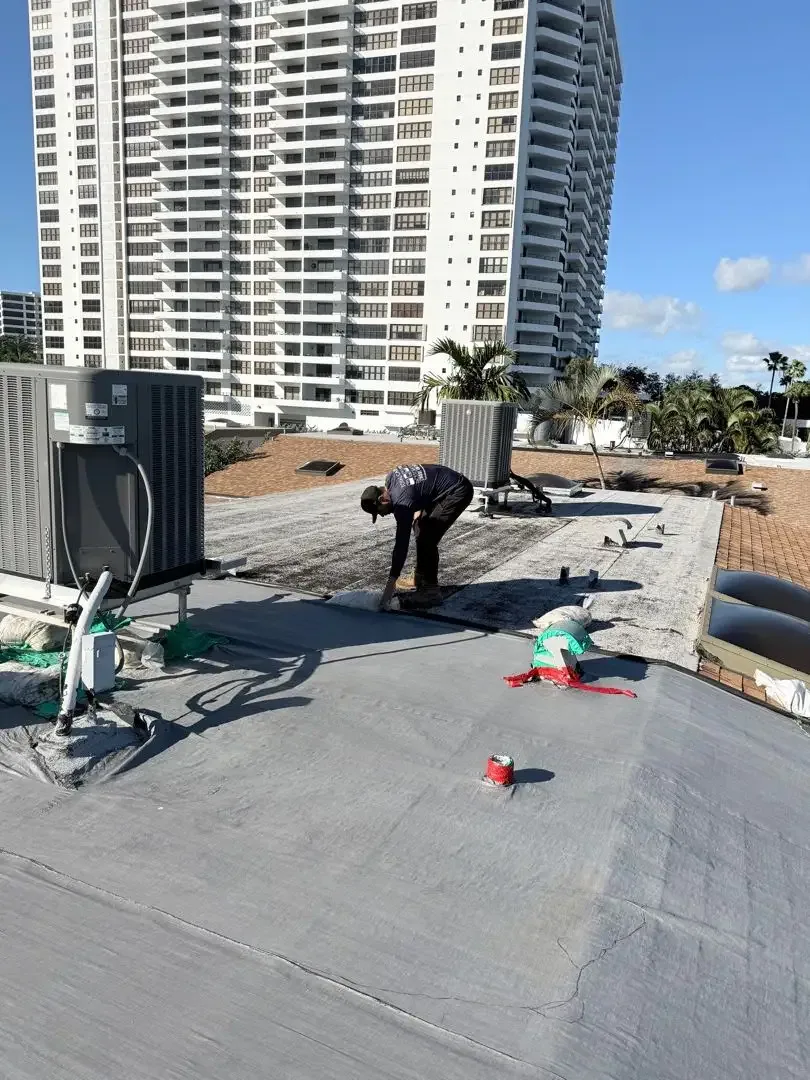
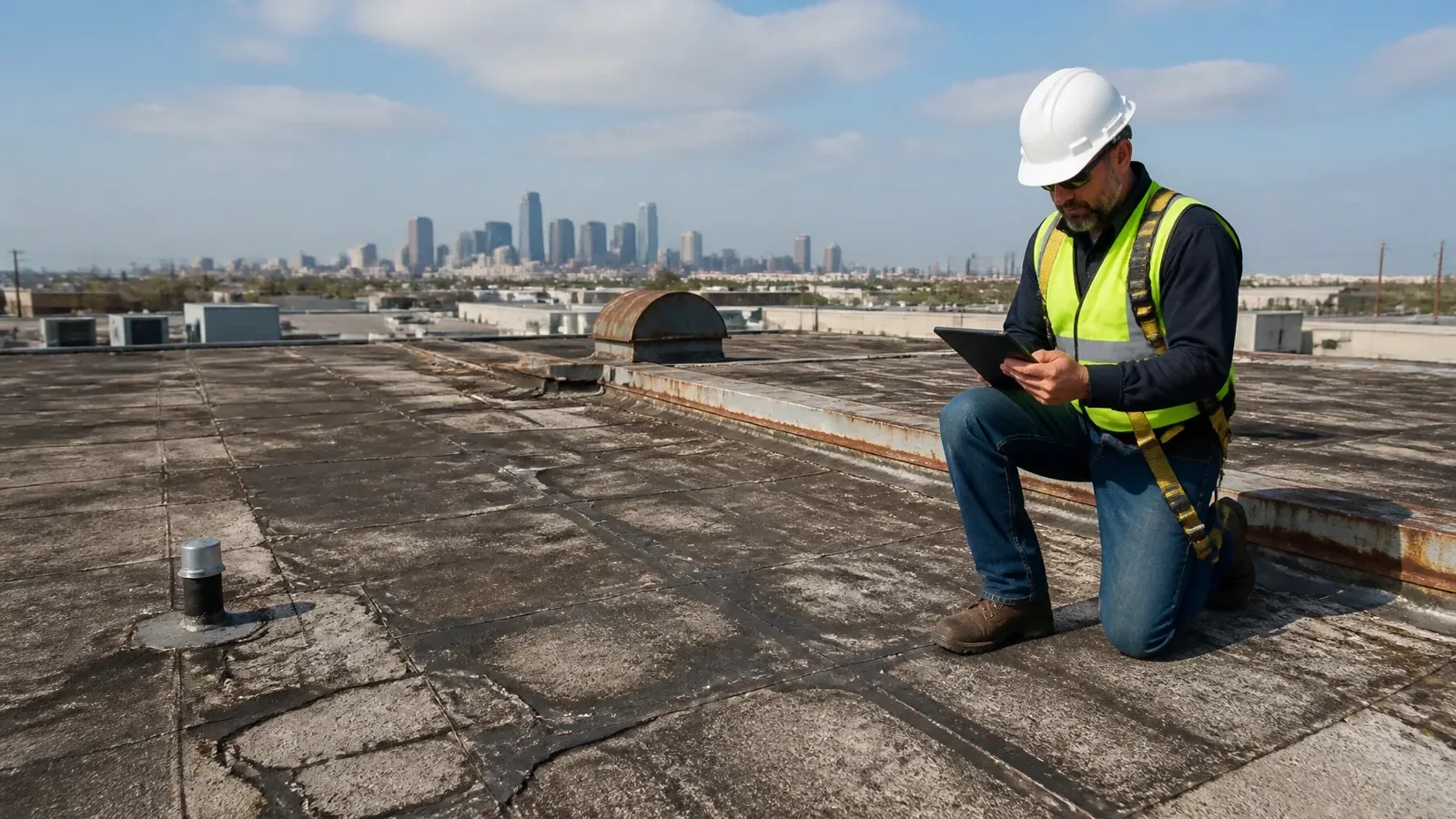
On a low-slope school roof, we inspect membrane laps, parapets, edge metal, drains, scuppers, skylights, and rooftop equipment supports. A leak above a classroom can travel before it reaches the ceiling, so we compare the interior location with the drainage route and past repairs. The report marks what was visible and what needs a test. A commercial roof inspection can separate an isolated flashing failure from a broader assembly concern.
Water that remains near a drain can affect insulation and create repeated interior problems. We check the bowl, strainer, overflow, surrounding membrane, and nearby slope. TPO roofing may fit some replacement projects when the existing structure, attachment, insulation, and design criteria support it. A roof coating cannot dry wet layers or fix a weak deck, so the assembly needs to be evaluated before choosing a surface treatment.
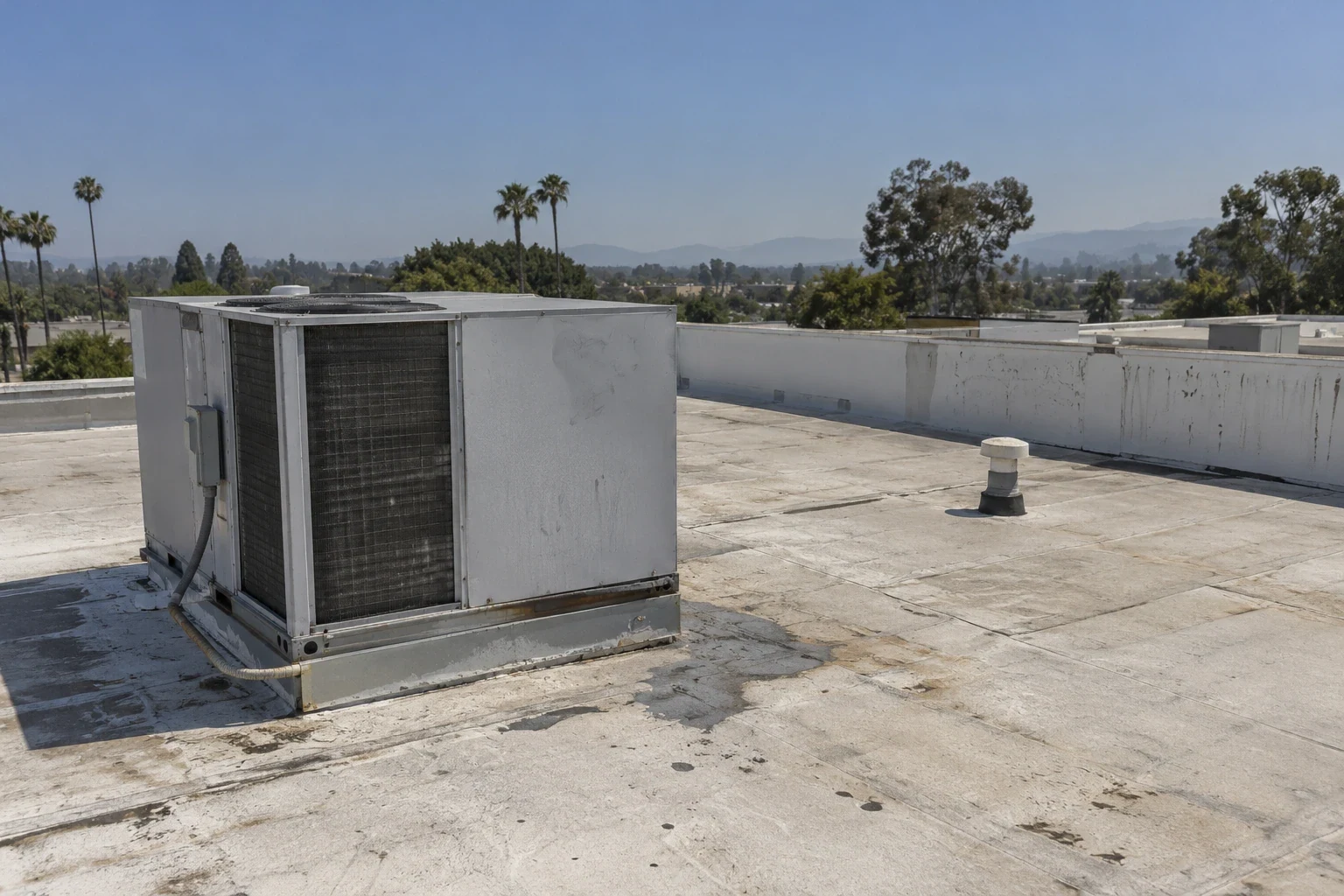
School roofs can also have HVAC curbs, vents, conduit, and skylights that involve other trades. We identify who can isolate equipment and who protects the opening while flashing is repaired. The timing should include the interior room below, the rooftop unit schedule, and the point at which the roof is secure before students or staff return.
Prepare for heat and monsoon runoff
Surprise's low-desert summer puts heat on exposed membrane, sealants, and metal details. Phoenix Sky Harbor's July normal offers regional context, not a temperature reading from a school roof. We inspect seams, exposed flashing, and penetrations for actual movement or loss of adhesion. Heat is a reason to check those details; it is not proof that a school has damage or needs replacement.
Phoenix summer thunderstorms can combine strong gusts with intense rain and runoff, making a post-storm check of drains, edge metal and equipment supports worthwhile. A school roof review should trace runoff to drains and scuppers, examine perimeter attachment, and check whether rooftop equipment is properly supported. After a storm, we photograph displaced edge metal or opened seams and keep those findings distinct from prior wear. If water enters a room before a scheduled project, emergency roof response can stabilize the opening while a permanent repair is planned.
The city's adopted codes effective January 1, 2026 include the 2024 International Building Code and 2024 International Existing Building Code, with local amendments. A district's design and permitting team confirms the applicable path for its project. We can document roof conditions and identify assembly assumptions for that review, but the design criteria and permit decision belong to the responsible professionals.
Protect occupied areas and school operations
During the school year, roof access may cross bus lanes, student entrances, or after-school activity areas. The district sets the permitted route, work hours, and areas that must remain clear. We plan material staging, noise, lift windows, and daily dry-in within those limits. A short written notice can name the building, roof zone, temporary restriction, and contact instead of asking staff to interpret a broad project schedule.
If replacement requires an open roof, the scope divides it into sections that can be made watertight before the end of each shift. Interior protection is coordinated for rooms below the day's work, and equipment shutdowns are scheduled with maintenance staff. Phased occupied-building work can keep offices or summer programs separate from roof areas under construction. The superintendent or facilities lead confirms when a space can return to normal use.
Public procurement may require submittals, inspections, or documentation beyond a private repair. The district or general contractor provides those terms and the approved schedule. We identify the roofing scope, trade interfaces, temporary tie-ins, and exclusions so the project's responsible team can review them before material ordering.
Keep campus records consistent
A district needs repeatable reports across buildings, but the recommendation cannot be copied from one roof to the next. We can use common fields for assembly, condition, repair boundary, and follow-up while noting different deck types, access, drainage, and occupant schedules. A condition report with marked photos can show where water entered, what was repaired, and what still needs testing.
Education is one of Surprise's employment clusters, while City Center and the Railplex show a broad local mix of civic, healthcare, retail, industrial, and service uses. That context helps explain the range of building operations in the market; the district's own records and roof walk establish its facility conditions. A public-agency roof program may also need procurement and access coordination, while a healthcare roof scope uses patient-area and mechanical constraints. The records should reflect the school district's actual requirements.
At turnover, we can return dated photos tied to each school building, identify materials installed, list the repair boundary, and note any open design or maintenance item. The facilities team can then schedule the next visit by property rather than recreating the inspection from email.
Commercial Roofing Questions
Can a roof project be scheduled during summer break?
A break may provide a larger work window, but custodial, summer-program, delivery, and mechanical schedules still matter. We coordinate the available zones and daily closure point with facilities.
How do you prevent a leak from disrupting a classroom?
We identify the room below, map the roof area, and set temporary interior protection before opening the assembly. The work plan names the affected space and the point when it is safe to return.
Do roof findings at one school apply to every building in a district?
No. Even nearby buildings can have different assemblies, repairs, drains, and equipment. We tie each finding and recommendation to a specific roof plan and facility record.
What if a storm damages the roof during a school term?
Around-the-clock response can stabilize an opening and protect the interior. We document the temporary boundary, then inspect the surrounding roof before pricing permanent work.
What should a district receive at closeout?
A useful handoff has plan-marked locations, dated photos, completed repair details, materials installed, and a list of remaining tests or maintenance items for each building.
Ready to review the roof scope?
Request a Roof Assessment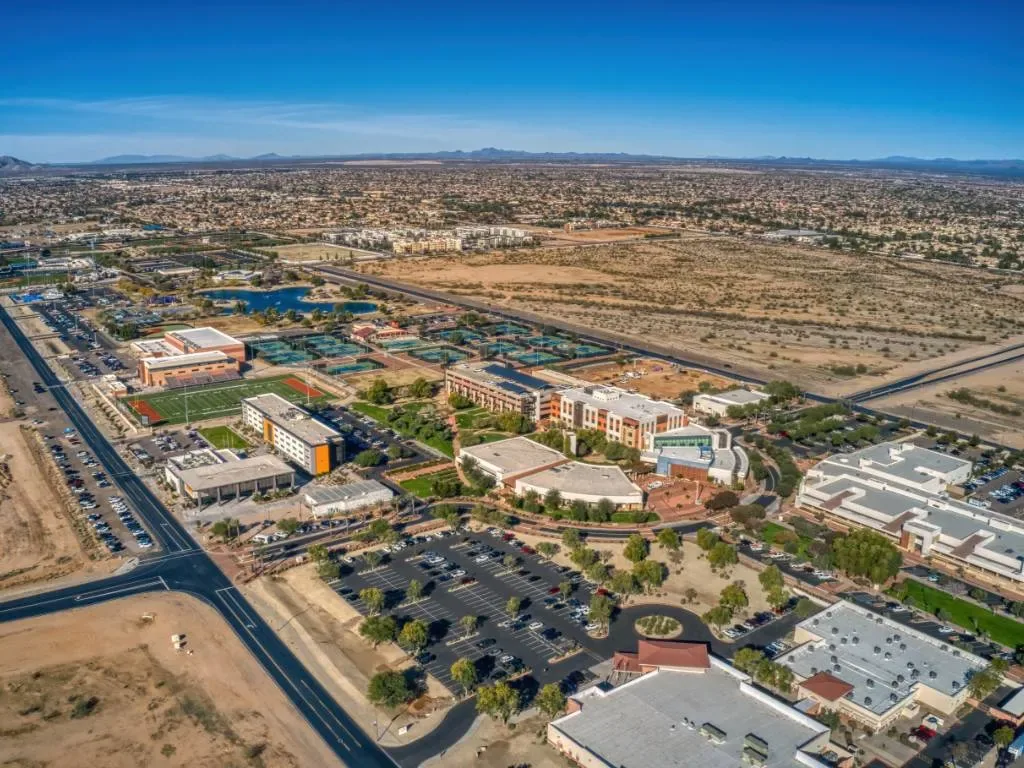
Related Roofing Work
Set a school roof work window
Share the campus roof plans, building calendar, access limits, and leak records. We can coordinate inspections and prepare separate scopes for each facility and work zone.