An office near Surprise City Center may have several rooftop units, exhaust points and repair areas that meet at different membrane transitions. KEE roofing is a PVC-based membrane option that owners may compare when they want a reinforced sheet system with specific service characteristics. The name alone does not establish compatibility or life expectancy. We inspect the roof, record the exposure and confirm the proposed assembly against the specification before recommending a material. City Center has a broad mix of civic, retail and healthcare uses; each property still needs its own roof assessment.
Understand the KEE/PVC membrane
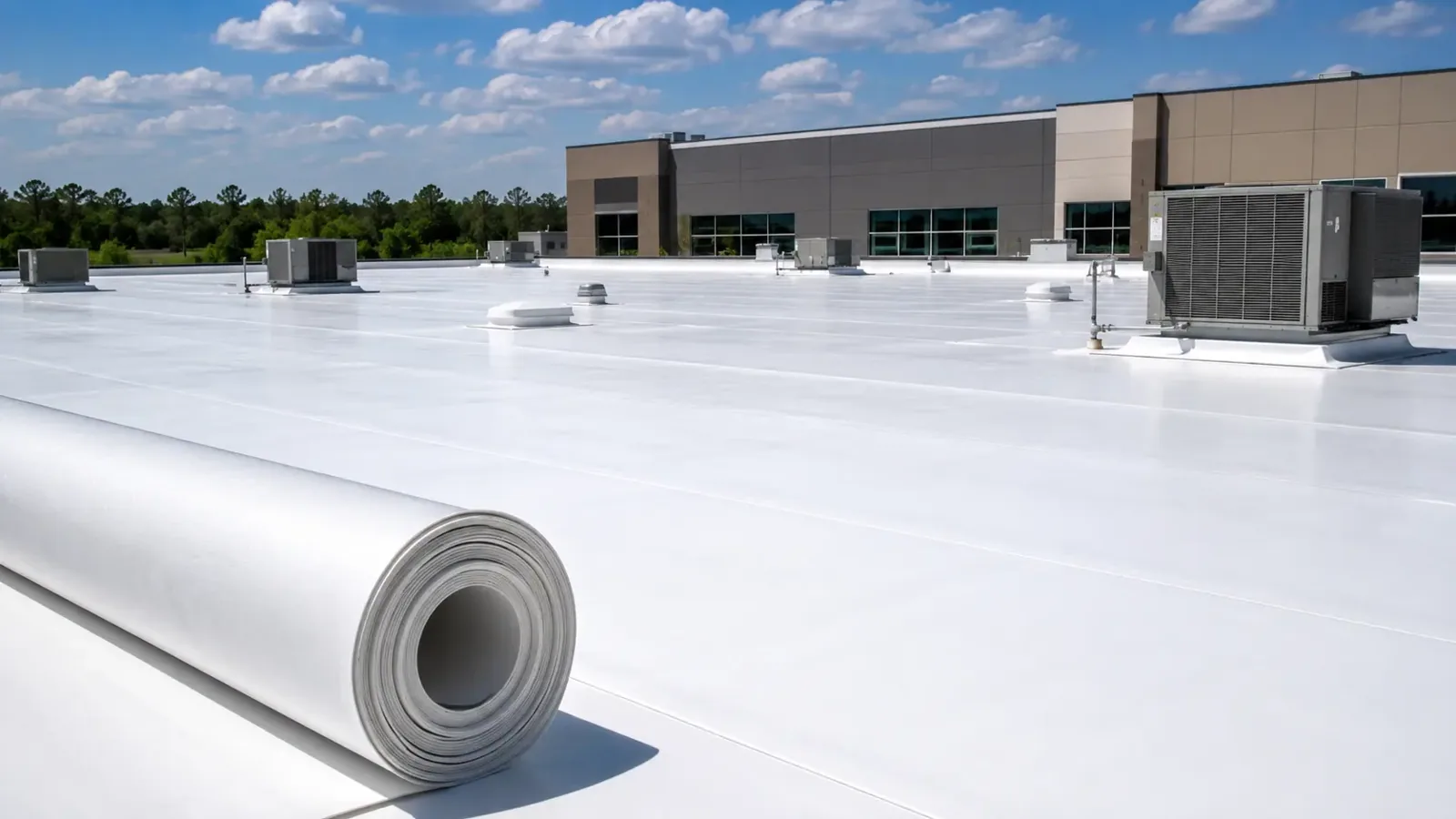
KEE refers to ketone ethylene ester, an additive used in some PVC membrane formulations. Product composition varies, so the selected manufacturer's data and approval determine what is being supplied. A reinforced sheet is installed as part of a complete roof system, with seams, fasteners or adhesive, insulation, cover board, flashing and edge metal all contributing to the result. We document the exact product rather than using “KEE” as a blanket label for every PVC roof.
Hot-air welding joins compatible membrane laps. The field crew must keep the overlap clean and dry, tune the welding equipment to the conditions, make test welds and check the cooled seams. Corners and irregular penetrations need appropriate accessories or field fabrication. A specification may require a particular thickness, reinforcement, color, attachment method or warranty; those points should be written into the submittal and proposal.
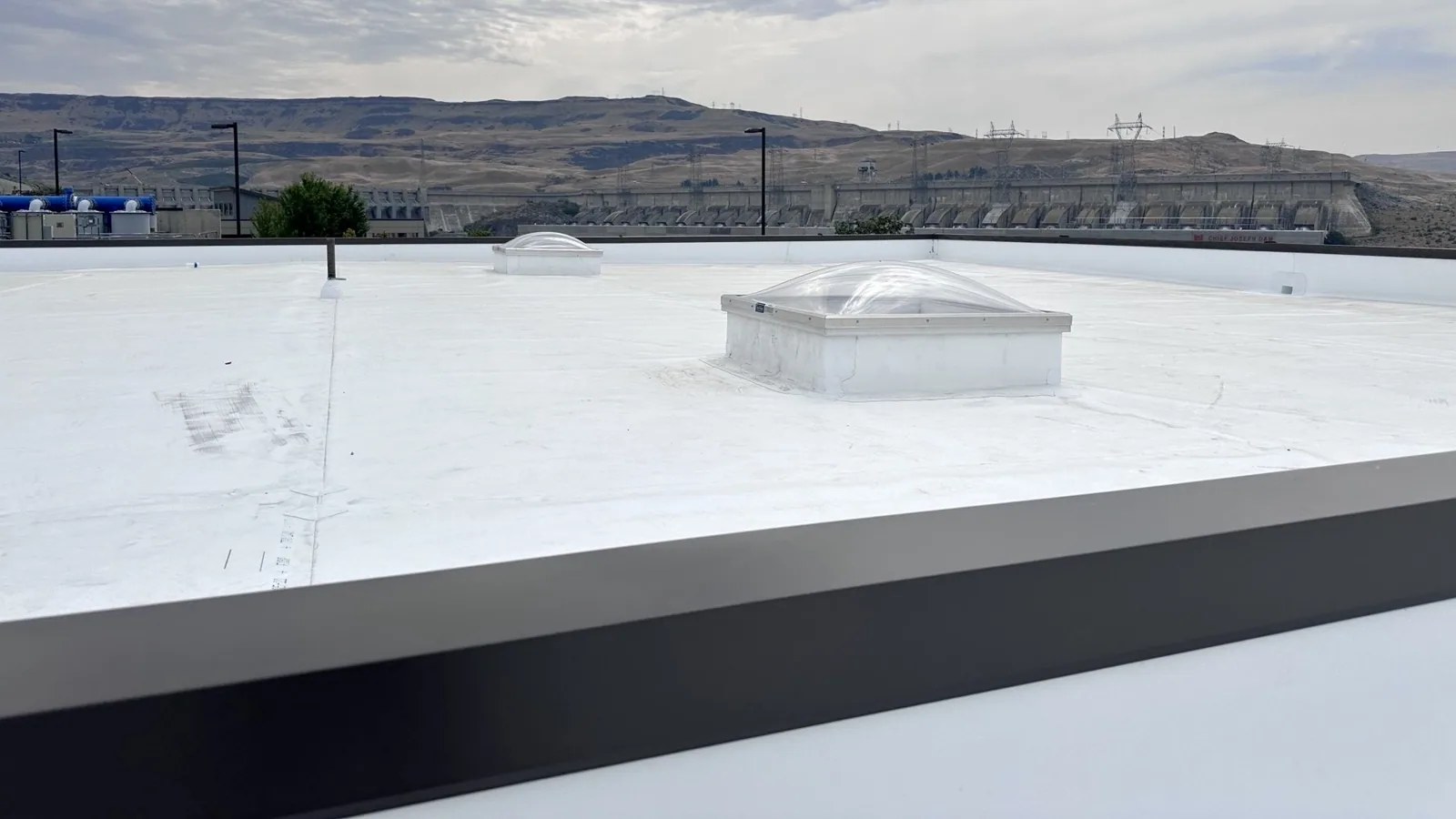
Owners should compare the whole assembly, not a marketing description. A light surface can reflect more sunlight than a dark one, but building energy use also depends on insulation, HVAC and operations. The project should explain the roof layers, expected maintenance and warranty limits. For standard formulations, compare PVC membrane choices and TPO assemblies against the actual service exposure and approved details.
Map roof use and existing conditions
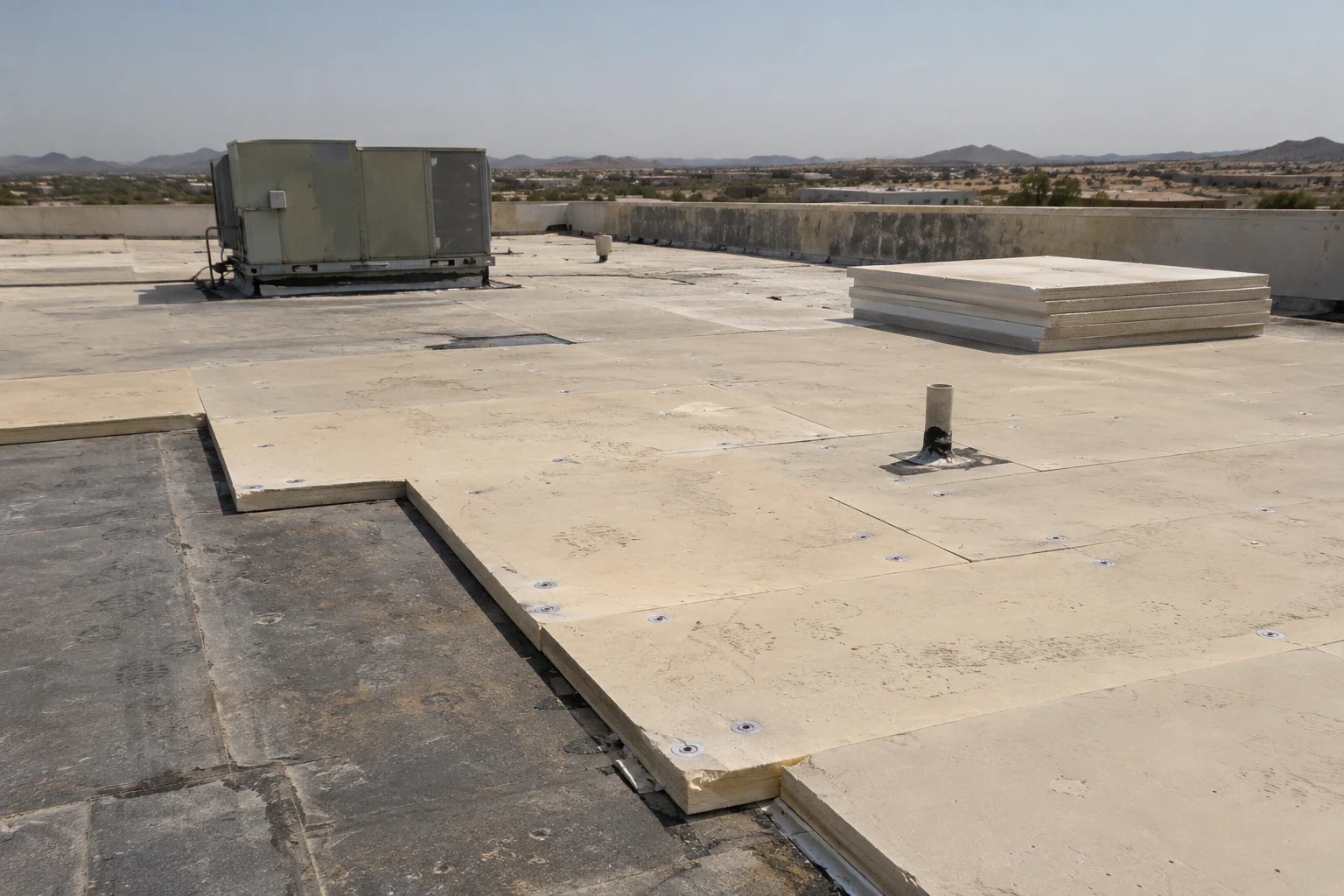
Before pricing a recover, we look for moisture, loose attachment, delamination, surface contamination and damaged deck. A roof can have an apparently sound field while a seam, curb or drain has a localized failure. Mark each observation on a roof plan and photograph it from a useful distance, then include a closer image of the detail. That record helps the owner distinguish a condition that can be repaired from one that affects the proposed overlay.
Surprise's employment profile includes consumer services, healthcare, education, retail and government or social-service work. That variety means roof activity can differ by property: a clinic may have scheduled appointments, a warehouse may turn trucks through a service lane, and a retail roof may have public hours to protect. We ask how the building is used before setting access and staging assumptions, rather than treating every low-slope roof as an empty work zone.
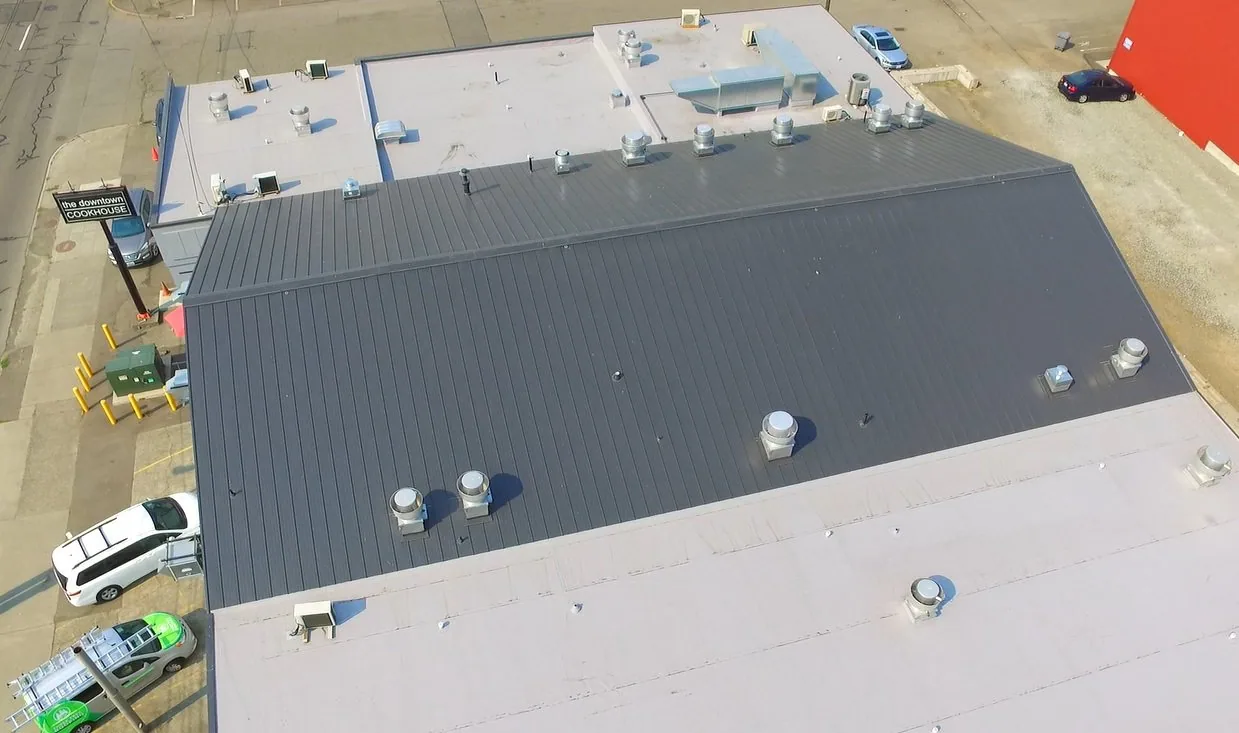
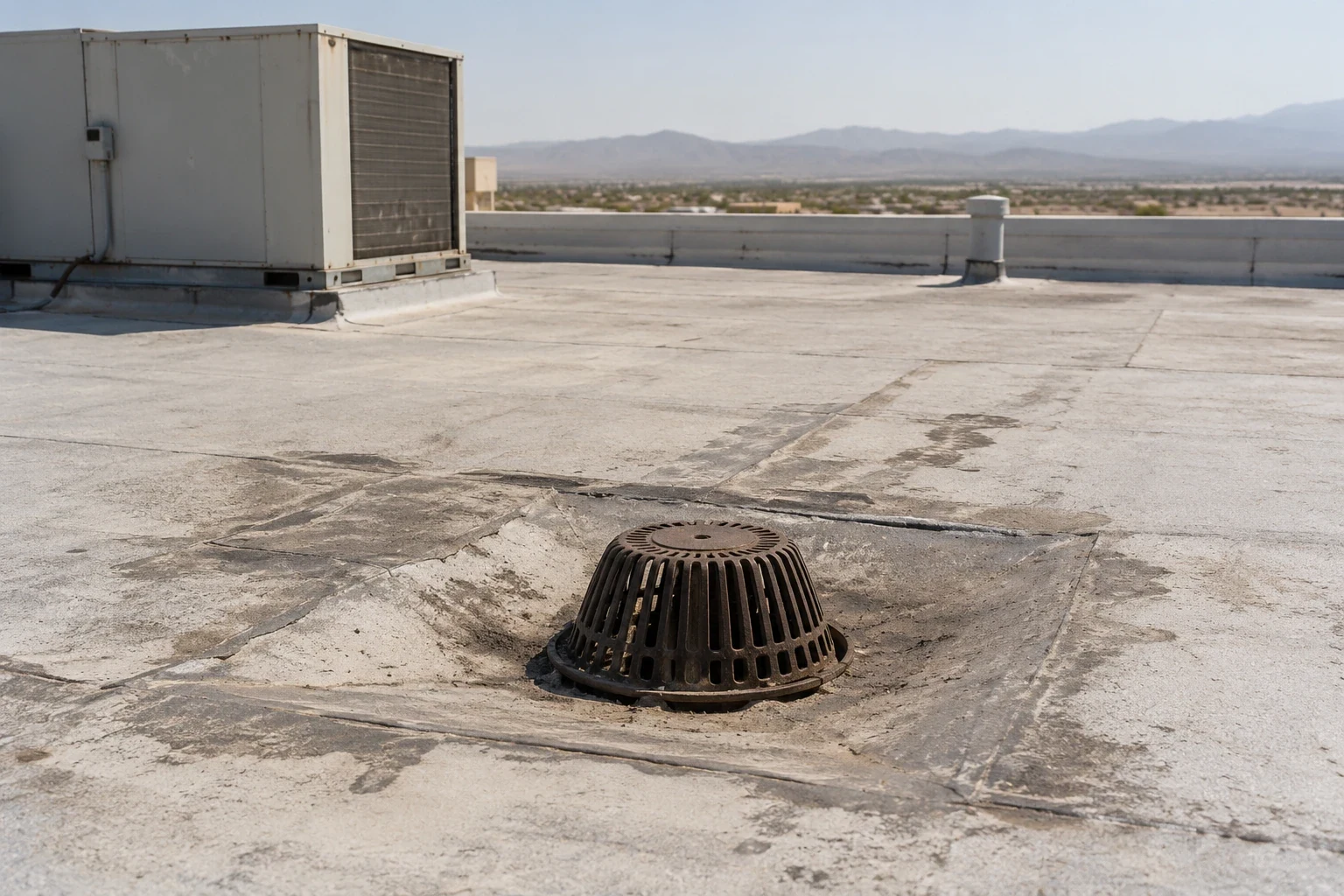
Review drain bowls, scuppers, roof edges, skylights and equipment curbs with the membrane. If new insulation raises the surface, the drain and parapet may need adjustment. A roof inspection can map existing conditions, and cover-board planning should reflect the deck, attachment and finished drainage elevation. A roof that remains serviceable may need a repair rather than a full KEE installation.
Set attachment and detail requirements
KEE membrane can be installed in approved mechanically attached or adhered configurations; the tested system and design documents should identify which one applies. Fastener pullout, deck flute, adhesive compatibility, substrate moisture and perimeter zones affect the installation. We do not select an attachment pattern by copying another building. The proposal should name the basis for the selected system and show where the design transitions at corners, parapets and penetrations.
For adhered work, surface preparation and weather conditions determine whether the bonding operation can proceed. For mechanical attachment, the crew needs the correct fasteners, plates and layout at each roof zone. A concealed deck condition can change the accepted detail. If the installed substrate differs from the drawings, stop, document the location and request direction before closing the area.
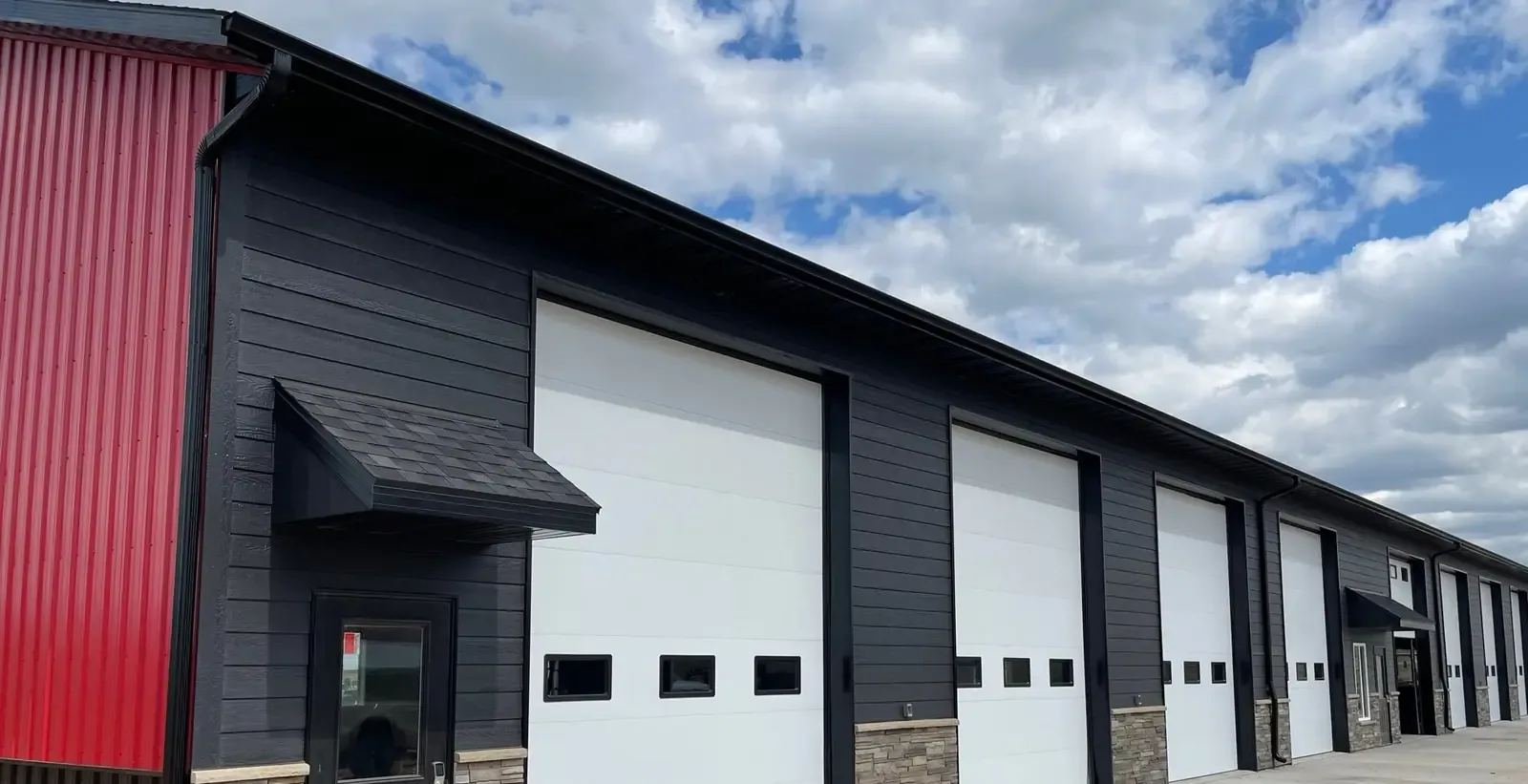
Roof edges and drains are common leak paths because the membrane meets another material there. Coordinate coping and edge metal with the membrane termination, and plan drains and scuppers before setting insulation height. Around curbs, a support and curb review helps avoid a last-minute cut through finished work. The Railplex industrial area illustrates the region's mixed industrial building context, though it does not predict any individual roof detail.
Protect the roof during installation
Heat, wind and dust affect the daily sequence. The Phoenix region has persistent summer heat, and monsoon storms can bring damaging winds and heavy rain. That does not prove a roof has damage, but it does make a protected work boundary, secure material staging and clear drainage path important. The foreman should know the forecast window, the safe stopping point and who checks that each tie-in is closed before leaving.
Work in a manageable area so insulation and membrane are not left exposed longer than planned. Keep drains open, protect rooftop equipment and separate hot work or lifting from active tenant routes. If the building stays occupied, give the facility contact a daily update with the work area, any changed access route and the time a trade needs to shut down equipment. A written occupied-building sequence can define those handoffs.
At the end of each phase, test the seams, inspect corners, verify edge termination and remove debris. Photograph concealed details before they are covered. Record any deviation from the approved submittal and keep the repair location on the roof plan. These steps help the owner review workmanship and provide a clear record if a future service call concerns that area.
Compare KEE with repair and replacement paths
KEE/PVC may be a candidate when the selected product and approved assembly match the roof's exposure, substrate and warranty needs. It is not automatically superior to standard PVC, TPO, EPDM or a restoration system. Compare product data, seams, attachment, flashing, repairs and long-term maintenance. A coating is a different approach; consider restoration only if the existing substrate is compatible and remains sound.
Cost drivers include roof height, tear-off, wet insulation, deck repair, curb lifts, edge-metal replacement, drain corrections, staging and occupied hours. Ask the proposal to separate base work from allowances for concealed conditions. If a building uses solar equipment or plans a future array, coordinate the attachment and access plan before installation. New supports or future pathways can otherwise disturb completed membrane.
Keep product data, seam tests, inspection photos, warranty documents and maintenance instructions with the roof plan. After wind or heavy rain, inspect edges, drains and any place where service trades crossed the membrane. Report a change by location and photograph it before making a repair. A KEE system is easiest to maintain when the owner knows which product was installed and which repair materials the manufacturer permits.
Commercial Roofing Questions
Is KEE a separate membrane from PVC?
KEE is used in some PVC formulations. Product makeup varies, so the proposal and submittal should identify the exact membrane and approved assembly.
How are seams made on KEE roofing?
Compatible reinforced sheets are commonly joined with hot-air welding. Test welds, clean overlap and post-cooling checks help verify the field process.
Can KEE be installed over an existing roof?
An overlay depends on moisture, attachment, substrate and project requirements. The existing assembly needs inspection before another layer is proposed.
Does KEE automatically mean chemical resistance?
The membrane name does not replace a compatibility review. Identify the actual exposure and compare it with the manufacturer's written data for the specified product.
What records should be kept after installation?
Retain the product submittal, roof plan, seam checks, photos of concealed details, repair log, warranty and manufacturer maintenance instructions.
Ready to review the roof scope?
Request a Roof Assessment
Related Roofing Work
Confirm the product and roof conditions
Send the existing roof plan, service exposure, repair history and project specification. We can inspect the assembly and compare KEE/PVC with other approved options.