Commercial roofing along the West Phoenix and Loop 101 employment corridor starts with a roof system and an access plan, not an assumed property type. Loop 101 and I-10 connect West Phoenix with West Valley communities. The same network puts Glendale, Peoria and Phoenix employment areas on connected freeway and arterial routes from Surprise. For a property manager, the practical question is how roof work fits the building's operation, delivery schedule and rooftop service needs.
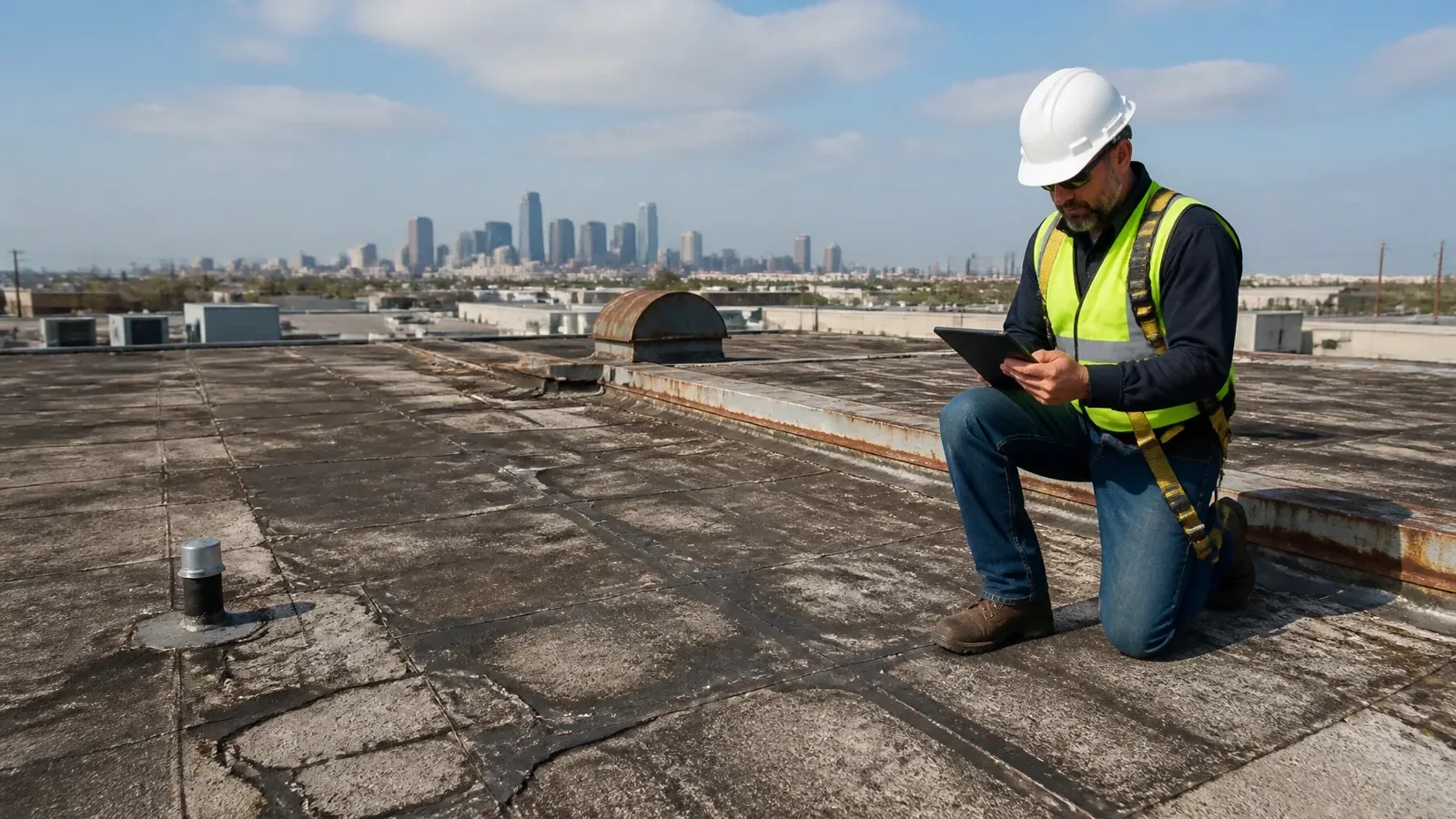
We inspect seams, penetrations, drains, edge details and equipment supports, then map visible conditions against leak history. Water can travel inside an assembly before it shows on a ceiling, so the nearest interior mark is a starting point rather than a repair location. A roof condition report records findings and photos so the owner can distinguish an isolated issue from system-wide wear.
Route the crew, then protect the roof
Loop 101 and I-10 provide the backbone for a corridor that ties western communities to Phoenix employment areas. The route to a specific property still depends on its gate, loading space and work-hour restrictions. We verify the delivery approach with the site contact and identify where tools can stage without interfering with operations. If a lift or crane is needed, the project lead can confirm the setup area and any required coordination before material is ordered.
Roof access is only one part of site control. We look at interior use below the planned work, rooftop equipment, electrical or HVAC service paths, and any fragile surfaces. A property with several tenant spaces may need notices and different work windows. A corridor's geography does not tell us whether a property is occupied, which membrane it has or what area is safe to open. Those questions are resolved with the building contact and field inspection.
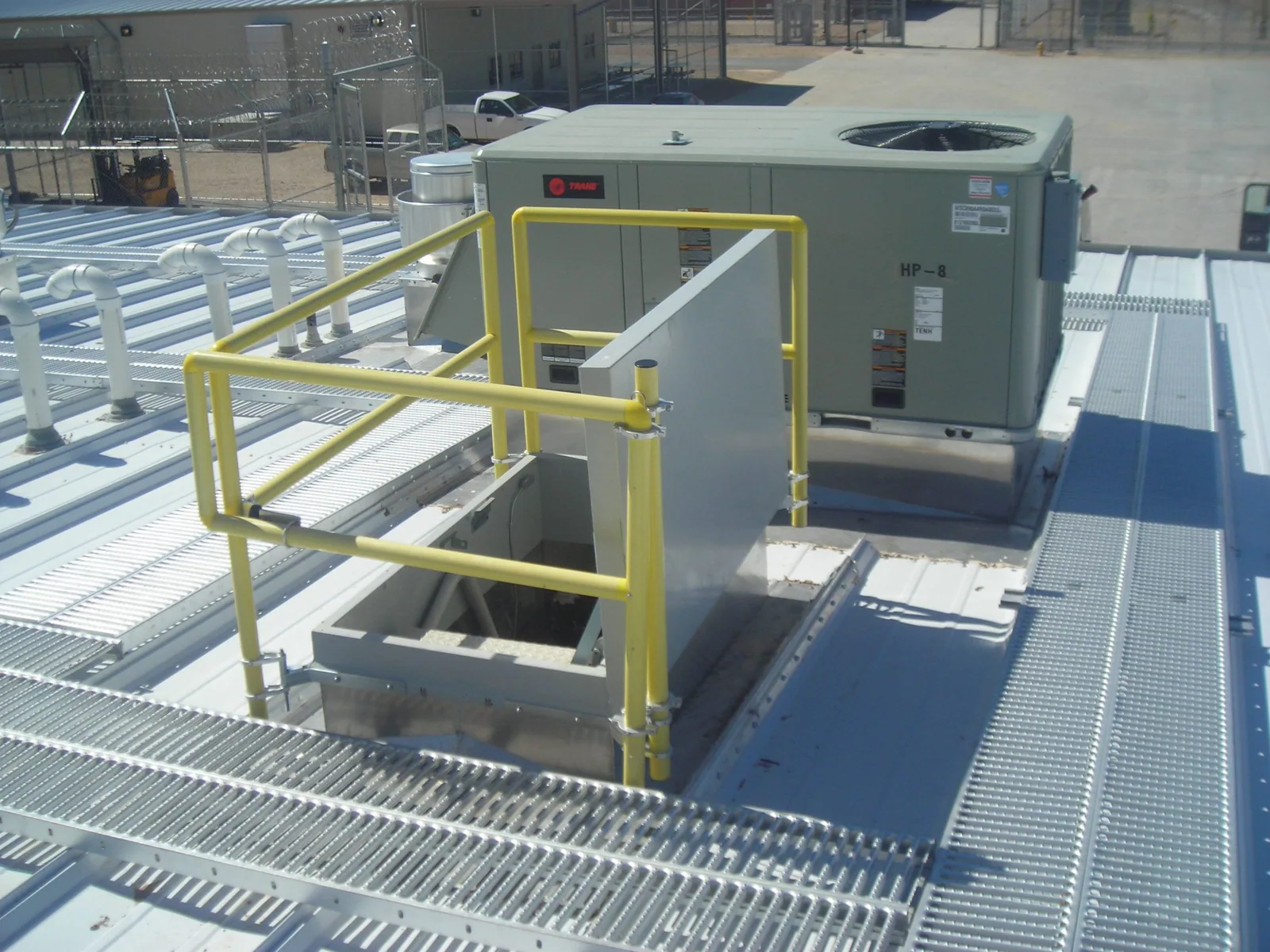
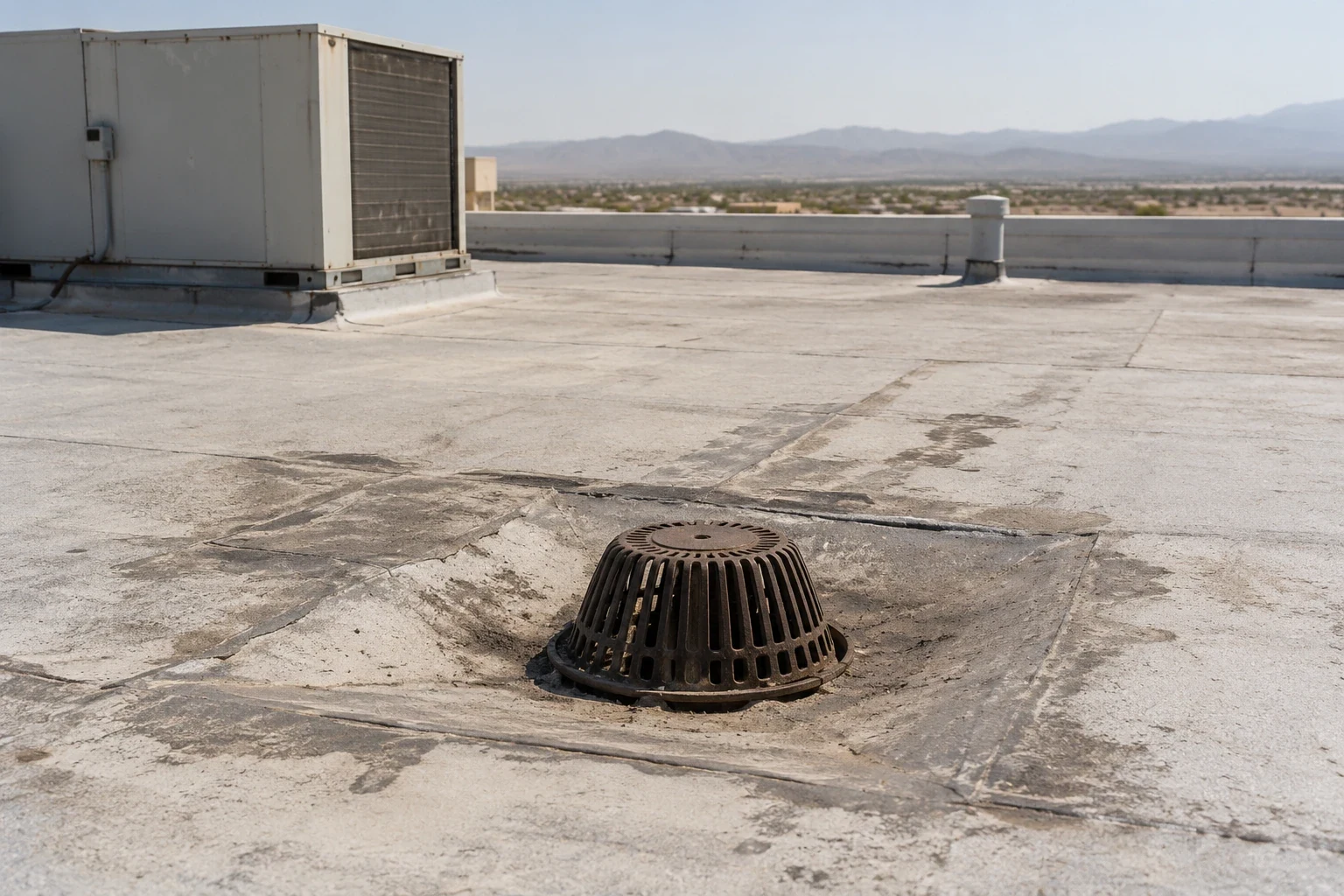
On the roof, water-entry details deserve close attention: wall flashing, curbs, pipe penetrations, laps and drain bowls. We check whether sealant remains bonded, whether fasteners are secure and whether drainage routes are open. A repair at a curb should account for equipment service clearance and the waterproof connection around the support. Our curb and equipment detail work coordinates the roof system with the mechanical interface, while drain and scupper service traces the water path to its outlet.
Keep sun and monsoon conditions in the inspection
West Phoenix commercial roofs share high solar exposure and monsoon-season wind and rain risk. Summer heat can dry sealants and work on membrane seams; wind pressure can reveal loose edge conditions, and heavy rain tests drains and overflow paths. We inspect the actual roof for split patches, open laps, lifted metal and ponding rather than predicting a failure from regional weather alone. The material, maintenance record and prior repairs tell us how to interpret what is visible.
After a storm, we photograph affected areas and compare them with the previous condition where records exist. A lifted termination and a blocked drain are different findings with different fixes. We check strainers and scuppers, inspect the flashing around outlets and note whether water has reached interior spaces. When damage is active, emergency response is available around the clock, holidays included. We can secure the immediate opening and document the permanent repair separately from temporary protection.
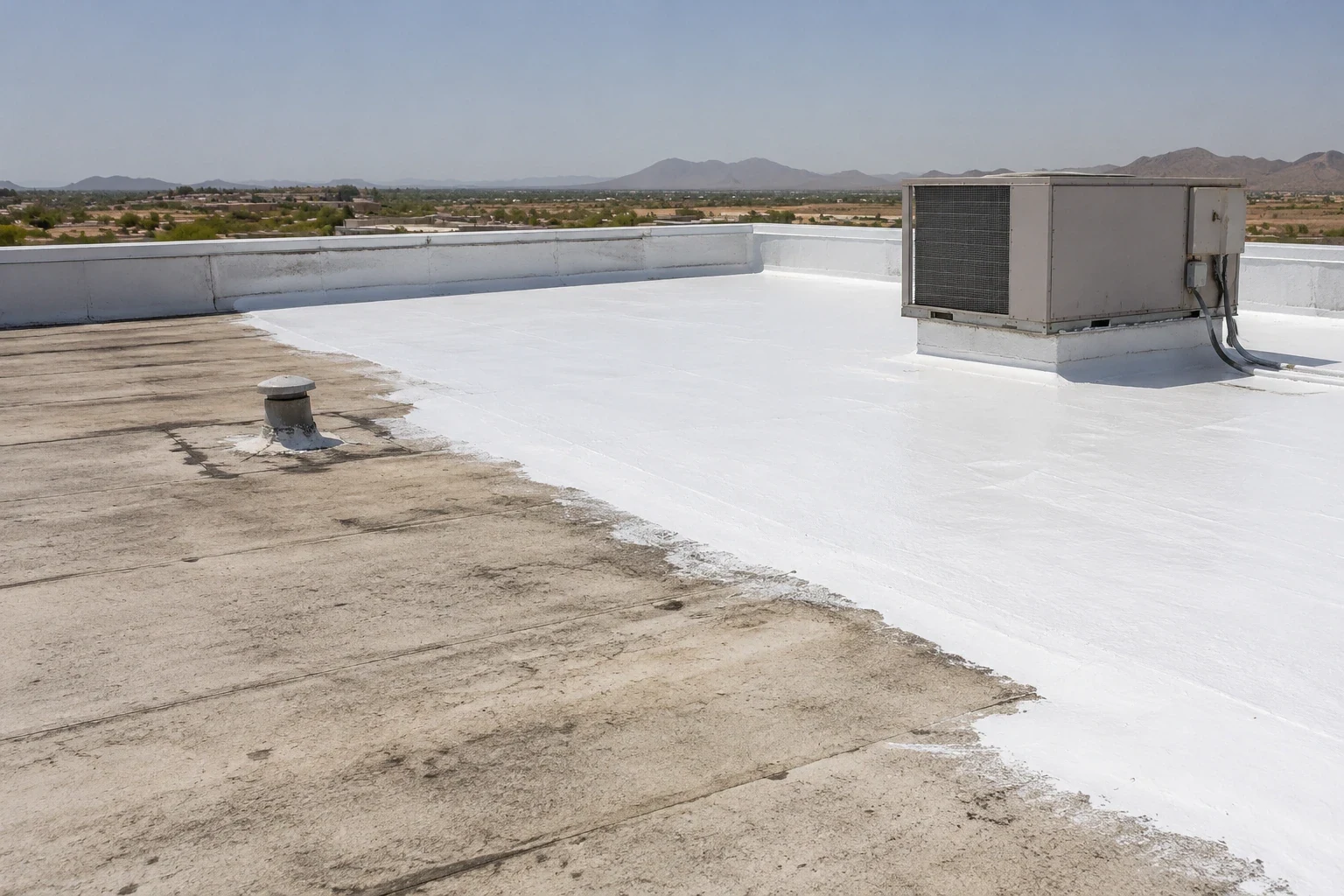
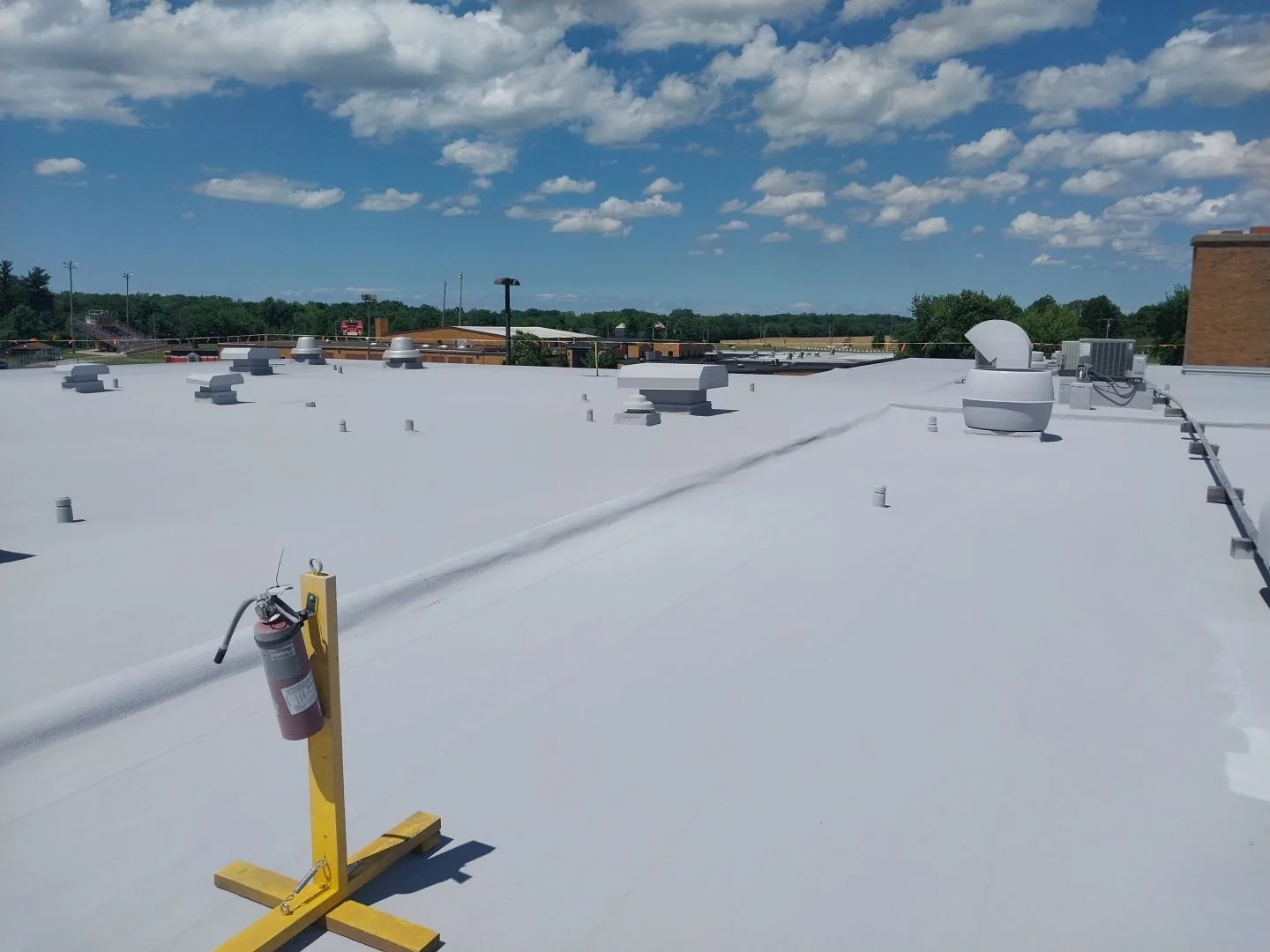
For a coating or recover, the roof must be evaluated for moisture, adhesion, attachment and transitions. A surface system may be considered when those conditions support it, but it cannot correct wet insulation or unstable edges. If the existing assembly is unsuitable, replacement or targeted repair may be more appropriate. Our roof coating evaluation checks preparation and compatibility, and a recover review confirms whether another layer is viable.
Make the repair boundary visible
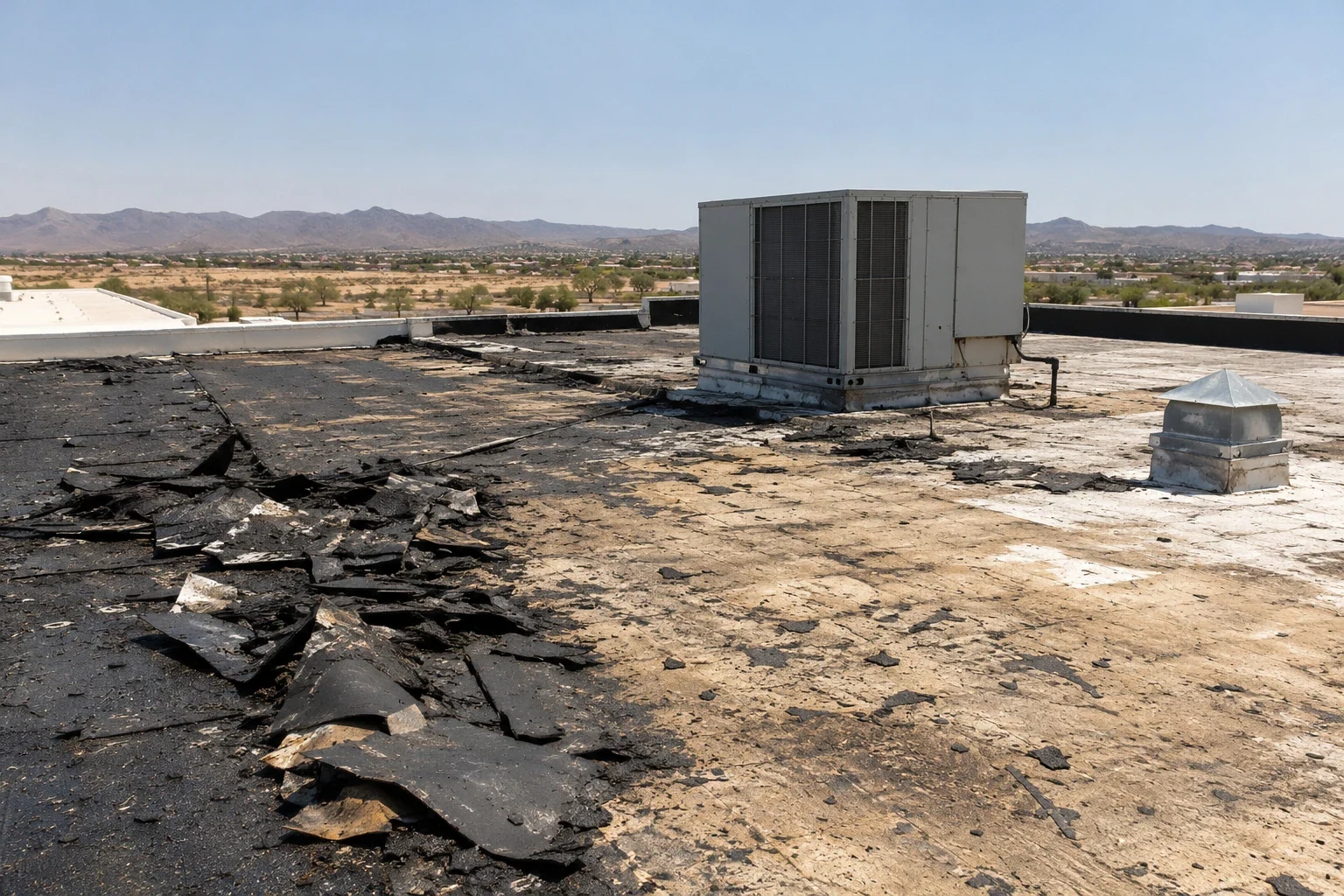
Some roof defects have a clear limit: a puncture, a failed pipe flashing or an open seam with sound membrane around it. We prepare the affected area and tie the repair into compatible material. If several seams have opened or insulation is wet in more than one zone, treating each visible leak as a separate patch can leave the underlying problem in place. We document affected areas and explain what additional testing could change the repair choice.
A recover requires a stable, sufficiently dry assembly and enough clearance at drains, curbs and perimeter details. A coating needs a substrate that can be cleaned, prepared and bonded. We check those requirements before pricing either option. If replacement is warranted, the proposal describes tear-off or overlay eligibility, insulation, edge metal, equipment coordination, disposal and phasing. A replacement scope should say what happens at each roof zone and how it will be protected between shifts.
Budget and schedule follow the size and condition of the work area, access, number of transitions, equipment moves, material lead time and time available to isolate the roof. We separate immediate stabilization from permanent work where an opening cannot wait. The owner can see which repair is required now, which issue needs a test and which capital option deserves pricing. The inspection can document those choices before a larger project is selected.
Hold the work window to the building
Before a crew starts, we agree on staging, roof access, tenant communication, fall protection, interior protection and the dry-in limit for each day. When work touches HVAC or electrical equipment, the sequence should identify who disconnects, moves or reconnects the system and who seals each penetration. We secure temporary openings before leaving and record any area that still needs permanent completion. That handoff helps the facilities team manage the roof between shifts.
Loop 101 and I-10 link with routes serving Glendale, Peoria and Phoenix employment areas. A portfolio review can compare the West Phoenix district with a Surprise Loop 303 corridor roof, while keeping findings tied to each property's assembly. If a property operates through normal hours, our occupied-building work plan gives the owner an access and phasing sequence before installation.
After completion, keep dated photos, roof zones, material details and repair notes with the facility record. We can return to inspect the same seams or outlets and compare their condition. If a major project must wait, a maintenance plan can identify what needs attention before the next storm season. A practical roof file gives future service crews a starting point and reduces uncertainty about the limits of earlier repairs.
For a roof walk, share leak locations, available drawings, work-hour restrictions and any known equipment changes. We will inspect what is accessible, note visible defects and explain where concealed conditions may require a test. The resulting scope will state the work boundary, access assumptions and cost drivers so the general contractor or owner can coordinate the next step.
Commercial Roofing Questions
How should a roof walk be planned on an employment corridor property?
Start with the building contact, roof access rules, delivery route and active work schedule. We confirm which roof sections are available, where equipment can stage and what interior areas need protection before inspecting the assembly.
Does high solar exposure mean a coating is the best repair?
No. We first check adhesion, substrate condition, moisture, drainage and edge details. A coating is appropriate only when the existing assembly can support it; otherwise we compare a repair, recover or replacement scope.
What is the right response to a roof leak after a monsoon storm?
Protect the interior and report the leak location, then have the roof inspected for the actual entry path. We photograph damaged seams, edges, penetrations and drainage conditions and separate temporary stabilization from permanent repair.
Can roofing work be phased across several buildings?
Yes, when each building and roof zone is assessed separately. We sequence access, material staging, temporary protection and tenant communication so active areas remain usable where conditions allow.
Ready to review the roof scope?
Request a Roof Assessment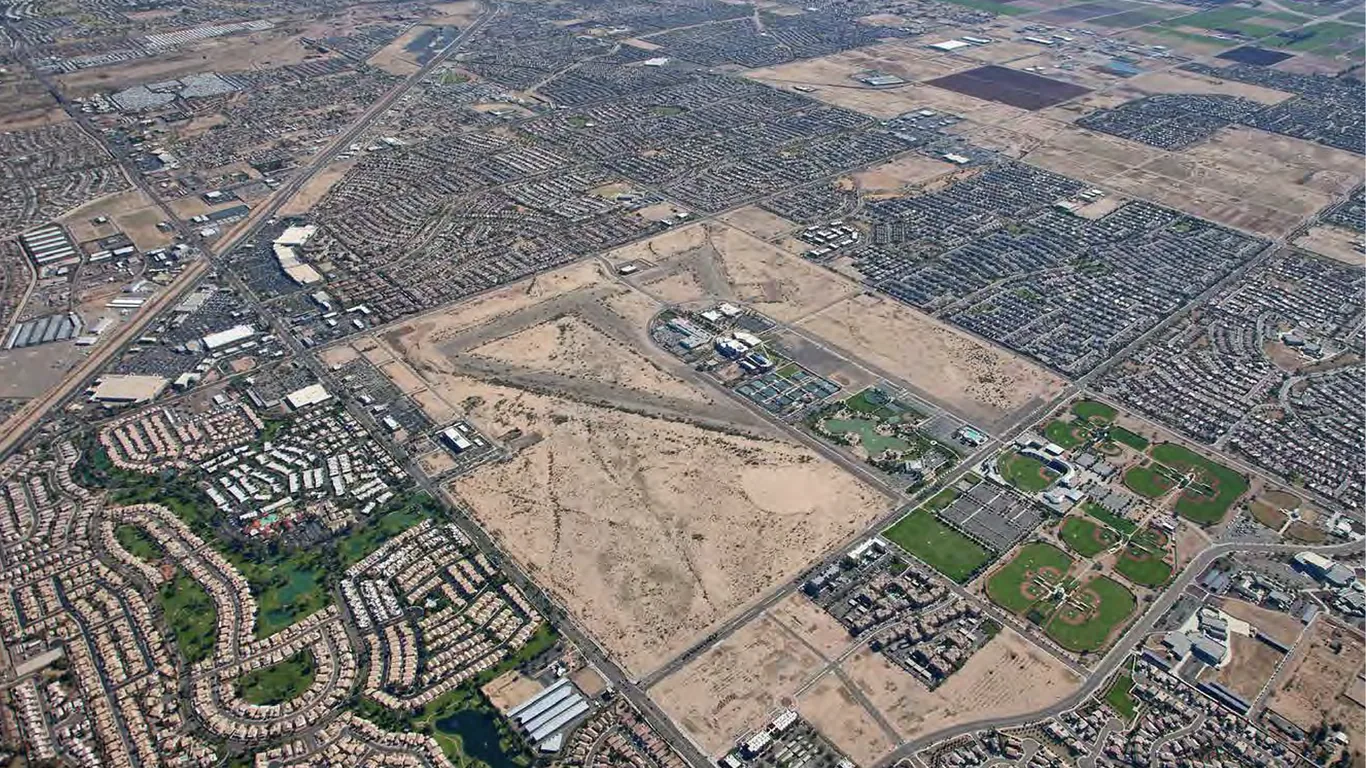
Related Roofing Work
Coordinate a corridor roof assessment
Share the property location, roof records, leak notes and access window. We will inspect the assembly and provide a work sequence with repair options tied to field conditions.