A retail or service building near Surprise's Cactus Road and Loop 303 corridor may have multiple roof zones, signs, equipment, and tenant hours to work around. Holcim Elevate, formerly Firestone Building Products, is a manufacturer whose commercial system must be matched to the existing deck and project requirements. We begin with a roof walk, locate leaks and prior repairs, and check insulation, edges, drains, and curbs. The low-desert heat and regional monsoon storms give those details attention, but only measured conditions justify the repair or replacement scope.
Carry the current manufacturer name through the scope
Firestone Building Products became part of Holcim Elevate's roofing business. Project records may use the older name. We verify the material on existing submittals before identifying a repair product or replacement assembly. A familiar name helps locate records, but it does not establish compatibility with new adhesive, flashing, or cover board.
Holcim Elevate offers commercial roofing systems and components that need to be specified together for the job. We review the current system requirements, deck type, roof slope, attachment, insulation, and perimeter details. If the proposed work ties into another membrane, we identify the transition and verify its compatibility before ordering. For comparison, a GAF assembly review or Carlisle SynTec comparison should use the same roof areas and design assumptions, not a different set of quantities.
Our scope names the proposed material, assembly components, and roof sections. If records are incomplete, we inspect instead of inferring what is hidden. That distinction matters when a repair meets an older membrane or the new roof follows a current specification.
Inspect exposure and existing roof conditions
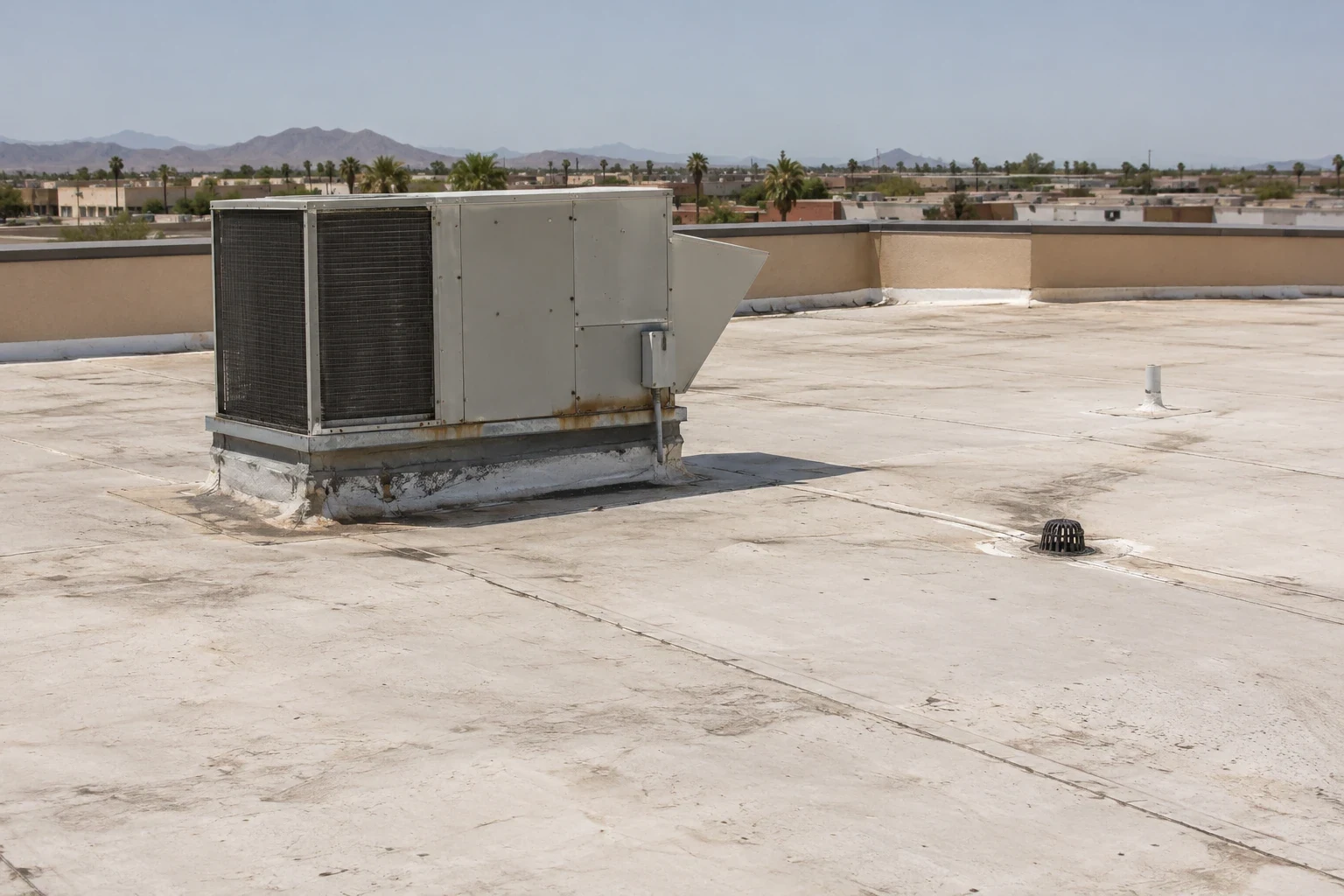
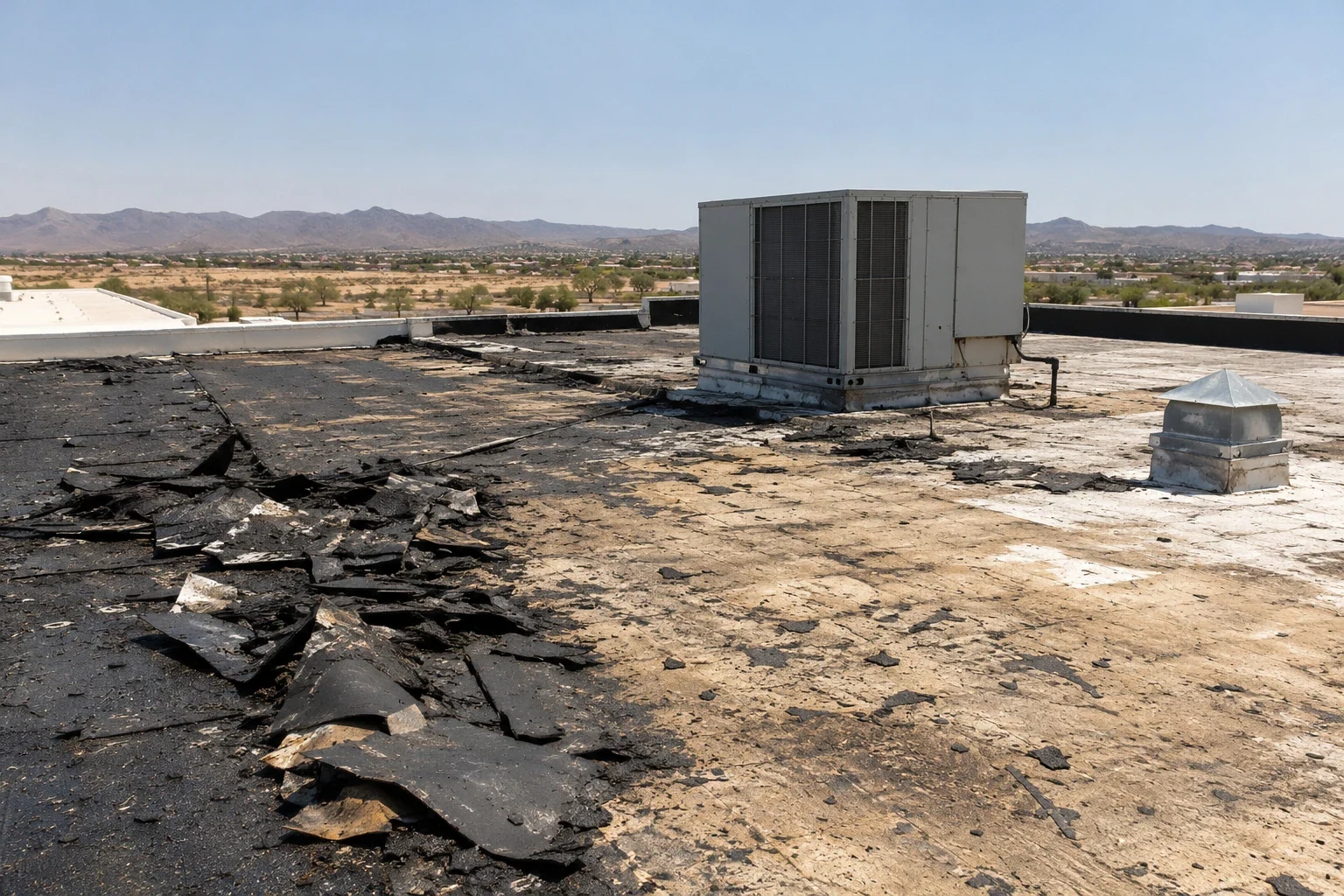
We check field seams, laps, flashing, edge metal, drains, roof-to-wall transitions, and previous patches. Soft insulation or a deck change can shift the recommendation from a surface repair to opening the assembly. A moisture survey may help map an area, but a test opening can still be needed to confirm layers. The report marks visible water entry, deteriorated material, and unresolved questions.
City planning places commercial projects near the Cactus Road and Loop 303 junction; roof access and staging still depend on the property. We plan around each property's service lane and tenant hours. A shopping-center roof review connects repairs to occupied entries and rooftop equipment without assuming that all sections have the same membrane history.
Long summer heat makes brittle sealant, open laps, membrane movement, and flashing edges useful inspection points; exposure is context rather than a diagnosis. Phoenix-area monsoon storms can bring damaging wind and heavy rain, so we also check drains, scuppers, edge attachment, and temporary tie-ins.
Choose repair or replacement with the layers in view
A defined defect on an otherwise serviceable roof may be repaired without replacing the full assembly. When the membrane has broad deterioration, the insulation is wet, or attachment is not holding, a replacement or removal scope may make more sense. A recover remains possible only when the existing roof is dry, stable, and permitted to receive another layer. We mark the boundary and state which observation leads to each option.
Cost depends on tear-off depth, deck condition, insulation, cover board, access, edge metal, drainage corrections, equipment handling, and disposal. Timing shifts with the amount of roof released, tenant restrictions, and the weather window. We separate those drivers in the estimate so an owner can compare system work on the same basis. A replacement scope should also identify allowances for concealed conditions instead of burying them in a single lump figure.
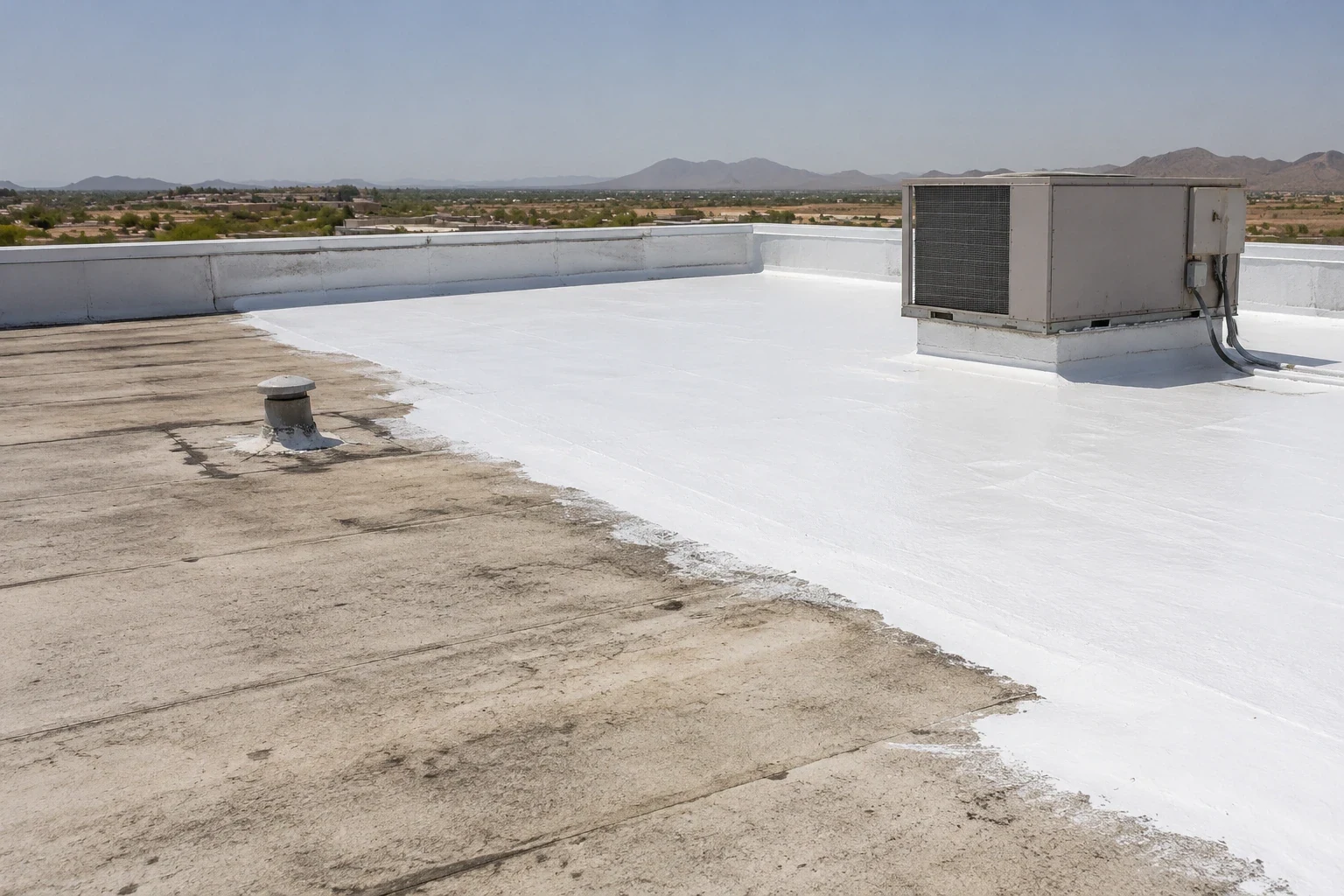
If the roof is stable enough for a recover, we review layer limits, fastening, roof elevation, and drain capacity first. Where a coating is considered, compatibility and adhesion tests must support the choice. Restoration work does not correct wet insulation or a weak deck. We show what remains under each option and which details the crew will rebuild, so the owner's decision follows the roof rather than a generic product preference.
Coordinate edge, curb, and drainage work
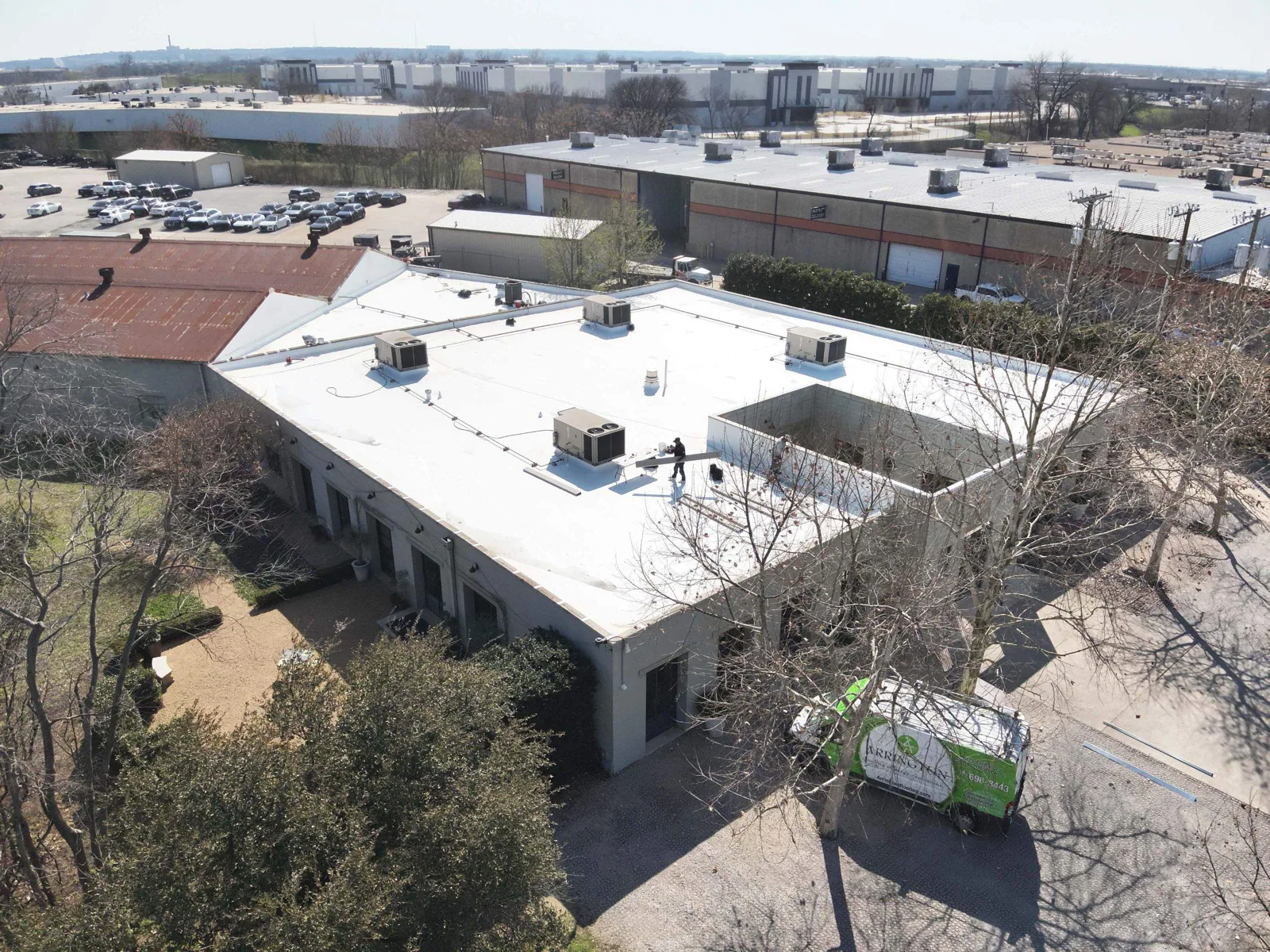
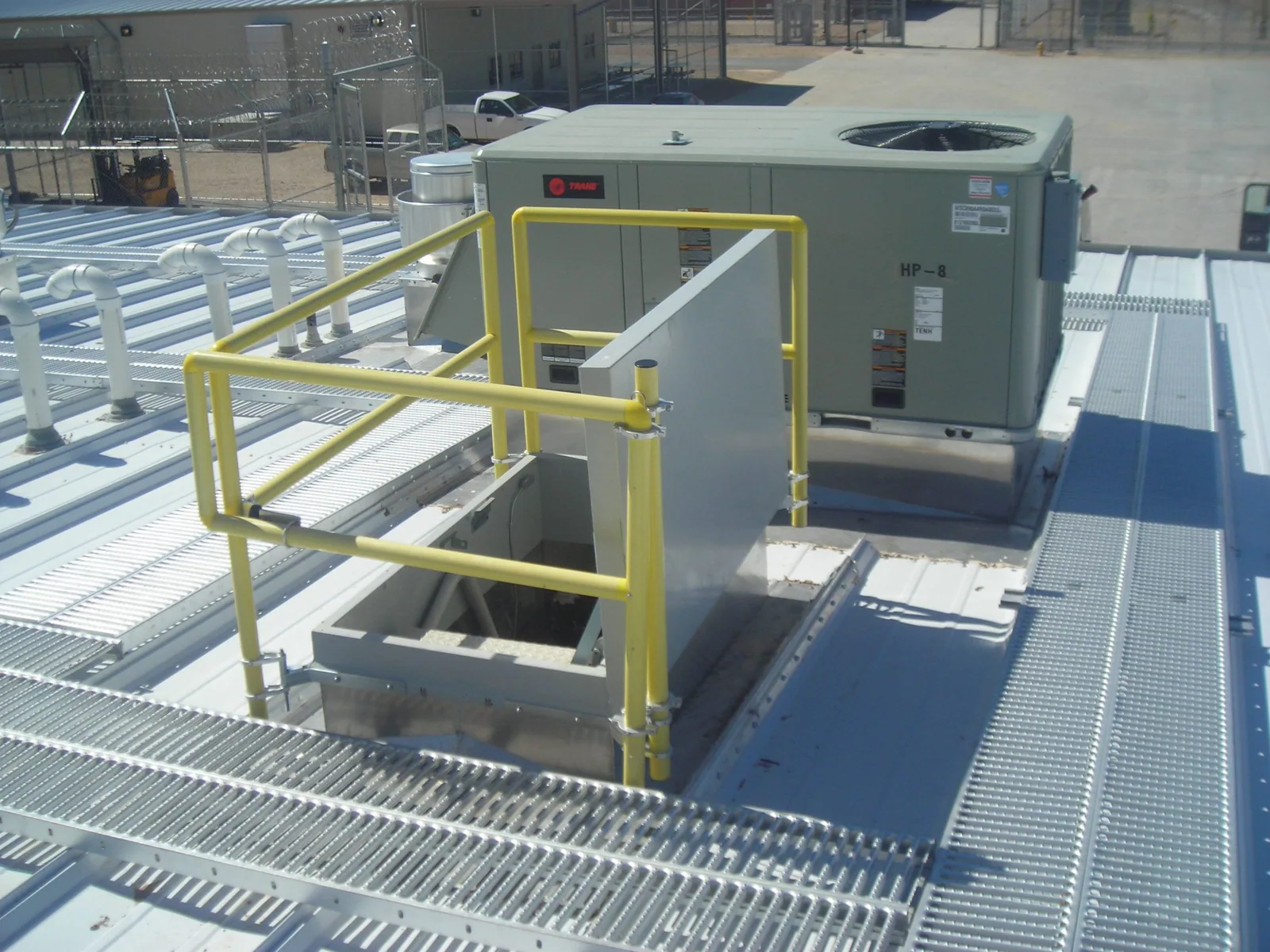
Membrane installation includes the transitions that surround it. We identify the termination at each wall, coping condition, curb height, pipe flashing, skylight, and drain. Where rooftop equipment must move, the mechanical trade confirms disconnection and reset; roofing protects the opening and closes the membrane around a sound curb. A curb scope should state the handoff before work reaches that roof zone.
New insulation can raise the finished roof and leave an outlet too low. We measure drain bowls, scuppers, overflow paths, and crickets before choosing a thickness or tapered layout. If metal edges are being replaced, attachment and membrane termination need to be coordinated as one assembly. The edge-metal work should match the substrate and approved detail, while a drainage check ensures construction leaves outlets clear.
During monsoon season, a daily dry-in boundary matters. We secure loose sheets and rolls, protect exposed insulation, and close each opening before the crew leaves. The project lead should know where the crew stops, what remains protected, and who checks temporary work if weather advances. Those steps help preserve the system details while deliveries and access remain coordinated with the property.
Check Surprise permit and rooftop interfaces
Since January 2026, Surprise has applied its locally amended 2024 building and existing-structure rules to relevant permit scopes. We check the applicable permit path for the actual reroof or alteration rather than assume that a previous project used the same review. The selected assembly, deck work, fire classification, and structural changes may affect submittals. A code question that needs design confirmation is identified before installation is scheduled.
Work can also meet electrical, fire-protection, or solar equipment at the roof. The trade responsible for each disconnect, support, conduit, and test needs to be clear. If the owner plans future panels, discuss attachment and roof-life implications before a new membrane closes. A solar-ready roof review should resolve those interfaces without assuming future equipment is already approved or installed.
We coordinate deliveries, hoisting, tenant notice, and active entrances. Loop 303 and US 60 / Grand Avenue connect Surprise to the West Valley; site gates and lanes determine staging.
Keep the installed system identifiable
Closeout should show the assembly that was installed, not merely repeat the manufacturer's name. We retain product data, accepted submittals, marked plans, seam or adhesion checks, dated photos, and repair notes by roof area. The property record should identify any detail awaiting another trade and any condition that needs follow-up. That file helps a later service visit distinguish new work from older patches or an adjacent system.
For a multi-building owner, repeatable records support maintenance planning. A condition record keeps photos, repair boundaries, and open items tied to a roof plan. If storms affect the property later, a storm repair review can record fresh damage and separate it from existing wear. The assembly should still be identified from material labels and approved project documents.
Before we prepare a Holcim Elevate scope, share roof plans, prior submittals, leak history, and the building's access restrictions. We inspect a representative area and list what needs confirmation. The result is a repair or replacement plan with components and trade handoffs clearly stated.
Commercial Roofing Questions
Does a Firestone-era roof record still help identify the system?
Yes, it can provide a product name or assembly reference. We compare that record with visible labels and field conditions, then confirm the current product requirements before specifying repair materials or tying in a new system.
Can an older Holcim Elevate membrane be repaired with any compatible-looking product?
No. We identify the membrane and detail, then check the manufacturer's requirements for the proposed repair. Similar appearance does not establish chemical or assembly compatibility.
What should be checked before coating a roof?
The surface must be suitable for adhesion, and the existing assembly must be dry and stable. We inspect prior coatings, seams, flashings, drainage, and moisture before deciding whether restoration is a viable option.
How do you plan roofing around retail hours?
We confirm customer entries, service lanes, deliveries, equipment access, and the roof sections the property can release. Each shift closes to an agreed dry-in boundary, with protected paths for tenants and staff.
Which Surprise code applies to a reroof?
Surprise's current permit framework includes locally amended building and existing-structure requirements; confirm the path for the planned reroof before specifying details. We check the permit path and project scope with the appropriate design and permitting contacts before work is specified.
Ready to review the roof scope?
Request a Roof Assessment
Related Roofing Work
Review a Holcim Elevate roof assembly
Share prior product records, roof plans, leak locations, and site hours. We can inspect the existing system and prepare a scope that identifies compatible components, permit questions, and the repair boundary.