
A grocery roof has to protect refrigerated cases, stock rooms, produce areas and a store that may receive deliveries before opening. Rooftop equipment and refrigeration lines can make a repair more than a membrane patch, so we begin with the facility contact and the trade responsible for each unit. We map the leak report, roof slope, drains and curbs, then set a boundary the store team can work around. The Cactus Road and Loop 303 commercial corridor adds local retail context, but the condition of one grocery roof comes from its own inspection.
Coordinate refrigeration and roof access
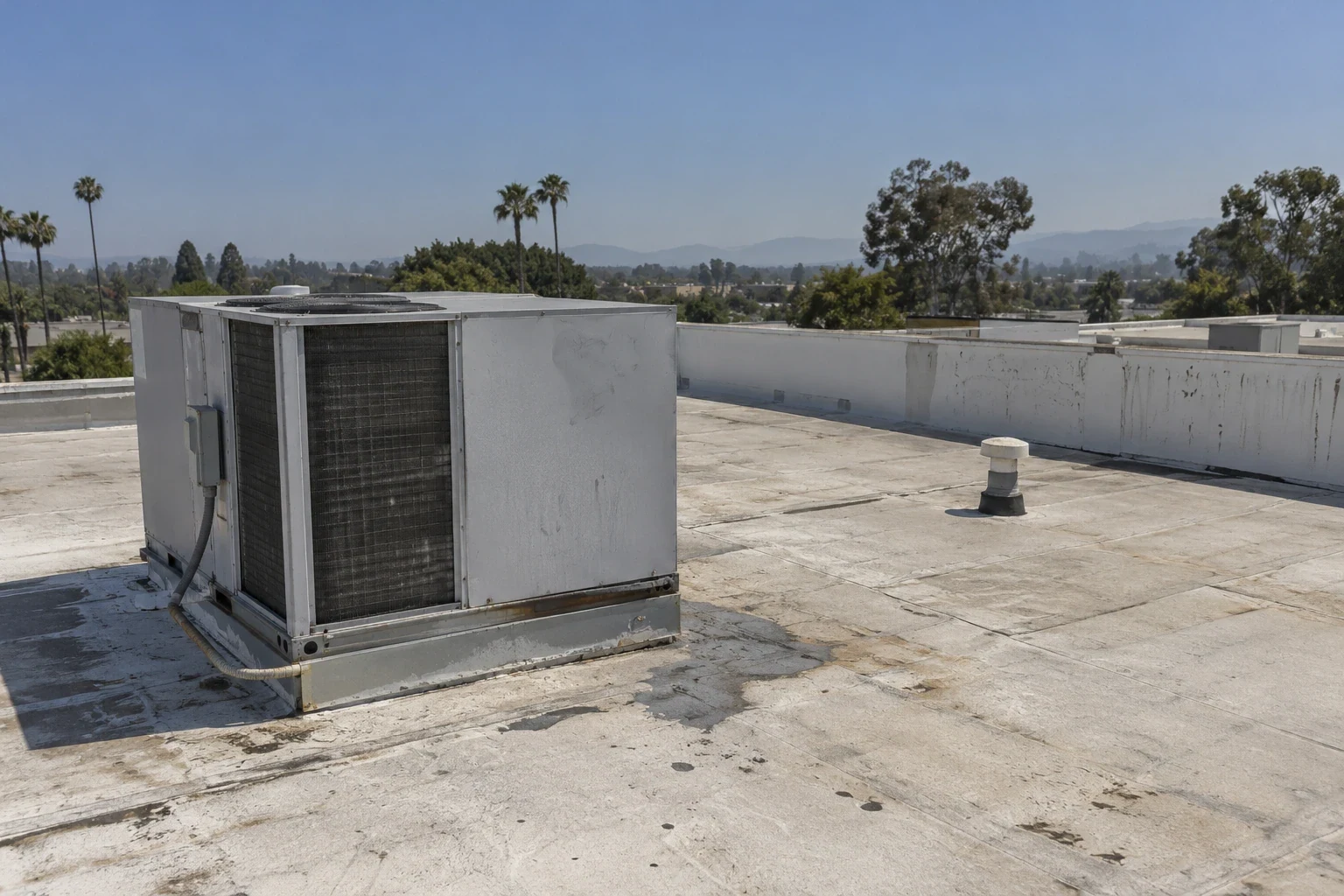
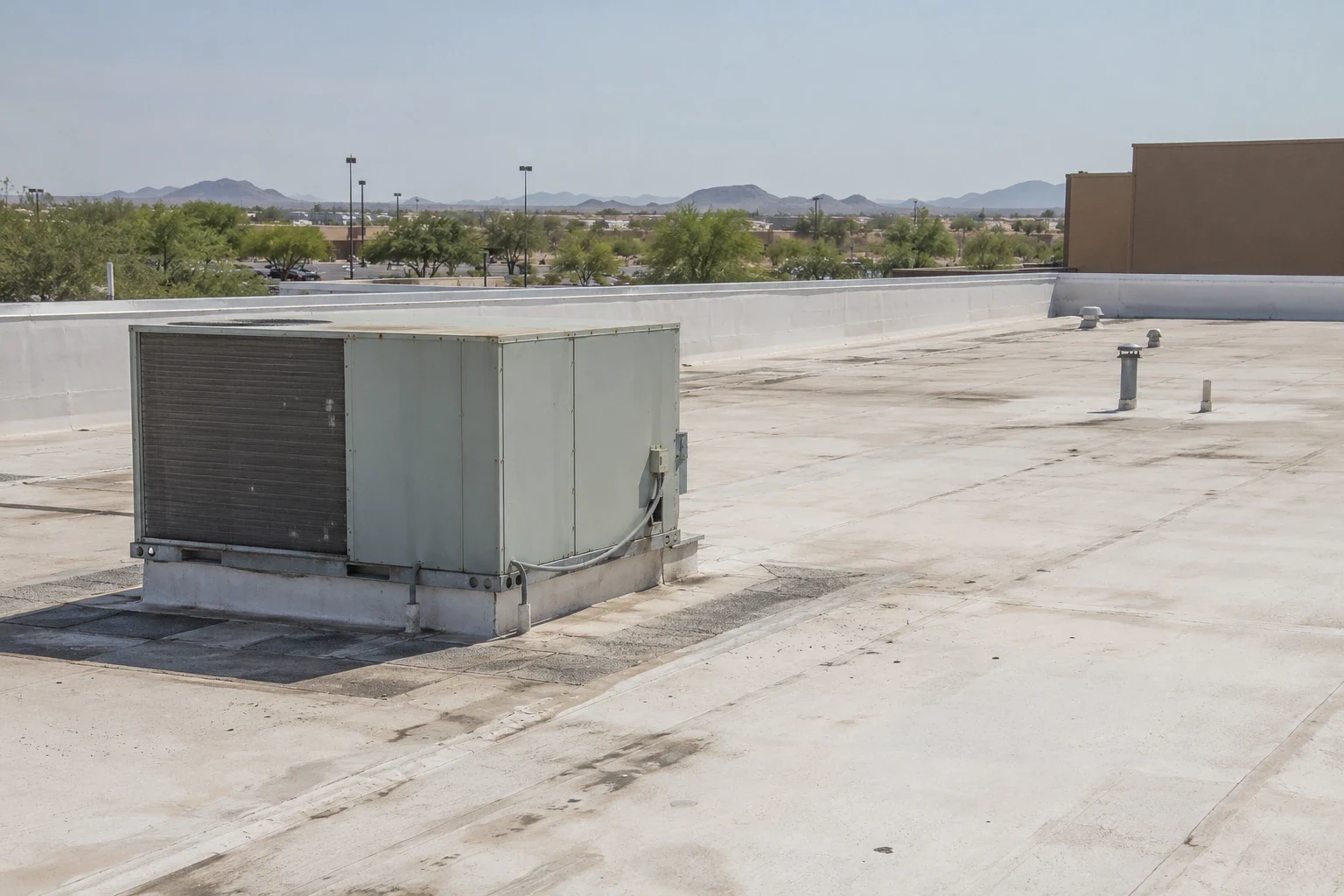
Before work, the store lead can identify delivery windows, receiving doors, customer paths, refrigeration equipment, air intakes and any area where product needs added protection. The mechanical contractor confirms whether a unit or line needs isolation. We coordinate the opening, curb or penetration detail with that trade and set a temporary weather plan before material is removed. A roof crew should not disconnect a refrigeration circuit or assume a unit can be turned off because the work is overhead.
For a grocery store with open hours, the route for a lift or material may be as important as the roof zone. We mark where a delivery truck can queue, which entrance stays available and who can approve a change. A phased reroof plan can separate a receiving-area repair from the customer entrance and sales floor. A big-box retail roof may share a wide field, but cooler equipment and early deliveries create a different sequence for each store.
Connect a ceiling report to the roof path
A stain above a cooler or aisle is a useful clue, but it does not identify the point where water entered. We compare its location with roof slope, seams, curbs, skylights, drains and prior repairs. The roof plan should label what was seen and what is still concealed. If a test opening is needed, we record its location and the layers found there. That helps the owner decide whether to repair one detail, replace wet insulation or inspect a larger area.
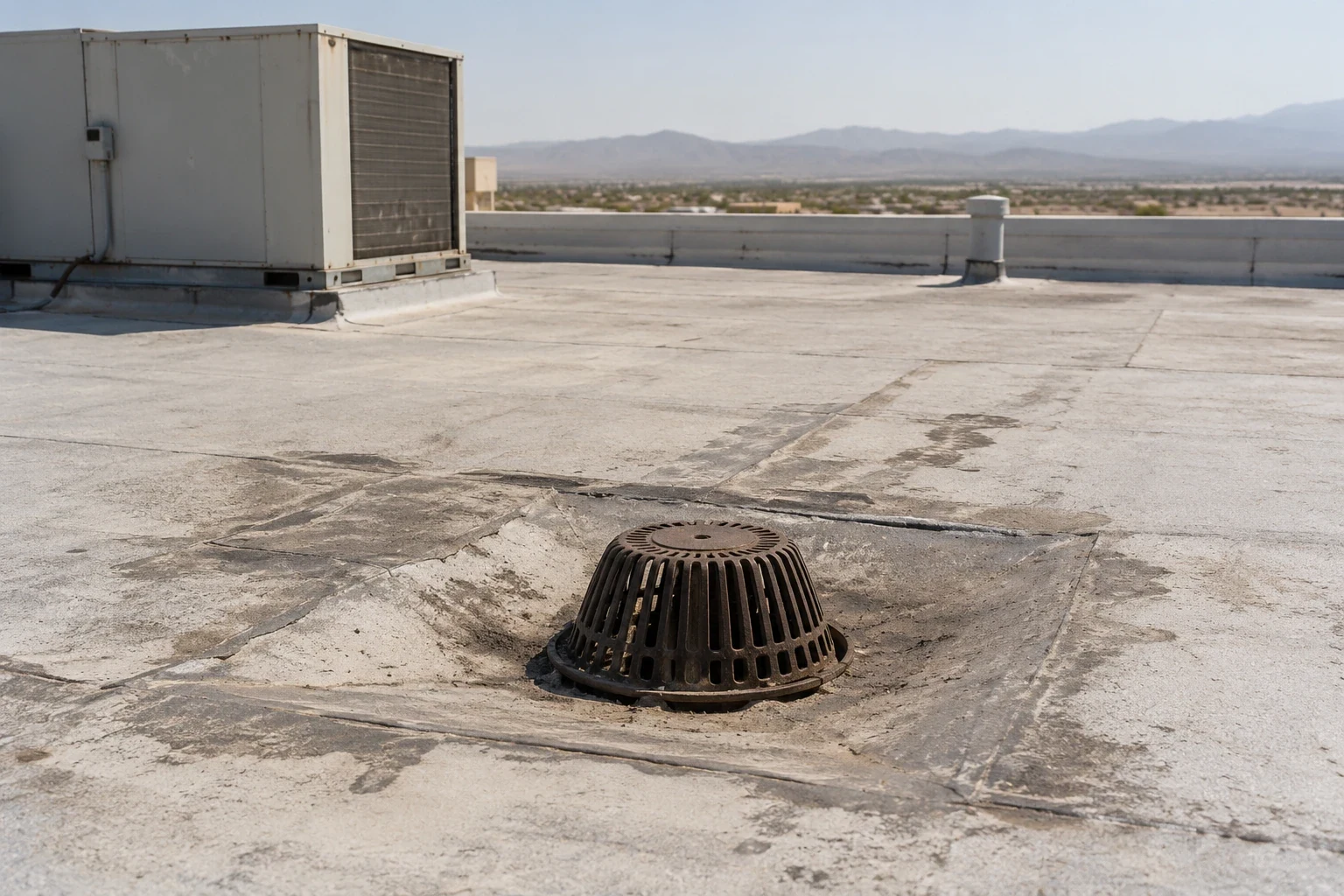
Drainage deserves its own check on a grocery roof because runoff can cross several sections before reaching an outlet. We look for debris, loose rings, standing water, split flashing and overflow paths that could reach a wall or intake. a roof inspection can record seams, drains and curbs together, while drain and scupper work can correct a route that is part of the leak condition. We do not treat a blocked drain as proof that the membrane beneath it has failed.
Choose repair or renewal from the roof condition
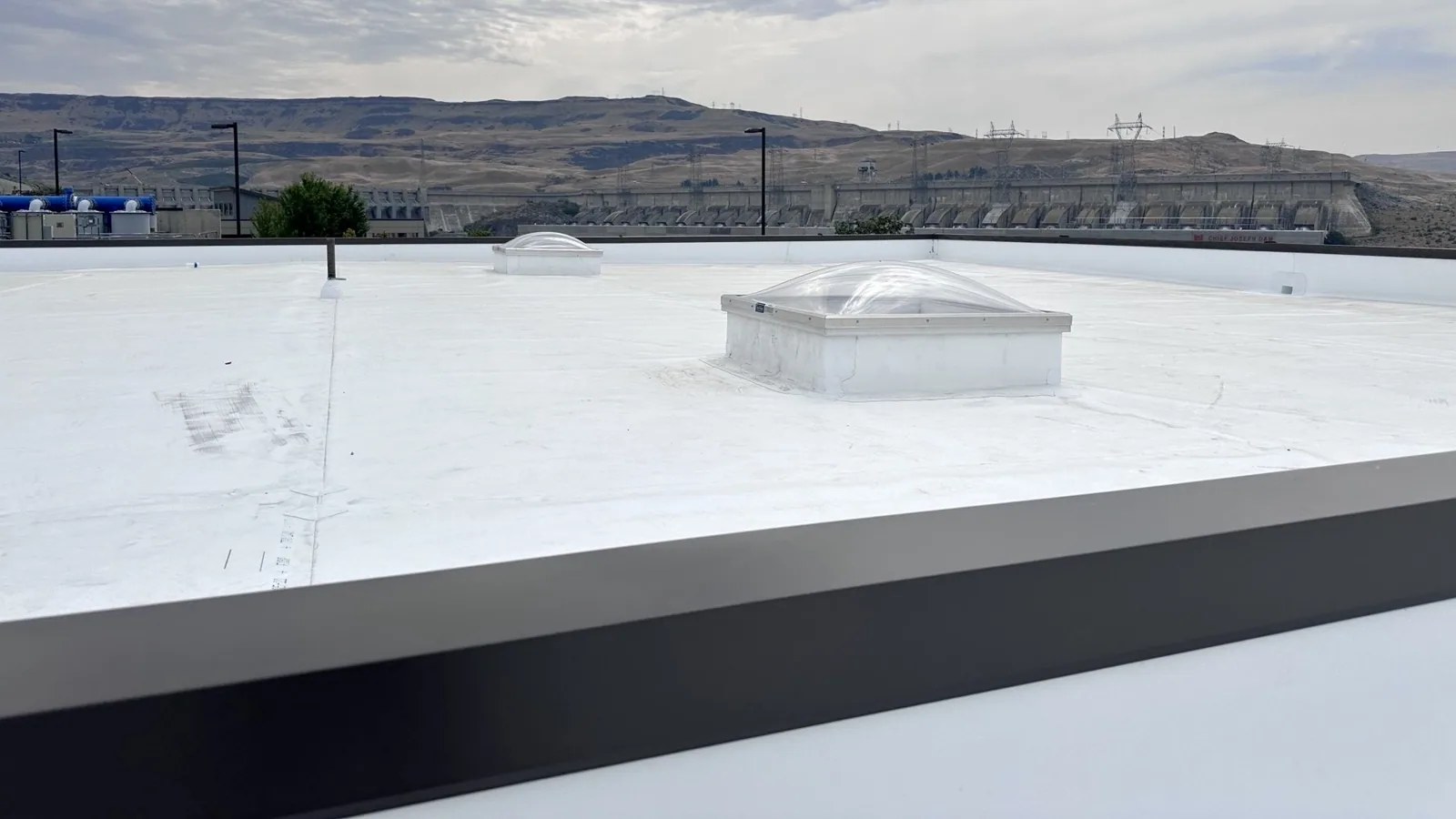
A localized seam or flashing repair may be enough when the surrounding assembly is dry and attached. If moisture has spread, fastening is weak or the deck is damaged, the scope may need to expand. A recover only works when the existing roof and project requirements allow another layer; curb height, drains, parapets and doors must still work at the finished elevation. We show which parts of the roof were tested and which need another look before comparing repair, selective removal or a full replacement.
Price and sequencing should account for work above freezers, coolers, receiving and the sales floor separately. The proposal can identify which units need trade support, what product protection is included, and when drains or rooftop access are temporarily restricted. If a test opening changes the repair boundary, the owner should know who approves additional insulation or deck replacement and how the area is kept dry while that decision is made. Those details help facilities compare a short repair window with a larger project scheduled around store deliveries and operating hours.
For a replacement, TPO, PVC or another roof assembly is selected based on the deck, attachment, insulation, service details and design. The proposal can show how each equipment curb, pipe support and drain gets rebuilt and which trade handles the refrigeration connection. Cost drivers include roof area, tear-off, disposal, new insulation, lift access, after-hours work, temporary protection and the store's delivery schedule. Those assumptions should be visible before the project is priced.
Protect the roof through hot and stormy periods
The July normal mean at Sky Harbor is about 95.5°F, a Phoenix-region proxy rather than a reading from a grocery roof. We trace the grocery roof's runoff and inspect flashing around exhaust and refrigeration equipment. A closer look at the refrigerator and freezer curbs shows whether a service opening has affected the surrounding membrane. The scope records each exposed lap and curb transition where refrigeration piping crosses the roof.Phoenix monsoon storms may carry damaging gusts and concentrated rainfall; we trace runoff around refrigeration equipment and drains. We set a stop point for each work zone, secure materials and close the temporary tie-in before leaving an opening exposed.For a grocery alteration, the designer can verify which of Surprise's adopted 2024 building-code editions and amendments apply to the submitted roof details. The design professional and permitting authority confirm which requirements apply to a reroof or alteration. Before a store work window, we also identify which air intakes need protection from dust and which areas need a weather check after a storm. If water is entering during business hours, emergency roof response can protect the immediate area while the permanent repair scope is confirmed.
Leave operations with a clear repair record
At closeout, we inspect the repaired seam, curb, drain or edge, remove loose debris and restore the agreed access route. The store contact should know whether any entrance, loading area or roof restriction remains. If an item needs a return visit, we name the roof location and responsible person rather than leave a vague punch note. That makes the handoff easier when a different shift manager opens the store the next morning.
We can provide a roof plan marked by area, dated photos, material information, repair notes and maintenance steps. A condition record can support the next inspection and budget review. For stores with a kitchen, restaurant roof coordination may involve different exhaust details, while each grocery roof needs its own equipment and drainage map. We review the work with the facilities lead and prepare a written next step for the owner. A later inspection should use the same roof plan to check the repaired detail, drain path and any open punch item. If the store changes equipment or access routes, facilities can add that information to the record before the next service visit and work window.
Commercial Roofing Questions
Can a grocery store remain open while roof work is underway?
Often, if the delivery, customer and employee routes are coordinated and the work zone is protected. We agree on a lift and staging plan with the store contact before crews mobilize.
Who handles rooftop refrigeration equipment?
The refrigeration or mechanical contractor controls isolation, service and restart for its equipment. We coordinate the roof opening and flashing at the curb or penetration with that trade.
How do you trace a leak over a cooler or sales aisle?
We compare the interior report with roof slope, seams, drains, equipment and prior repairs, then record the likely path and any test needed. A visible stain does not establish which roof detail is open.
When can a recover be considered?
The current assembly must be dry, attached and eligible for another layer under the project requirements. Moisture, deck condition, curb height, drainage and existing layer count can rule it out.
What should store staff receive at closeout?
A marked roof plan, photos, repair and material notes, open items and maintenance steps give facilities a usable record. It should also state any equipment handoff handled by a refrigeration trade.
Ready to review the roof scope?
Request a Roof Assessment
Related Roofing Work

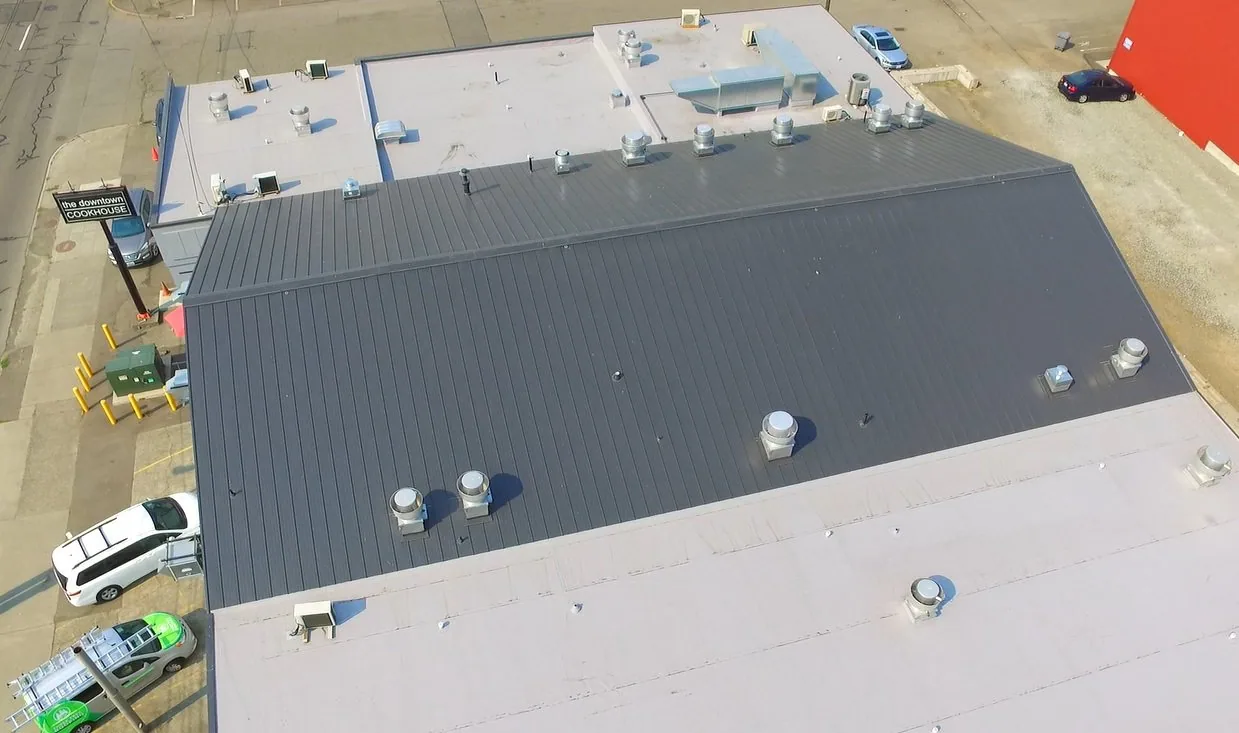
Review the grocery roof and equipment plan
Share the roof plan, delivery windows, refrigeration contacts and leak history. We can coordinate access with the store team, trace the drainage route and prepare a repair or replacement scope.